Ancient star opens window to early days of the universe

Still in its original galaxy, a rare holdout from the second generation of stars sheds new light on the origins of the elements—and how massive supernovae reshaped the cosmos

A “Second-Generation” Star Reveals the Universe’s Earliest Secrets

Not all archaeologists dig in the ground—some look to the sky. In a breakthrough study, scientists from the University of Chicago have identified an ancient star that likely belongs to the second generation of stars ever formed—offering a rare glimpse into the universe’s earliest history.

A Star from the Dawn of Time

Led by researcher Anirudh Chiti, the team discovered a star still residing in the tiny primordial galaxy where it was born. Its chemical composition acts like a cosmic fossil, preserving evidence of the first processes that created elements in the universe.

“This is the first really clear detection of which elements are initially produced in primordial galaxies,” Chiti explained.

The findings were published in Nature Astronomy, marking a major step in understanding how the building blocks of matter formed.

The Universe Before Elements

Shortly after the Big Bang, the universe was extremely simple. Only three elements existed:

  • Hydrogen

  • Helium

  • Lithium

There were no heavier elements like carbon, oxygen, or gold. These had to be created later inside stars through nuclear fusion.

How Stars Created the Elements

The first massive stars acted like cosmic furnaces. Inside their cores:

  • Atoms fused to form heavier elements

  • When the stars exploded (supernovae), they scattered these elements into space

  • New stars formed from this enriched material

This cycle repeated over time, gradually producing the full periodic table that makes up planets—and life itself.

Why This Star Is Special

Scientists have long understood this general process, but finding direct evidence has been difficult. This newly discovered star is unique because:

  • It formed very early, from material enriched by the first stars

  • It still exists in its original galaxy

  • It contains very low levels of heavy elements, marking it as extremely ancient

According to Alexander Ji, finding such stars requires searching for those with the lowest metal content, since heavy elements accumulate over time.

How Scientists Found It

The discovery relied on advanced telescopes and instruments:

  • The Dark Energy Camera helped identify candidate stars

  • Follow-up observations were made using:

    • Las Campanas Observatory

    • Very Large Telescope

By analyzing the light spectrum of the star, scientists could determine its chemical composition—essentially reading its history.

Why This Discovery Matters

This star acts like a missing piece of the puzzle in cosmic history. It helps scientists:

  • Understand how the first elements formed

  • Trace the transition from the first stars to later generations

  • Learn how galaxies evolved in the early universe

A Cosmic Archaeological Find

Just as archaeologists uncover artifacts to understand ancient civilizations, astronomers study stars like this to uncover the universe’s origins.

This discovery shows that even after billions of years, traces of the universe’s earliest moments still exist—quietly shining in the night sky.

Neanderthal prey: elephant teeth preserve 125,000-year-old record of movement and diet

Ancient Elephant “Diaries” Hidden in Fossil Teeth

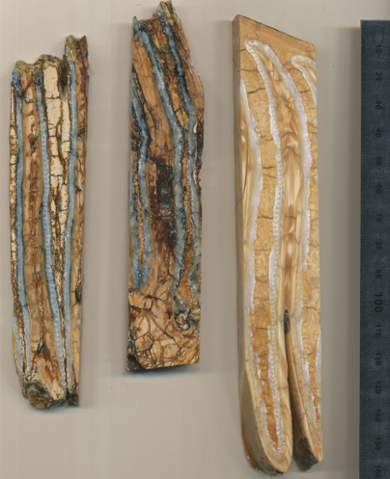
A fascinating study published in Science Advances reveals how fossilized teeth can act like biological identity cards, preserving detailed records of life from tens of thousands of years ago. By analyzing these natural archives, scientists have reconstructed the lives of four Palaeoloxodon antiquus—the largest land mammals of prehistoric Europe.
These massive elephants lived during the last interglacial period around 125,000 years ago and were among the animals hunted by Neanderthals.

Teeth as Time Capsules

Tooth enamel forms slowly, layer by layer, and each layer captures chemical signals from the environment. This process allows scientists to read teeth almost like a timeline of an animal’s life.

The key technique used is isotopic analysis, which examines variations in elements such as oxygen and strontium. These variations reflect:

  • The water sources an animal drank from

  • The plants it consumed

  • The regions it moved through

Tracking Ancient Journeys

According to Elena Armaroli of the University of Modena and Reggio Emilia, this method allows researchers to reconstruct movement patterns with remarkable precision:

Tooth enamel records environmental data “layer by layer,” making it possible to trace movements almost like reading a diary preserved for over 100,000 years.

From these analyses, scientists discovered that the elephants:

  • Traveled across large territories

  • Likely followed seasonal migration routes

  • Adapted to changing environments during the interglacial period

Why This Matters

This research goes beyond understanding elephants—it helps scientists reconstruct entire ancient ecosystems. By tracking where these animals moved, researchers can better understand:

  • Climate conditions in prehistoric Europe

  • Migration patterns of large mammals

  • Hunting behaviors of Neanderthals

A Glimpse Into Prehistoric Life

Fossil teeth are proving to be one of the most powerful tools in archaeology and paleontology. What looks like a simple tooth is actually a detailed record of movement, diet, and environment, preserved for over 100,000 years.

Through discoveries like this, scientists are not just studying fossils—they are uncovering the daily lives of creatures that once roamed ancient Europe, step by step, layer by layer.

Tracking Ice Age Giants: Movement, Diet, and Climate

New research on fossil teeth from Palaeoloxodon antiquus is revealing not just where these massive animals lived—but how they moved, what they ate, and even the environments they came from.

Diverse Movement Patterns

By combining isotopic analysis with paleoproteomics, researchers reconstructed the life histories of several elephants in remarkable detail.

Analysis of strontium isotopes in their teeth showed two very different lifestyles:

  • Local individuals:

    • Lived for years around Neumark-Nord

    • Stayed within a relatively small area near lakes

  • Long-distance travelers (adult males):

    • Originated from geologically distinct, likely mountainous regions

    • Traveled up to 300 kilometers

    • Crossed forests and open woodlands before reaching Neumark-Nord

These findings suggest that some elephants migrated over vast distances—possibly for resources, mating, or seasonal changes—before being hunted by Neanderthals.

Diet and Environment

All the elephants fed on C3 plants, typical of temperate European environments. However, their diets reveal important ecological differences:

  • Migrating elephants:

    • Lived in dense, forested regions

  • Local elephants:

    • Fed in more open landscapes near lakes

Oxygen isotope data also points to differences in:

  • Water sources

  • Climate conditions

  • Possibly elevation

Together, this shows that these animals occupied diverse habitats across prehistoric Europe.

Seasonal Climate Insights

The study also contributes to understanding climate during the time of Neanderthals. Research led by Wil Roebroeks at Leiden University builds on ongoing work at Neumark-Nord.

Meanwhile, researcher Marissa Vink analyzed tooth enamel from ancient horses to reconstruct seasonal climate variation over about 500 years of Neanderthal occupation.

Her findings, published in Quaternary Sciences Reviews, used:

  • Oxygen isotopes (climate and water signals)

  • Carbon isotopes (dietary patterns)

  • Nitrogen isotopes (environmental conditions)

This allowed scientists to track seasonal shifts in climate and food availability on a sub-annual scale—a highly detailed picture of Ice Age environments.

Why This Matters

This research transforms fossil teeth into powerful records of movement, diet, and climate, helping scientists understand:

  • How large animals adapted to changing environments

  • The ecosystems Neanderthals depended on

  • Seasonal patterns that shaped prehistoric life

Ultimately, these findings reveal a dynamic Ice Age world—where giant elephants migrated across vast landscapes, climates shifted with the seasons, and early humans interacted with both in complex ways.

Archaeologists Unearthed a 400-Year-Old Letter. It Confirmed the Existence of a Legendary King.

The letter, dating to the 16th or 17th century, contained an order from King Qashqash, a Nubian ruler whose historicity was previously uncertain.

Ancient Document Confirms the Existence of Nubian King Qashqash

A Small Fragment With Major Historical Importance

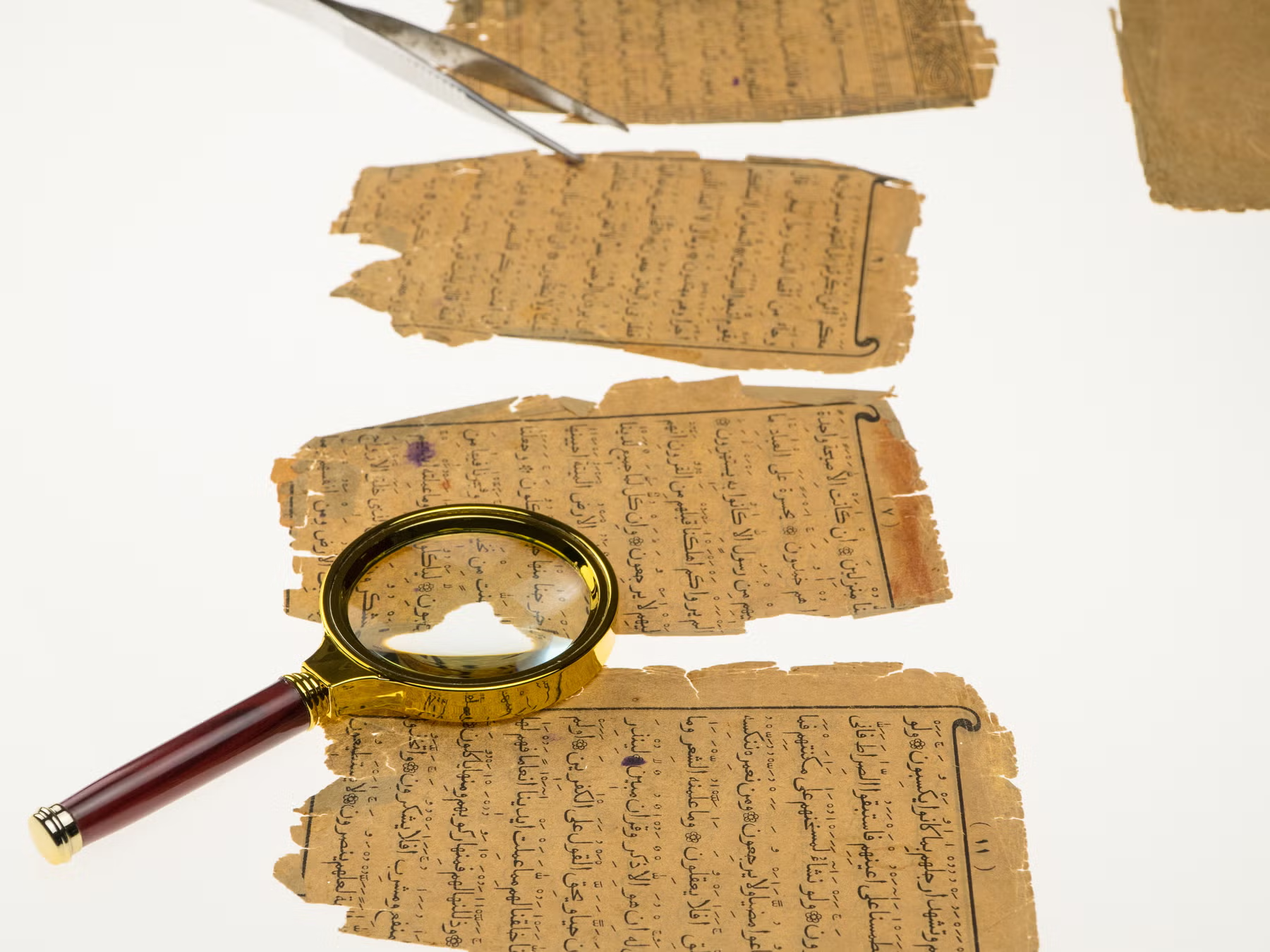
A small piece of paper discovered in northern Sudan has helped solve a long-standing historical mystery. Archaeologists found more than 20 paper fragments dating from the 16th or 17th centuries, including a document issued by King Qashqash.

For years, historians debated whether Qashqash was a real ruler or simply a figure mentioned in legends and later religious writings. This newly discovered document now provides direct physical evidence that the king truly existed.

Discovery at the Ruins of Old Dongola

The fragments were uncovered during excavations at Old Dongola, an important historical city in medieval Nubia.

Old Dongola once served as the capital of the Kingdom of Makuria, a powerful Christian state that dominated parts of the Nile Valley for centuries.

Archaeologists discovered the papers inside the ruins of what appears to have been the residence of a high-ranking official or elite leader, suggesting that the building once played a role in administration or governance.

A Royal Order Written on Paper

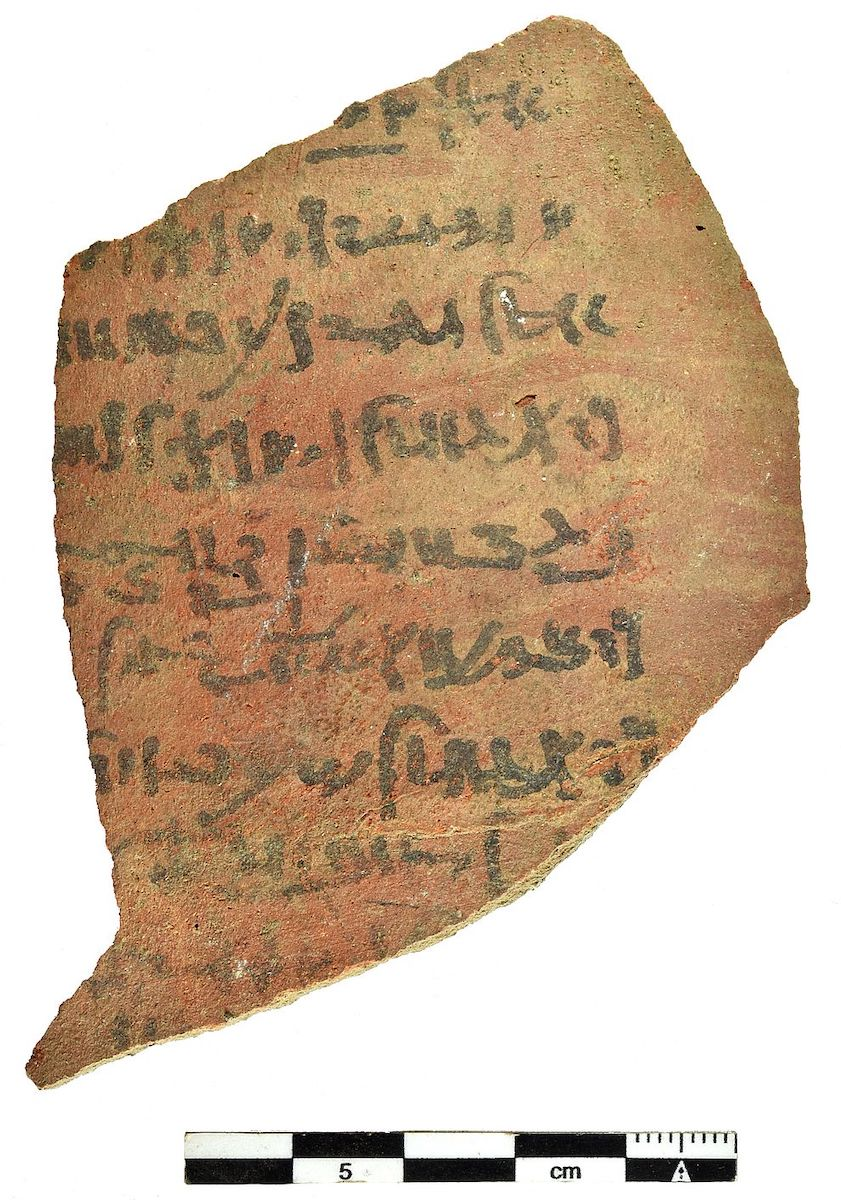
Among the fragments was a particularly significant piece measuring just 4 by 3.5 inches. Despite its small size, the document carries major historical importance.

Written in Arabic, the text contains an administrative order issued by King Qashqash to one of his subordinates. The order instructs the exchange of an ewe for textiles, reflecting a routine transaction within the kingdom’s economic system.

Although the command itself is simple, the document is remarkable because it is issued directly in the king’s name, confirming his authority and presence in the historical record.

Research That Verified the Discovery

The document became the focus of a scholarly study published in the journal Azania: Archaeological Research in Africa.

Researchers used several scientific and historical methods to analyze the find, including:

  • Radiocarbon dating to determine the age of the paper

  • Numismatic evidence (study of coins) from the region

  • Written historical sources connected to the period

Together, these methods helped scholars investigate leadership, social relationships, and the growing influence of Arabic culture in Dongola during the Funj period.

Turning Legend Into History

Before this discovery, references to King Qashqash appeared only in scattered historical mentions and later religious or legendary texts. Because these sources were written long after his supposed reign, historians could not confirm whether he had truly ruled.

The newly discovered document changes that. It transforms a king previously known only from oral traditions and later writings into a verified historical figure who exercised real political authority.

A Glimpse Into Everyday Governance

Interestingly, the document itself does not record a dramatic political event. Instead, it captures something much more ordinary: a routine administrative instruction involving trade goods.

This small detail is precisely what makes the discovery so valuable. It shows that Qashqash was actively involved in the everyday governance of his kingdom, issuing orders that managed economic exchanges and administrative affairs.

Reconstructing Nubia’s Pre-Colonial Past

Finds like this help historians better understand the complex political and cultural history of medieval Nubia. The discovery also sheds light on how Arabic language and administrative practices became increasingly influential in the region during the Funj period.

Even a small fragment of paper can reshape our understanding of the past. In this case, it confirms that King Qashqash was not a legend but a real ruler who governed in Old Dongola roughly 500 years ago, leaving behind a brief yet powerful trace of his authority.