The City Dionysia (or Great Dionysia) was far more than a mere theatrical festival; it was a sophisticated, state-sponsored cultural centerpiece of Athenian democracy. Held annually in the spring (the month of Elaphebolion, roughly March/April), it functioned as a grand demonstration of Athens' religious piety, artistic supremacy, and political power.
I. The Birthplace of Drama
The festival is universally recognized as the crucible of Western drama. Its evolution from ritual to theater is a defining chapter in ancient history:
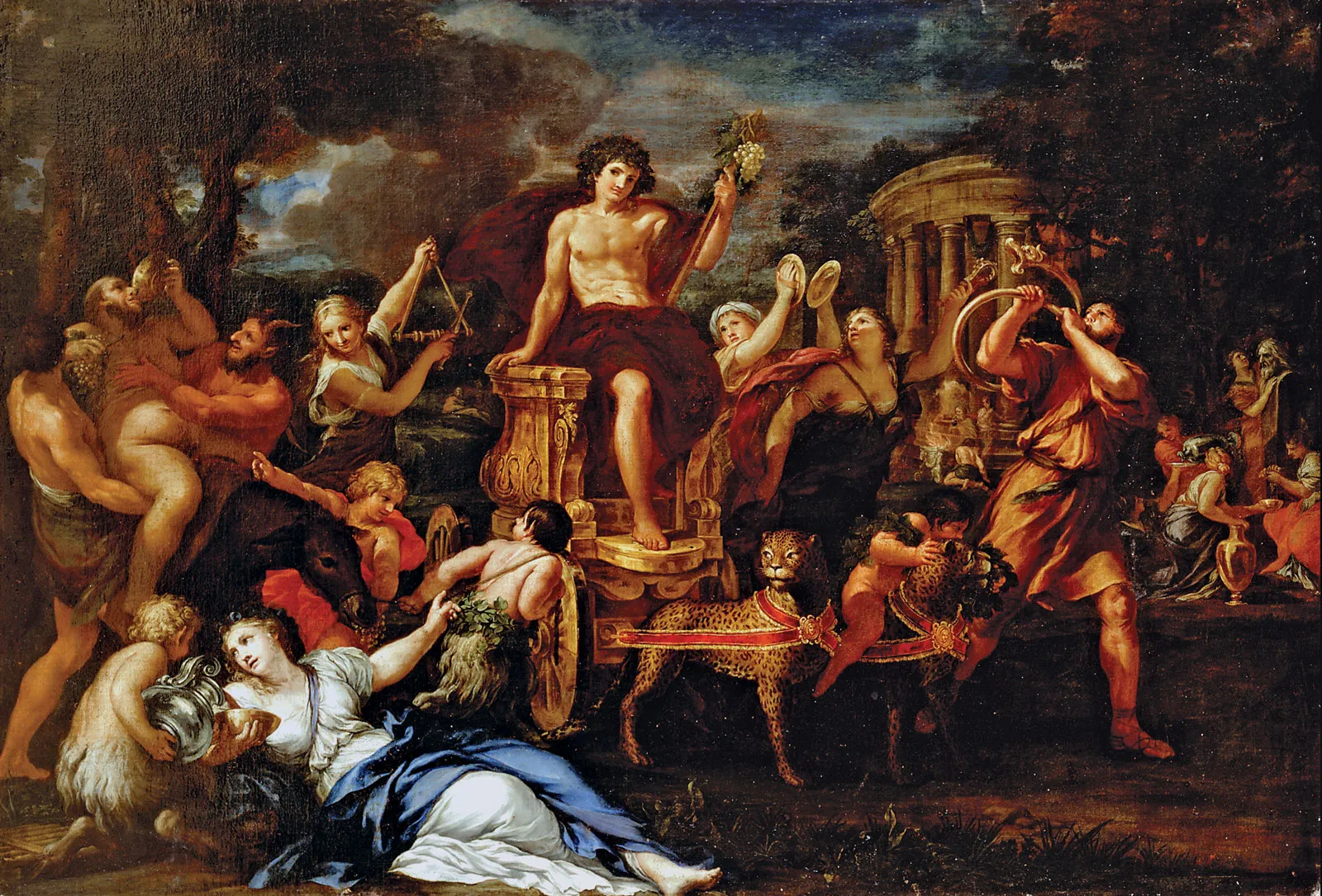
From Dithyrambs to Tragedy: The festival’s roots lay in the dithyramb—a choral ode sung and danced in honor of Dionysus, the god of wine, transformation, and fertility. Over time, the leader of the chorus (the choragus) began to engage in dialogue with the group, creating the prototype for the actor.
The First Thespian: Tradition credits the poet Thespis (c. 534 BCE) with the revolutionary innovation of introducing an actor who interacted with the chorus, effectively "inventing" acting. His name is the etymological root of "thespian."
Tragedy and Comedy: The festival matured into a highly structured competition featuring three genres:
Tragedy: Playwrights (like Aeschylus, Sophocles, and Euripides) presented a tetralogy consisting of three tragedies and one lighter satyr play, which provided a comedic, often ribald, counterpoint to the gravity of the tragedies.
Comedy: Comedic playwrights (like Aristophanes) competed in a separate category, using satire to critique contemporary politics, social norms, and public figures.
II. Festival Structure and Civic Duty
The City Dionysia was a massive undertaking that involved the entire city-state:
The Pompe (Procession): The festival began with a grand, vibrant procession that escorted a cult statue of Dionysus into the city and to his sanctuary, signaling the god's presence at the event.
State Sponsorship: Plays were not performed for profit but as a civic duty. Wealthy citizens, known as choregoi, were selected by the state to fund the training and costumes of the chorus. This was a form of "liturgy"—a mandatory tax-like service that conferred great social prestige on the donor.
The Competitive Spirit: Each year, three tragedians were chosen to compete. A jury of ten men, selected by lot from each of the ten Athenian tribes, judged the performances. The winning playwrights and their choregoi received immense public acclaim and were often immortalized in inscribed records.
III. Theater as a Political Stage
The Theatre of Dionysus, located on the southern slope of the Athenian Acropolis, was a purpose-built space designed to hold upwards of 14,000–17,000 spectators. It was intentionally constructed as a communal "seeing place" (theatron).
Athens’ Showcase: Because the festival took place in spring when sailing conditions improved, the city was filled with foreign dignitaries and representatives from across the Athenian Empire. Athens used the event as a public stage to display its wealth, present war orphans, and flaunt its cultural dominance.
Communal Experience: The open-air, hillside construction ensured that the entire citizenry—primarily male citizens—shared a collective experience. The performances were not merely entertainment; they were serious investigations into justice, the nature of the gods, the ethics of war, and the responsibilities of the citizen.
IV. Evolution of the Stage
The physical environment of the theater evolved in tandem with the drama:
The Orchestra: The circular "dancing place" remained the focal point for the chorus.
The Skene: Originally a simple tent for costume changes, it evolved into an elaborate stone structure with multiple levels and wings, allowing for complex stagecraft, including the use of cranes (mechane) for "deus ex machina" entrances and rolling platforms (ekkyklema) to reveal interior scenes.
The City Dionysia fundamentally transformed human storytelling. By turning the worship of Dionysus into a structured dialogue between a lone actor and a chorus, the Greeks created a medium where society could mirror itself, question its values, and explore the extremities of the human condition under the gaze of both the gods and the state.