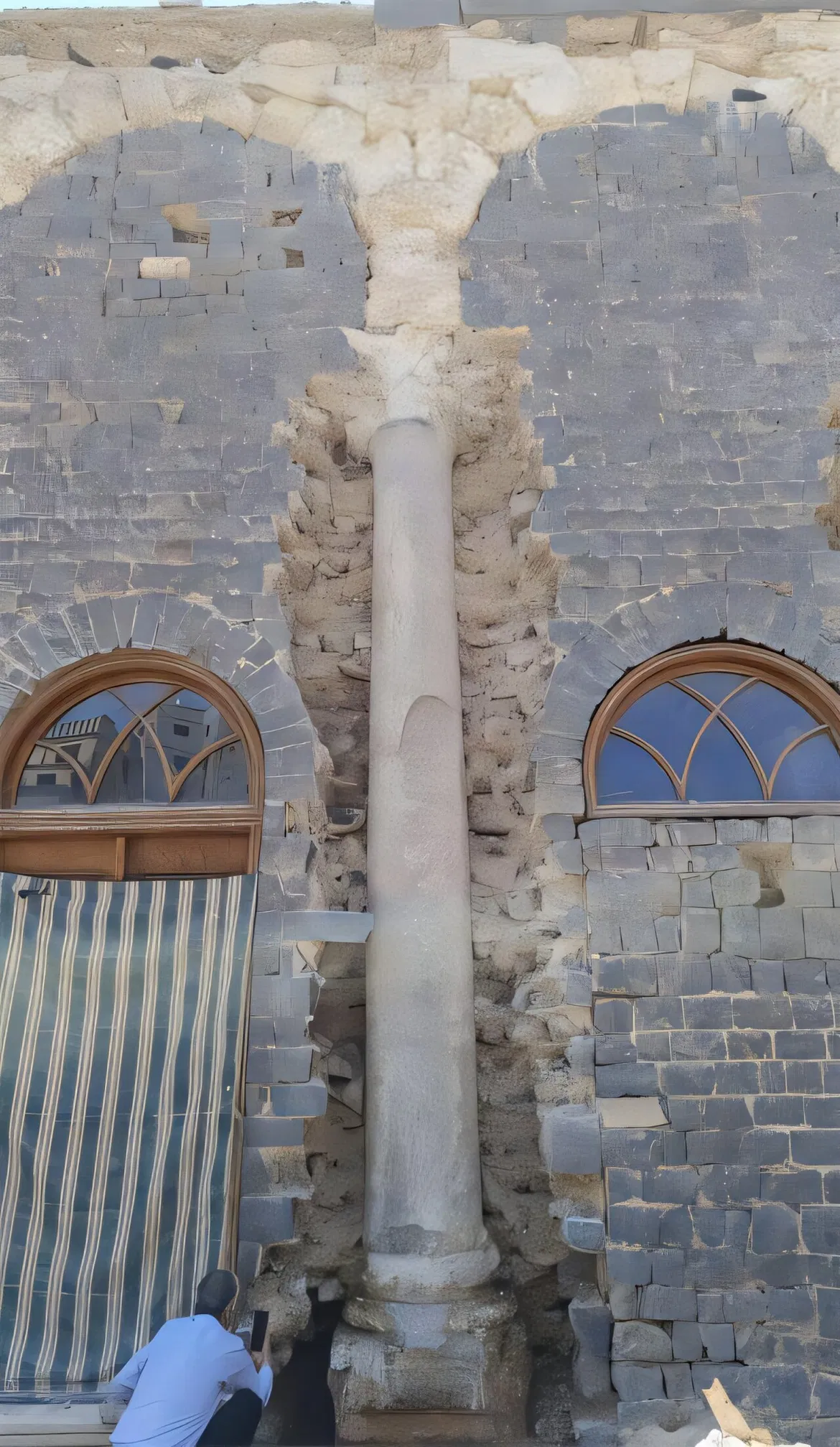
A recently uncovered Ancient Greek inscription at the base of a column inside the Great Mosque of Homs in Syria is adding weight to a long-debated theory: that the medieval mosque may have been built over the ruins of a far older sacred structure—a Roman-era Temple of the Sun.
Homs, in western Syria just north of Damascus, was known in antiquity as Emesa. The city has long been recognized for its historical monuments, particularly the Great Mosque, which is frequently noted for its unusual architectural layout. The mosque is also linked to the 12th-century Zengid ruler Nur ad-Din, further deepening the layered history of a site long connected—through both tradition and academic research—to earlier religious buildings.
According to a new study published in the archaeology journal Shedet, the inscription could offer significant evidence in resolving whether the Great Mosque was constructed atop the Temple of Elagabalus, also called the Temple of the Sun, or if that ancient temple was actually situated elsewhere in the city.
A long-running question about Emesa’s sacred centre
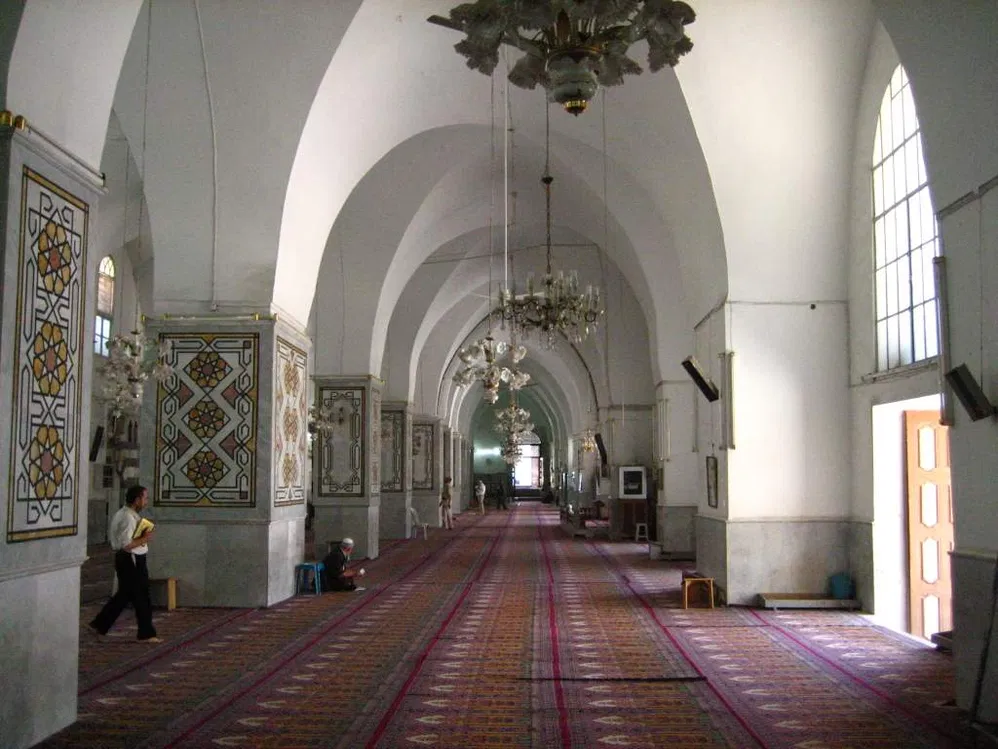
Interior of the Great Mosque of al-Nuri in Homs, Syria.
New Clues in the Debate Over the Great Mosque of Homs
For many years, historians and archaeologists have examined historical writings, ancient coins, and structural remains to determine whether the site of the Great Mosque in Homs reflects a succession of sacred buildings. A widely discussed theory suggests that the location may have transitioned from a pagan temple to a Christian church and eventually into a mosque.
Despite extensive research, the question has remained unresolved. The main challenge has been the absence of clear physical proof that directly connects these different phases of worship at the same site.
A Significant Archaeological Discovery
A recently uncovered inscription, found during restoration work, may now help clarify this long-standing debate.
Dr. Maamoun Saleh Abdulkarim, a professor of archaeology and history at the University of Sharjah, considers the discovery a major development. According to him, the inscription introduces fresh material evidence into a discussion that has long relied on interpretation and indirect sources.
The central issue is location: Was the Temple of Elagabalus built beneath the present-day Great Mosque in the city center? Or was it positioned instead on the archaeological mound, or “tell,” where the remains of the Islamic Citadel of Homs are now located?
This new finding could help scholars move closer to a clear answer.
Continuity of Sacred Space
Dr. Abdulkarim believes the inscription supports the idea that the site may have experienced religious continuity rather than complete replacement. In other words, instead of one structure being entirely erased and rebuilt elsewhere, later communities may have reused and reshaped the same sacred space to reflect new beliefs.
If experts confirm that the inscription is linked to solar worship symbolism, it could suggest a direct physical connection between the ancient pagan sanctuary and the religious buildings that followed. This would point to a layered transformation of the site over time.
Why This Matters for History and Archaeology
If confirmed, the evidence would strengthen the argument that religious change in ancient Emesa—modern-day Homs—occurred gradually through architectural adaptation. Each era may have built upon the foundations of the previous one, preserving elements of the past while redefining their meaning.
The discovery also highlights the value of collaboration across disciplines. Archaeology, the study of inscriptions, architectural history, and heritage preservation all play essential roles in uncovering and interpreting complex historical sites.
As research continues, the Great Mosque of Homs may offer deeper insight into how sacred spaces evolve—revealing how history is often layered, not erased.
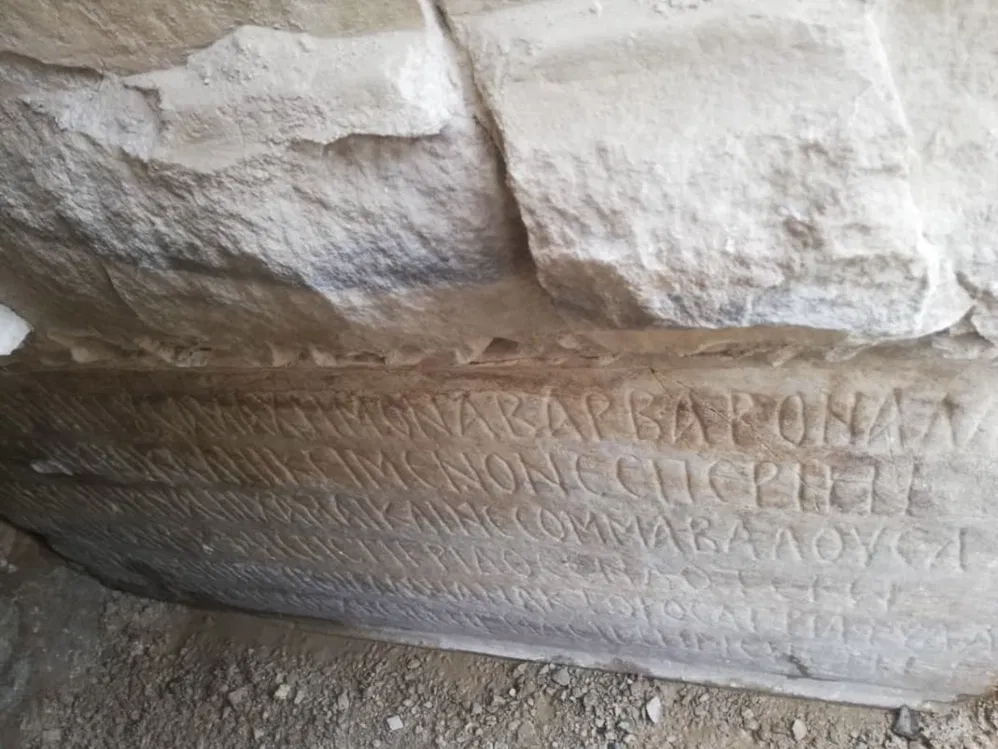
The inscription was discovered in the Great Mosque of Homs in Syria. The writing in the inscription image is symmetrical, formal, and spaced in horizontal lines, a style common in formal dedication or commemorative texts. The text adopts a heroic and militaristic tone, portraying a warrior-king likened to the wind, the storm, and the leopard, as he defeats enemies and exacts tribute with commanding royal authority.
Ancient Greek Inscription Discovered Inside the Great Mosque of Homs
A remarkable Ancient Greek inscription has been identified on a granite column base inside the Great Mosque of Homs in Syria. The stone had been hidden beneath the mosque’s flooring and was first brought to light during excavation work in 2016.
According to Teriz Lyoun, head of the Excavation Department in Homs, the carved base measures roughly one square meter. The inscribed section occupies most of the front surface, making it a prominent and carefully planned feature.
What the Inscription Says
The text, written in Greek, presents a dramatic and powerful description of a warrior figure. It speaks of a force that rises into the sky to defeat enemies, shatters shields, and tears opponents apart. The figure is described as roaring from a hilltop, striking with strength and ferocity, and drawing royal authority from the god of war during daylight hours.
The tone is bold and heroic, filled with vivid imagery of battle and divine power.
A Formal and Structured Design
Lyoun explains that the inscription is arranged in evenly spaced horizontal lines, reflecting a balanced and symmetrical layout. This format is commonly seen in official dedication or commemorative texts from the ancient world.
The lettering appears deliberate and formal. The multi-line text is carved in straight rows and framed with a decorative border along the top edge, suggesting that it once held ceremonial or symbolic importance.
Linguistic Clues from Roman Syria
Dr. Maamoun Saleh Abdulkarim notes that the Greek text contains certain grammatical inconsistencies. Rather than weakening its significance, he views these irregularities as historically meaningful.
During the Roman period in Syria, Aramaic was widely spoken, and Greek—although commonly used in administration and inscriptions—was not always written with strict classical accuracy. These linguistic features align with what scholars know about the multicultural and multilingual environment of the region at that time.
From Pagan Temple to Church to Mosque?
At the heart of Abdulkarim’s interpretation is the idea that ancient Emesa—modern-day Homs—experienced several major religious transitions while maintaining a central sacred location within the city.
He argues that the inscription strengthens the case for placing the Temple of the Sun, often associated with the cult of Elagabalus, on the same site where the Great Mosque now stands. Over centuries, different faith communities may have adapted and reused the same sacred ground rather than abandoning it.
Even if the inscription is poetic in style and does not provide explicit architectural details, it still offers valuable insight. Each Roman-era inscription uncovered at the mosque adds another piece to the puzzle, helping researchers better understand the site's layered history.
Emesa: A Sacred and Strategic City
The study also highlights Emesa’s strategic importance in the ancient Levant. Positioned along major trade and travel routes, the city held both political and religious influence.
Its sacred center was not only a place of worship but also a symbol of civic identity and authority. This close connection between religion and governance makes the discovery even more significant.
As ongoing research continues at the Great Mosque of Homs, scholars hope that further findings will shed more light on how this historic site evolved—from pagan sanctuary to Christian church to Islamic mosque—reflecting centuries of religious and cultural transformation.