• MAIN PAGE
  • LATEST NEWS
    • Lost Cities
    • Archaeology's Greatest Finds
    • Underwater Discoveries
    • Greatest Inventions
    • Studies
    • Blog
  • PHILOSOPHY
  • HISTORY
  • RELIGIONS
    • Africa
    • Anatolia
    • Arabian Peninsula
    • Balkan Region
    • China - East Asia
    • Europe
    • Eurasian Steppe
    • Levant
    • Mesopotamia
    • Oceania - SE Asia
    • Pre-Columbian Civilizations of America
    • Iranian Plateau - Central Asia
    • Indus Valley - South Asia
    • Japan
    • The Archaeologist Editor Group
    • Scientific Studies
    • Aegean Prehistory
    • Historical Period
    • Byzantine Middle Ages
    • Predynastic Period
    • Dynastic Period
    • Greco-Roman Egypt
  • Rome
  • PALEONTOLOGY
  • About us
Menu

The Archaeologist

  • MAIN PAGE
  • LATEST NEWS
  • DISCOVERIES
    • Lost Cities
    • Archaeology's Greatest Finds
    • Underwater Discoveries
    • Greatest Inventions
    • Studies
    • Blog
  • PHILOSOPHY
  • HISTORY
  • RELIGIONS
  • World Civilizations
    • Africa
    • Anatolia
    • Arabian Peninsula
    • Balkan Region
    • China - East Asia
    • Europe
    • Eurasian Steppe
    • Levant
    • Mesopotamia
    • Oceania - SE Asia
    • Pre-Columbian Civilizations of America
    • Iranian Plateau - Central Asia
    • Indus Valley - South Asia
    • Japan
    • The Archaeologist Editor Group
    • Scientific Studies
  • GREECE
    • Aegean Prehistory
    • Historical Period
    • Byzantine Middle Ages
  • Egypt
    • Predynastic Period
    • Dynastic Period
    • Greco-Roman Egypt
  • Rome
  • PALEONTOLOGY
  • About us
No results found

Archaeologists Unearth Wall Section at Important Silk Road City Which Traded in ‘Heavenly Horses’

January 17, 2026

A joint archaeological team from China and Uzbekistan has uncovered sections of the walls of a significant Silk Road city, shedding new light on the region’s ancient past.

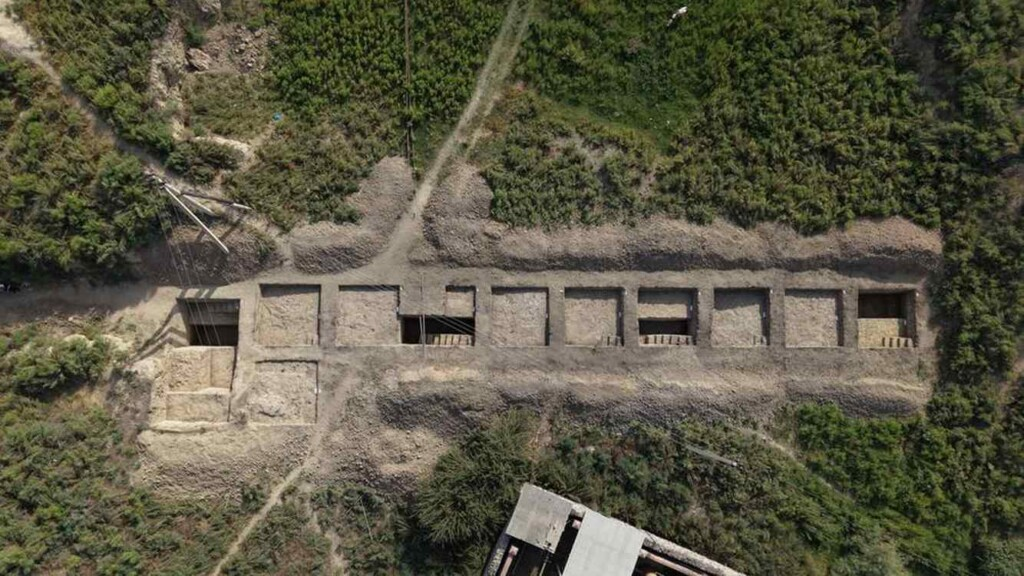
After two years of excavation, researchers have revealed the foundations of palaces, city gates, homes, street networks, and craft workshops at a site known as Kuva. The settlement lies in Uzbekistan’s Fergana Valley, close to the Chinese border, and would have been one of the earliest stops along the Silk Road after travellers crossed the harsh Tarim Basin.

Kuva is thought to have been occupied from the 3rd century BCE until the 10th century CE. Over that long period, it passed through the hands of several powers, including the Achaemenid Persians, Macedonians, Parthians, Sogdians, and later a new Persian dynasty.

In 2023, China’s Luoyang Archaeological Institute joined forces with Fergana State University to investigate a 110,000-square-metre area believed to contain the remains of the ancient city. Most recently, the team uncovered standing sections of city walls buried underground, confirming earlier theories that the walls were rebuilt multiple times throughout Kuva’s history.

Mr Liu Bin, head of the Chinese side of the expedition, told Xinhua that studying the construction techniques of the walls will help researchers establish more accurate dates for each phase of occupation and identify the architectural styles associated with different ruling groups.

Kuva and the wider Fergana Valley hold particular importance in Chinese history. During the Han Dynasty, China’s first unified empire, Han rulers fought repeated wars against the nomadic Xiongnu confederation to keep western routes open. These routes later formed the Great Silk Roads, with Fergana as one of their key early stops.

Historical records show that part of the Han Dynasty’s military success came from securing a supply of horses from the Fergana Valley. Known as “Heavenly Horses,” these animals were faster and stronger than those from northern China, giving the Han army a crucial advantage against the highly mobile Xiongnu. Kuva likely played a role in facilitating this trade of horses in exchange for silk and jade.

Along the Silk Roads, prosperous trading posts often grew into wealthy city-states. However, when trade networks were disrupted, such cities could quickly fall into decline, facing economic collapse and even starvation.

Many Silk Road routes are dotted with ruins left behind by these breakdowns in trade. One such example, reported last year, involved the first survey of two ancient settlements—Tugunbulak and Tashbulak—in southeastern Uzbekistan near the Afghan border. These sites appear to have functioned as centres for mining, iron smelting, and the production of finished goods for nomadic groups, effectively serving as semi-independent trade hubs.

Discovered as recently as 2015 in the Mal’guzar Valley, these settlements lay beyond the control of major kingdoms and relied heavily on trade along the Silk Road’s southern branch through Afghanistan and eastern Iran.

Cities such as Kuva and Tugunbulak are crucial for understanding the rise and decline of trade along the Silk Road. Excavations at Kuva are expected to continue for some time, with researchers hopeful that further discoveries will deepen knowledge of this famous trans-Asian network.

Looking ahead, Liu Bin said that systematic excavations of the palace areas are planned for next year to gain a clearer understanding of the settlement’s layout and functional zones.
Ancient temple rich with gold and ritual altars unearthed on Evia island

January 17, 2026

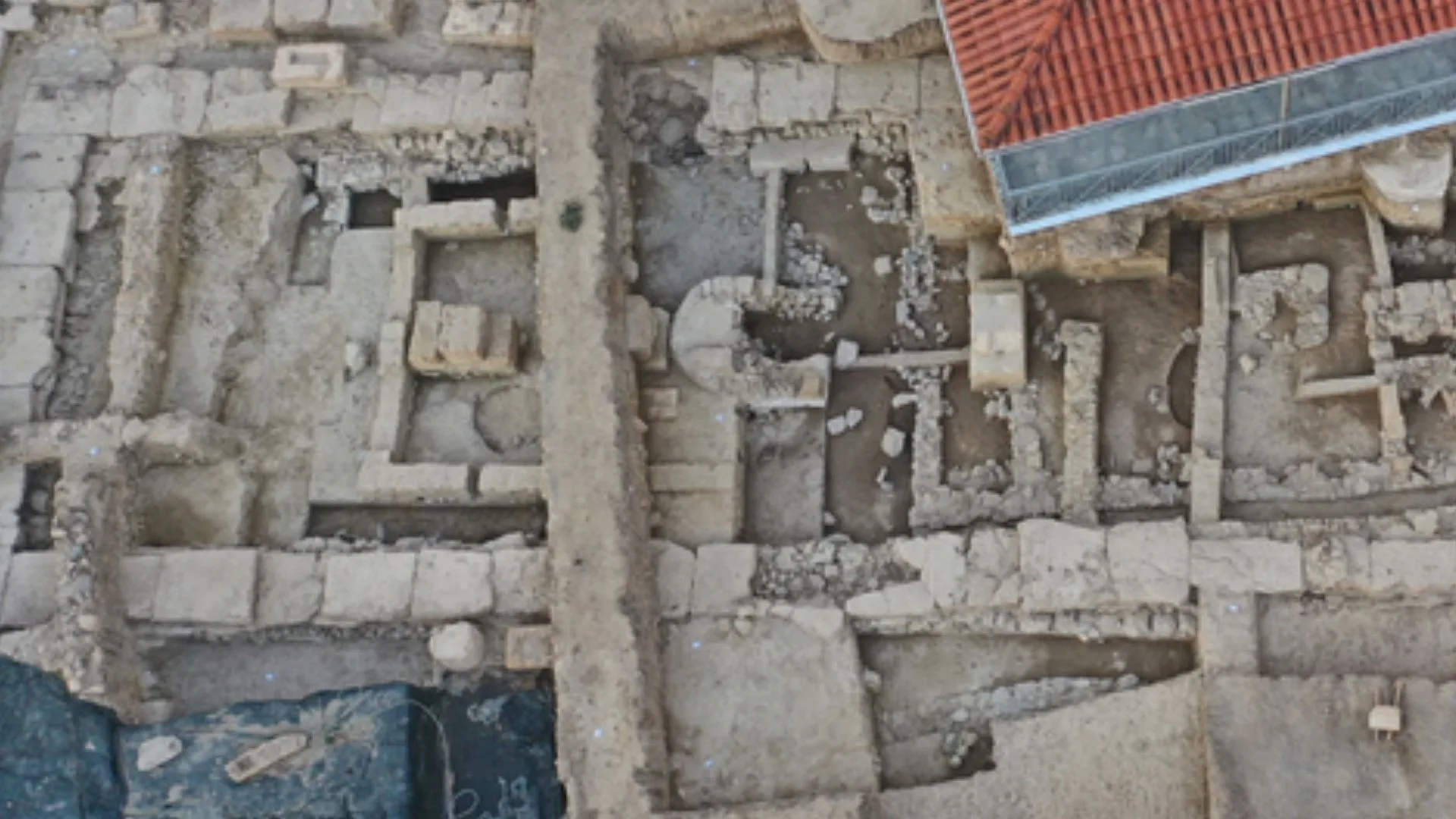
Archaeologists excavating on the Greek island of Evia have uncovered a previously unknown ancient temple filled with heavily used altars and a rich collection of valuable offerings, marking another major discovery in the region, according to Popular Mechanics. Dating to the 7th century BC, the site is located near the renowned Temple of Amarysia Artemis, Greece’s Ministry of Culture has confirmed.

The temple, fully excavated in 2023, is around 30 metres long—typical in size for early Greek temples. Portions of its outer walls and a western arch have survived, but the most significant finds were made within the building itself. Inside, archaeologists identified several hearths that appear to have served as altars, pointing to sustained and intensive ritual activity.

One of the most notable features is a horseshoe-shaped altar. Thick layers of ash containing burnt animal bones indicate repeated sacrificial practices, while pottery recovered from the site suggests that ritual use may have begun even before the temple was constructed, possibly as early as the late 8th century BC.

The excavation also yielded a diverse array of offerings, including Corinthian alabaster vessels, Attic pottery, locally produced ritual ceramics, and jewellery made from gold, silver, coral, and amber. Researchers also found amulets originating from the eastern Mediterranean, along with bronze and iron fittings.

Constructed with mudbrick walls set on a dry-stone foundation, the temple reflects the marshy nature of the surrounding landscape at the time. Traces of fire damage suggest the building was later strengthened and expanded, likely during the late 6th century BC.

Even earlier layers at the site revealed bronze figurines of bulls and a ram dating to the Geometric period, as well as a Mycenaean clay bull’s head. Evidence also points to human activity at the location as far back as the 9th century BC, indicating that the area’s religious significance evolved gradually over several centuries.

One of Northern Europe’s Oldest Wooden Doors Found, Estimated to Be 650 Years Old

January 17, 2026

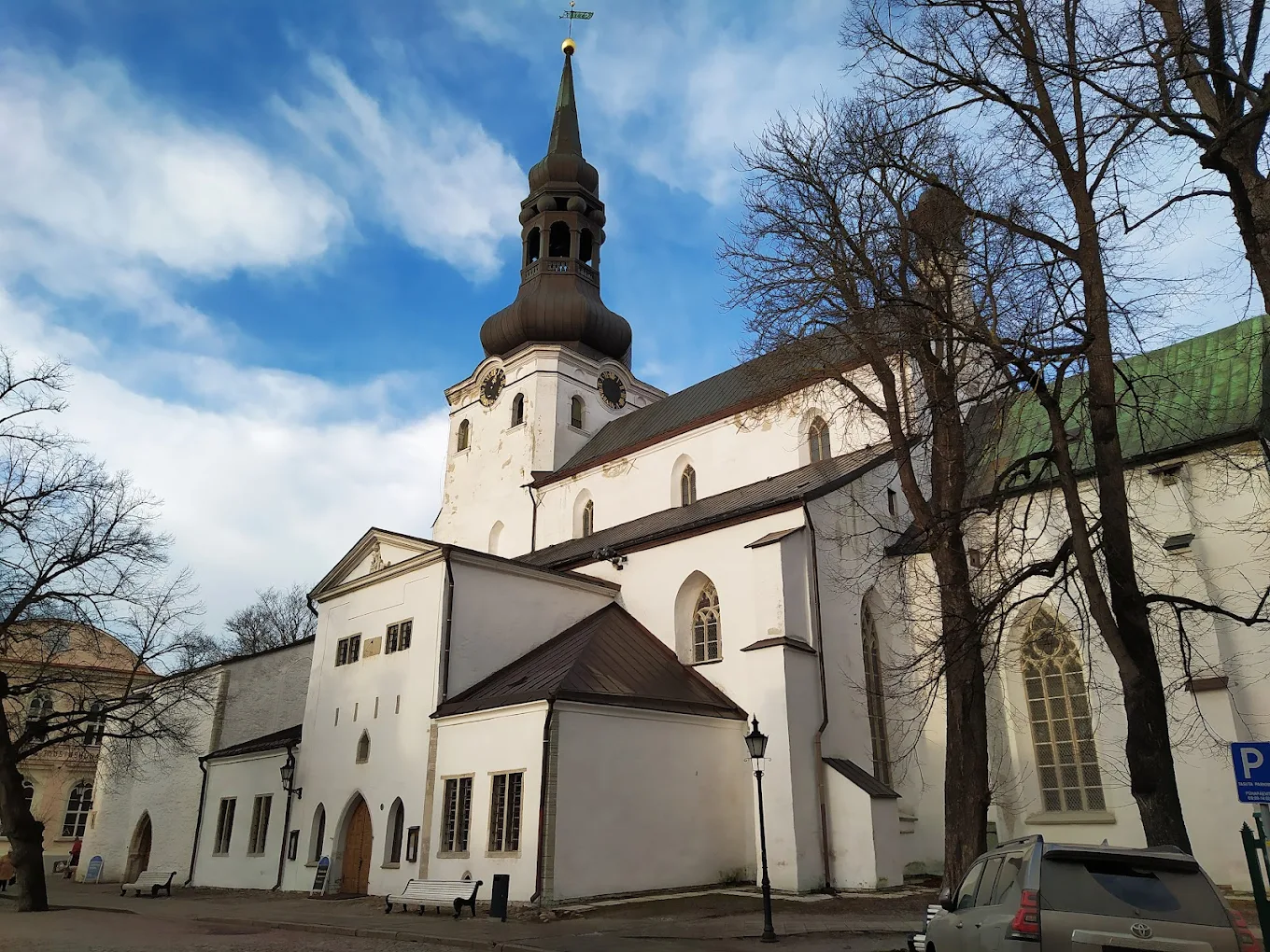
Researchers in Estonia have identified what is now thought to be the country’s oldest surviving wooden door—and among the oldest in Northern Europe. Tucked away inside St. Mary’s Cathedral (Toomkirik) in Tallinn’s Old Town, the medieval door is around 650 years old, providing a rare, physical connection to Estonia’s late medieval past.

The finding was confirmed through a scientific study using dendrochronology, or tree-ring dating. Analysis showed that the wood was most likely cut and worked between 1378 and 1394, with the strongest evidence pointing to 1382. This means the door predates the one in Tallinn’s Bremen Tower by about 16 years, overturning long-held assumptions about which was the oldest.

Older Than the Former Record Holder

Until now, historians believed the roughly 630-year-old door in the Bremen Tower—part of Tallinn’s medieval city wall—was the oldest surviving example in Estonia. The newly dated door is located inside the King’s Chapel, a small, double-vaulted space built into the thick western wall of St. Mary’s Cathedral in the latter half of the 14th century.

Though visible to visitors climbing the cathedral tower, the door is rarely opened. It leads into the King’s Chapel, a quiet and secluded room whose original function is still debated. Scholars suggest it may have served as a private chapel for a ruler or noble, aligning with the cathedral’s historical ties to Baltic German elites.

How the Door Was Dated

To determine its age, researchers carefully removed the door from its hinges and examined its construction. The interior is made mainly of pine planks, while the exterior is faced with oak boards and strengthened with iron rivets. The growth rings in both woods were compared with established regional tree-ring records from the Baltic and Northern Europe, allowing for precise dating.

Medieval Craftsmanship Preserved

The door’s significance lies not only in its age but also in its craftsmanship. The use of pine and oak reflects typical medieval building practices, balancing availability with durability. Oak provided a tough outer layer, while pine formed a sturdy internal structure.

Experts note that the door appears to have been purpose-built rather than assembled from reused materials. Its hinges, construction techniques, and overall design match what is known of late 14th-century workmanship, further supporting the scientific dating results.

A Matter of Cultural Heritage

Identifying Estonia’s oldest door is more than a historical curiosity. Heritage specialists say it helps clarify the building history of St. Mary’s Cathedral and enriches understanding of medieval architecture in the Baltic region. Each accurately dated feature adds to the broader picture of Tallinn’s development during the Hanseatic period.

Once the analysis was complete, the door was returned to its original position. Church officials have stressed the importance of safeguarding such a significant artifact so future generations can continue to encounter a tangible piece of Estonia’s medieval history.

Could There Be an Even Older One?

Researchers caution that while the King’s Chapel door is currently the oldest known surviving door in Estonia, it may not be the oldest ever made. As research methods advance and more historic structures are examined, older examples could still be discovered.

For now, the sturdy wooden door in St. Mary’s Cathedral remains a remarkable survivor from the 14th century—quietly standing witness to more than six centuries of history in the heart of Tallinn’s Old Town.

Ancient Acoustic Chambers with Mysterious Echoes

January 15, 2026

Across the ancient world, certain structures display remarkable acoustic properties that continue to puzzle researchers. These chambers were not accidental; they were deliberately designed to manipulate sound in ways that enhanced ritual, communication, and spiritual experience.

At Chavín de Huántar in Peru, stone galleries amplify sound, creating roaring echoes that mimic animal calls. Archaeologists believe priests used these effects during ceremonies to induce fear or awe, reinforcing their authority. In Malta’s Hypogeum, a subterranean temple produces deep resonant tones when spoken in certain chambers, affecting the human nervous system.

Greek theaters were engineered with extraordinary precision. Even whispered speech could be heard clearly across vast open-air arenas. Sound traveled through carefully calculated stone seating and architectural angles. Similarly, Mayan pyramids at Chichén Itzá produce echo effects resembling bird calls when clapped, possibly symbolizing sacred animals.

These acoustic designs suggest ancient builders understood sound physics intuitively, if not mathematically. Sound was treated as a sacred force, capable of transforming consciousness and connecting humans to the divine.

Ancient acoustic chambers reveal that early civilizations did not only build for sight but for sound and sensation. These spaces remind us that architecture was once a multisensory experience, blending engineering, spirituality, and human perception in ways still not fully understood.

The First People Who Tried to Predict the Future

January 15, 2026

The desire to foresee the future is as old as humanity itself. Ancient societies developed divination systems to interpret signs from gods, nature, and the cosmos, believing that the future left traces in the present.

In Shang Dynasty China, oracle bones were heated until they cracked, and diviners interpreted the patterns to answer questions about war, harvests, and royal decisions. These inscriptions form one of the earliest known writing systems. In Mesopotamia, priests practiced astrology, reading planetary movements as messages from the gods. Eclipses, comets, and unusual births were considered omens of political change or disaster.

Greek oracles, such as Delphi, delivered cryptic prophecies believed to come from Apollo. These predictions influenced military campaigns, colonization, and royal decisions. Meanwhile, augurs in Rome interpreted the flight of birds, thunder, and animal entrails to determine divine approval.

Divination served practical purposes. It provided structure in uncertain times, legitimized authority, and offered psychological comfort. While modern science rejects supernatural prediction, these practices represent humanity’s earliest attempts to understand patterns, probability, and causation.

The first future-seekers laid the groundwork for astronomy, mathematics, and philosophy. Their methods reveal how deeply humans have always sought meaning beyond the visible present.

Ancient Roads That Changed the World Forever

January 15, 2026

Long before modern highways, ancient roads formed the backbone of civilization. These routes enabled trade, migration, warfare, and cultural exchange, fundamentally shaping human history. Roads were not merely paths but arteries through which ideas, religions, technologies, and power flowed.

The Silk Road stands as the most famous example, connecting China to the Mediterranean. Through this vast network, silk, spices, metals, and philosophies such as Buddhism and Islam traveled across continents. The exchange was not one-sided; diseases, innovations, and artistic styles also moved along these routes.

The Royal Road of Persia, built under Darius I, stretched over 2,500 kilometers and featured rest stations, guards, and standardized administration. It allowed messages to travel with unprecedented speed and helped unify a vast empire. Similarly, Roman roads were engineered for durability, with layered stone construction that allowed legions to march quickly and maintain control over distant provinces.

Pilgrimage routes also shaped societies. Roads leading to sacred sites fostered economic growth and cultural blending. The Camino de Santiago in Europe and routes to Mecca transformed local communities into cosmopolitan centers.

Ancient roads collapsed distances and created interconnected worlds. They accelerated the pace of history, enabling civilizations to expand influence beyond local boundaries. Without these early networks, the development of global culture, commerce, and empire would have been impossible.

Pyramids That Are Older Than Egypt

January 15, 2026

While Egypt’s pyramids dominate popular imagination, pyramid-like structures existed long before and far beyond the Nile Valley. These monuments challenge the idea that pyramid construction was a uniquely Egyptian innovation and instead suggest parallel architectural evolution across ancient civilizations.

One of the oldest pyramid structures is found in Gunung Padang in Indonesia. Recent studies propose that parts of this terraced structure may date back over 10,000 years, possibly making it older than Egypt’s earliest dynasties. Similarly, the Caral civilization of Peru built massive stepped pyramids around 2600 BCE, independently developing monumental architecture without evidence of Old World influence.

In Mesoamerica, pyramids such as those at Teotihuacan and later Maya cities served religious and astronomical purposes rather than tombs. These structures were often aligned with solstices, equinoxes, and celestial events, emphasizing their ritual significance. Meanwhile, in China, large earthen pyramids near Xi’an functioned as imperial tombs, predating some Egyptian pyramids in form, if not age.

The existence of pyramids worldwide raises questions about shared human solutions to similar challenges. Pyramidal forms are structurally stable, symbolically powerful, and ideal for representing sacred mountains or cosmic order. Rather than evidence of lost global civilizations, these monuments show how different societies independently arrived at similar architectural expressions.

These ancient pyramids reflect humanity’s universal impulse to build upward, connect earth to sky, and leave lasting marks on the landscape. Their global presence demonstrates that complex thought and engineering emerged in multiple regions, reshaping our understanding of early civilization.

The Secret Poison Masters of Antiquity

January 15, 2026

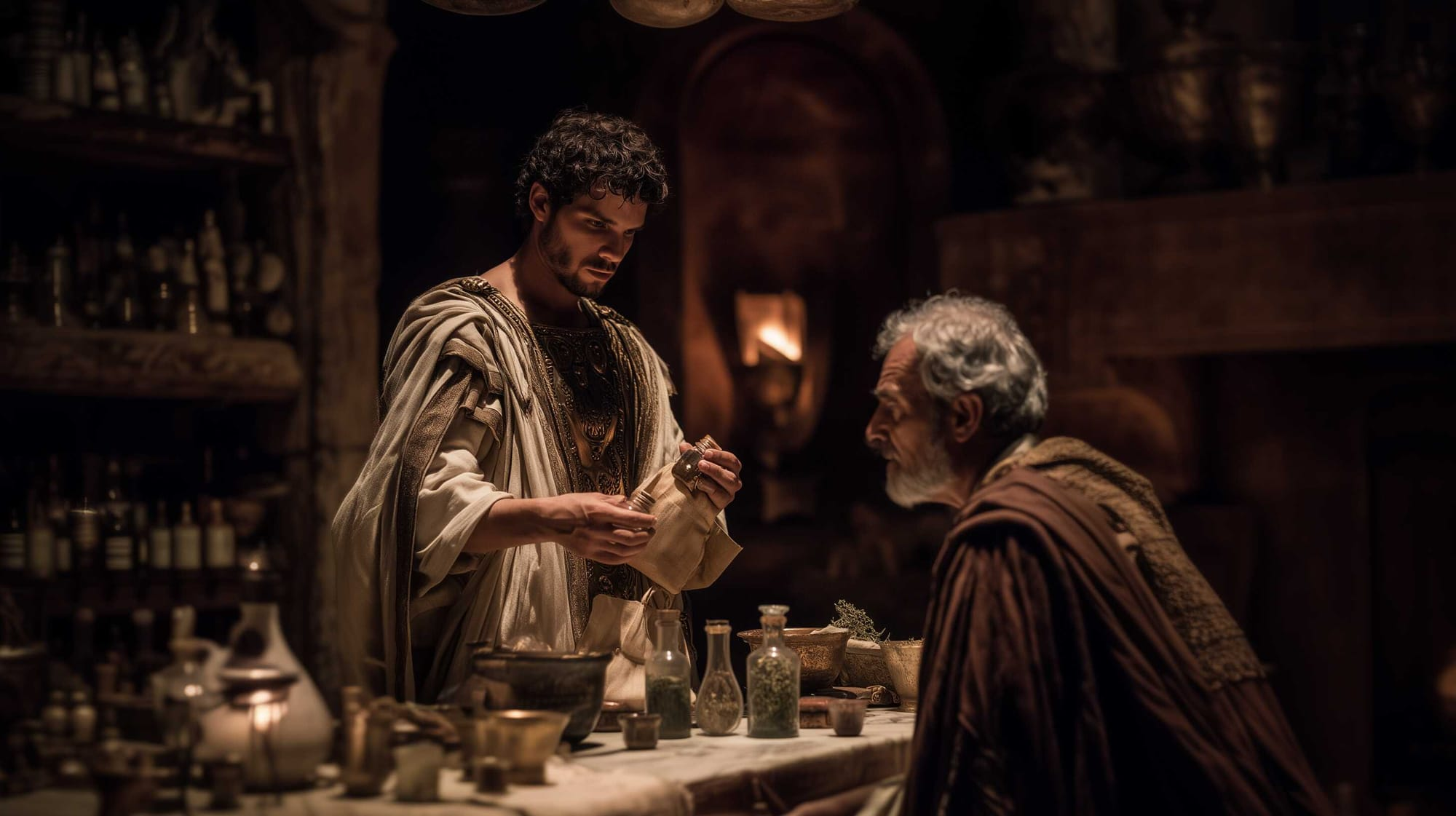
In the ancient world, poison was one of the most feared and sophisticated tools of power. Long before modern chemistry, civilizations developed complex knowledge of toxic substances derived from plants, minerals, and animals. This early toxicology was often guarded as secret knowledge, passed down among healers, priests, royal servants, and assassins. Poisons were used not only to kill but also to manipulate, incapacitate, or protect rulers from assassination.

Ancient India’s Arthashastra describes poisons in remarkable detail, including methods of administration through food, drink, cosmetics, clothing, and even jewelry. Royal courts employed poison tasters and specialists trained to detect subtle signs of contamination. Similarly, in ancient China, texts documented toxic herbs and antidotes, while Daoist alchemists experimented with mercury and arsenic—sometimes with deadly consequences.

In the Greek and Roman worlds, poison played a central role in politics. Hemlock, the poison used to execute Socrates, was a legally sanctioned substance. Roman emperors such as Nero and Claudius were rumored to rely on poison experts like Locusta, who engineered tailored toxins for specific victims. Poison became a weapon of intrigue, allowing assassinations to appear as illness or natural death.

Knowledge of antidotes developed alongside poisons. Mithridates VI of Pontus famously consumed small doses of toxins daily to build immunity, a practice now known as mithridatism. His antidote formula, believed to contain dozens of ingredients, influenced medical traditions for centuries.

Poison mastery created an atmosphere of paranoia in royal courts. Meals were tested, kitchens guarded, and servants monitored. This fear shaped political culture, reinforcing secrecy, surveillance, and ritual purification. Poisons thus represent not only early scientific knowledge but also the darker side of power, where survival depended on mastering nature’s most lethal substances.

Moon Worship Before the Dawn of History

January 15, 2026

Introduction:
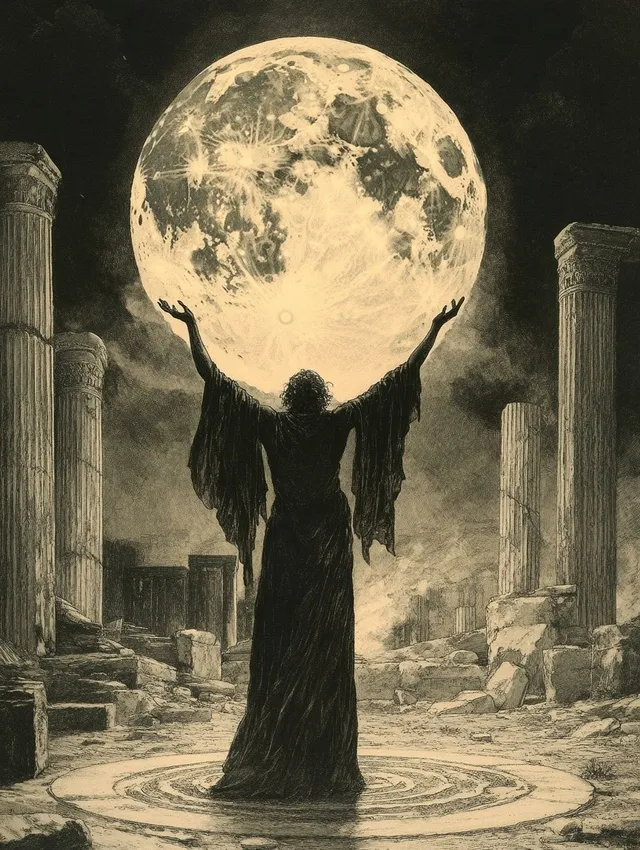
Even before recorded history, humans observed the moon with reverence, connecting its cycles to fertility, tides, and timekeeping. Moon worship was central to many early spiritual systems across continents.

Cultural Significance:

  • Mesopotamia: Lunar deities like Sin were associated with wisdom, agriculture, and fate.

  • Egypt: Khonsu, the moon god, was linked to healing and divine order.

  • Europe: Neolithic monuments like Stonehenge align with lunar cycles, suggesting ceremonial observances.

Ritual Practices:
Prehistoric peoples likely timed planting, hunting, and festivals according to lunar phases. Offerings, dances, and chants honored the moon’s perceived influence on life, weather, and fertility.

Symbolism and Myth:
The moon often represented cyclical time, renewal, and femininity. Many myths describe lunar journeys, battles, or lovers, reflecting the moon’s rhythm and influence on human behavior.

Conclusion:
Moon worship illustrates early humans’ deep connection to natural cycles. By observing and venerating the moon, societies structured time, celebrated fertility, and integrated celestial phenomena into spiritual life, leaving legacies in architecture, myth, and ritual that endure to this day.

The First Warriors Who Wore Animal Skins as Armor

January 15, 2026

Introduction:
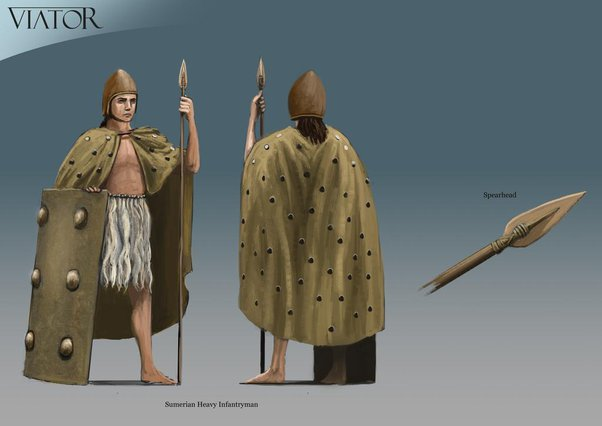
Before the advent of metal armor, early warriors relied on animal hides, furs, bones, and even shells to protect themselves in battle. These materials were both practical and symbolic, linking warriors to the power of the animals they wore.

Practical Use:
Animal hides provided flexibility and some protection from weapons, while bones or scales reinforced key areas. Helmets sometimes featured horns or antlers to intimidate opponents, and warriors often dyed hides with natural pigments for camouflage or ritual purposes.

Symbolism:
Wearing animal skins connected the warrior to spiritual or totemic forces. In many cultures, hunters and warriors believed that the animal’s strength, speed, or ferocity transferred to them, offering both physical and psychological advantages.

Cultural Examples:

  • Scythians and Nomadic Eurasia: Horse-mounted warriors adorned themselves with pelts of wolves, leopards, or bears.

  • Indigenous Americas: Warriors incorporated feathers, pelts, and bones into ceremonial armor, signaling courage and social rank.

  • Europe: Prehistoric cave paintings depict armed figures with animal attire, suggesting ritualistic and combative roles.

Conclusion:
Animal-skin armor illustrates the intersection of survival, warfare, and spirituality in ancient societies. These early warriors show humanity’s ability to harness nature not only for utility but also for symbolic power, shaping cultural identity through conflict and ceremony.

Ancient Ice Age Civilizations Beneath the Glaciers

January 15, 2026

Introduction:
During the Ice Age, much of the Earth was covered in glaciers. Recent studies suggest that humans may have lived, hunted, and traded beneath or near these ice sheets, adapting to extreme conditions and leaving traces still being discovered today.

Archaeological Evidence:

  • Beringia (Alaska-Siberia): Land bridges exposed during glacial periods allowed migration and early settlements. Artifacts, tools, and animal bones indicate complex survival strategies.

  • Scandinavian Glacial Sites: Preserved camps and tools show adaptation to cold climates, with clothing, shelters, and communal organization.

Adaptations and Technologies:
Humans developed sophisticated tools, insulated shelters, and hunting strategies. Ice-age populations mastered animal skins, fire, and seasonal migration. Some evidence suggests rudimentary social hierarchies, ceremonial practices, and long-distance trade.

Myths and Legends:
Many Ice Age myths, such as giants, frost beings, or primordial civilizations, may stem from memories of early glacial communities. Oral traditions could have preserved stories of survival in extreme environments.

Conclusion:
Exploring Ice Age civilizations beneath glaciers highlights humanity’s resilience and adaptability. These early communities laid the foundations for later settlements, showing that human ingenuity has always thrived even in the harshest conditions.

The Lost Gold Mines of Ancient Empires

January 15, 2026

Introduction:
Gold has always been a source of wealth, power, and legend. Ancient empires often based their economy, trade, and conquest on access to gold, leading to legendary mines—some real, some mythical—that shaped history.

Famous Ancient Mines:

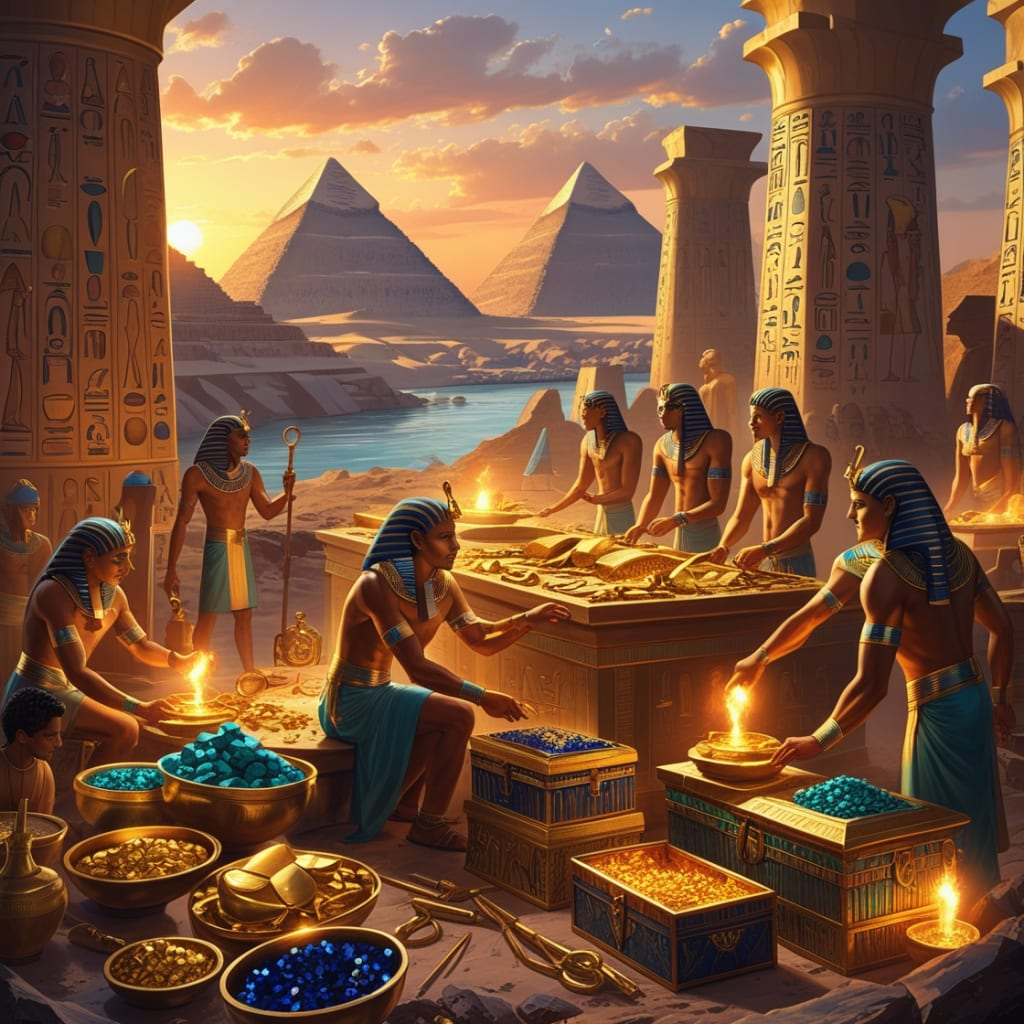
  • Nubia: Egypt prized Nubian gold for jewelry, temple offerings, and trade. The Nile facilitated transport, creating wealth central to pharaonic power.

  • Wieliczka, Poland: Salt and gold mines from the Bronze Age reflect early European resource extraction techniques.

  • Mythical Mines: Stories of King Solomon’s treasures or the “Gold of Ophir” inspired exploration and conquest, blending fact and legend.

Economic and Political Impact:
Gold fueled trade, diplomatic gifts, and tribute systems. Empires with access to gold could maintain armies, build monumental architecture, and display wealth as a symbol of divine favor or legitimacy. Control over mines often determined political stability and expansionist ambitions.

Mining Techniques:
Ancient miners used rudimentary tools, fire, and water channels to extract ore. Archaeological evidence shows extensive tunnels, crushing stones, and smelting techniques, highlighting ingenuity and labor organization.

Cultural Significance:
Gold also had symbolic meaning. It represented the sun, immortality, or divine favor. In Egypt, gold adorned tombs and sarcophagi; in Mesoamerica, it symbolized power and the sacred.

Conclusion:
Lost gold mines remind us that wealth has always been intertwined with human ambition, ingenuity, and myth. They reveal the economic foundations of empires and the enduring allure of treasure, which has driven trade, conquest, and culture for millennia.

The Sacred Fire Keepers of Prehistory

January 15, 2026

Introduction:
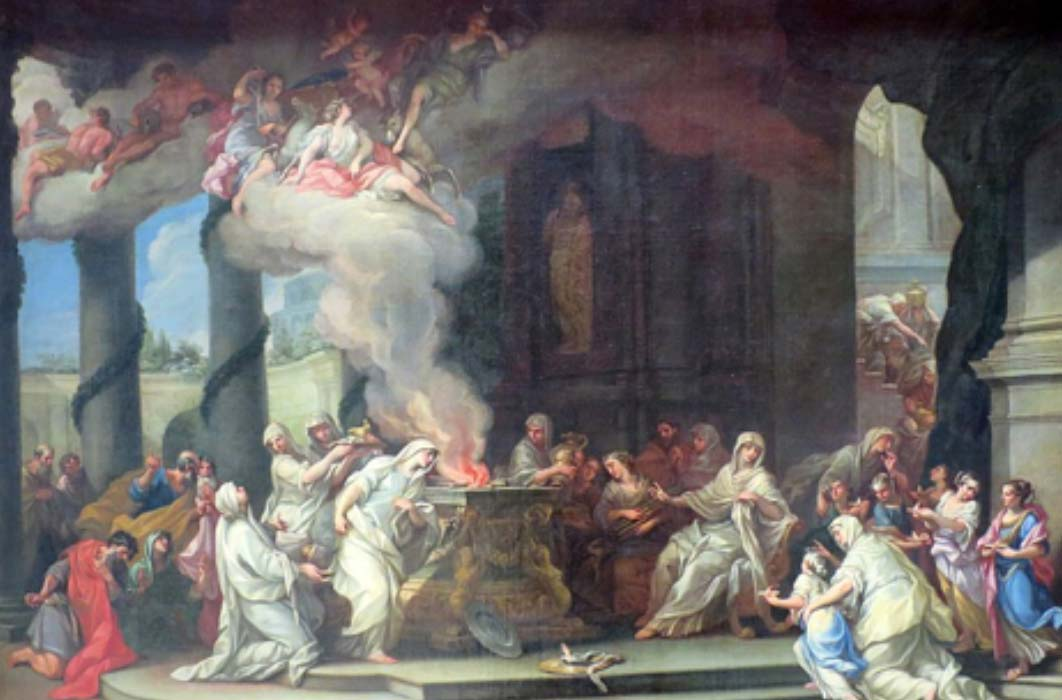
Long before written records, human communities revered fire as both a practical and spiritual force. Some clans or groups were designated as the eternal guardians of sacred flames, ensuring that the fire never went out. These “fire keepers” were vital to survival, ritual, and identity.

Roles and Duties:
Sacred fire keepers maintained flames for domestic use, warmth, cooking, and protection. More importantly, these fires were central to ritual and ceremony. They represented continuity, life, and divine presence. The fire itself was often considered sacred, embodying the gods’ power or the ancestors’ spirits. Extinguishing the flame accidentally could be catastrophic, symbolizing bad omens or divine displeasure.

Cultural Examples:

  • Zoroastrian Atash Behrams (Persia): Priesthoods maintained fires for centuries, considering them eternal and purifying.

  • Vedic India: Agni, the fire god, was central in ritual, with priests tending sacred flames to ensure correct offerings and cosmic order.

  • Prehistoric Europe: Archaeological evidence suggests hearths were preserved in central locations, hinting at communal and ritual importance.

Social and Spiritual Significance:
The fire keepers often held elevated social status, acting as spiritual leaders, advisors, and mediators. They transmitted knowledge, controlled ritual calendars, and maintained the community’s link to the divine. Their role strengthened social cohesion and symbolized the community’s shared identity.

Conclusion:
Sacred fire keepers remind us of humanity’s early understanding of the interplay between natural forces and spiritual life. By preserving eternal flames, they preserved culture, memory, and faith, creating a legacy that influenced later religions and societies worldwide.

Buried Kingdoms Under Volcanos

January 15, 2026

Introduction:
Throughout history, volcanic eruptions have buried entire settlements, preserving them in astonishing detail. These buried kingdoms provide a unique snapshot of ancient life, culture, and disasters.

Pompeii and Herculaneum (Italy):
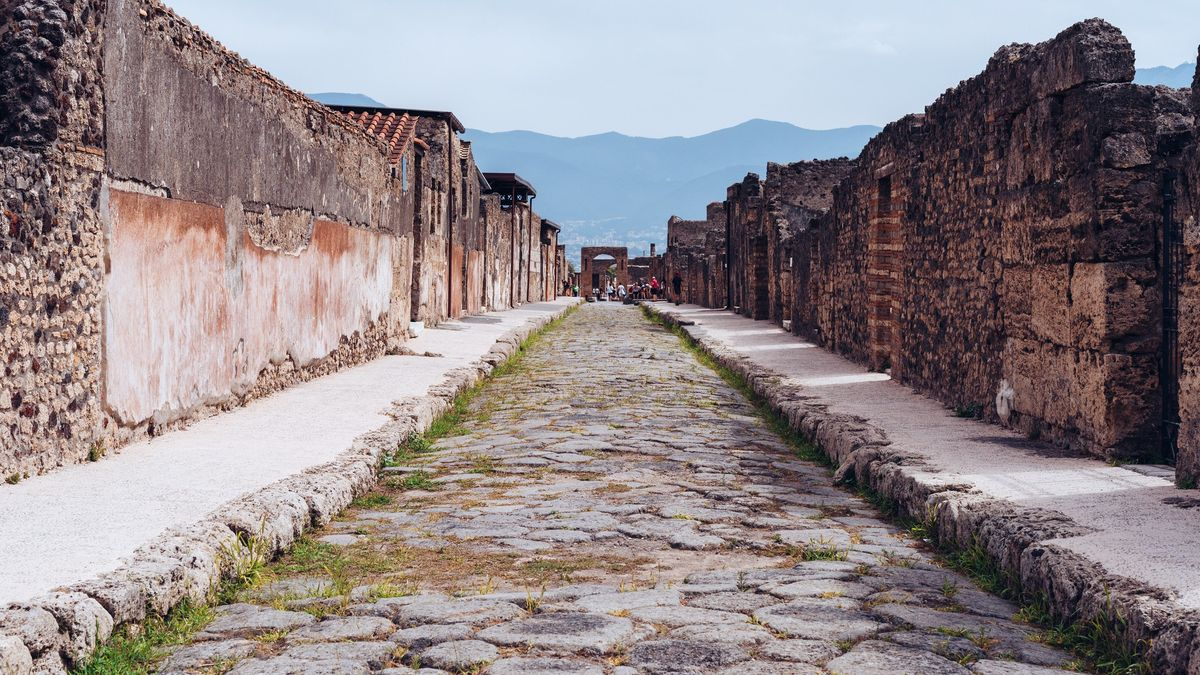
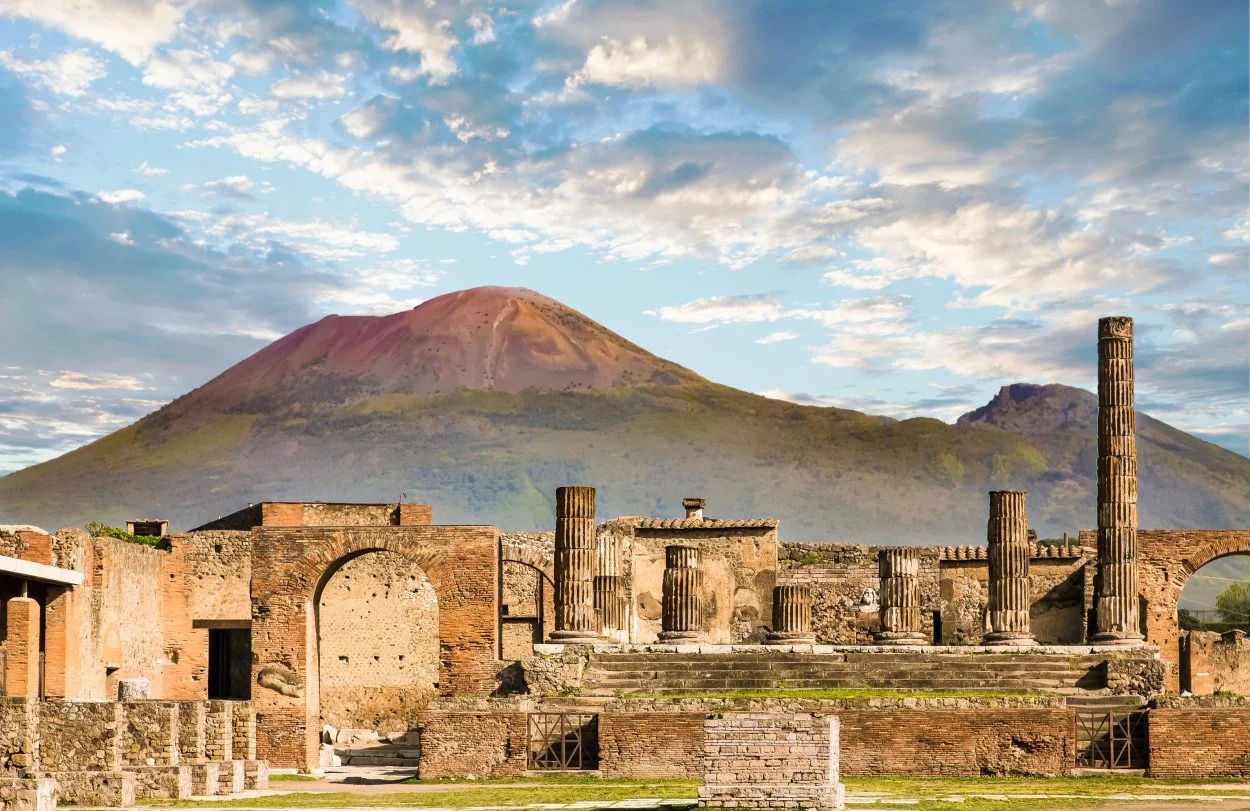
The eruption of Mount Vesuvius in 79 CE engulfed Pompeii and Herculaneum in ash and pumice, freezing daily life in time. Streets, houses, frescoes, tools, and even victims’ bodies provide an unparalleled archaeological record of Roman society.

Akrotiri (Santorini, Greece):
The Minoan city of Akrotiri was buried by the volcanic eruption on Thera (Santorini) around 1600 BCE. Remarkably preserved frescoes, buildings, and artifacts offer insights into Minoan culture, trade, and urban planning.

Cultural and Historical Impact:
These buried kingdoms show how natural disasters shaped civilizations. Ash and lava not only destroyed settlements but also preserved them, offering future generations a unique lens into daily life, religious practices, and architectural techniques.

Archaeological Significance:
Volcanic preservation allows researchers to study organic materials like wood, textiles, and food, which rarely survive in other contexts. Excavations reveal urban layouts, plumbing systems, and artistic expression, creating a holistic view of ancient society.

Conclusion:
Buried kingdoms beneath volcanoes are time capsules, revealing the delicate balance between human activity and natural forces. They underscore both the vulnerability of ancient societies and the remarkable ways in which catastrophic events can preserve history for millennia.

Ancient Languages That No One Has Ever Deciphered

January 15, 2026

Introduction:
Some ancient languages remain undeciphered, leaving entire civilizations partly shrouded in mystery. Scripts like Rongorongo of Easter Island, Linear A of the Minoans, and the Indus Valley script resist interpretation despite advances in linguistics, cryptography, and computational analysis.

Rongorongo (Easter Island):
Discovered on wooden tablets, Rongorongo features glyphs that may encode myth, genealogy, or astronomical data. Scholars speculate it was a mnemonic or symbolic script rather than a fully phonetic language. Its isolation on Easter Island complicates cross-referencing with related languages.

Linear A (Minoan Civilization):
Linear A predates Linear B, which was deciphered as an early form of Greek. However, Linear A may encode the Minoan language, which has no known relatives. Researchers debate whether it represents a full linguistic system or a symbolic, administrative shorthand for trade and record-keeping.

The Indus Valley Script:
Inscribed on seals, pottery, and tablets, the Indus script includes hundreds of symbols, often in short sequences. Attempts to decipher it face the challenge of missing bilingual texts, unknown phonetics, and limited inscriptions, making it one of archaeology’s greatest enigmas.

The Importance of Decipherment:
Decoding these scripts could illuminate aspects of trade, religion, governance, and daily life in ancient civilizations. Even partial understanding can reveal social structure, literacy levels, and intercultural connections.

Challenges and Future Prospects:
Advances in computational linguistics, AI pattern recognition, and cross-cultural comparison may eventually crack these codes. Until then, the undeciphered scripts remind us of the limits of modern knowledge and the mysteries of human expression preserved over millennia.

The Astral Temples Aligned to the Milky Way

January 15, 2026

Introduction:
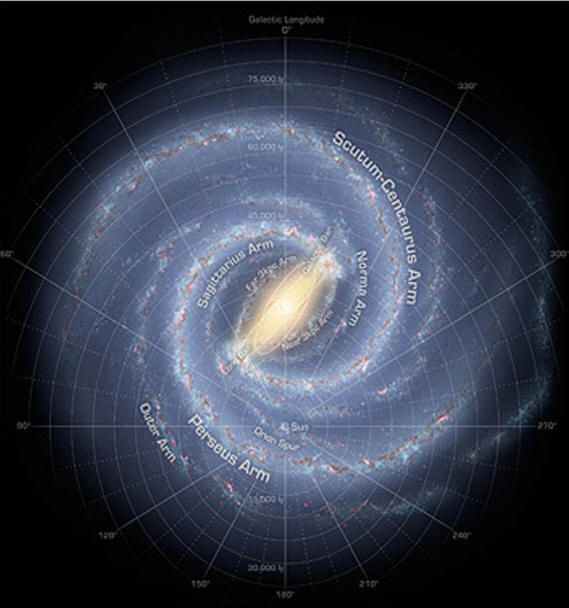
Across the ancient world, many civilizations built temples, pyramids, and ceremonial structures aligned with celestial objects. Among these, some were specifically oriented to the Milky Way, the dense star cluster visible in the night sky. These alignments suggest a sophisticated understanding of astronomy and a spiritual connection between human society and the cosmos.

Examples of Astral Temples:

  • Chichen Itza (Maya Civilization): The pyramid of El Castillo aligns with the sun and stars, including the Milky Way, marking equinoxes and solstices. Its design reflects a cosmological view in which celestial phenomena governed agricultural and ritual cycles.

  • Giza Pyramids (Egypt): Some theories suggest that pyramids and temples along the Nile were placed to mirror constellations, including the Milky Way, reinforcing the Pharaohs’ divine association with the heavens.

  • Megalithic Sites in Europe: Ancient stone circles like those in Carnac, France, and Callanish, Scotland, show alignment with star patterns that intersect the Milky Way, indicating ritual or calendrical purposes.

Cultural and Religious Significance:
For ancient civilizations, the Milky Way often represented a sacred river in the sky, a pathway of souls, or the dwelling place of deities. Aligning temples with this cosmic feature symbolized connection with divine forces, ensured harmony between humans and the universe, and guided agricultural, ceremonial, and political activities.

Engineering and Observational Skills:
Constructing these temples required detailed astronomical observation, careful planning, and precise engineering. Priests or astronomer-priests likely tracked star movements over decades to determine optimal orientation. The combination of geometry, astronomy, and ritual demonstrates that early societies had a deeply integrated approach to science, spirituality, and architecture.

Conclusion:
The astral temples aligned with the Milky Way reveal that ancient civilizations saw the cosmos not only as a navigational or calendrical tool but as an integral part of spiritual and cultural life. These monuments stand as lasting evidence of humanity’s enduring fascination with the stars.

Prehistoric Bridges That Connected Continents

January 15, 2026

Introduction:
During prehistoric times, land bridges connected continents, enabling the migration of humans, animals, and plants. These routes were crucial for the spread of populations, technology, and cultural practices long before modern transportation existed.

Examples of Prehistoric Bridges:

  • Beringia: Connecting Siberia to Alaska, this land bridge allowed the first humans to enter the Americas.

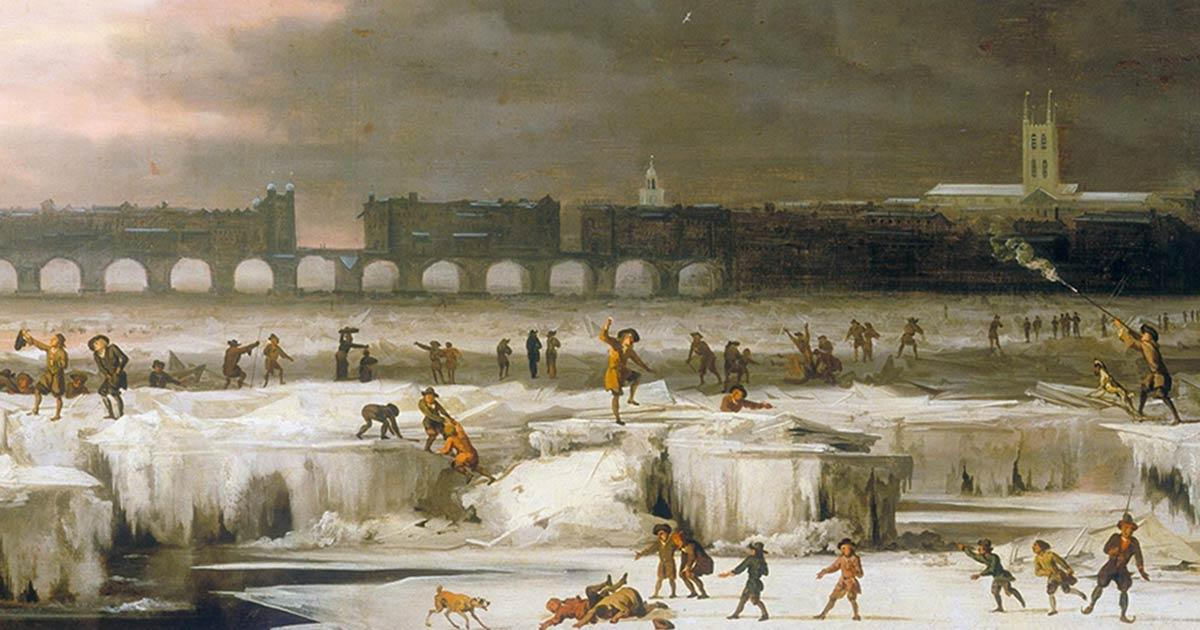
  • Doggerland: Once connecting Britain to mainland Europe, Doggerland supported Mesolithic hunter-gatherer societies before submergence by rising seas.

  • Lemuria (Mythical): While largely speculative, some legends suggest a lost southern continent that may have influenced ancient myths of sunken lands.

Impact on Human History:
These land bridges facilitated early migration, trade, and cultural exchange. For example, Beringia enabled the peopling of the Americas, while Doggerland served as fertile hunting grounds and settlement areas. Animals that migrated across these bridges influenced ecosystems and shaped human survival strategies.

Archaeological and Geological Evidence:
Remnants of tools, fossils, and submerged landscapes provide evidence of these ancient bridges. Sediment analysis, underwater surveys, and paleoenvironmental reconstructions help scientists understand how sea level changes transformed geography and led to the disappearance of these vital connections.

Conclusion:
Prehistoric bridges were more than physical landforms; they were lifelines that shaped human history, biodiversity, and cultural evolution. Understanding them reveals the interconnectedness of ancient peoples and ecosystems across continents.

Forbidden Rituals from Lost Religions

January 15, 2026

Introduction:
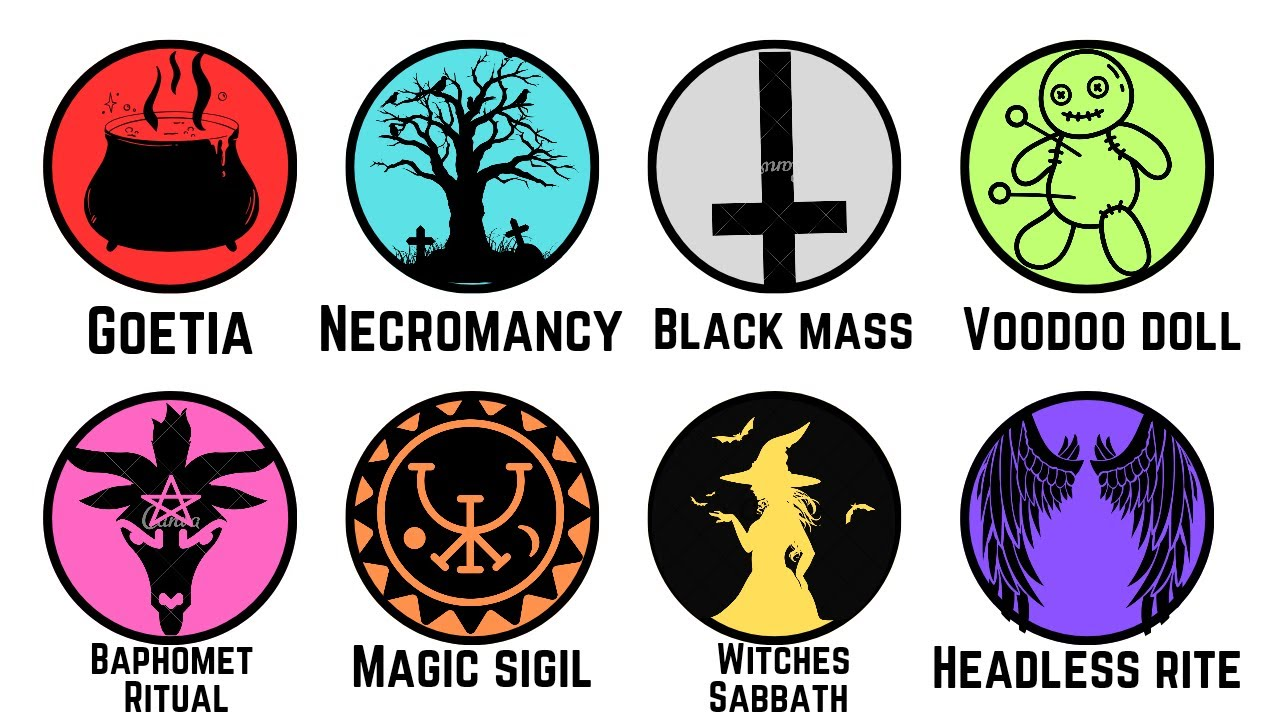
Ancient civilizations often practiced religious rites that were secretive, restricted, or forbidden to outsiders. These rituals could involve initiation ceremonies, animal sacrifices, fertility rites, or even esoteric knowledge meant only for elite priests or initiates. Because most of these practices were intentionally hidden, knowledge of them has survived only through fragmentary texts, myths, or archaeological remnants.

Types of Forbidden Rituals:

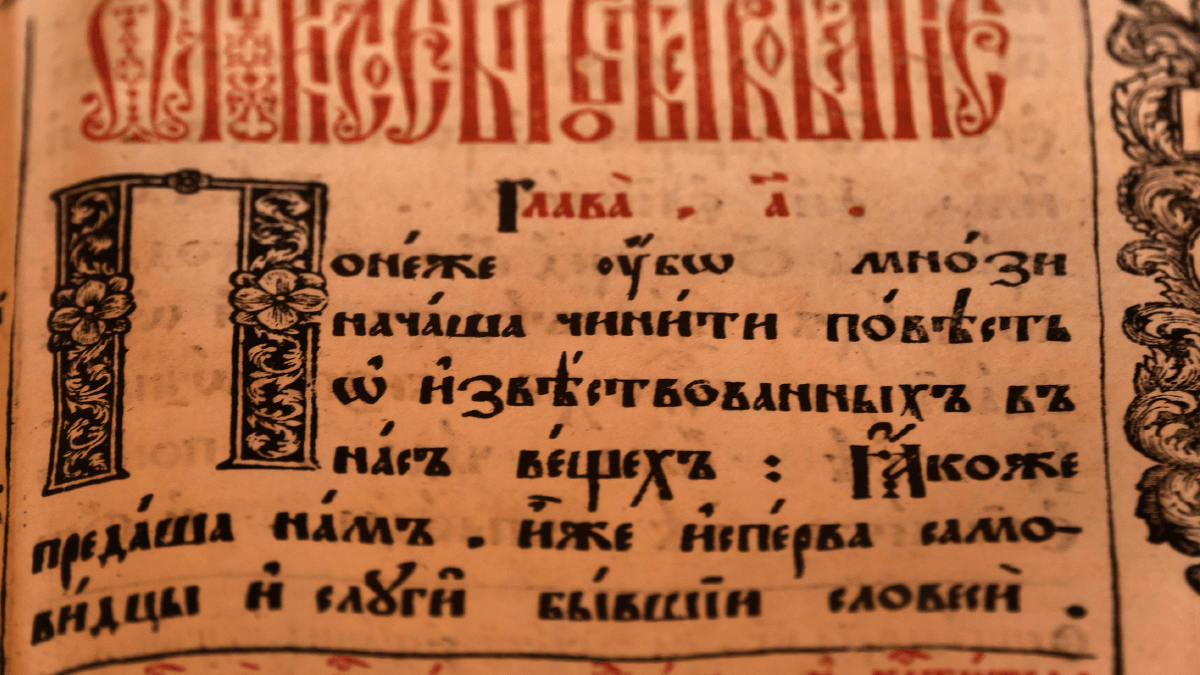
  • Initiation Rites: Many ancient societies, from Egyptian mystery schools to the Greek Eleusinian Mysteries, conducted complex initiations requiring secrecy and symbolic rebirth.

  • Sacrificial Ceremonies: Some rituals involved offerings to gods, often of animals or symbolic items, believed to maintain cosmic balance or ensure divine favor.

  • Mystical Knowledge: Certain ceremonies included chanting, meditation, or esoteric teachings that were considered too dangerous or sacred for ordinary people.

Cultural Significance:
These forbidden rites served multiple purposes. They reinforced social hierarchies, protected sacred knowledge, and maintained religious cohesion. For example, the secrecy surrounding the Eleusinian Mysteries in Greece strengthened civic unity while instilling awe and obedience. Similarly, in Mesoamerica, secret sacrificial rituals emphasized the divine power of rulers and priests.

Evidence and Interpretation:
Modern archaeology has uncovered temples, altars, and artifacts linked to these rites. Ancient texts, such as fragmentary Egyptian papyri or Greco-Roman accounts, provide insight, but interpretation is difficult due to deliberate secrecy. Scholars rely on cross-cultural comparisons, ethnographic studies, and symbolic analysis to reconstruct these lost practices.

Conclusion:
While the full details of these forbidden rituals remain elusive, their enduring traces highlight the complexity of ancient religious life. They remind us that much of human history lies hidden beneath layers of secrecy, myth, and ritual practice.

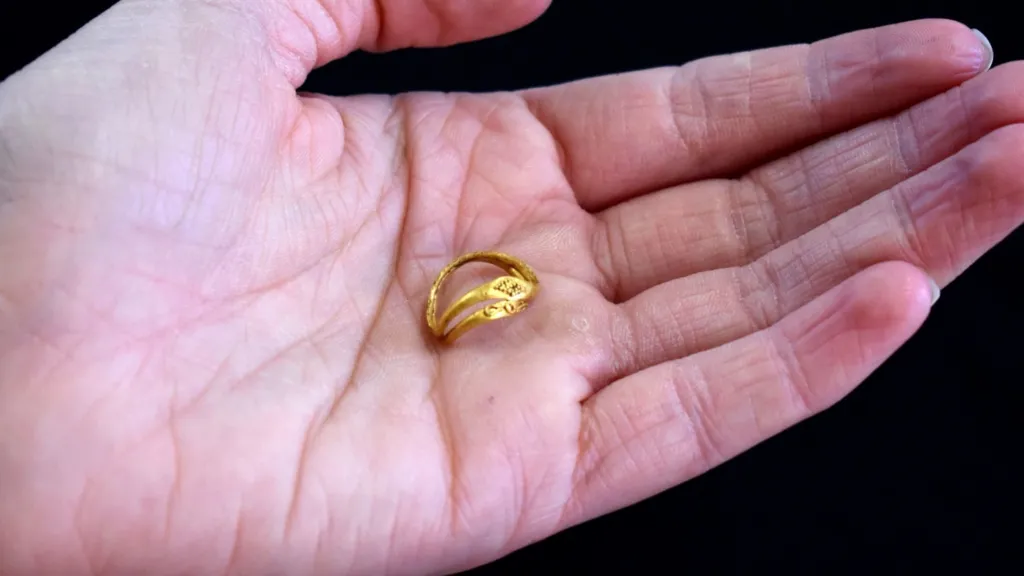
Colchester Archaeological Trust said the rings - probably made for a child - were an "intimate find"

Gold rings and marble found underneath Roman city

January 15, 2026

A striking pair of interlinked Roman gold rings, along with almost 100 fragments of marble, has been uncovered during excavations in Britain’s oldest recorded city.

Archaeologists in Colchester also found a sizeable piece of Roman flue tile—typically used in bathhouses or other elite buildings—alongside extensive Roman structural remains. The Colchester Archaeological Trust said the discoveries beneath St Nicholas Square are “only the tip of the iceberg.”

“It’s a bit like keyhole surgery,” said Adam Wightman of the trust. “We get brief chances to dig down and glimpse these early structures.”

Status and grandeur

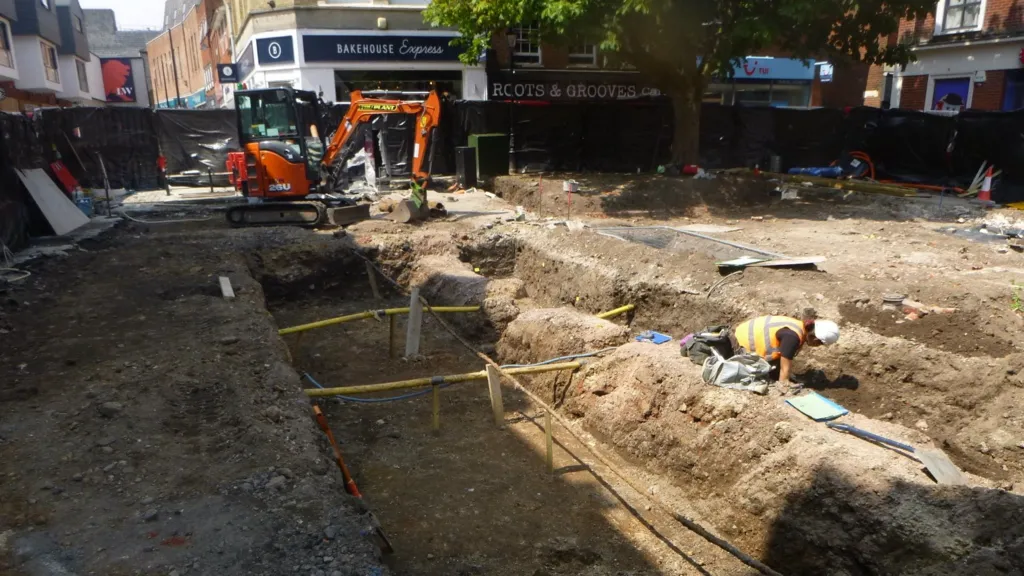
The archaeological work took place between October 2023 and June 2025, ahead of redevelopment plans for St Nicholas Square. The excavations were carried out by the Colchester Archaeological Trust on behalf of Colchester City Council, and the site had not been investigated since the mid-1950s.

Wightman told the BBC that the recent findings confirm the presence of “very large, substantial Roman buildings,” likely rising several storeys high.

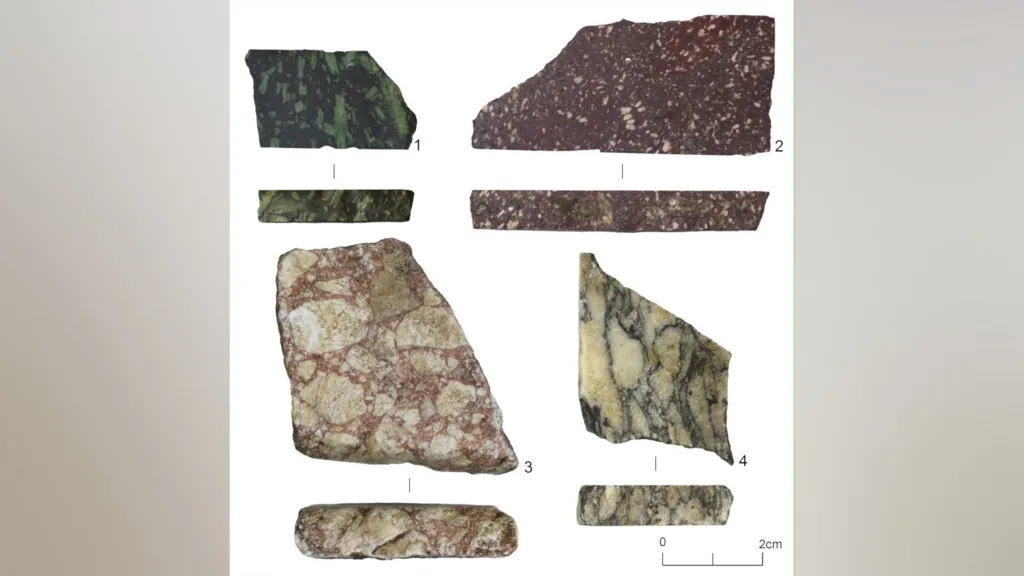
Eight pieces of Roman marble, varying in size and colour—including red, blue, and yellow—were among the materials recovered.

Almost 100 pieces of marble were discovered, including some imported from Greece, Egypt and Turkey

The trust said the finds highlight the “status and grandeur” of certain buildings on the site.

Wightman explained that the large fragment of flue tile bears an inscribed surface with a “distinctive pattern” made using a roller stamp.

“This stamped decoration is an exact match for examples recovered from the Roman bathhouse at Billingsgate in London,” he told the BBC.

“While it doesn’t conclusively prove there was a bathhouse here, it strongly supports the idea that these were high-status buildings, equipped with underfloor heating systems that channelled warm air up through the walls.”

‘Intimate find’

In total, archaeologists recovered 98 pieces of marble, some of which had been imported from as far afield as Greece, Egypt and Turkey.

“If we were able to fully excavate the site, we would be finding thousands upon thousands of marble fragments,” Wightman said, noting that around 2,000 pieces were uncovered during excavations in the 1950s.

“What we’ve found so far is really just the tip of the iceberg,” he added.

“All of this points to a far more complex and intriguing story about the buildings of Roman Colchester, closely linked to the evidence emerging from this area.”

One of the conjoined rings is decorated with 25 tiny gold pellets, arranged in a diamond formation

The trust said the discovery of the linked gold rings—belonging to individuals of “considerable status”—was highly unusual and further supports the view that this area of Colchester was “a wealthy and important part of the city.”

The rings, likely made for a child based on their small size, are dated to between the 1st and 3rd centuries AD.

According to the trust, one ring is decorated with 25 tiny gold beads arranged in a diamond pattern, while the other features a flat, elongated bezel adorned with fine gold wire. The design forms a central circle flanked by drop-shaped motifs, possibly symbolising a flower.

Describing them as an “intimate find,” the trust said the rings serve as a reminder that Roman Colchester “was not only a place of buildings, but of people and families who lived within them.”

The discoveries were made during excavation work in Colchester's St Nicholas Square

Councillor Julie Young, deputy leader and cabinet member for housing at Colchester City Council, said she was “thrilled” by the discoveries, noting that they underscore “the city’s significance through the centuries and add greater richness to our story as Britain’s First City.”

She also thanked the Colchester Archaeological Trust for their careful and thorough work throughout the project.

“Their expertise ensures our heritage is properly respected and documented, while helping to create a vibrant public space for everyone to enjoy,” she said.

The council added that the redeveloped St Nicholas Square is “already proving to be extremely popular,” having hosted a Ferris wheel during the Christmas period, with monthly Sunday markets planned for the future.

Bronze Age Burial Uncovered in Greece

January 15, 2026

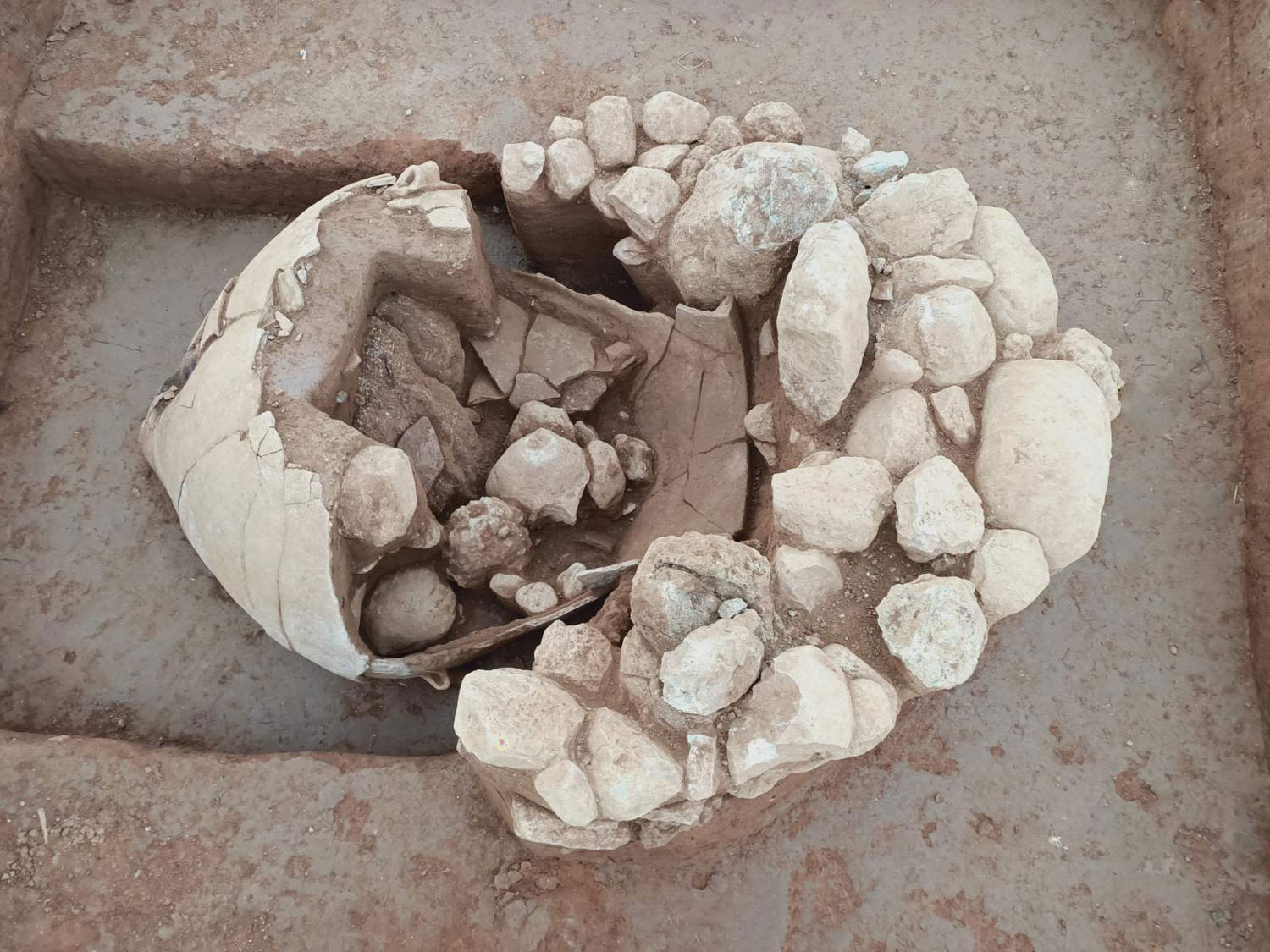
RAFINA, GREECE—According to La Brújula Verde, archaeologists have uncovered a Bronze Age grave and a large circular pit along the bank of a stream in eastern Attica. A team from Greece’s Ephorate of Antiquities of Eastern Attica discovered a pithos nearly six feet in length inside the tomb. The vessel was decorated with corded reliefs around its neck and handles and had been laid horizontally on its side. Its opening was sealed with a mock doorway formed from two large stones and smaller slabs, then enclosed by a semicircular wall built from river pebbles. Inside the jar, resting on sand and pebbles, were the bones of two individuals, which had been covered with large stones. The burial also contained a copper awl, an oval-shaped stone believed to have functioned as a plaque, obsidian points, and ceramic vessels.

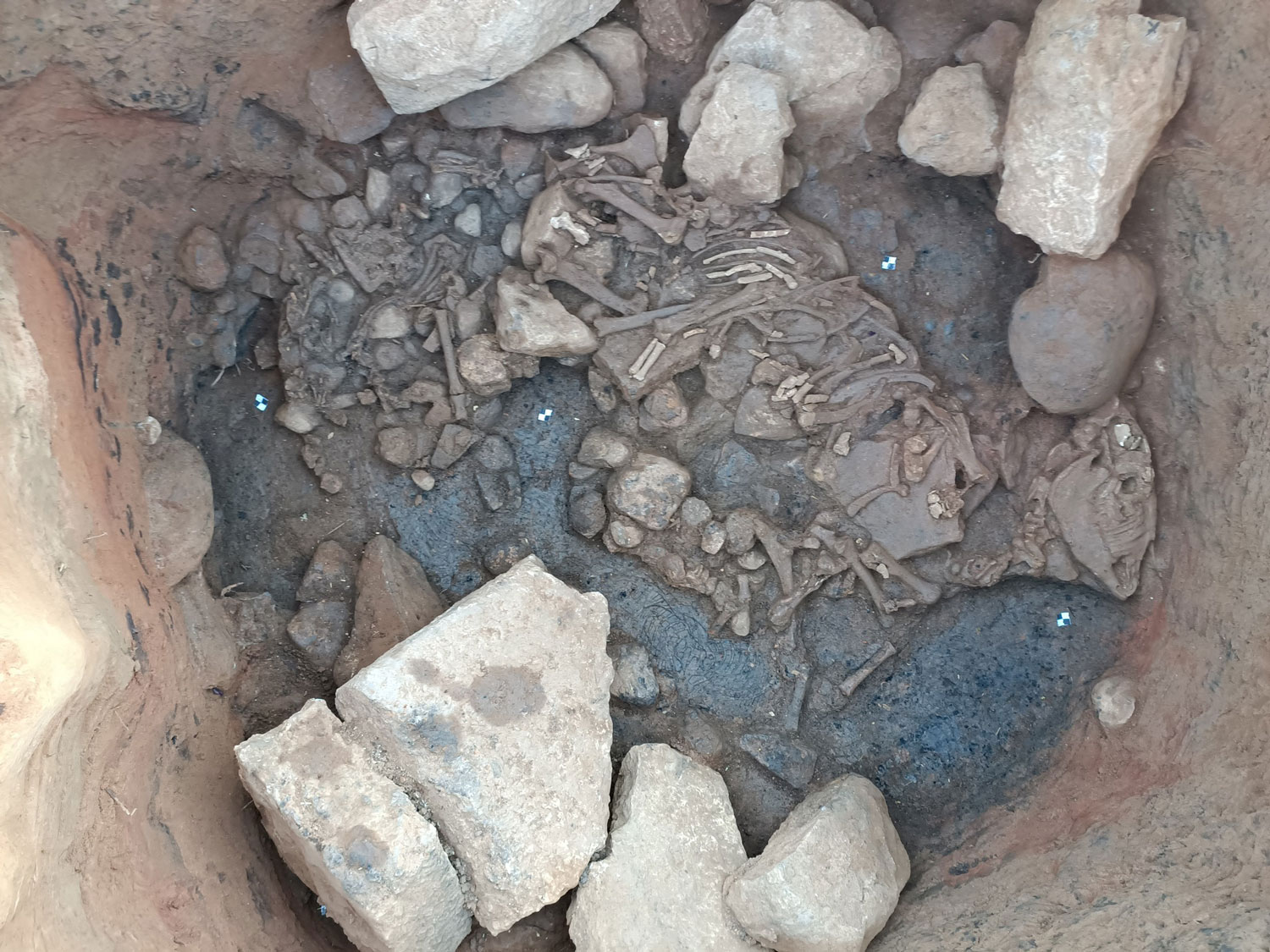
About six feet from the burial, excavators identified a large circular pit showing evidence of fire and prolonged ritual activity. From the upper layers, they recovered a bull’s skull, pottery fragments, and copper coins. Near the base of the pit, they found a layer of ash and burned material, along with the bones of an equid and smaller animals. These animal remains are thought to be cremains, possibly from animals cooked as sacrificial offerings. Dating both the burial and the pit’s contents may clarify whether the two features are connected.

← Newer Posts Older Posts →
Featured
image_2026-07-26_232306564.png
August 2, 2026
Chucalissa: Tennessee's Shell-Tempered Pottery Site
August 2, 2026
Read more →
August 2, 2026
image_2026-07-26_232234845.png
August 2, 2026
Renfrew Mounds: Mississippi's Moundville Satellite
August 2, 2026
Read more →
August 2, 2026
image_2026-07-26_232049483.png
August 2, 2026
Carson Mounds: Mississippi's Mound Group Metropolis
August 2, 2026
Read more →
August 2, 2026
image_2026-07-26_232020672.png
August 2, 2026
Feltus Mounds: Mississippi's Plaquemine Culture
August 2, 2026
Read more →
August 2, 2026
image_2026-07-26_231915672.png
August 2, 2026
Grand Village of the Natchez: Mississippi's 17th-Century Site
August 2, 2026
Read more →
August 2, 2026
image_2026-07-26_231627735.png
August 2, 2026
Winterville Mounds: Mississippi's Temple Complex
August 2, 2026
Read more →
August 2, 2026
read more

Powered by The archaeologist