• MAIN PAGE
  • LATEST NEWS
    • Lost Cities
    • Archaeology's Greatest Finds
    • Underwater Discoveries
    • Greatest Inventions
    • Studies
    • Blog
  • PHILOSOPHY
  • HISTORY
  • RELIGIONS
    • Africa
    • Anatolia
    • Arabian Peninsula
    • Balkan Region
    • China - East Asia
    • Europe
    • Eurasian Steppe
    • Levant
    • Mesopotamia
    • Oceania - SE Asia
    • Pre-Columbian Civilizations of America
    • Iranian Plateau - Central Asia
    • Indus Valley - South Asia
    • Japan
    • The Archaeologist Editor Group
    • Scientific Studies
    • Aegean Prehistory
    • Historical Period
    • Byzantine Middle Ages
    • Predynastic Period
    • Dynastic Period
    • Greco-Roman Egypt
  • Rome
  • PALEONTOLOGY
  • About us
Menu

The Archaeologist

  • MAIN PAGE
  • LATEST NEWS
  • DISCOVERIES
    • Lost Cities
    • Archaeology's Greatest Finds
    • Underwater Discoveries
    • Greatest Inventions
    • Studies
    • Blog
  • PHILOSOPHY
  • HISTORY
  • RELIGIONS
  • World Civilizations
    • Africa
    • Anatolia
    • Arabian Peninsula
    • Balkan Region
    • China - East Asia
    • Europe
    • Eurasian Steppe
    • Levant
    • Mesopotamia
    • Oceania - SE Asia
    • Pre-Columbian Civilizations of America
    • Iranian Plateau - Central Asia
    • Indus Valley - South Asia
    • Japan
    • The Archaeologist Editor Group
    • Scientific Studies
  • GREECE
    • Aegean Prehistory
    • Historical Period
    • Byzantine Middle Ages
  • Egypt
    • Predynastic Period
    • Dynastic Period
    • Greco-Roman Egypt
  • Rome
  • PALEONTOLOGY
  • About us
No results found

Dwarka: India's Submerged Kingdom of Krishna

June 18, 2026

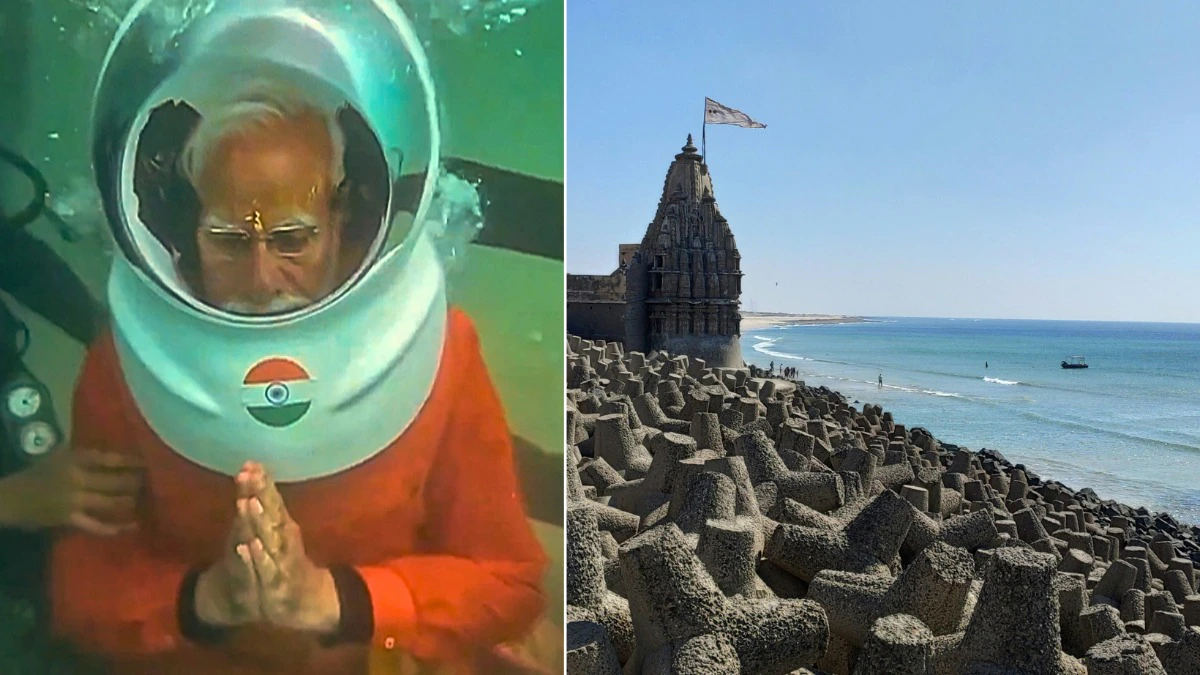
In the sacred texts of Hindu literature—most notably the epic Mahabharata and the Harivamsa—the ancient city of Dwarka was a magnificent, fortified island metropolis constructed by the divine architect Vishwakarma at the explicit request of Lord Krishna.

According to ancient texts, Krishna founded this golden kingdom off the western coast of Gujarat to protect his people from constant invasions. The texts describe a sprawling city constructed out of gold, silver, and precious gems, featuring 900,000 royal palaces, massive defensive bastions, and a highly organized network of assembly halls and deep harbors.

The Mahabharata records that when Krishna departed the earthly realm at the end of the Dvapara Yuga, the ocean rose and systematically swallowed the entire city, turning the mythical capital into a sunken kingdom.

                  [ THE MYTHOLOGICAL CHRONOLOGY ]
                                 │
        ┌────────────────────────┴────────────────────────┐
        ▼                                                 ▼
[ MAHABHARATA NARRATIVE ]                       [ MARINE ARCHAEOLOGICAL FINDS ]
* Golden city of Lord Krishna                   * Massive sandstone block bastions
* Swallowed by ocean upon his death            * Triangular three-holed stone anchors
* Long dismissed as pure myth                   * Protracted Late Bronze Age trade port

Pulling Myth Into Archaeological Reality

For millennia, Western historians dismissed the narrative of Dwarka as pure poetic myth. However, beginning in the late 20th century, the Marine Archaeology Unit of India’s National Institute of Oceanography (NIO), led by pioneering archaeologist Dr. S.R. Rao, began systematic underwater sweeps off the coast of modern Dwarka in the Arabian Sea. What they discovered fundamentally bridged the gap between mythology and science.

Submerged between 3 to 20 meters beneath the Arabian Sea, underwater archaeologists mapped a sprawling complex of man-made stone structures extending across the seafloor:

  • The Fortified Bastions: Researchers discovered massive, interlocking dressed sandstone blocks forming semicircular bastions, protective seawalls, and structural foundations.

  • The Maritime Anchors: Divers recovered dozens of large, triangular stone anchors featuring three precision-drilled holes, identical to the maritime anchors utilized by Late Bronze Age and Harappan trade networks across the Mediterranean and Persian Gulf.

  • The Ancient Jetty: Remnants of stone-paved jetties and flight steps (ghats) indicate that this sunken city operated a highly sophisticated, deep-water port facility designed to handle heavy international merchant fleets.

Chronological Controversies

The discovery of sunken Dwarka has sparked intense academic debate regarding its exact age. Dr. S.R. Rao and his team argued that the structural typology, the specific types of pottery recovered, and the stone anchors align with the Late Bronze Age (c. 1500–1200 BCE), which perfectly matches the traditional chronological placement of Krishna’s era.

Other researchers urge caution, suggesting some architectural layers date to the early historical period of the historical Indian kingdoms. Regardless of the exact century of its construction, the underwater ruins of Dwarka prove that the ancient writers of the Mahabharata were not inventing a fantasy city out of thin air; they were recording a real, highly advanced maritime civilization that was reclaimed by the sea during a period of intense post-glacial coastal adjustment.

Port Royal: Jamaica's 1692 Earthquake-Swallowed Pirate City

June 18, 2026

During the late 17th century, Port Royal was the undisputed commercial and maritime hub of the Caribbean. Built on a precarious sand spit at the mouth of Kingston Harbour in Jamaica, it earned a reputation as the "Wickedest City on Earth." It was a chaotic haven for privateers, buccaneers, and outright pirates—including the legendary Sir Henry Morgan—who were actively financed by the British Crown to raid Spanish treasure fleets.

The city grew with frantic speed, cramming over 2,000 multi-story brick buildings, crowded taverns, brothels, and slave markets onto just 51 acres of premium coastal land. Because space was limited, builders ignored structural safety, erecting heavy, European-style brick structures directly onto uncompacted, water-logged marine sand.

   [ THE PRECARIOUS SAND SPIT ] ──► Heavy Brick Infrastructure Built on Marine Sand
                                               │
                                   (The June 7, 1692 Cataclysm)
                                               │
                                               ▼
   [ SOIL LIQUEFACTION ] ◄─────── 33 Acres of Urban Grid Slide Into the Sea

The June 7, 1692 Cataclysm

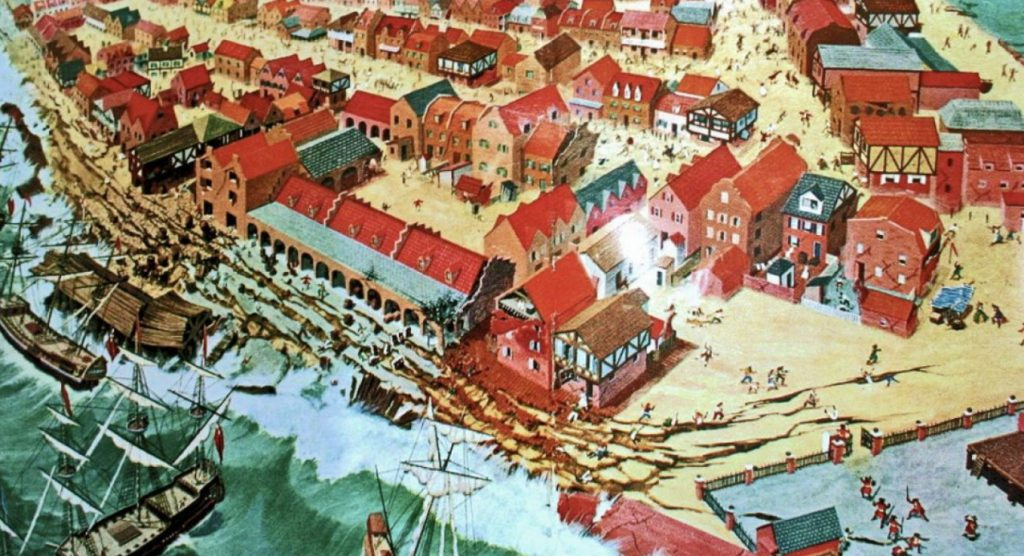
At approximately 11:43 AM on June 7, 1692, a massive earthquake, estimated at a magnitude of 7.5, struck the island of Jamaica. The impact on Port Royal was instantaneous and catastrophic due to a devastating geological phenomenon known as soil liquefaction:

  • The Quicksand Effect: The violent seismic waves destabilized the loose, water-saturated sand of the spit. The friction between the sand grains collapsed, causing the entire peninsula to instantly take on the properties of a liquid.

  • The Structural Slide: Entire streets of heavy brick houses sank vertically into the earth or slid horizontally into the deep waters of the harbor. People walking down the street were instantly swallowed up by closing fissures in the ground.

  • The Tsunami Wake: Seconds after the earth shook, a massive tsunami swamped the remaining remnants of the town, lifting large naval vessels over the tops of sunken houses and dropping them directly into the destroyed urban center.

When the dust settled, over 33 acres—two-thirds of the entire city—had permanently vanished beneath the waves of the harbor, killing over 2,000 citizens in a matter of minutes.

The Underwater Time Capsule

Because the city sank so rapidly, it created one of the most pristine underwater historical sites in the Western Hemisphere. Unlike land sites that suffer from continuous rebuilding, looting, and decay, Port Royal was frozen in time at exactly 11:43 AM. This exact time was verified when underwater archaeologists excavated a silver pocket watch crafted by French maker Paul Blondel, its gears permanently frozen by salt water at the precise moment of the disaster.

Extensive underwater excavations led by the Institute of Maritime History and Texas A&M University have mapped intact brick walls, fully stocked kitchens, and shipwright workshops resting in less than 40 feet of water.

Divers have recovered thousands of everyday artifacts that have redefined our understanding of colonial life, including pewter mugs still crusted with tobacco ash, intact crates of fine Chinese porcelain, thousands of clay pipes, and stacks of silver Spanish pieces of eight. Port Royal stands as an uncompromised, underwater monument to the volatile, gold-obsessed maritime frontier of the golden age of piracy.

Baiae: Italy's Roman Las Vegas Beneath the Waves

June 18, 2026

Located in the volcanic Phlegraean Fields near Naples, Baiae was the absolute apex of luxury, hedonism, and political intrigue for the elite of the late Roman Republic and Empire. Emperors like Julius Caesar, Nero, Caligula, and Hadrian built sprawling, hyper-luxurious coastal villas that extended directly over the water.

However, Baiae sat on a volatile volcanic engine. A geological phenomenon known as bradyseism—the cyclical rising and falling of the earth's crust caused by the filling and emptying of underground magma chambers—permanently submerged the lower half of the resort city under six meters of water by the 4th century CE.

                         [ THE BRADYSEISMIC ENGINE ]
                                      │
         ┌────────────────────────────┴────────────────────────────┐
         ▼                                                         ▼
 [ THE PALATIAL SECTOR ]                                 [ THE THERMAL MATRIX ]
 Sunken marble nymphaeums, copyist statues               Integrated volcanic hypocaust networks
         │                                                         │
         └────────────────────────────┬────────────────────────────┘
                                      ▼
             [ UNDERWATER HIGHWAY: Via Herculanea Mosaic Grid ]

Today, the Submerged Archaeological Park of Baiae allows divers to explore intact Roman streets, imperial dining rooms, and private thermal baths that have been completely colonized by marine life.

The Imperial Nymphaeum of Emperor Claudius

The absolute jewel of submerged Baiae is the Punta Epitaffio complex, an elite, semi-circular underwater dining hall (nymphaeum) belonging to Emperor Claudius.

The layout features a magnificent, flooded room lined with marble copyist statues of the imperial family, Dionysian figures, and scenes from Homer’s Odyssey, including a famous statue of Odysseus holding a wine cup.

The floor of this imperial chamber is a flawless matrix of multi-colored opus sectile marble tiles, which underwater conservators must systematically brush clean of marine algae to reveal their vibrant geometric colors.

The Architecture of Excess

Baiae was an engineering triumph of the ancient world. Roman architects utilized the region’s intense volcanic activity to revolutionize luxury living:

  • The Volcanic Hypocausts: Private villas were built directly over natural sulfur vents, channeling volcanic steam through hollow terracotta wall pipes to heat private infinity pools and saunas.

  • The Opus Signinum Wharves: Builders used volcanic ash (pozzolana) to create hydraulic concrete that hardened underwater, allowing them to construct massive concrete piers that jutted out into the sea, supporting private dining platforms where elite Romans engaged in legendary.

Heracleion: Egypt's Sunken City Resurfaces

June 18, 2026

Known to the ancient Greeks as Heracleion and to the ancient Egyptians as Thonis, this magnificent metropolis sat at the mouth of the Canopic branch of the Nile River. It was Egypt's absolute premier international port of entry, controlling all European maritime trade before the founding of Alexandria in 331 BCE.

Around the 8th century CE, a catastrophic combination of liquefaction, severe Nile floods, and massive earthquakes caused the unstable clay foundations of the delta to collapse, dropping the entire city 30 feet into the Abu Qir Bay.

Rediscovered in 2000 by underwater archaeologist Franck Goddio, the excavation of Heracleion has yielded an unparalleled collection of monumental sculpture, religious treasures, and maritime architecture that has completely re-illuminated the Ptolemaic and Pharaonic relationship.

The Colossi of the Delta

Emerging from the dark marine silt are three colossal, 16-foot-tall statues carved out of pristine red granite. Depicting an Egyptian king, an anonymous queen, and the god Hapy (the personification of the Nile flood), these multi-ton statues once flanked the grand entrance of the Great Temple of Amun-Gereb.

The preservation of these figures is flawless:

  • The Ptolemaic Fusion: The artistic style displays a sophisticated blend of classical Greek anatomical realism and rigid, traditional Pharaonic iconography.

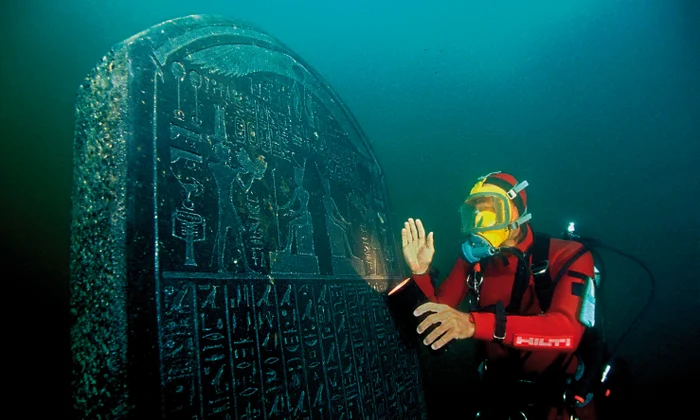
  • The Decree of Canopus: Archaeologists uncovered a massive, perfectly preserved black diorite stele inscribed with the Decree of Canopus (238 BCE), written in Hieroglyphic, Demotic, and Greek scripts, predating the Rosetta Stone and providing a direct match for linguistic decoding.

The Shipwreck Graveyard

Heracleion features the largest concentration of ancient shipwrecks ever found at a single site. Over 70 ancient vessels dating from the 6th to 2nd centuries BCE have been mapped within the sunken port canals.

Many of these ships were not sunk by accident; they were intentionally scuttled to form defensive underwater barricades or to block specialized custom tax channels. Inside these ships, divers recovered thousands of bronze coins, Athenian lead weights, and gold earrings, highlighting the intense, lucrative taxation system that filled the treasuries of the pharaohs with international gold.

Atlit Yam: Israel's Neolithic Underwater Village

June 18, 2026

Located 400 meters off the coast of Atlit near Haifa, Israel, submerged under 8 to 12 meters of Mediterranean water, sits Atlit Yam. Dating to the Pre-Pottery Neolithic B period (c. 7000–6300 BCE), this 9,000-year-old settlement provides the most complete and pristine map of an early human maritime-agricultural community ever discovered.

The site was preserved when a massive, catastrophic tsunami—likely triggered by the structural collapse of the eastern flank of Mount Etna volcano thousands of miles away—swamped the coast, sealing the village under meters of marine sand before the ocean permanently reclaimed the shelf.

The Megalithic Marine Stonehenge

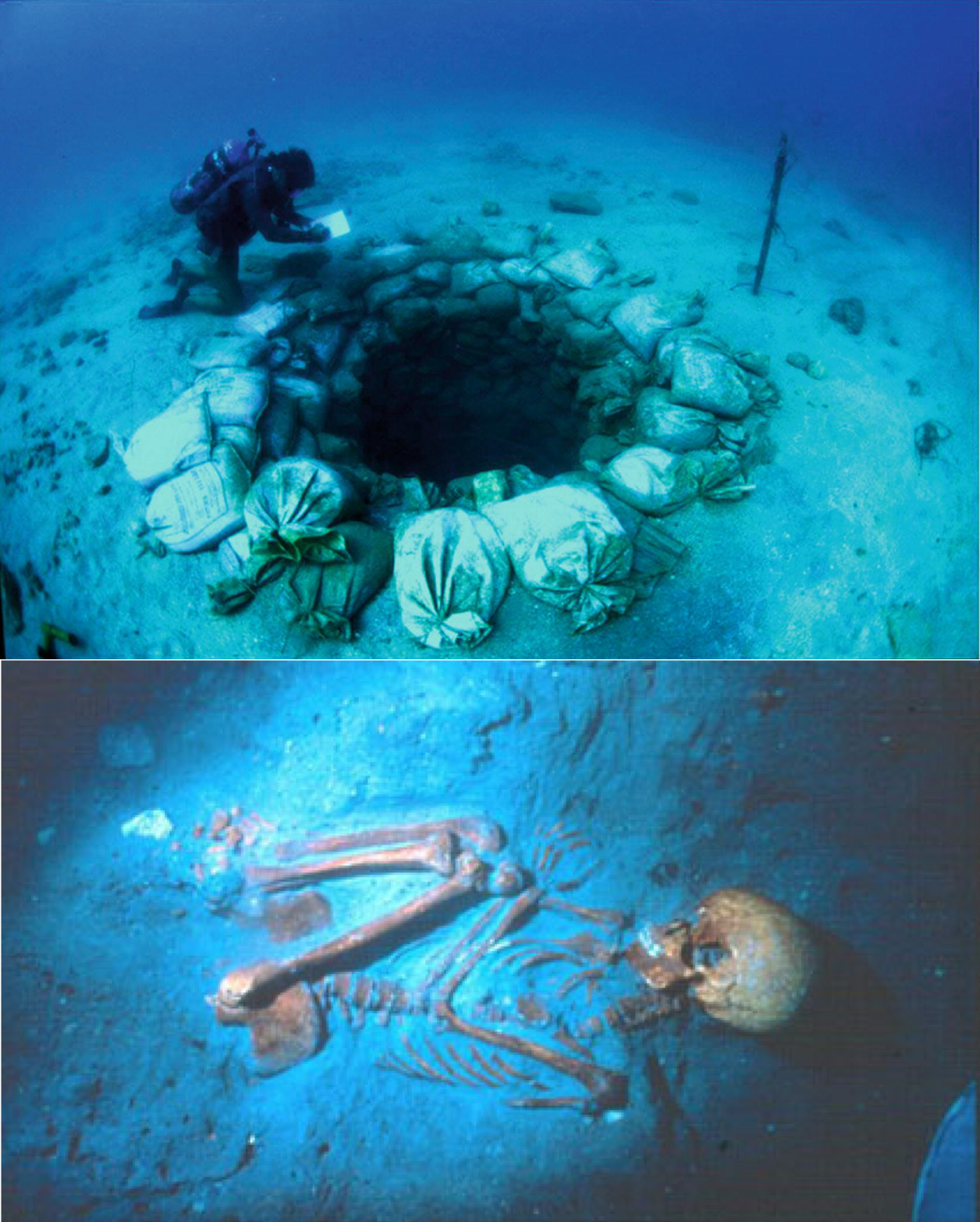
The absolute architectural centerpiece of Atlit Yam is a monumental, freestanding megalithic stone circle that sits silently on the ocean floor. The monument consists of seven massive stone pillars, each weighing up to half a ton, arranged in a perfect circle around a central freshwater spring.

  • The Bedrock Carvings: The inner faces of the megaliths feature deep, ground-out cupmarks designed to hold libations, liquid offerings, or sacred water.

  • The Ritual Geometry: The pillars form an outdoor, subterranean temple dedicated to a prehistoric water cult. As the surrounding sea levels rose at the end of the last Ice Age, salinating their coastal aquifers, the villagers erected this stone circle to appease the chthonic forces and protect their precious fresh water source.

The Early Domesticators and the Birth of TB

The domestic architecture of Atlit Yam consists of rectangular stone houses featuring heavy clay floors and integrated stone-lined storage pits. The organic preservation at the site is staggering; archaeologists have recovered the earliest known wooden structures, fishing nets, and the bones of domesticated cattle, sheep, and pigs, alongside tons of marine fish bones.

   [ MEGALITHIC FRESHWATER WELL ] ──► Salination of aquifer due to rising seas
                                                │
                                    (The Pathological Nexus)
                                                │
                                                ▼
   [ INTRA-MURAL BURIAL ANALYSIS ] ◄── Earliest genetic confirmation of Human Tuberculosis (TB)

The human skeletons buried beneath the house floors have provided geneticists with a world-class epidemiological breakthrough. DNA extracted from a mother and infant buried together at Atlit Yam provided the oldest definitive genetic confirmation of human tuberculosis (TB) in world history.

By studying these bones, scientists proved that TB did not jump from domesticated cattle to humans as previously believed, but was already mutating and decimating human populations within these early, densely packed maritime villages, providing a window into the health crises of early civilization.

Pavlopetri: Greece's 5,000-Year-Old Sunken Bronze Age Town

June 18, 2026

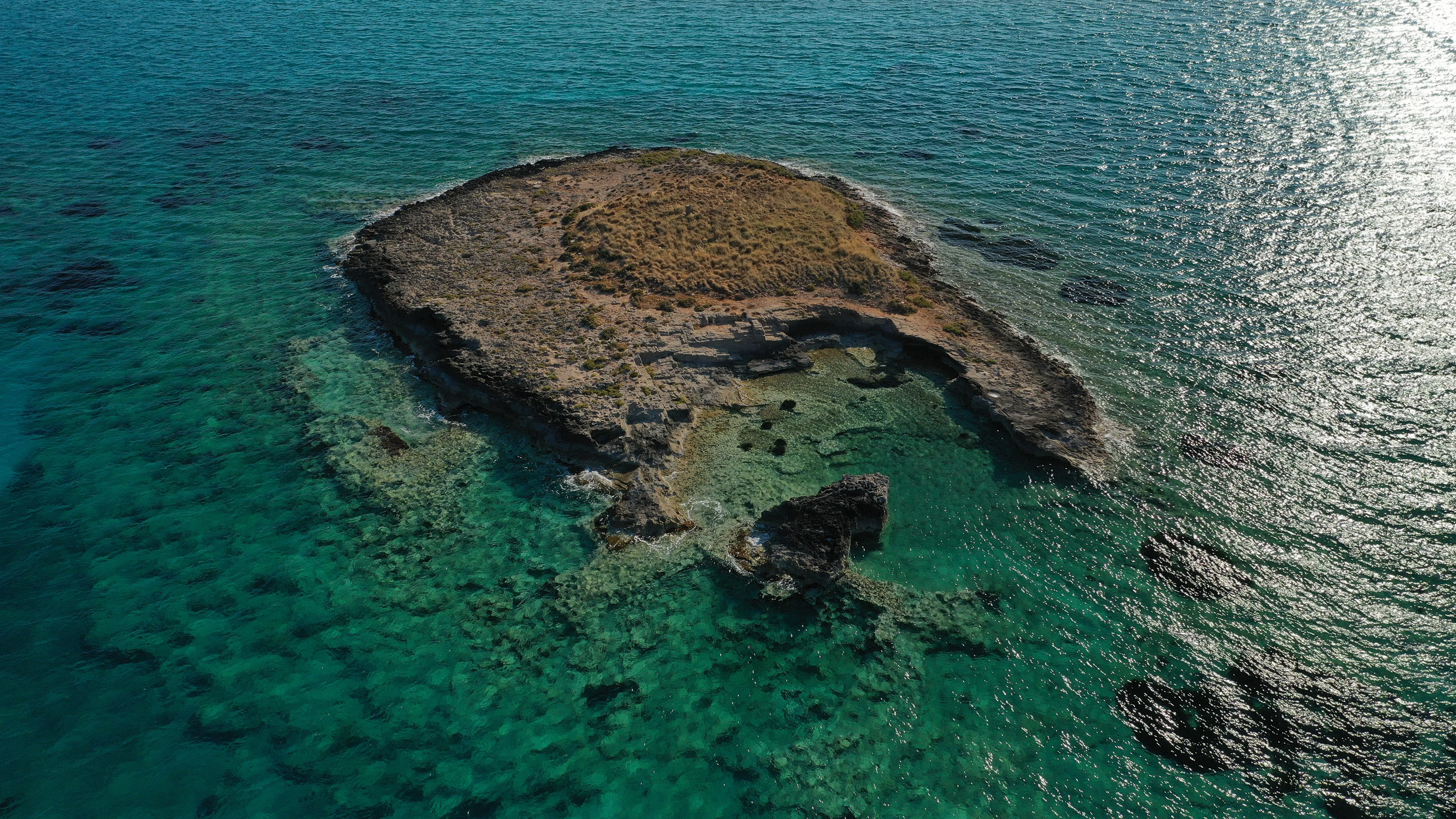
Submerged under just three to four meters of crystal-clear water off the coast of southern Laconia in Greece sits Pavlopetri, globally recognized as the oldest fully submerged maritime town in the world. First occupied around 3000 BCE and flourishing throughout the Mycenaean and Minoan Bronze Ages (c. 1600–1100 BCE), Pavlopetri is unique because it was never built over by later civilizations. When tectonic shifts and rising sea levels submerged the town around 1000 BCE, it created an uncompromised, underwater time capsule.

                  [ THE SUNKEN CITY OF PAVLOPETRI ]
                                 │
        ┌────────────────────────┴────────────────────────┐
        ▼                                                 ▼
[ THE BRONZE AGE URBAN GRID ]                   [ THE SUBSURFACE CEMETERY ]
* 15 complex multi-room stone buildings          * Sunken rock-cut cist tombs
* Intricate 9-meter-wide central avenues         * Intra-mural infant pithos burials
* Standardized plazas & stone courtyards        * Sacred ancestor transition chambers

Using cutting-edge marine robotics, side-scan sonar, and 3D digital mapping, underwater archaeologists have reconstructed a highly organized urban grid covering over 50,000 square meters. The city was not a primitive fishing village; it was a highly sophisticated, industrial port town.

The Anatomy of the Submerged Suburb

The underwater grid consists of at least fifteen separate, large-scale multi-room buildings constructed out of heavy stone blocks, separated by wide, stone-paved streets:

  • The Megaron Architecture: Several residences feature the classic megaron design—large central halls with porches that pre-date the palace layouts of Mycenae and Tiryns.

  • The Industrial Pithoi: Inside the sunken rooms, archaeologists found the crushed remains of hundreds of massive ceramic storage jars (pithoi), used to store bulk shipments of olive oil, grain, and wine for international export.

  • The Loom Weight Workshops: The discovery of hundreds of clay loom weights concentrated in specific sectors indicates a large-scale textile production industry, specializing in manufacturing sails and garments for Aegean trade fleets.

The Subsurface Necropolis

Woven directly into the urban fabric of Pavlopetri is a extensive, haunting necropolis. Archaeologists have mapped dozens of rock-cut cist tombs and intra-mural burials directly beneath the stone floors of the houses. Children were frequently buried inside large ceramic jars (pithoi) tucked beneath the foundations of active living rooms.

This spatial layout reveals a profound psychological connection to the dead; the citizens of Pavlopetri chose to live, trade, and sleep directly above the bones of their ancestors, utilizing the physical presence of the dead to legitimize their ownership of the premium coastal real estate.

Tell Brak: Syria's 6,000-Year-Old Urban Experiment

June 18, 2026

While standard historical models suggest that the world's very first cities developed in southern Mesopotamia (modern-day Iraq) at sites like Uruk, excavations at Tell Brak in northeastern Syria have turned this timeline upside down. Dating back to the late 5th and early 4th millennia BCE (c. 4200–3800 BCE), Tell Brak is evidence of an independent, massive "northern" urban experiment that grew simultaneously with—or perhaps even earlier than—its southern counterparts.

   [ TRADITIONAL URUK MODEL ] ────► Core-Periphery: Top-Down Southern Colonial Expansion
                                              │
                                   (The Tell Brak Evidence)
                                              │
                                              ▼
   [ REVISED ANCIENT MATRIX ] ◄─── Multi-Centric: Independent Northern Urbanization

Tell Brak grew not through a central, top-down decree, but through a unique process of amalgamation. Satellite surveys and spatial mapping reveal that it began as a cluster of distinct, separate villages that expanded inward toward one another until they fused into a single, massive urban sprawl covering over 130 hectares.

The Eye Temple and the Thousand Idols

The spiritual and ideological heart of this early metropolis was the monumental Eye Temple, a massive sacred building erected around 3500 BCE over the ruins of even older sanctuaries. When British archaeologist Max Mallowan excavated the complex, he discovered a staggering ritualistic time capsule: the temple platform was packed with thousands of miniature alabaster sculptures known as "Eye Idols."

These abstract, geometric figurines feature flat, rectangular bodies topped by oversized, heavily incised pairs of eyes. They represent a sophisticated, shared cognitive language:

  • The All-Seeing Ancestor: The eyes likely symbolized the constant, open-eyed vigilance of the gods or deceased ancestors watching over the early city.

  • Mass Production: The sheer volume of these idols indicates a highly organized, industrialized system of public devotion, where citizens could acquire standardized tokens to leave as permanent stand-ins for their own prayers.

Industrialization and Early Warfare

Tell Brak's urban experiment was fueled by massive industrial zones. Archaeologists have excavated large-scale workshops dedicated to mass-producing flint tools, fine obsidian beadwork, and standardized basalt grinding stones.

However, this massive concentration of wealth and population had a dark side. In the outer sub-tells, researchers uncovered massive mass graves filled with the disarticulated bones of hundreds of young men, showing clear signs of unhealed trauma. These sites represent the earliest documented evidence of large-scale urban warfare and systemic violence in human history, marking the moment when the pressures of city life triggered organized, devastating conflict.

Boncuklu Tarla: Turkey's 12,000-Year-Old Temple Village

June 18, 2026

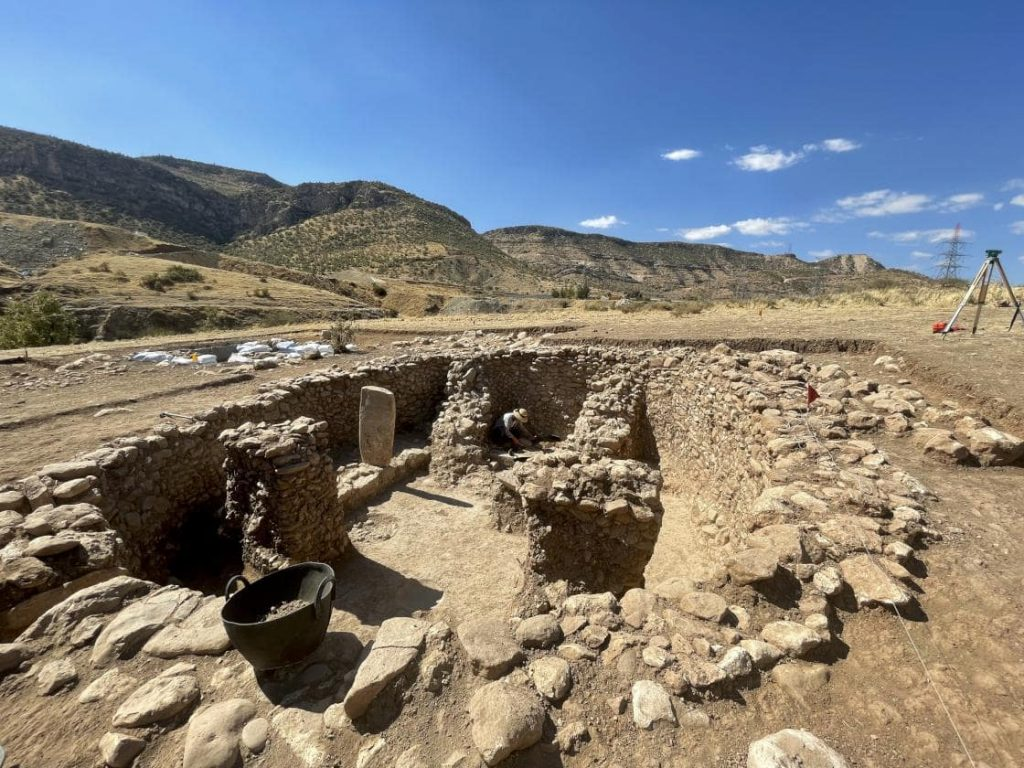
While Göbekli Tepe and Karahan Tepe represent monumental, isolated ritual sanctuaries where people gathered but did not permanently live, the newly excavated site of Boncuklu Tarla ("The Field of Beads") provides the missing link: a permanent, sedentary village where humans lived alongside their temples at the absolute dawn of history. Located in the Dargeçit district of Mardin province in southeastern Turkey, Boncuklu Tarla dates back to an astonishing 10,000 to 11,000 BCE, making it over 12,000 years old—predating the earliest cities of Sumer by over 7,000 years.

The site is a dense, layered ecosystem of continuous human habitation spanning the Late Epipaleolithic to the Pre-Pottery Neolithic A and B periods. Here, the transition from wild nomadic hunting to settled village life is preserved directly in the stone architecture.

The Evolution of the Circular House

The architectural layers of Boncuklu Tarla document a profound cognitive shift in how humans conceptualized space:

  • The Earliest Layers: The oldest residential structures are small, circular semi-subterranean huts dug directly into the soil, utilizing basic timber posts and reed roofs, mimicking temporary nomad base camps.

  • The Transitional Peak: As the centuries progressed, the architecture shifted away from single-family huts into massive, communal, multi-room complexes featuring perfectly plastered floors made of burnt lime and crushed clay (terrazzo).

  • The Public Temples: In the center of the residential village, the community erected a series of monumental public buildings featuring heavy stone walls, stone benches running along the interior perimeters, and freestanding pillars that mirror the elite architecture of Göbekli Tepe.

                         [ THE ARCHITECTURAL STRATIGRAPHY ]
                                         │
         ┌───────────────────────────────┴───────────────────────────────┐
         ▼                                                               ▼
 [ RESIDENTIAL SECTOR ]                                        [ TEMPLE SECTOR ]
 Plastered terrazzo floors, circular stone huts                Communal stone benches, freestanding pillars
         │                                                               │
         └───────────────────────────────┬───────────────────────────────┘
                                         ▼
                 [ HISTORICAL MATRIX: Intra-mural Infant Burials ]

The Field of Beads and the Ancestor Cult

The site earned its modern name due to the discovery of tens of thousands of miniature, highly sophisticated ornamental beads made of colorful local stones, serpentines, carnelian, and marine shells. These beads were woven into intricate necklaces, bracelets, and, most notably, elaborate waistbelts found directly on the skeletons of the deceased.

The burial customs at Boncuklu Tarla highlight a deeply spiritual, chthonic ancestor cult. The villagers practiced intra-mural burial, cutting through the plastered floors of their own active living rooms to bury their deceased family members—particularly infants—directly beneath the house.

Often, the skulls of the dead were removed, treated with red ochre pigment, and displayed within the public temple structures before being reburied. This constant, physical proximity to the bones of the ancestors provided the social glue necessary to hold a permanent community together.

Long before humans had mastered the art of making pottery or baking bread, the residents of Boncuklu Tarla were already engineers, master lapidaries, and architects, creating a permanent, bead-adorned home base that witnessed the birth of the modern settled world.

5. Architectural and Cultural Breakdown of Near EasteWhile Göbekli Tepe and Karahan Tepe represent monumental, isolated ritual sanctuaries where people gathered but did not permanently live, the newly excavated site of Boncuklu Tarla ("The Field of Beads") provides the missing link: a permanent, sedentary village where humans lived alongside their temples at the absolute dawn of history. Located in the Dargeçit district of Mardin province in southeastern Turkey, Boncuklu Tarla dates back to an astonishing 10,000 to 11,000 BCE, making it over 12,000 years old—predating the earliest cities of Sumer by over 7,000 years.

The site is a dense, layered ecosystem of continuous human habitation spanning the Late Epipaleolithic to the Pre-Pottery Neolithic A and B periods. Here, the transition from wild nomadic hunting to settled village life is preserved directly in the stone architecture.

The Evolution of the Circular House

The architectural layers of Boncuklu Tarla document a profound cognitive shift in how humans conceptualized space:

  • The Earliest Layers: The oldest residential structures are small, circular semi-subterranean huts dug directly into the soil, utilizing basic timber posts and reed roofs, mimicking temporary nomad base camps.

  • The Transitional Peak: As the centuries progressed, the architecture shifted away from single-family huts into massive, communal, multi-room complexes featuring perfectly plastered floors made of burnt lime and crushed clay (terrazzo).

  • The Public Temples: In the center of the residential village, the community erected a series of monumental public buildings featuring heavy stone walls, stone benches running along the interior perimeters, and freestanding pillars that mirror the elite architecture of Göbekli Tepe.

                         [ THE ARCHITECTURAL STRATIGRAPHY ]
                                         │
         ┌───────────────────────────────┴───────────────────────────────┐
         ▼                                                               ▼
 [ RESIDENTIAL SECTOR ]                                        [ TEMPLE SECTOR ]
 Plastered terrazzo floors, circular stone huts                Communal stone benches, freestanding pillars
         │                                                               │
         └───────────────────────────────┬───────────────────────────────┘
                                         ▼
                 [ HISTORICAL MATRIX: Intra-mural Infant Burials ]

The Field of Beads and the Ancestor Cult

The site earned its modern name due to the discovery of tens of thousands of miniature, highly sophisticated ornamental beads made of colorful local stones, serpentines, carnelian, and marine shells. These beads were woven into intricate necklaces, bracelets, and, most notably, elaborate waistbelts found directly on the skeletons of the deceased.

The burial customs at Boncuklu Tarla highlight a deeply spiritual, chthonic ancestor cult. The villagers practiced intra-mural burial, cutting through the plastered floors of their own active living rooms to bury their deceased family members—particularly infants—directly beneath the house.

Often, the skulls of the dead were removed, treated with red ochre pigment, and displayed within the public temple structures before being reburied. This constant, physical proximity to the bones of the ancestors provided the social glue necessary to hold a permanent community together.

Long before humans had mastered the art of making pottery or baking bread, the residents of Boncuklu Tarla were already engineers, master lapidaries, and architects, creating a permanent, bead-adorned home base that witnessed the birth of the modern settled world.
5. Architectural and Cultural Breakdown of Near EasteWhile Göbekli Tepe and Karahan Tepe represent monumental, isolated ritual sanctuaries where people gathered but did not permanently live, the newly excavated site of Boncuklu Tarla ("The Field of Beads") provides the missing link: a permanent, sedentary village where humans lived alongside their temples at the absolute dawn of history. Located in the Dargeçit district of Mardin province in southeastern Turkey, Boncuklu Tarla dates back to an astonishing 10,000 to 11,000 BCE, making it over 12,000 years old—predating the earliest cities of Sumer by over 7,000 years.

The site is a dense, layered ecosystem of continuous human habitation spanning the Late Epipaleolithic to the Pre-Pottery Neolithic A and B periods. Here, the transition from wild nomadic hunting to settled village life is preserved directly in the stone architecture.

The Evolution of the Circular House

The architectural layers of Boncuklu Tarla document a profound cognitive shift in how humans conceptualized space:

  • The Earliest Layers: The oldest residential structures are small, circular semi-subterranean huts dug directly into the soil, utilizing basic timber posts and reed roofs, mimicking temporary nomad base camps.

  • The Transitional Peak: As the centuries progressed, the architecture shifted away from single-family huts into massive, communal, multi-room complexes featuring perfectly plastered floors made of burnt lime and crushed clay (terrazzo).

  • The Public Temples: In the center of the residential village, the community erected a series of monumental public buildings featuring heavy stone walls, stone benches running along the interior perimeters, and freestanding pillars that mirror the elite architecture of Göbekli Tepe.

                         [ THE ARCHITECTURAL STRATIGRAPHY ]
                                         │
         ┌───────────────────────────────┴───────────────────────────────┐
         ▼                                                               ▼
 [ RESIDENTIAL SECTOR ]                                        [ TEMPLE SECTOR ]
 Plastered terrazzo floors, circular stone huts                Communal stone benches, freestanding pillars
         │                                                               │
         └───────────────────────────────┬───────────────────────────────┘
                                         ▼
                 [ HISTORICAL MATRIX: Intra-mural Infant Burials ]

The Field of Beads and the Ancestor Cult

The site earned its modern name due to the discovery of tens of thousands of miniature, highly sophisticated ornamental beads made of colorful local stones, serpentines, carnelian, and marine shells. These beads were woven into intricate necklaces, bracelets, and, most notably, elaborate waistbelts found directly on the skeletons of the deceased.

The burial customs at Boncuklu Tarla highlight a deeply spiritual, chthonic ancestor cult. The villagers practiced intra-mural burial, cutting through the plastered floors of their own active living rooms to bury their deceased family members—particularly infants—directly beneath the house.

Often, the skulls of the dead were removed, treated with red ochre pigment, and displayed within the public temple structures before being reburied. This constant, physical proximity to the bones of the ancestors provided the social glue necessary to hold a permanent community together.

Long before humans had mastered the art of making pottery or baking bread, the residents of Boncuklu Tarla were already engineers, master lapidaries, and architects, creating a permanent, bead-adorned home base that witnessed the birth of the modern settled world.
Karahan Tepe: Göbekli Tepe's Twin Sister Site

June 18, 2026

For decades, the 11,500-year-old sanctuary of Göbekli Tepe in southeastern Turkey stood alone as an architectural anomaly—an impossible temple complex built by hunter-gatherers long before the invention of agriculture, pottery, or metal tools. However, the ongoing excavations at Karahan Tepe, located just 23 miles to the east in the rugged Taş Tepeler region, have revealed that Göbekli Tepe was not an isolated miracle. It was part of a sprawling, highly coordinated network of Pre-Pottery Neolithic (PPN) ritual complexes that are completely overturning our understanding of the human mind at the end of the last Ice Age.

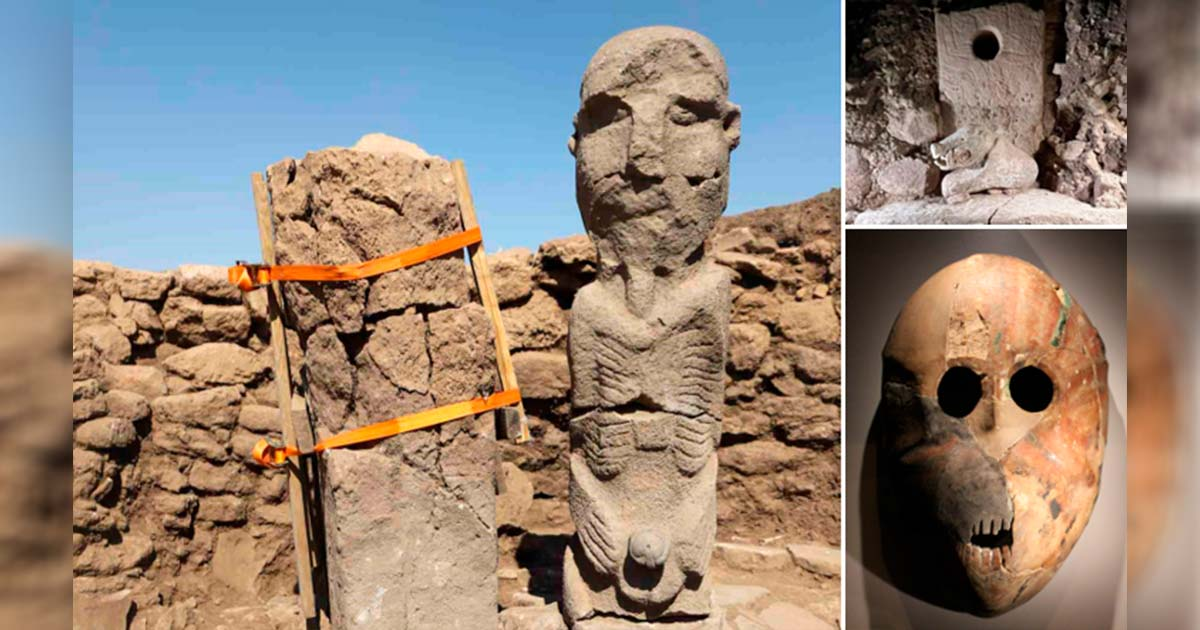
Dating to approximately 9400 to 8200 BCE, Karahan Tepe features a structural mastery that in many ways eclipses its twin sister site. While Göbekli Tepe is famous for its abstract, T-shaped limestone pillars carved with reliefs of dangerous animals, Karahan Tepe places a terrifying, visceral emphasis on human anatomy, shamanistic initiation, and phallic rituals.

The Chamber of the Phallic Pillars

The absolute architectural masterpiece of Karahan Tepe is a subterranean structure known as Complex AB. Carved directly out of the solid limestone bedrock of the hillside, this large rectangular pool features two interconnected, theatrical rooms:

   [ THE PREPARATION ROOM ] ──► Accumulation of ritual fluids or water
                                          │
                              (The Shamanistic Descent)
                                          │
                                          ▼
   [ THE PHALLIC CHAMBER ] ◄── Shaman navigates 11 standing bedrock phalluses ──► Exits via Serpent Portal
  1. The Eleven Pillars: Inside the main sunken room, the Neolithic builders carved eleven monumental phalluses directly from the living bedrock, causing them to erupt from the floor like stone stalagmites.

  2. The Human Head: Looking over these phallic pillars is a colossal, 3D human head carved into the western wall of the rock. The head features an elongated neck, heavy brow ridges, and deeply expressive lips, presenting a fierce, ancestral gaze that dominates the entire space.

  3. The Serpent Portal: To exit this chamber, an initiate had to crawl through a narrow, curved tunnel carved in the shape of a massive snake's head, emerging into a secondary, larger ceremonial pool.

The Spatial Geography of Shamanism

The architectural layout of Karahan Tepe suggests a highly structured, dramatic ritual process. The chambers were not designed for large public gatherings; instead, they were intimate, dark, underground spaces meant for elite, shamanistic initiations. Initiates likely moved through these rooms under the influence of psychotropic substances, navigating the subterranean pools of water amidst the carved phalluses while staring directly into the face of the stone ancestor.

The sheer scale of the site is staggering. Over 250 T-shaped pillars have been identified across the hillside, many featuring intricate reliefs of leaping foxes, slithering serpents, and stylized human hands gripping the waist.

The fact that Karahan Tepe and Göbekli Tepe were built simultaneously by hunter-gatherers proves that religion and ritual architecture came before agriculture, not after. It was the desperate psychological need to gather in massive numbers to build these monumental stone temples that forced humans to settle down, domesticate wild grains, and invent farming, turning the traditional timeline of human civilization completely on its head.

Arkaim: Russia's Stonehenge-Like Ural Fortress

June 18, 2026

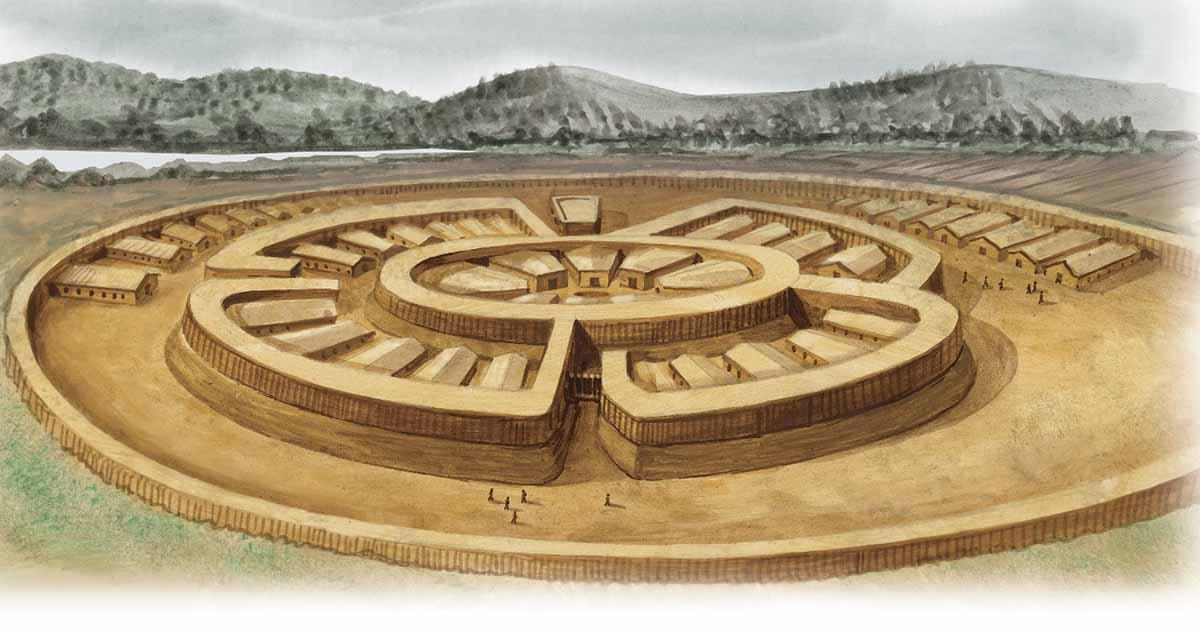
Deep in the windswept steppes of the southern Ural Mountains in Russia sits Arkaim, a monumental, circular fortified settlement belonging to the Bronze Age Sintashta culture (dating to roughly 2000 to 1800 BCE). Discovered by Soviet scientists in 1987 just before the valley was scheduled to be flooded for a reservoir, Arkaim is often dubbed "Russia’s Stonehenge" due to its striking circular geometry and advanced astronomical alignments. However, unlike the open stone circles of Britain, Arkaim was a highly sophisticated, densely populated, and heavily industrial nuclear fortress.

                  [ THE ARKAIM CIRCULAR CITADEL ]
                                 │
        ┌────────────────────────┴────────────────────────┐
        ▼                                                 ▼
[ THE OUTER WALL RING ]                         [ THE INNER RESIDENTIAL RING ]
* 35 domestic apartments                        * 25 elite apartments
* Internal metallurgical foundries               * Central public / ritual plaza
* Integrated drainage channels                  * Communal fresh water wells

The architecture of Arkaim is a masterclass in prehistoric urban engineering. The entire site is perfectly circular, measuring roughly 160 meters in diameter, and is constructed out of a sophisticated mix of timber, sun-dried mudbrick, and soil reinforced with local clay. The settlement is split into two concentric ringed walls that protect an integrated cluster of domestic apartments.

The Industrial Apartments and the Chariot Revolution

The outer ring contains 35 individual dwellings, while the inner ring contains 25 houses, all radiating inward like spokes on a wheel toward a central square plaza. What makes these apartments astonishing is their high-level industrial infrastructure:

  • The Smelting Furnaces: Nearly every single home in Arkaim featured its own integrated metallurgical forge and clay smelting furnace connected to a central chimney system. The Sintashta people were the ultimate metalsmiths of the Eurasian steppe, manufacturing high-grade bronze weapons, axes, and spears on an industrial assembly line.

  • The Water and Ventilation Matrix: The furnaces were engineered with a dual-well system. One well provided fresh water to the home, while a connected air shaft channeled cool, pressurized subterranean air directly into the base of the smelting furnace, acting as a natural, continuous bellows to elevate forge temperatures.

  • The Drainage Highways: Beneath the wooden-paved streets of the fortress, the builders carved a continuous drainage ditch that collected rainwater and waste, directing it out of the fort's main gates.

The Cosmic Wheel Alignment

Arkaim was not just a factory; it was a cosmic calendar. Archaeoastronomers have mapped the entire architecture of the fort to specific celestial events with a precision that equals or exceeds Stonehenge. The main outer walls, defensive towers, and internal gates are precisely aligned with the sunrise and sunset points of both the summer and winter solstices. Furthermore, the fort maps the extreme rising and setting points of the Moon across its long-term cycles.

This celestial mapping was critical for the Sintashta culture. As the inventors of the spoke-wheeled war chariot—the remains of which have been excavated from nearby Sintashta burial mounds alongside prized horses—tracking the seasons was an existential necessity to coordinate massive nomadic cattle migrations across the harsh Eurasian steppe. Arkaim served as a permanent, fortified winter sanctuary, industrial factory, and cosmic temple, acting as the technological launchpad for Indo-Iranian migrations that would eventually sweep southward into Persia and India.

Varna Necropolis: World's Oldest Gold Hoard Secrets

June 18, 2026

Discovered accidentally in 1972 by a tractor driver digging a trench near the Black Sea coast of Bulgaria, the Varna Necropolis represents one of the most astonishing turning points in human prehistory. Dating back to the Late Chalcolithic period (approximately 4600 to 4200 BCE), this prehistoric cemetery contains the absolute oldest gold artifacts ever manufactured by humankind. Before Varna, archeologists believed that complex, stratified human societies with extreme wealth disparities did not emerge until millennia later in Mesopotamia and Egypt. Varna shattered that timeline completely.

   [ THE NEOLITHIC EGALITARIAN MODEL ] ──► Uniform Burials, Shared Resources
                                                  │
                                      (The Varna Excavations)
                                                  │
                                                  ▼
   [ THE CHALCOLITHIC METALLURGICAL SHIFT ] ◄── Chiefdoms, Extreme Wealth Disparity

The site consists of nearly 300 graves, but the distribution of wealth within them is radically unequal. While the vast majority of burials contain simple pottery or basic flint tools, a tiny handful of elite graves contain an unimaginable volume of precious metals. The most famous of these is Grave 43, the burial of an elite male aged 45 to 50, widely considered the oldest documented king or high-level chieftain in human history.

The Anatomy of Grave 43

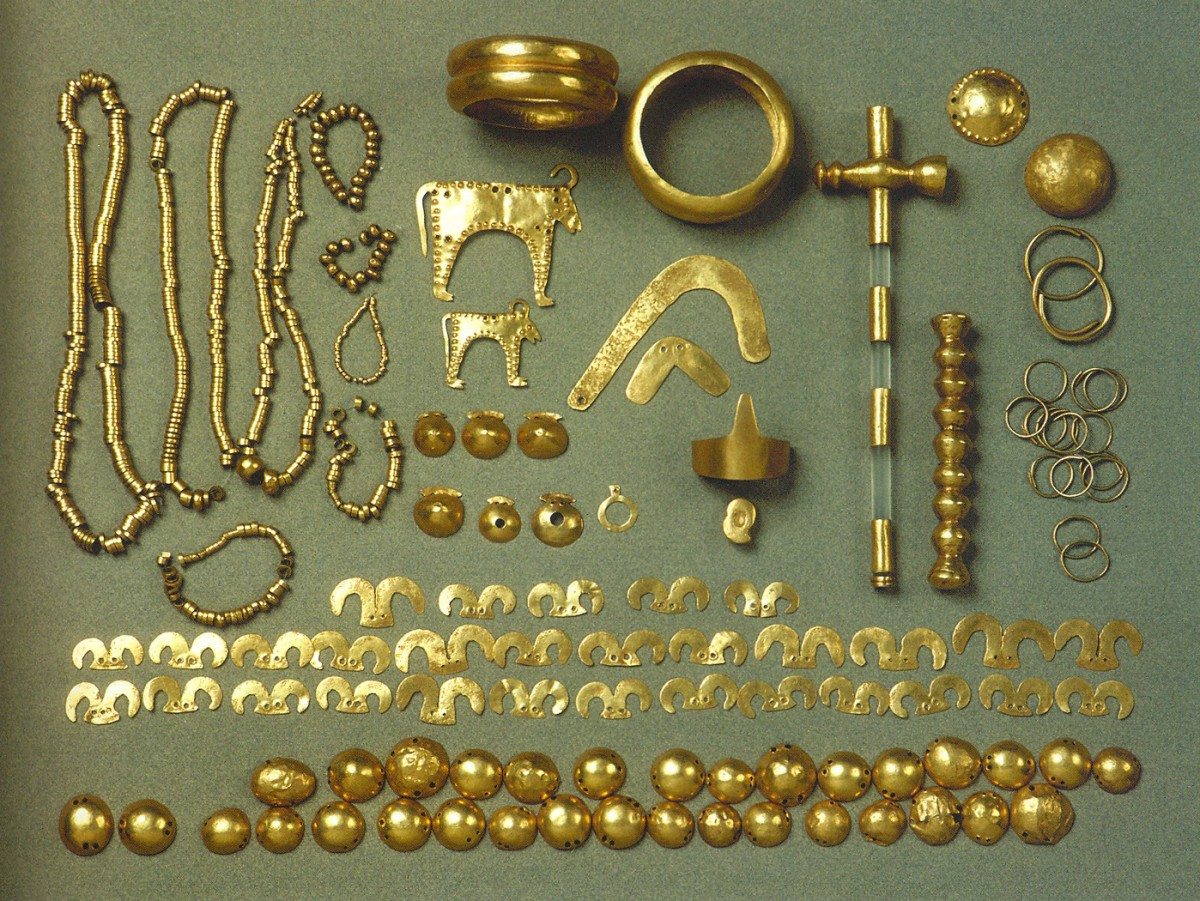
The male skeleton in Grave 43 was literally buried in a sea of gold. Archeologists recovered over 990 distinct gold artifacts from this single grave alone, weighing more than 3.3 pounds (1.5 kilograms). This single burial contained more gold than has been found from that entire era across the rest of the world combined.

The artifacts form an intricate toolkit of prehistoric political and spiritual power:

  • The Scepter: The chieftain held a heavy stone axe-head fitted to a wooden shaft completely encased in cylindrical gold tubes, creating the world's first royal scepter.

  • The Phallic Sheath: A prominent, conical gold sheath was placed over the individual's groin, symbolizing the divine, masculine fertility of the royal lineage.

  • The Regalia: The body was adorned with massive gold armbands, heavy solid-gold pectorals, over thirty gold beads wrapped around the neck, and intricate gold appliques sewn directly onto the burial shroud.

Symbolic Cenotaphs and the Birth of Currency

Equally mysterious are the "symbolic graves" found at Varna. Several of the richest burials contain absolutely no human bones. Instead, archeologists discovered life-sized clay masks of human faces decorated with gold earrings, gold diadems, and eyes made of gleaming gold disks. These cenotaphs were likely created for elite leaders who died far from home, in battle or at sea, ensuring their souls could still be anchored to the sacred cemetery.

The gold of Varna was not just for show; it marks the invention of currency and structured value. Metallurgical analysis shows that the Varna artisans possessed an incredibly sophisticated understanding of casting, hammering, and alloying gold with copper. They created standardized gold rings and disks that possessed a fixed weight and geometry. By establishing a universal medium of exchange backed by the spiritual power of the metal, the Varna culture established a vast trading network that stretched from the shores of the Black Sea deep into continental Europe, transforming metallurgy into the primary engine of human social hierarchy.

Tartessos: Spain's Lost Phoenician Empire Unearthed

June 18, 2026

For millennia, Tartessos existed in the twilight zone between myth, literature, and reality. Mentioned in the Hebrew Bible as the immensely wealthy silver port of Tarshish and linked by classical Greek historians like Herodotus to the legendary, long-lived king Arganthonios and his boundless riches of gold, copper, and silver, this civilization completely vanished from the historical record around the 6th century BCE. A series of massive, ongoing excavations in the Guadalquivir and Guadiana valleys of southern Spain have finally pulled Tartessos out of the realm of legend and into clear archaeological view.

The latest excavations have exposed a series of monumental, multi-story mudbrick and stone sanctuaries—most notably the site of Casas del Turuñuelo—that completely redefine the Western Mediterranean Bronze and Iron Ages. The architecture reveals a brilliant, hybrid civilization that was far more than a simple collection of farming villages.

The Architectural and Economic Empire

The unearthed Tartessian palaces feature sophisticated architectural techniques that were previously thought to be completely absent from Western Europe during this era:

  • The Architectural Fusion: The structural layouts, advanced ashlar masonry, and elite ivory carvings show direct influence from Phoenician maritime merchants who had sailed from the Levant. Tartessos absorbed these Near Eastern techniques and upscaled them.

  • The Indigenous Scale: The massive size of the palaces, featuring a monumental courtyard with a multi-step stone staircase, and unique geometric stone reliefs depicting human faces, prove it was a distinct, highly organized indigenous Iberian empire.

Tartessos managed a lucrative economic empire by controlling the rich silver mines of Huelva and the tin trade of the Atlantic, acting as the primary metallurgical melting pot of the ancient world. The discovery of these massive, burnt-down architectural complexes reveals a dramatic, ritualistic end.

The Hecatomb and the Ashes of Turuñuelo

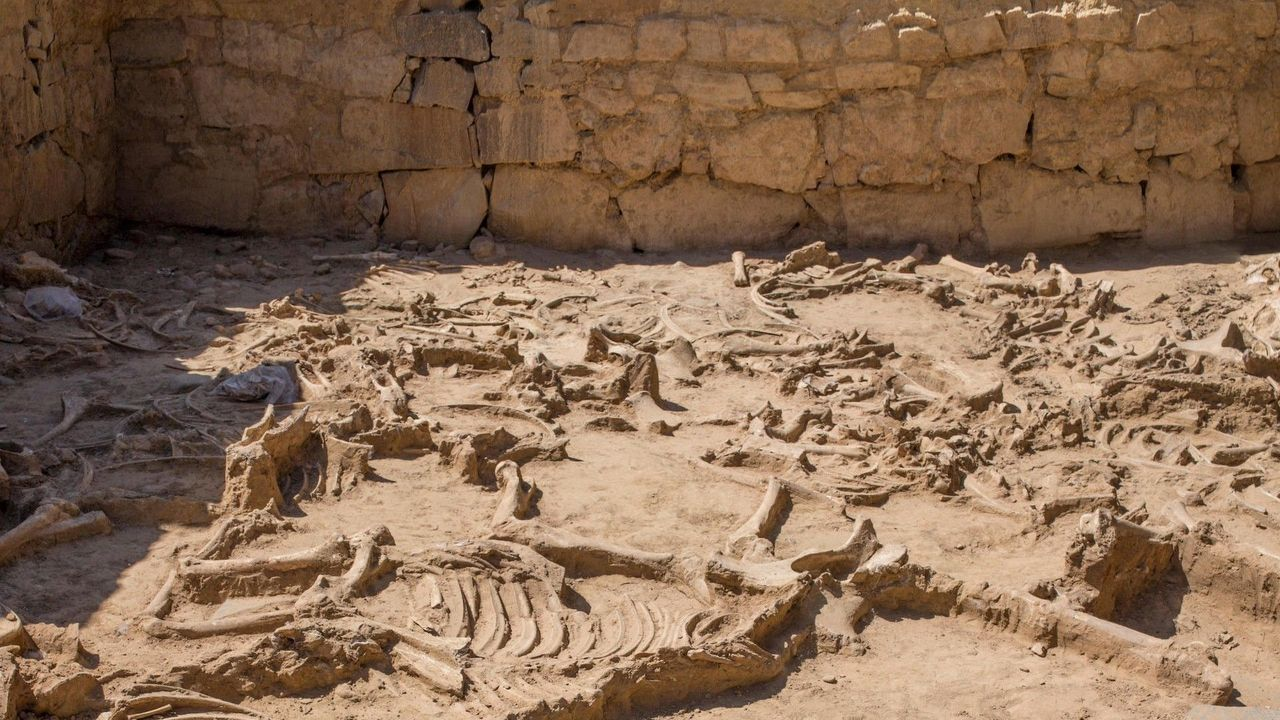
The definitive phase of Casas del Turuñuelo occurred at the end of the 5th century BCE, a period marked by massive geopolitical shifts across the Iberian peninsula. The excavation of the central courtyard revealed a scene of breathtaking, apocalyptic ritual.

Archaeologists uncovered the remains of a massive hecatomb—the systematic sacrifice of over 50 valuable horses, donkeys, and cattle. The animals were arranged in a precise, deliberate layout across the flagstone patio, their bodies showing no signs of battlefield trauma, but rather precision slaughter indicating an elite religious offering.

Following this massive sacrifice, the Tartessians held an enormous communal feast, consuming vast quantities of wine, Mediterranean fish, and wild game, as evidenced by thousands of discarded bones and broken amphorae. Then, rather than defending their monumental palace from encroaching Carthaginian or Celtic forces, the Tartessians made a radical, collective decision.

They gathered their most prestigious luxury imports—including a magnificent, fluted ritual altar made of Proconessian marble imported from Asia Minor and fine female statues crafted from Attic Pentelic marble—and smashed them within the sanctuary.

They then set the entire multi-story mudbrick complex on fire. The intense heat baked the mudbrick walls into solid ceramic, preserving the structural architecture.

Before the ashes could cool, the entire smoking ruin was intentionally buried under a massive, artificial clay mound measuring over 30 meters in diameter, completely sealing the site from the outside world. This intentional, self-inflicted destruction acted as a giant cultural reset button. By burying their wealth rather than surrendering it, the Tartessians transformed their greatest architectural achievement into an eternal, underground monument, leaving behind an pristine archaeological time capsule that is fundamentally rewriting the economic and artistic history of Western Europe.

Scythian Pazyryk Tattoos: Frozen Nomad Art Decoded by DNA

June 18, 2026

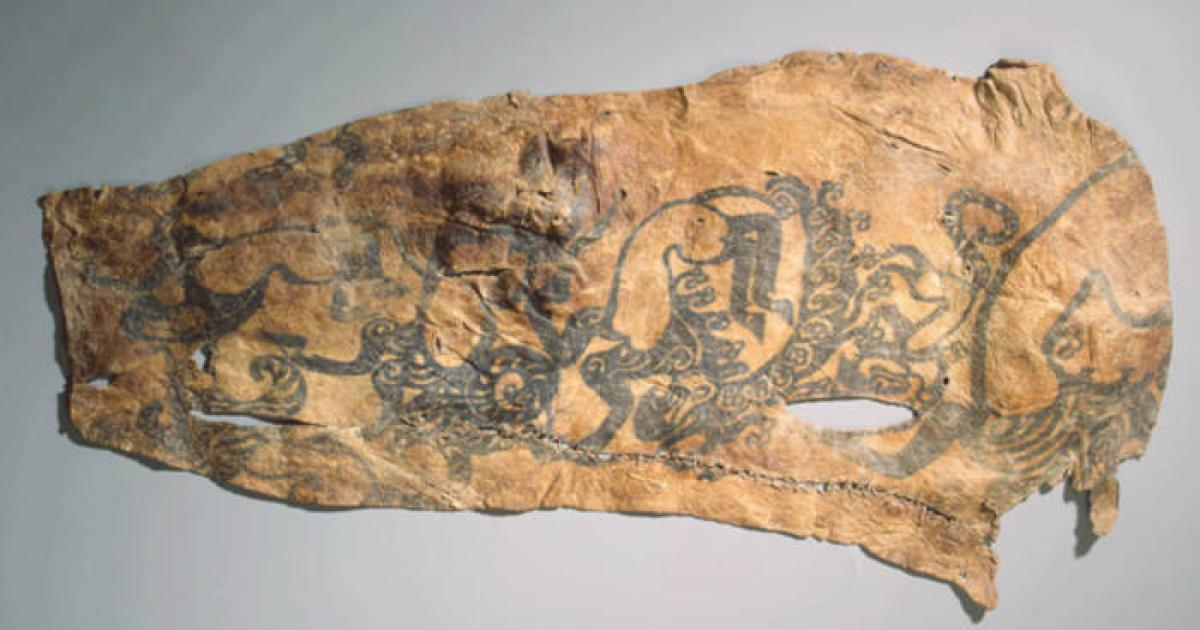
In the frozen, high-altitude Altai Mountains of Siberia, the permafrost has acted as a natural cryogenic freezer for millennia, preserving the mummified bodies of Scythian Pazyryk nomads for over 2,500 years. These Iron Age horse warriors have long fascinated researchers due to their extensive, elaborate body art—highly complex tattoos featuring coiling, fantastic beasts, stags with blossoming, hyper-extended antlers, and predatory felines locked in combat across their limbs.

                  [ THE PAZYRYK MUMMY PERMAPROST ]
                                 │
        ┌────────────────────────┴────────────────────────┐
        ▼                                                 ▼
[ THE RECONSTRUCTED ART ]                       [ THE ZOONOTIC DNA DECODING ]
* Coiling, fantastical beasts                    * Specific regional horse breeds mapped
* Highly abstract predatory felines             * Micro-pathogens & diet isotopes traced
* Intricate zoomorphic body contours            * Trans-Eurasian trade routes verified

Recently, geneticists and digital archaeologists successfully extracted deep-layer skin, hair, and ink DNA from the frozen mummies, decoding the biological and sociological context behind this ancient body art. The zoomorphic designs were not merely decorative or meant for personal vanity; the DNA profiles reveal a strict kinship and genealogical mapping system.

The Biological Blueprint of Nomad Art

By extracting the genetic material preserved directly inside the soot-and-tallow ink of the tattoos, scientists uncovered remarkable data:

  • Lineage Tracking: Specific animal motifs corresponded directly to distinct genetic lineages, regional horse-breeding pools, and specific tribal haplogroups. A warrior with a specific deer motif on their shoulder shared a distinct genetic marker with a lineage tracking thousands of miles away.

  • Migratory Isotope Mapping: Tracking the microscopic plant pathogens and water isotopes trapped within the tattoo ink has allowed scientists to reconstruct the exact seasonal migratory routes of these nomads.

  • The Trans-Eurasian Web: The data proves that their artistic choices tracked a sprawling trade network that connected the borders of early Warring States China directly to the Greek colonies of the Black Sea, turning the human body into a walking, living passport of tribal identity and geographical history.

The Technology of the Needle

The physical application of these tattoos required an incredible level of physiological endurance and specialized tools. Microscopic skin analysis reveals that the Pazyryk tattooists did not use simple bone needles; instead, they deployed fine bronze awls and multi-pronged needles capable of puncturing the skin at high frequencies without tearing the dermis. The ink itself was a sophisticated concoction of fine soot collected from the burning of specific sacred woods—such as larch and birch—mixed with animal fat and, occasionally, copper oxides to give the tattoos a striking, iridescent blue-green hue beneath the skin.

The distribution of the tattoos across the bodies of both male and female mummies shows a strict anatomical hierarchy. The ink almost always began on the right shoulder, cascading down the arms, across the chest, and finally wrapping around the lower legs.

Interestingly, many of these tattoos are placed directly over major acupuncture meridians and joint junctions, suggesting that the art served a dual purpose: it was a visual badge of honor and a therapeutic treatment designed to alleviate chronic osteoarthritis brought on by a lifetime of riding horses through freezing mountain passes.

The animal designs themselves—frequently depicting a creature known as the "Scythian Animal Style," where a stag's antlers transform into a cluster of predatory birds' heads—reflect a deeply animistic worldview. These nomads believed that by permanently binding the images of these swift, aggressive beasts to their flesh, they could physically absorb the speed, vision, and predatory instincts of the animals.

When a Scythian warrior died, their tattoos were carefully preserved by their kin through a complex mummification process that involved removing the internal organs and replacing them with aromatic herbs and pine needles, ensuring that their visual, inked identity would remain intact as they rode into the eternal pastures of the afterlife.

Thracian Kazanlak Tomb: Gold Masks Beyond Tutankhamun

June 18, 2026

The Rose Valley of Bulgaria, anciently known as the Valley of the Thracian Kings, has yielded a continuous stream of elite burial wealth that fundamentally challenges our understanding of ancient European metallurgy and ritual sophistication. While the Kazanlak Tomb has long been world-renowned for its stunning 4th-century BCE Hellenistic frescoes, deep-trench excavations around the wider necropolis complex have unearthed a series of royal shaft graves containing unprecedented gold artifacts.

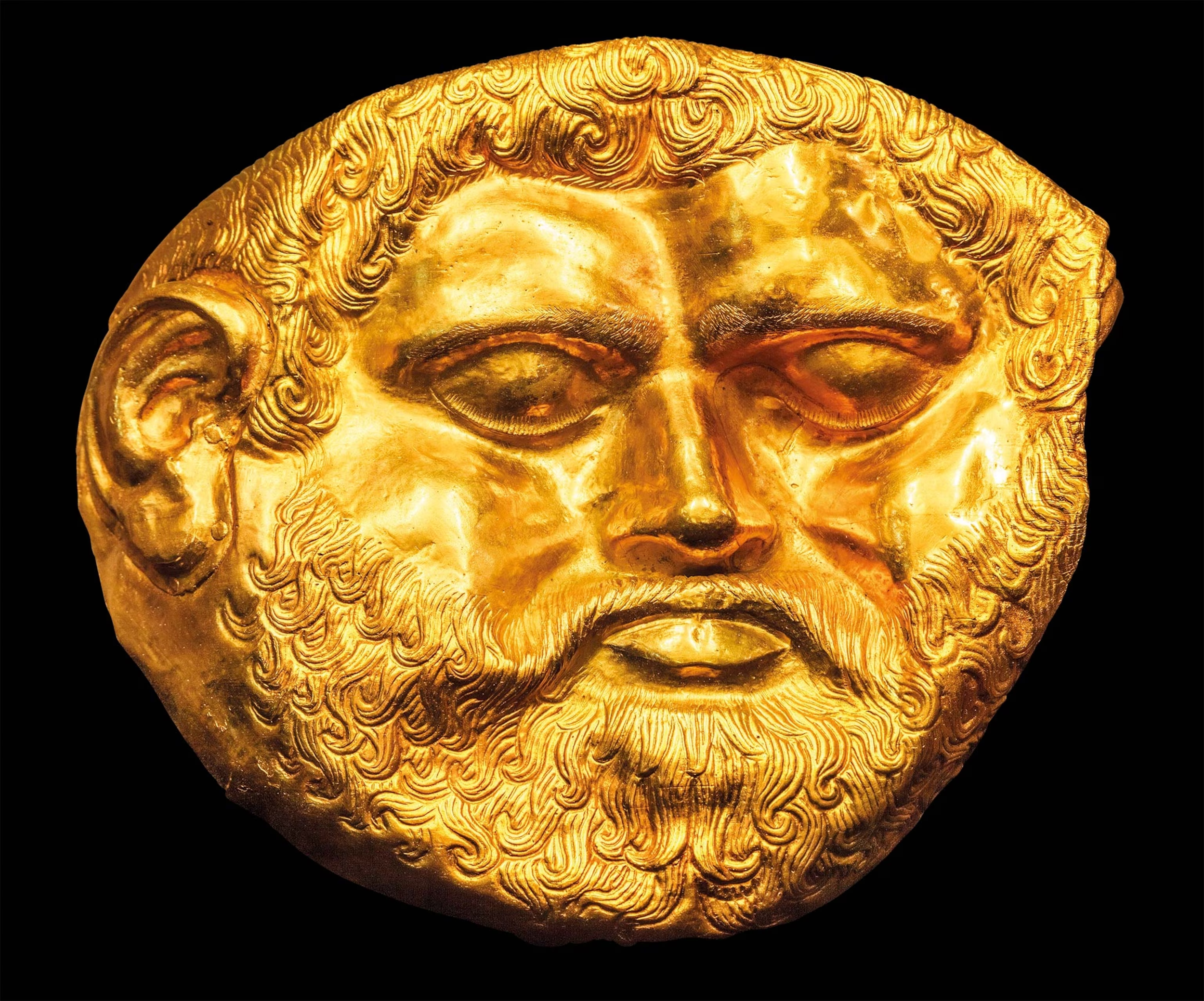
Chief among the discoveries is a massive, solid-gold death mask weighing over 1.5 pounds (nearly 700 grams), found alongside intricate gold signet rings, heavy pectoral plates, and a breathtaking ceremonial laurel wreath featuring lifelike gold leaves and olive berries. Unlike the idealized, glassy, and smooth features of Egyptian pharaonic masks like Tutankhamun's—which were manufactured to transition the deceased king into an unchanging, sterile celestial icon—the Thracian gold masks utilize a raw, visceral, highly realistic repoussé technique that captures raw individualistic portraiture:

  • Anatomical Realism: The masks exhibit deep-set facial wrinkles, heavy, asymmetrical brows, localized facial scars, and highly stylized, realistic beards belonging to specific, historical kings.

  • Cosmic Symbology: The outer borders are stamped with intricate geometric circles, rosettes, and solar rays, symbolizing a continuous cycle of cosmic energy.

The Orphic Deification Ritual

Laboratory data confirms that these gold masks were not manufactured simply as passive funereal decorations to cover a corpse. Microscopic wear analysis along the eye slits and inner bands reveals that these heavy masks were worn by living kings during complex Thracian Orphic mystery rituals. Through these rituals, the living king would descend into a subterranean chamber, experience a symbolic death, and emerge wearing the gold mask to declare himself a living god-king to his people.

The staggering volume of pure gold underscores the immense wealth of the Thracian Odrysian kingdom, a sophisticated, militarized society that controlled vast mountain gold mines and traded on equal economic footing with the Persian Empire and classical Athens. The Thracians, long dismissed by classical Greek writers as illiterate warriors addicted to warfare and unwatered wine, are revealed by the Kazanlak discoveries to be master artisans possessing a deep, esoteric understanding of the afterlife.

The gold utilized in these graves was extracted from the heavy alluvial deposits of the Sredna Gora and Balkan mountains. The Thracian metallurgists possessed an advanced knowledge of pyrotechnology, capable of purifying gold to over 23 carats and hammering it into gossamer-thin sheets that could form both delicate olive leaves for royal wreaths and heavy, load-bearing armor plates.

The architectural context of these finds is equally monumental. The tombs are constructed as sacred stone beehives (tholoi), featuring narrow, corbelled entrance dromoi that open into circular chambers. The frescoes within the main Kazanlak chamber, depicting a royal funeral banquet with high-spirited horses, weeping servants, and a king holding his queen’s wrist in a tender, final gesture of farewell, create an immersive spiritual theater.

When the sun aligned with the narrow entranceway on specific ritual days, it illuminated the gold artifacts within the dark interior, flashing a blinding, divine light out into the valley. This intentional manipulation of light and precious metal demonstrates that the Thracian kings used gold not as a stagnant hoarding mechanism, but as a dynamic spiritual technology designed to conquer mortality itself, rewriting the history of ancient European religion and art.

Albanian Byllis: Illyrian Fortress Rediscovered

June 18, 2026

For centuries, the classical city of Byllis—perched on a dramatic, 1,700-foot-high triangular plateau overlooking the Vjosa River valley in southern Albania—was viewed by Western scholars through a strictly Greco-Roman lens. It was long cataloged as a secondary colonial outpost established by Greek settlers expanding into the Adriatic. However, extensive, multi-year international excavation campaigns culminating in comprehensive reports between 2025 and 2026 have completely shattered this Eurocentric historical model.

   [ THE HISTORICAL MYTH ] ──► Greek Colonial Foundation Theory (Passive Periphery)
                                              │
                                  (The 2025 Excavations)
                                              │
                                              ▼
   [ THE EXCAVATED REALITY ] ◄── Indigenous Illyrian Urban Capital (Active Engine)

The newest archaeological layers prove that Byllis was a monumental, indigenous Illyrian urban capital planned, engineered, and inhabited by the Bylliones tribe. The ongoing European Union-funded conservation and excavation projects exposed the earliest foundations of the city’s massive, two-mile-long defensive wall circuit. These fortifications, which enclose an area of over 30 hectares, utilize a distinct trapezoidal and polygonal masonry style that pre-dates Hellenistic architectural adjustments. The Illyrians carved these massive limestone blocks directly from the living rock of the plateau, fitting them together without mortar to create an impenetrable barrier against Macedonian expansion.

The Civic and Democratic Matrix

The recent rediscoveries went far beyond military architecture, exposing a highly organized society. Excavators uncovered a sprawling administrative and civic heart that rivals the famous poleis of the Aegean:

  • The Stoa Complex: A massive, 140-meter-long double-storied promenade that served as the economic and legal spine of the city.

  • The Prytaneion: The official seat of the indigenous government, where archaeologists found administrative bronze tablets and weights stamped with the explicit ethnic name of the tribe: BYLLIONON.

  • The Great Theater: A 7,500-seat theater carved directly into the natural slope of the hill, utilizing an acoustic design optimized for public tribal assemblies rather than just dramatic performances.

The presence of these structures proves that the Illyrians were not "barbarians" living on the fringes of the classical world, but masters of independent, sophisticated urbanization. They operated a highly organized democratic state system, minted their own distinct currency, and managed a complex network of public works long before Roman legions marched across the Balkans.

Social Freedom and Economic Mastery

What has truly shocked historians is the evidence regarding the social fabric of Byllis. Excavations at the city's South Gate revealed clusters of ancient musical instruments—including cymbals, gongs, and bells—scattered across a localized performance area. This highlights a rich public performance culture where artistic talent flourished.

Furthermore, epigraphic evidence recovered from ivory and stone tablets within the region indicates a highly progressive legal standing for women. In stark contrast to classical Athens or Rome, where women were effectively disenfranchised property, wealthy Illyrian women at Byllis acted as independent moneylenders and high-level financial transactors.

The economic muscle of the city was tied directly to its geography. The Bylliones controlled Europe's largest natural bitumen mine, which is active to this day. They leveraged this highly prized material, used for waterproofing ships and sealing structures across the Mediterranean, to establish a vast trade monopoly.

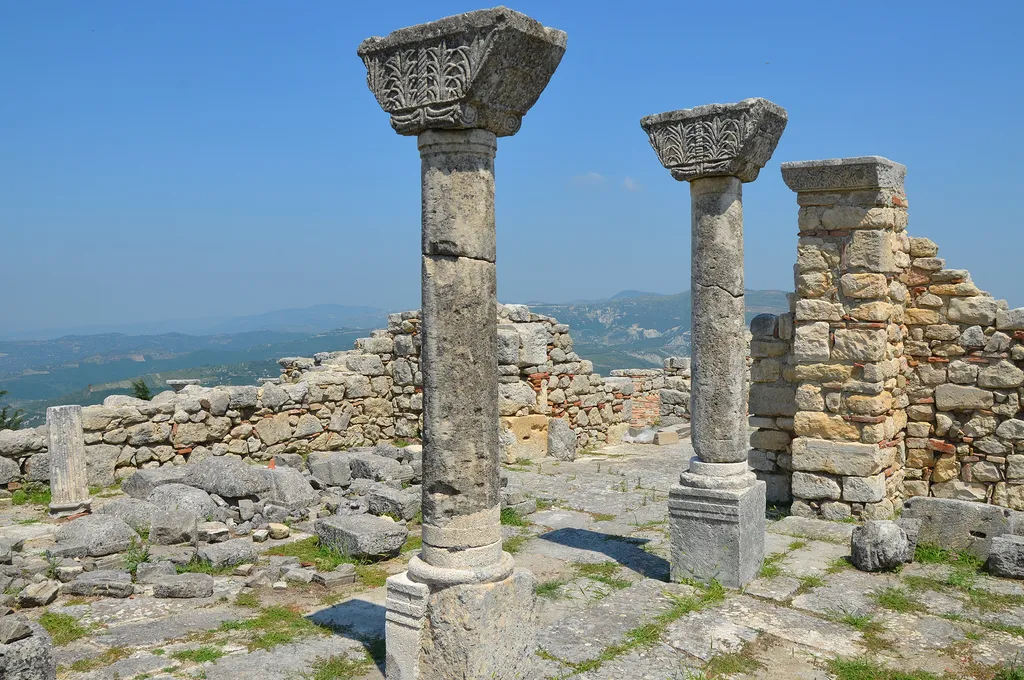
By the late antiquity and Byzantine periods, Byllis evolved into a massive Christian powerhouse. A network of five sprawling basilicas was erected, featuring over one hectare of brilliant mosaic flooring. Unlike contemporary Byzantine churches that focused exclusively on austere biblical scenes, the Byllis mosaics depict vibrant, secular everyday life: shepherds tending flocks, fishermen hauling nets bursting with crabs and lobsters, and detailed renderings of native flora, mushrooms, and fruit trees.

One prominent inscription reads, "In fulfillment of the vow of those whose names God knows," demonstrating a collective civic humility where elite donors chose divine recognition over personal vanity. Strikingly, these religious complexes were also commercial engines; excavations within the episcopal palace uncovered large-scale wine and oil production facilities directly integrated into the architecture. The Bishops of Byllis were running lucrative trade networks alongside their spiritual duties, cementing the city's status as an enduring center of wealth, production, and cultural autonomy until its eventual abandonment.

Sardinia's Nuraghe Towers: 8,000 Bronze Age Mysteries

June 18, 2026

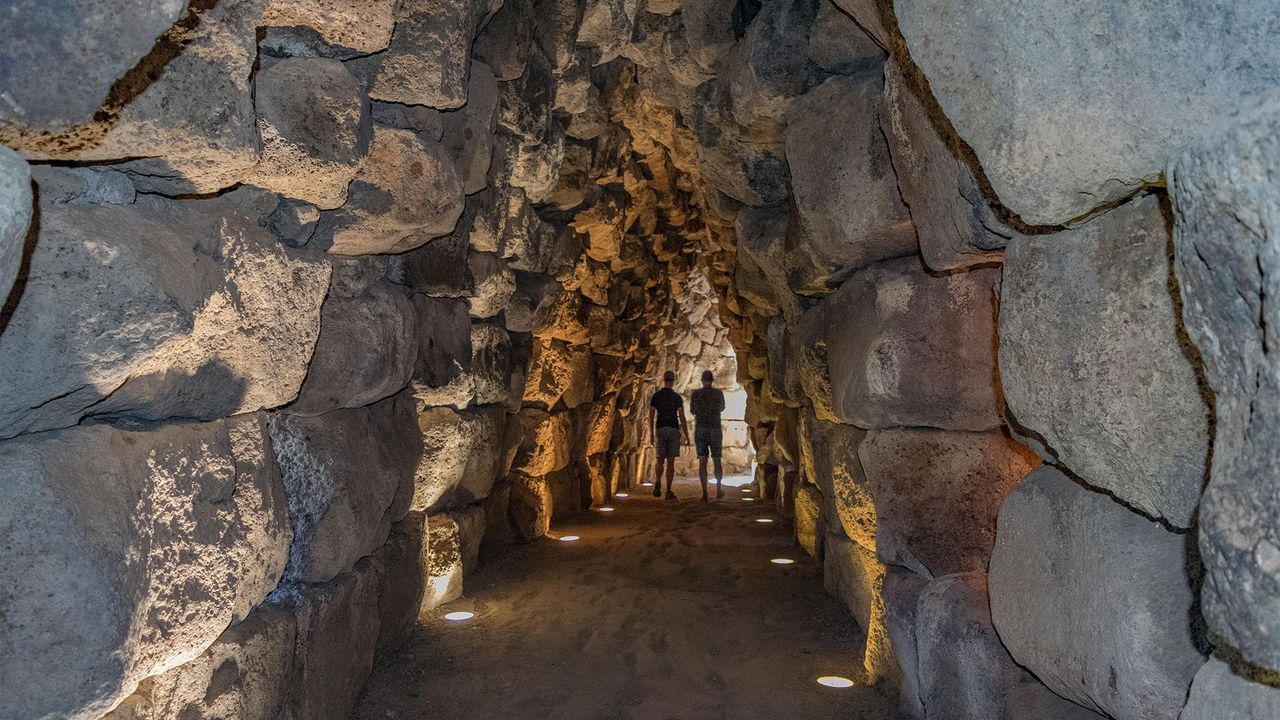
The island of Sardinia is home to one of the most sprawling, sophisticated, and deeply enigmatic architectural phenomena of the ancient Mediterranean: the Nuraghe towers.

Scattered across the rugged Sardinian landscape are the stone ruins of more than 7,000 to 8,000 of these monumental Bronze Age megaliths. Built by a forgotten civilization that left behind no written records, these towers represent a staggering feat of prehistoric engineering that continues to spark intense archaeological debate.

1. The Nuragic Civilization: Masters of Bronze and Stone

The architects of these structures are known simply as the Nuragic civilization, a highly organized, martial society that flourished on Sardinia from roughly 1800 BCE down to the Roman conquest in the 2nd century BCE.

While contemporary civilizations in Egypt, Mycenaean Greece, and Mesopotamia were developing writing systems, the Nuragic people channeled their collective energy into two massive cultural outputs: exceptional bronze metallurgy (producing thousands of detailed bronze statuettes, or bronzetti) and megalithic stone architecture. They transformed the entirety of Sardinia into a fortified, stone-clad landscape long before the founding of Rome.

2. Megalithic Engineering: Built Without Mortar

The sheer scale of a standard nuraghe is an engineering marvel. A typical tower is shaped like a truncated cone, resembling a modern industrial cooling tower, often standing between 30 to 65 feet (10 to 20 meters) tall.

What makes their preservation across three millennia so astonishing is their construction technique:

  • Cyclopean Masonry: The towers were built using giant, roughly hewn blocks of local volcanic rock, such as basalt, granite, or trachyte.

  • Dry-Stone Construction: The Nuragic builders used absolutely no mortar or cement. The immense structures are held together solely by the laws of gravity, the immense weight of the stones, and the precise, geometric interlocking of the blocks.

  • The Tholos Dome: Inside the towers, the builders utilized the tholos technique—corbelling rows of stones inward, layer by layer, until they met at the top to form a perfect, self-supporting domed ceiling.

A central, spiral stone staircase was frequently built directly inside the thick cavity of the double walls, allowing defenders to climb safely to upper floors or a roof-deck platform without being exposed to the outside.

3. From Simple Towers to Royal Citadels

As the centuries progressed, Nuragic architecture evolved from isolated watchtowers into massive, sprawling royal fortresses that rivaled the contemporary palaces of Mycenae.

Su Nuraxi di Barumini

The absolute pinnacle of this architectural evolution is Su Nuraxi di Barumini, a UNESCO World Heritage site located in southern Sardinia.

Dating back to the 16th century BCE, Barumini evolved into a complex, multi-towered citadel containing several layers of defense:

  • The Central Keep (Mastio): A massive three-story central tower that originally stood over 60 feet tall, featuring three stacked tholos chambers connected by internal staircases.

  • The Quadrilateral Bastion: A defensive wall containing four secondary towers, oriented to the four cardinal directions, linked by a massive curtain wall.

  • The Outer Ring and Village: Surrounding the central fortress is a labyrinth of over a hundred circular stone huts, meeting rooms, and ritual sanctuaries where the broader community lived, creating a highly organized, fortified urban ecosystem.

4. The 8,000 Mysteries: What Were They For?

Because the Nuragic people left behind no written records, texts, or inscriptions, the true function of the nuraghe towers remains the greatest mystery of the ancient Mediterranean. Archaeologists are sharply divided, with several competing theories:

The Military Fortress Theory

The traditional, long-standing view is that the nuraghes were defensive military strongholds. Their strategic placement on high plateaus, commanding hilltops, and valley passes suggests an island-wide network of defensive watchtowers. The thick walls, internal staircases, arrow-slits, and complex bastions indicate they were designed to withstand prolonged sieges, either from rival local clans fighting over fertile pastureland or from sea-faring foreign invaders.

The Elite Royal Residence Theory

Other researchers view the nuraghes as symbols of political power and prestige—the prehistoric equivalents of medieval castles. In this model, the grandest multi-towered structures were the permanent palaces of local tribal chieftains or royal dynasties, serving as administrative centers to control agricultural wealth, store bulk food supplies, and house the elite warrior class.

The Sacred Astronomical Sanctuary Theory

A more modern, interdisciplinary school of thought focuses on archaeoastronomy. Many nuraghes feature entrance portals and inner chambers precisely aligned with specific celestial events, such as the winter solstice sunrise, the rising points of specific bright constellations, or maximum lunar cycles. Proponents argue that the towers were sacred temples or cosmic calendars managed by a priestly caste to track agricultural seasons.

5. Structural Evolution of the Towers

Simple Nuraghe

  • Architecture: Composed of a single, isolated conical tower.

  • Interior Space: Features one to three stacked tholos chambers built on top of each other.

  • Location Strategy: Positioned on isolated hills, borders, and high mountain passes to serve as tactical watchtowers or border posts.

Complex or Polylobed Nuraghe

  • Architecture: Built around a central keep (mastio) enveloped by multiple secondary towers linked by a heavy curtain wall.

  • Interior Space: Expands into a miniature citadel with internal courtyards, corridors, storage silos, and water cisterns.

  • Location Strategy: Erected in low valleys, fertile plateaus, and centers of large settlements to serve as royal palaces or regional administrative hubs.

Sardinia's nuraghe towers stand as an enduring monument to the ingenuity of a Bronze Age society that successfully shaped the geology of their island. Whether they were built as fortresses of war, palaces of kings, or temples to the stars, these thousands of silent stone sentinels remain one of the ancient world's most compelling architectural mysteries, serving as a powerful reminder of the sophisticated, forgotten empires that once navigated the Mediterranean.

Malta's Ħal Saflieni Hypogeum: Prehistoric Sound Chambers

June 18, 2026

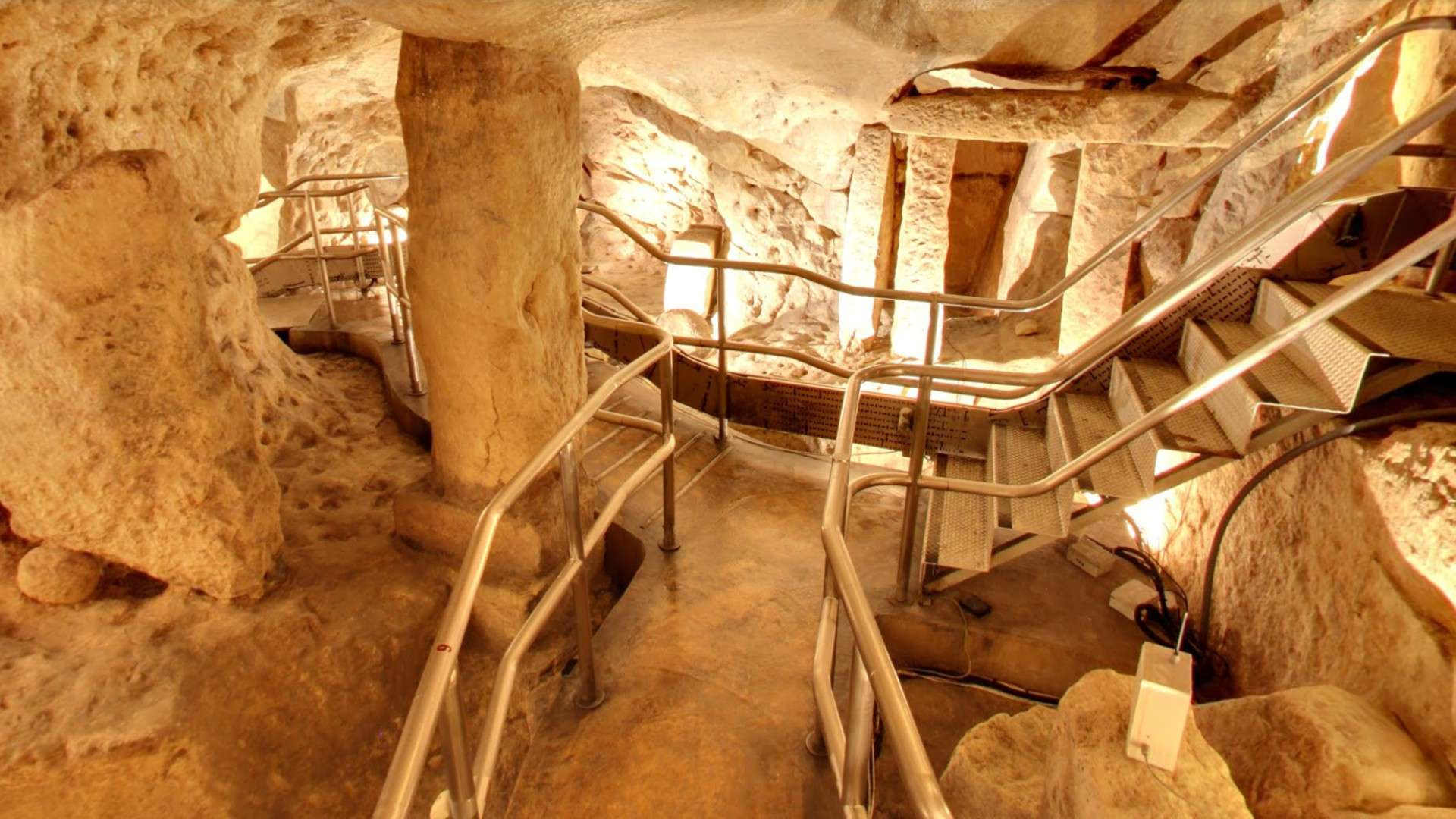
Deep beneath the suburban streets of Paola, Malta, sits a subterranean architectural marvel that challenges our understanding of Neolithic engineering, acoustic science, and spiritual life: The Ħal Saflieni Hypogeum.

Discovered accidentally in 1902 by stonemasons cutting cisterns for a new housing development, this massive, three-tiered underground sanctuary was carved entirely out of solid globigerina limestone between 3600 and 2500 BCE. While it served as a monumental collective tomb—housing the skeletal remains of an estimated 7,000 individuals—its most staggering feature is its highly sophisticated acoustic design, particularly within a room known globally as the Oracle Chamber.

1. The Architecture of the Underworld: Mirroring the Above

The Hypogeum (literally meaning "underground" in Greek) is not a chaotic network of rough caves. Instead, the prehistoric builders painstakingly carved the solid rock to mimic the grand, open-air megalithic temples they were constructing simultaneously on the surface, such as Ħaġar Qim and Tarxien.

Spanning three distinct, descending levels that reach a depth of roughly 10 meters ($33\text{ feet}$), the complex features beautifully smooth, curved walls, monumental lintels, and trilithon doorways. In the Main Chamber, the masons went so far as to carve false corbelled domes into the solid ceiling rock, creating an optical illusion of open, vaulted roofs where none existed. Through this intense expenditure of labor using nothing but flint, obsidian, and antler picks, they successfully transformed a dark, subterranean void into a highly structured, majestic theater for the dead.

2. The Oracle Chamber: The Physics of Sub-Woofer Resonance

The absolute apex of the Hypogeum’s intellectual design is found on the middle level inside the Oracle Chamber. This relatively small, rectangular room features a unique, small oval niche carved into the wall at face height.

For over a century, acoustic physicists and archaeoacousticians have studied this room because of its mind-boggling sound manipulation properties. If a person speaks into the room normally, very little happens. However, if a male voice drops his pitch to a specific low-frequency resonance—precisely 110 Hz—the entire subterranean complex reacts like a giant, stone sub-woofer.

   [ LOW-FREQUENCY VOCALIZATION ] ──► Chanted into the Custom Oval Wall Niche
                                                 │
                                   (The Acoustic Resonance Loop)
                                                 │
                                                 ▼
   [ 110 HZ SOUND WAVELENGTHS ] ◄──── Amplified by Curving Rock Facets / Echoes through Tier Grid

This precise acoustic resonance is achieved through several deliberate structural factors:

  • The Amplification Niche: The oval niche acts as a natural megaphone, concentrating the sound waves and projecting them outward.

  • The Curving Ceiling Facets: The ceiling of the chamber is carved with unique, sweeping curves that prevent sound waves from flat-lining or scattering. Instead, it channels the sound, causing it to bounce and amplify exponentially as it rolls through the room.

  • The Continuous Echo: A single low chant in this room generates a powerful, vibrating echo that travels seamlessly through all three levels of the complex, making the sound feel as though it is emerging out of the very earth itself.

3. Archaeoacoustics: The Neurological Impact of 110 Hz

Why did these Neolithic builders spend centuries carving a room perfectly tuned to 110 Hz? While we have no written texts to confirm their motives, modern cognitive neurology and archaeoacoustics offer a fascinating, scientific hypothesis.

In 2008, a pilot study conducted by the Mantra Consortium monitored the brain activity of healthy adults exposed to different acoustic frequencies. The results revealed that when the human brain is subjected to a sustained 110 Hz frequency, a striking neurological shift occurs:

  • Deactivation of the Language Center: Activity in the left prefrontal cortex—the region responsible for logical processing, language, and linear thought—suddenly drops.

  • Activation of Emotional Processing: The brain shifts its activity toward the right prefrontal cortex, which governs creativity, abstract visualization, and intense emotional states.

  • The Trance State: This specific frequency mimics the brainwave states associated with deep meditation, religious ecstasy, and trance.

To the Neolithic people of Malta, entering the dark, flickering light of the Hypogeum to hear a priest or oracle chant from the hidden wall niche would have been an overwhelming, reality-altering experience. The physical vibration of the stone walls combined with the neurological shift caused by the 110 Hz resonance would induce vivid hallucinations and a profound sense of cosmic detachment—perfectly engineering a space where the living could commune directly with the spirits of their ancestors.

4. Summary of the Hypogeum's Structural Dynamics

  • The Scale: A three-tiered, hand-carved underground necropolis housing 7,000 individuals, chiseled out of solid globigerina limestone using only stone and antler tools.

  • The Architecture: Intentionally mimics the layout, trilithons, and corbelled roofs of Malta’s surface megalithic temples to establish an intentional spatial bridge between the worlds of the living and the dead.

  • The Acoustic Mechanics: Utilizing an integrated wall niche and curved limestone ceiling geometries to isolate and amplify a specific low-frequency resonance of 110 Hz.

  • The Neurological Purpose: Sound design engineered to trigger a shift from logical left-brain thought to right-brain abstract processing, inducing ritualistic, meditative trance states during ceremonies.

The Ħal Saflieni Hypogeum stands as one of our planet's most brilliant early symphonies of architecture and sensory manipulation. It proves that prehistoric societies were not merely primitive builders stacking rocks; they possessed an incredibly nuanced, experimental grasp of structural dynamics, materials, and how the physical geometry of a room can directly alter human consciousness. By turning the dark interior of the earth into a living acoustic instrument, the ancient builders of Malta created a timeless sanctuary where architecture, sound, and the human mind became permanently fused together in the dark.

Richat Structure: Eye of Sahara as Atlantis Epicenter

June 18, 2026

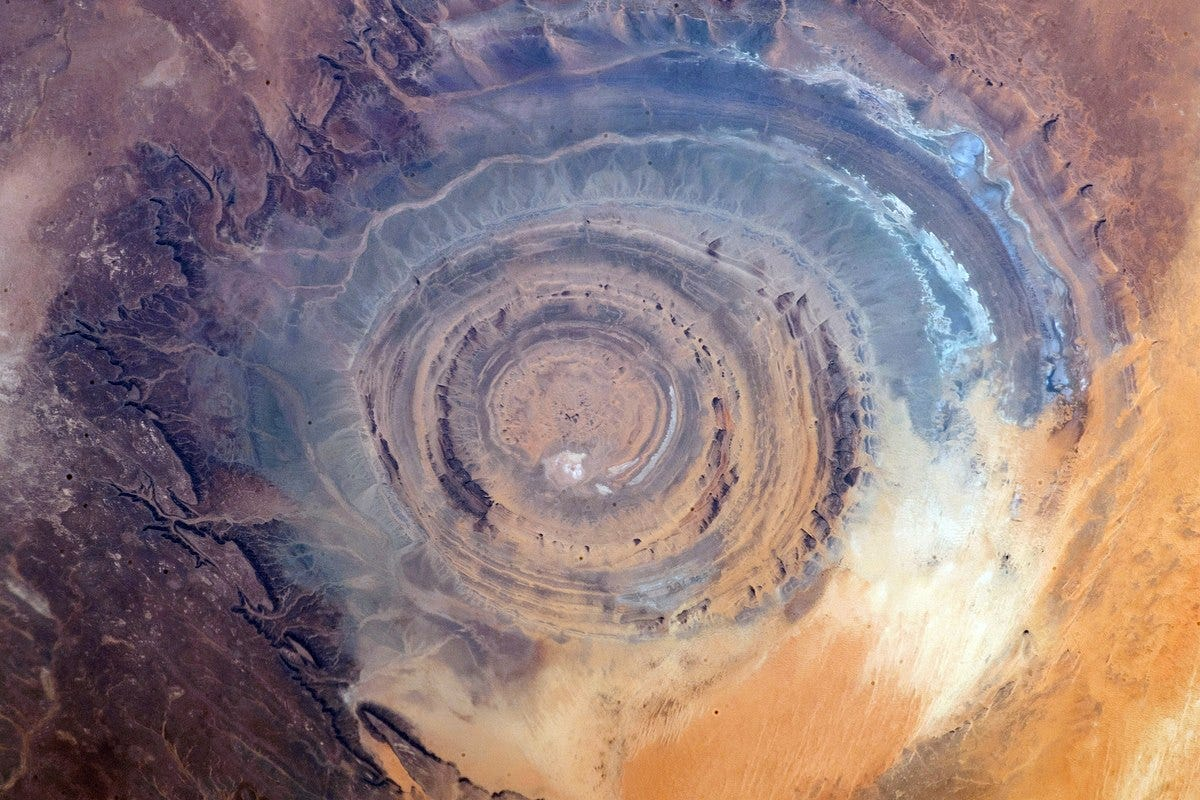
Deep in the windswept deserts of west-central Mauritania sits the Richat Structure, globally recognized as the "Eye of the Sahara." Looking from space, this jaw-dropping geological anomaly resembles a colossal, 40-kilometer-wide ($25\text{-mile}$) bulls-eye or concentric ring network carving directly into the desert floor.

In recent years, the Richat Structure has exploded in popularity across digital media platforms as the supposed physical location of Atlantis, the legendary lost civilization chronicled by the Greek philosopher Plato around 360 BCE. Proponents of this theory point to a series of stunning visual and structural correlations that seem too precise to be mere coincidence.

However, when historians, classicists, and structural geologists analyze the site, the "Atlantis epicenter" theory completely evaporates. The true narrative of the Eye of Sahara does not rely on a sunken maritime empire, but rather on the deep time scales of tectonic magmatism, continental rifting, and selective dome erosion.

1. The Atlantean Argument: Plato’s Blueprint in the Sand

The modern resurgence of the Richat-as-Atlantis theory relies heavily on comparing the physical geography of Mauritania with the literal text of Plato’s dialogues, Timaeus and Critias. Proponents match several key descriptions:

  • The Concentric Rings: Plato described Atlantis as a city built out of alternating, concentric zones of water and land—specifically, three rings of water and two of land. From an aerial view, the Richat Structure displays an identical concentric ring footprint.

  • The Scale and Dimensions: Plato stated that the outer ring of Atlantis measured 127 stadia in diameter. When converted to modern metrics, this equals roughly 23.5 kilometers—a measurement that matches the inner core rings of the Richat anomaly.

  • The Northern Mountains and Southern Plain: Plato noted that the city was sheltered to the north by grand, sweeping mountains noted for their beauty, while opening up to the south into a vast, rectangular agricultural plain. Satellite imagery shows the rugged Atlas and Mauritanian mountain ridges bounding the Richat to the north, sloping down into a vast desert basin to the south.

  • The Colors of the Stone: The dialogues mention that the architects of Atlantis quarried stone that was black, white, and red to construct their monumental palaces. Geologists confirm that the rock strata of the Richat feature black basalts, white limestones, and red iron-rich volcanic breccias.

2. The Geological Reality: The Sinking of a Magmatic Dome

Despite these visual coincidences, mainstream geologists—who have mapped the Richat Structure using field geochemistry, aeromagnetic surveys, and satellite radar—have definitively proven that the structure is completely natural. It is not a excavated city, but a highly unique geological feature known as a deeply eroded alkaline magmatic dome.

Its formation began roughly 100 million years ago during the Cretaceous period, coinciding with the violent breakup of the supercontinent Pangea and the opening of the Atlantic Ocean.

Step 1: The Magmatic Uplift

Deep beneath the Earth's crust, a massive plume of superheated magma forced its way upward into the overlying flat sheets of sedimentary sandstone and limestone. The magma never erupted onto the surface to form a traditional volcano. Instead, it acted like a giant underground piston, pushing the flat surface rock layers upward from below to create a massive, circular blister or dome on the landscape.

Step 2: Hydrothermal Alteration and Collapse

As the magma cooled slowly over millions of years, highly reactive, mineral-rich hydrothermal fluids surged through the cracks in the dome. These fluids chemically dissolved and weakened the internal limestone core of the structure. Deprived of its underlying support, the center of the dome suffered a massive structural collapse, dropping straight down to form a vast central depression.

Step 3: Differential Weathering

Once the dome collapsed, tens of millions of years of wind, rain, and desert sandstorms went to work on the exposed edges of the rock layers. Sandstone is exceptionally hard and resistant to erosion, while limestone and shale are soft and easily hollowed out by the elements.

   [ HIGH-DENSITY MAGMA PISTON ] ──► Pushes Flat Sandstone Layers Upward into a Dome
                                                │
                                   (The Deep Time Weathering)
                                                │
                                                ▼
   [ CONCENTRIC RING RIDGE LINES ] ◄── Hard Sandstone Remains / Soft Limestone Erodes Away

As erosion stripped away the top of the dome, the hard sandstone layers remained standing as high, prominent concentric ridges, while the softer rock layers were swept away entirely, carving out the deep concentric valleys between them. This process of differential weathering manufactured the flawless circular "steps" that alternative theorists mistake for man-made concentric rings.

3. The Flaws in the Myth: Altitude and Archaeology

When the site is evaluated using standard historical method and archaeological science, the Atlantis theory suffers from critical errors:

1. The Altitude Conflict

Plato’s central premise is that Atlantis was an international maritime empire—a low-lying naval power whose canals opened directly into the Atlantic ocean, allowing triremes and merchant ships to sail deep into the city's heart.

The Richat Structure sits at an average altitude of 400 meters ($1,300\text{ feet}$) above sea level and is located more than 500 kilometers ($300\text{ miles}$) inland from the modern Atlantic coast. While the Sahara was considerably greener in the deep past, geophysical mapping confirms that the Richat plateau was never submerged beneath the ocean during any period of human history. Ships could never have sailed into its rings.

2. The Complete Absence of Artifacts

If the Richat were truly the thriving, high-technology capital of a global empire that controlled the western Mediterranean, the soil should be thick with the indestructible trash of human civilization: thousands of tons of metal slag, brick kilns, glass fragments, domestic refuse heaps, and structural foundations.

Instead, extensive archaeological surveys across the Richat have recovered only two types of human materials:

  • A scattered collection of Acheulean stone handaxes and scraping tools dating back hundreds of thousands of years, dropped by early hominids (Homo erectus).

  • Scattered Neolithic arrowheads and spear points left behind by nomadic hunter-gatherers around 4,000 BCE.

There is an absolute, multi-millennial void of any permanent masonry, plumbing, metallurgy, or urban settlement infrastructure.

4. Summary of the Richat Anomaly

  • The Sensation: A theory framing the Eye of the Sahara as the literal epicenter of Plato's Atlantis due to its matching concentric rings, mountain boundaries, and stone color palettes.

  • The Geomorphology: A 40-kilometer-wide alkaline magmatic dome created 100 million years ago by subterranean magma pressure during the rifting of Pangea.

  • The Structural Mechanics: Tens of millions of years of differential weathering, where hard sandstone beds resisted erosion to form high ridges, while soft limestones washed away to form concentric ring trenches.

  • The Archaeological Verdict: Total absence of urban masonry, metals, or domestic infrastructure; the site is situated 400 meters above sea level, making historical maritime ship access physically impossible.

The Richat Structure stands as one of the greatest natural wonders of our planet. By removing the speculative veil of alternative myths, we reveal a far grander scientific truth. The Eye of the Sahara is not a sunken monument to human hubris, but a pristine, open-air laboratory displaying the staggering tectonic forces that tear continents apart and reshape the crust of the earth over deep time. Looking down into its colossal stone rings is not a glance into a forgotten human history, but a profound window into the majestic, patient architecture of the Earth itself.

Bosnian Pyramids: Visoko's Controversial 12,000-Year Structures

June 18, 2026

Nestled in the green hills surrounding the town of Visoko, Bosnia and Herzegovina, sits a cluster of landforms that became the center of one of the most persistent archaeological debates of the 21st century: The Bosnian Pyramids.

In 2005, Semir Osmanagić (an entrepreneur and alternative history author) announced that the town’s prominent, angular hills were actually a complex of 12,000-year-old stepped pyramids. Dubbing them the Pyramids of the Sun, Moon, and Dragon, he claimed they were built by a lost European civilization at the end of the last Ice Age, making them far older and larger than the Great Pyramid of Giza.

Despite the immense tourism boom and popular allure surrounding the site, the global scientific community reacted with overwhelming condemnation. In 2006, the European Association of Archaeologists issued a formal declaration labeling the project a "cruel hoax." The true story of Visoko does not involve prehistoric stonemasons, but rather a fascinating collision of tectonic geology, natural sedimentary fracturing, and deep medieval history.

1. The Pro-Pyramid Argument: "Laser-Straight" Geometry

The Bosnian Pyramid of the Sun Foundation, led by Osmanagić, points to several distinct features across Visoko's hills as definitive material proof of human engineering:

  • The Symmetrical Facets: Visočica Hill features four distinct, triangular faces that align remarkably well with the cardinal directions (North, South, East, West).

  • The Interlocking Slabs: Excavations on the hillside exposed vast, multi-layered pavements of flat, rectangular blocks that resemble poured concrete or fitted stone pavers.

  • The Ravne Tunnel Network: A labyrinth of subterranean passages located kilometers away from the hills, which alternative theorists claim was an ancient ventilation and transport network connecting the pyramid complex.

2. The Geological Reality: Flatirons and Conglomerate

When international geologists, sedimentologists, and mining engineers conducted independent structural analyses of Visoko, they concluded that the "pyramids" were entirely natural formations created by the Earth's standard geomorphological forces.

The Physics of Flatirons

The striking, triangular symmetry of Visočica Hill is a well-known geological feature called a flatiron. Millions of years ago, the region sat beneath a massive Miocene-era lake basin. As rivers emptied into the lake, they deposited flat, horizontal layers of sediment over generations.

Later, intense tectonic activity associated with the collision of the African and Eurasian plates buckled the earth, tilting these horizontal sedimentary beds upward at an angle. Over millennia, rainfall and wind eroded the soft, exposed edges of the tilted rock, leaving behind a series of triangular, steep-sloped ridges that mimic the shape of a pyramid entirely naturally.

Nature's Concrete: Breccia and Conglomerate

The "interlocking stone blocks" uncovered by excavators are not prehistoric masonry; they are natural, sedimentary rock formations known as conglomerate and breccia.

As the ancient lake dried up, layers of rounded river pebbles, gravel, and sand were subjected to immense underground pressure. Minerals dissolved in the groundwater acted as a natural glue, cementing the loose stones into massive, horizontal sheets of natural rock.

Because sandstone and conglomerate contract and fracture along clean, perpendicular lines of stress (joints) as they dry and settle, the rock naturally splits into neat, rectangular blocks. To an untrained eye, this looks like a paved stone street or poured concrete. In reality, it is a textbook example of natural geological fracturing.

3. The Ravne Tunnels: Natural Caves Adapted by History

The underground Ravne Tunnels are frequently used by alternative history proponents as proof of a subterranean network. However, British geologist Anthony Harding and local mining experts confirmed that these tunnels are entirely natural.

The tunnels are hollow channels carved out by ancient underground rivers flowing through the soft, loose gravel layers of the conglomerate rock. Furthermore, archaeologists discovered that many sections of the tunnels featured genuine historical artifacts—but they did not date back 12,000 years.

Instead, the tunnels contain remnants from the Middle Ages and the Roman era, when local populations used the natural cave networks for mining, emergency shelter, and military defense.

4. The True Historical Wonder: Stari Grad Visoki

Dismantling the 12,000-year-old pyramid myth does not mean Visoko lacks historical significance. By focusing entirely on a pseudo-scientific fantasy, the project inadvertently overlooks and damages a genuine, incredibly important archaeological site resting on the very peak of the hill: Stari Grad Visoki (The Old Town of Visoko).

   [ THE HILLTOP SUMMIT ] ───► Stari Grad Visoki (14th-Century Medieval Castle)
                                          │
                              (The Cultural Core)
                                          │
                                          ▼
   [ RECEPTION OF CHARTERS ] ◄─── Heart of the Kingdom of Bosnia / Court of King Tvrtko I

During the 14th century, the summit of Visočica Hill was the absolute political and cultural heart of the independent Kingdom of Bosnia. It housed a heavily fortified royal castle where the first Bosnian King, Tvrtko I, signed critical state charters and hosted foreign dignitaries.

The slopes beneath the castle were home to Mile, one of the most important administrative and religious centers of medieval Bosnia, serving as the coronation and burial place of Bosnian kings. Tragically, some early, unregulated volunteer excavations looking for the "pyramid" accidentally cut through and compromised medieval strata, drawing fierce criticism from professional historians fighting to preserve Bosnia’s actual medieval heritage.

5. Summary of the Visoko Controversy

  • The Phenomenon: A viral claim that Visočica Hill is a 12,000-year-old stepped pyramid, serving as the foundation for a lost, prehistoric European empire.

  • The Scientific Verdict: Total rejection by the European Association of Archaeologists, classifying the hills as natural geomorphological structures.

  • The Geomorphology: Natural flatiron ridges formed by tectonically tilted sedimentary rock beds that eroded into sharp, triangular faces.

  • The Lithology: Natural Miocene conglomerate and breccia sheets that fractured along orthogonal joint lines, mimicking artificial concrete blocks.

  • The Authentic History: A vital 14th-century medieval stronghold at the summit (Stari Grad Visoki), acting as the seat of royal power for the Kingdom of Bosnia.

The controversy of the Bosnian Pyramids highlights a powerful sociological phenomenon: the human brain’s natural tendency to find familiar, structured patterns in the chaotic shapes of nature (a psychological trait known as pareidolia). While Visoko's hills are a masterpiece of tectonic tilting and natural rock fracturing rather than ancient engineering, the site remains a deeply compelling landscape. Stripping away the fantasy exposes a rich history, showing how a unique, naturally grand hill served as an inspiring high point of defense, identity, and royalty for the medieval Kingdom of Bosnia.

Piri Reis Map: 1513 Chart Showing Ice-Free Antarctica?

June 18, 2026

The Piri Reis Map is one of the most famous and beautiful fragments of cartography from the Age of Discovery. Drawn on gazelle skin in 1513 by the Ottoman admiral, geographer, and cartographer Ahmed Muhiddin Piri (better known as Piri Reis), the map compile-synthesized dozens of older charts to map the Atlantic Ocean, the western coasts of Europe and Africa, and the newly discovered eastern coast of South America.

In alternative history circles—popularized by author Erich von Däniken in the 1960s and more recently by Graham Hancock—the map is presented as a profound mystery. They claim that the bottom portion of the map illustrates the Queen Maud Land coast of Antarctica completely free of ice.

Because Antarctica was not officially discovered until 1820, and its sub-glacial coastline has been frozen for millions of years, these authors argue the map proves that an advanced, prehistoric global civilization mapped the planet during the last Ice Age.

However, when historians, geographers, and cartographers actually analyze the map, the mystery vanishes. The true story of the Piri Reis map does not rely on ancient anomalies, but rather on the standard practices of 16th-century mapmaking, geographic distortion, and a heavy reliance on Christopher Columbus.

1. The Core Claim: The Sub-Glacial Coastline

The theory that Piri Reis mapped an ice-free Antarctica relies heavily on the work of Charles Hapgood, an American college professor who published Maps of the Ancient Sea Kings in 1966. Hapgood claimed that the landmass curving out from the bottom of South America matched the coastline of Queen Maud Land, Antarctica, with shocking seismic accuracy.

To alternative theorists, this layout implies:

  • The map must be based on source charts dating back to a time when Antarctica was free of ice ($10,000\text{ BCE}$ or earlier).

  • The creators must have possessed advanced spherical trigonometry to map the earth from an aerial projection point.

2. The Cartographic Reality: Terra Australis Incognita

To understand why the Piri Reis map features a massive landmass at the bottom, one must look at the intellectual mindset of Renaissance cartographers. They were not working with satellite data; they were working with a mixture of raw exploration data and classical Greek philosophy.

the Law of Geometric Balance

Ever since the time of Aristotle and Ptolemy, European and Middle Eastern geographers believed in a concept known as Terra Australis Incognita (the Unknown Southern Land).

The Greeks argued that the world was a sphere that required perfect geometric balance. Because they knew there was a massive weight of landmasses in the Northern Hemisphere (Europe, Asia, Africa), they logically deduced that there must be an equally massive, heavy continent at the bottom of the globe to act as a counterweight. If this southern continent did not exist, they believed, the Earth would literally capsize and tip over in space.

As a result, almost every mapmaker of the 15th and 16th centuries drew a hypothetical, sprawling landmass at the bottom of their charts. They did not need to see it or survey it; their philosophy dictated that it had to be there.

3. The Structural Error: South America Curved

When we strip away the theoretical "Antarctica" label and look closely at the annotations written in Ottoman Turkish on the map itself, a much simpler, more accurate explanation emerges: The bottom of the map is just the lower half of South America, bent sideways to fit the shape of the gazelle skin.

   [ BRAZILIAN COASTLINE ] ───► Continues Down toward Patagonia
                                          │
                             (The Animal Skin Limit)
                                          │
                                          ▼
   [ DISTORTED 90° CURVE ] ───► Bent Eastward along the bottom edge of the parchment

Piri Reis was painting on a precious, limited piece of parchment made from a single gazelle skin. As he mapped the newly discovered coastline of Brazil moving southward, he ran out of physical space at the bottom of the skin.

Rather than stitching on a new piece of leather, he followed a common practice of his era: he distorted the coastline, bending the tip of South America (modern-day Argentina and Patagonia) sharply to the right at a 90-degree angle to run along the natural margin of the parchment.

The Textual Proof

The proof of this distortion is written right on the map. Piri Reis filled his chart with extensive notes explaining his sources. In the text blocks pinned to that controversial "Antarctic" landmass, he mentions that the region is exceptionally hot and filled with large snakes, monstrous beasts, and parrots. This description fits the tropical and subtropical climate of South America perfectly, but it completely rules out a sub-glacial or cold polar landscape.

4. The Columbus Connection

The true historical value of the Piri Reis map lies not in a lost Ice Age civilization, but in the fact that it preserves the lost first-voyage maps of Christopher Columbus.

Columbus’s original personal charts that he drew during his 1492 journey to the Caribbean were lost to history. However, in 1501, Ottoman sailors captured a Spanish ship in the Mediterranean. Inside the ship’s cabin, they found a pilot who had sailed with Columbus, who happened to be carrying copies of Columbus’s original charts.

   [ COLUMBUS'S 1492 VOYAGE ] ──► Original Maps Drawn ──► Lost to European History
                                                                │
                                                    (The Ottoman Interception)
                                                                │
                                                                ▼
   [ PIRI REIS COMPILATION ] ◄─── Copied from captured Spanish Pilot's charts (1501)

Piri Reis explicitly notes on his map that he used "the map of Colombo" to construct the western Caribbean portion of his chart. This explains why the Caribbean section features unique historical errors—such as depicting the island of Cuba as part of the mainland continent, which matches Columbus’s mistaken, lifelong belief that he had reached the coast of Asia.

5. Summary of the Cartographic Analysis

  • The Myth: A 1513 Ottoman chart showing the sub-glacial, ice-free coastline of Antarctica, proving prehistoric high-technology mapping.

  • The Material Constraint: A 90-degree distortion of the Patagonian South American coastline, bent eastward to fit the physical boundary of a single piece of gazelle hide.

  • The Ideological Driver: The insertion of Terra Australis Incognita—a theoretical southern continent invented by Greek philosophers to act as a weight counterweight for the globe.

  • The Historical Value: The preservation of Columbus’s earliest, otherwise-lost navigation charts of the Caribbean and the New World.

The Piri Reis Map remains one of the greatest triumphs of Renaissance geography. By stripping away the pseudo-scientific myths of ancient astronauts or prehistoric mapping lasers, we expose a far more realistic and human wonder. The map shows an brilliant Ottoman admiral sitting in Constantinople, meticulously weaving together captured Spanish charts, Portuguese navigation logs, and ancient Ptolemaic geometry to make sense of a world that was expanding faster than anyone could comprehend. It is an enduring monument to an era when human beings were boldly charting the edge of the unknown using nothing but courage, ink, and a profound curiosity about the shape of the earth.

← Newer Posts Older Posts →
Featured
image_2026-06-23_131458153.png
June 30, 2026
Samothracian Mysteries: Sanctuary Island's Secret Rites
June 30, 2026
Read more →
June 30, 2026
image_2026-06-23_131422008.png
June 30, 2026
Lokrian Ajax Temple: Greece's Cursed Hero Sanctuary
June 30, 2026
Read more →
June 30, 2026
image_2026-06-23_131351051.png
June 30, 2026
Arcadian Lykaion: Zeus Wolf Cult Altar Rediscovered
June 30, 2026
Read more →
June 30, 2026
image_2026-06-23_131317745.png
June 30, 2026
Messenian Helots: Slave Revolt Sites Unearthed
June 30, 2026
Read more →
June 30, 2026
image_2026-06-23_131243980.png
June 30, 2026
Thessalian Meteora Monasteries: Byzantine Cliff Dwellings
June 30, 2026
Read more →
June 30, 2026
image_2026-06-23_131055652.png
June 30, 2026
Epirote Oracle of Dodona: 2026 Bronze Tablets Found
June 30, 2026
Read more →
June 30, 2026
read more

Powered by The archaeologist