• MAIN PAGE
  • LATEST NEWS
    • Lost Cities
    • Archaeology's Greatest Finds
    • Underwater Discoveries
    • Greatest Inventions
    • Studies
    • Blog
  • PHILOSOPHY
  • HISTORY
  • RELIGIONS
    • Africa
    • Anatolia
    • Arabian Peninsula
    • Balkan Region
    • China - East Asia
    • Europe
    • Eurasian Steppe
    • Levant
    • Mesopotamia
    • Oceania - SE Asia
    • Pre-Columbian Civilizations of America
    • Iranian Plateau - Central Asia
    • Indus Valley - South Asia
    • Japan
    • The Archaeologist Editor Group
    • Scientific Studies
    • Aegean Prehistory
    • Historical Period
    • Byzantine Middle Ages
    • Predynastic Period
    • Dynastic Period
    • Greco-Roman Egypt
  • Rome
  • PALEONTOLOGY
  • About us
Menu

The Archaeologist

  • MAIN PAGE
  • LATEST NEWS
  • DISCOVERIES
    • Lost Cities
    • Archaeology's Greatest Finds
    • Underwater Discoveries
    • Greatest Inventions
    • Studies
    • Blog
  • PHILOSOPHY
  • HISTORY
  • RELIGIONS
  • World Civilizations
    • Africa
    • Anatolia
    • Arabian Peninsula
    • Balkan Region
    • China - East Asia
    • Europe
    • Eurasian Steppe
    • Levant
    • Mesopotamia
    • Oceania - SE Asia
    • Pre-Columbian Civilizations of America
    • Iranian Plateau - Central Asia
    • Indus Valley - South Asia
    • Japan
    • The Archaeologist Editor Group
    • Scientific Studies
  • GREECE
    • Aegean Prehistory
    • Historical Period
    • Byzantine Middle Ages
  • Egypt
    • Predynastic Period
    • Dynastic Period
    • Greco-Roman Egypt
  • Rome
  • PALEONTOLOGY
  • About us
No results found

Knap of Howar: Orkney's 5,500-Year Farmhouse

August 31, 2026

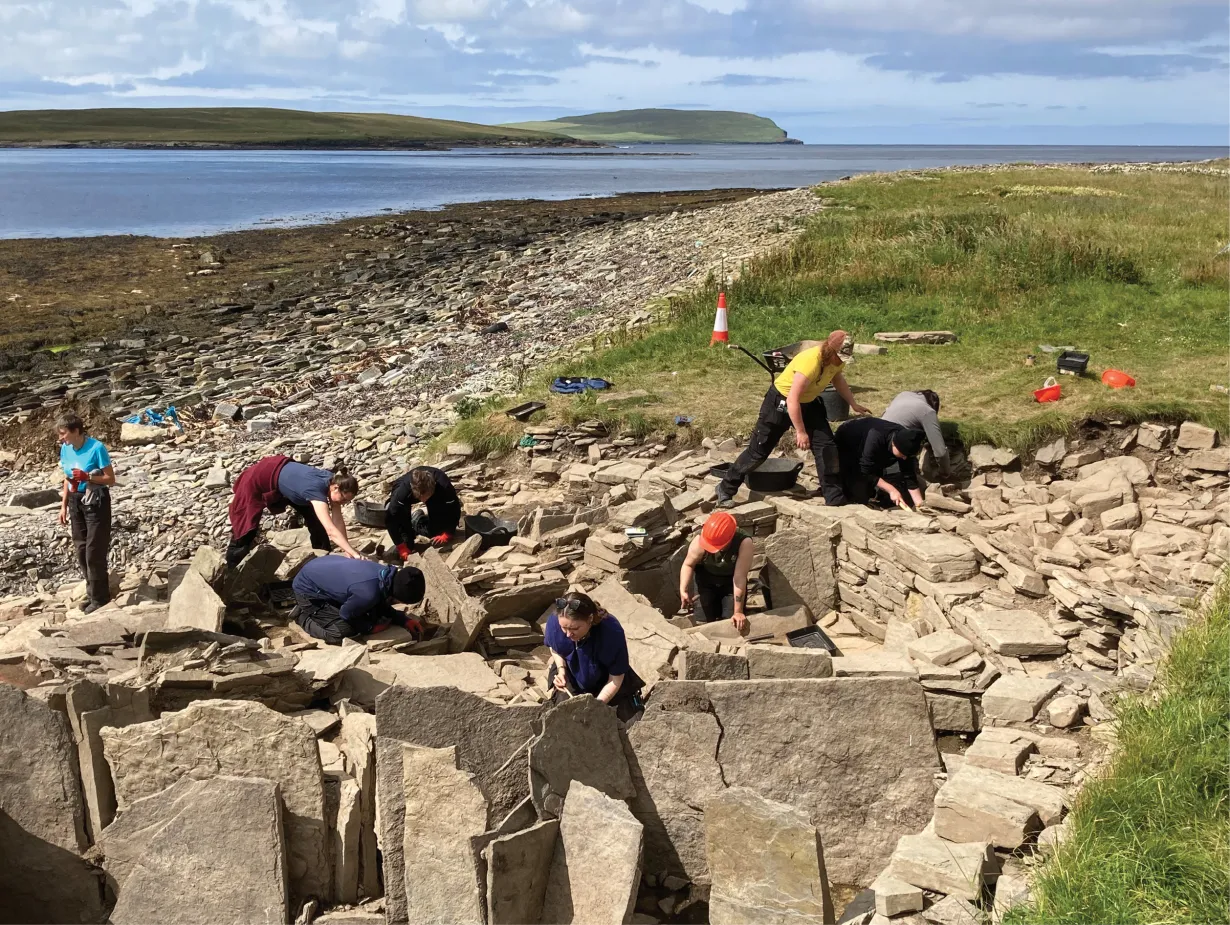
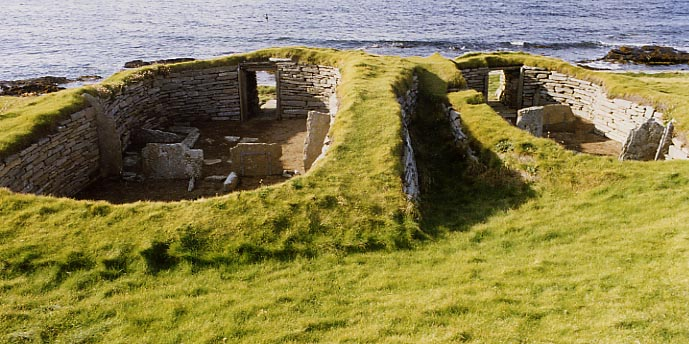
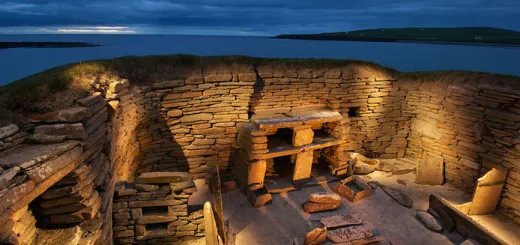
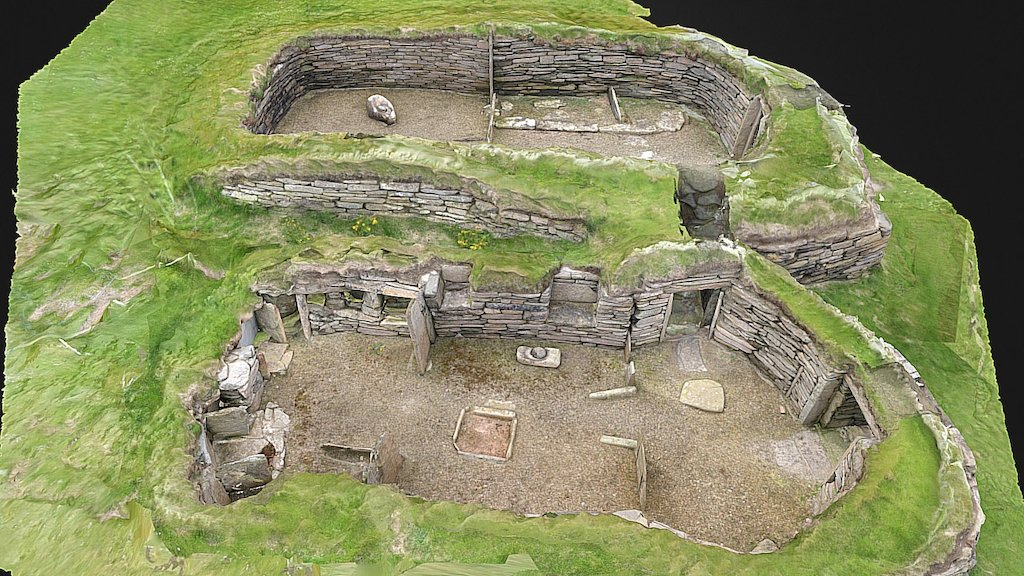
The Knap of Howar, located on the island of Papa Westray in Orkney, contains two stone-built houses dating to approximately 5,500 years ago.

The structures are among the oldest known preserved stone houses in northern Europe and provide extraordinary evidence for early farming communities.

Their architecture demonstrates that Neolithic people were already constructing durable homes and maintaining long-term relationships with the landscape.

One of Europe's Oldest Stone Houses

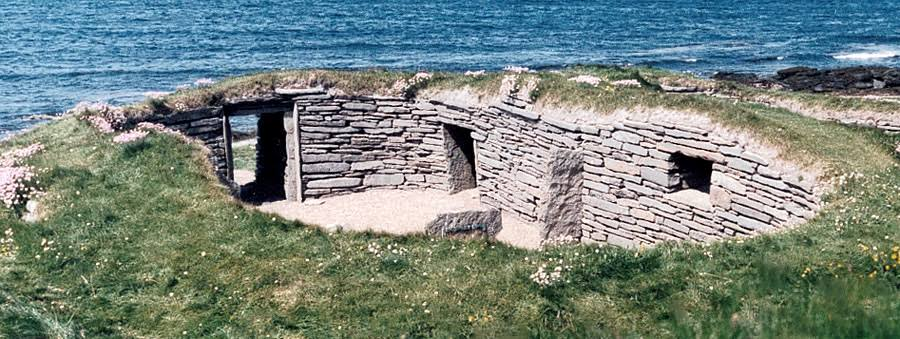
The Knap of Howar houses were constructed using local stone.

They were partially built into the ground, providing protection from Orkney's cold and windy climate.

The houses remained occupied for generations.

House Design

The two houses were connected by a low passage.

Inside were:

  • hearths;

  • stone beds;

  • storage compartments;

  • and work areas.

Their similarity suggests that they formed part of a planned settlement.

Farming

The inhabitants practiced agriculture and animal husbandry.

They likely cultivated cereals such as:

  • barley;

  • wheat;

  • and related crops.

They also raised livestock.

Cattle and Sheep

Livestock provided:

  • meat;

  • milk;

  • hides;

  • bones;

  • and labor.

Animals were also important socially.

Owning livestock could contribute to household wealth and status.

Marine Resources

Despite their farming lifestyle, the inhabitants continued to exploit the sea.

Their diet could include:

  • fish;

  • shellfish;

  • seabirds;

  • and other marine resources.

This demonstrates that Neolithic economies were diverse.

Stone Construction

Stone was abundant on Papa Westray.

Builders could use slabs and blocks without requiring large quantities of timber.

This was particularly advantageous in an environment with limited woodland.

Food Preparation

The hearth was the center of domestic life.

Fire allowed inhabitants to:

  • cook grain;

  • roast meat;

  • heat water;

  • and keep warm.

Grinding stones were used to process cereals.

Storage

Agriculture requires storage.

Harvested grain had to be protected from:

  • moisture;

  • pests;

  • and spoilage.

Stone storage spaces could help maintain food supplies.

Community Life

The construction of permanent houses indicates a significant degree of social stability.

People repeatedly returned to the same buildings.

This suggests:

  • attachment to place;

  • household organization;

  • and long-term management of agricultural land.

Climate

The Neolithic climate of Orkney was different from today but still challenging.

Strong winds and cool temperatures made sturdy buildings particularly valuable.

The partially subterranean design provided insulation.

Why Knap of Howar Matters

The Knap of Howar is important because it preserves evidence for:

  • early farming;

  • permanent settlement;

  • stone architecture;

  • domestic organization;

  • and mixed agricultural-marine economies.

Conclusion

The Knap of Howar demonstrates that Neolithic farmers in Orkney were capable of creating durable homes and organizing their lives around long-term settlement.

The houses provide an unusually intimate glimpse into prehistoric domestic life.

They show that more than 5,000 years ago, people were already building houses that could remain standing for generations.
Wideford Hill: Orkney's Neolithic Cairn

August 31, 2026

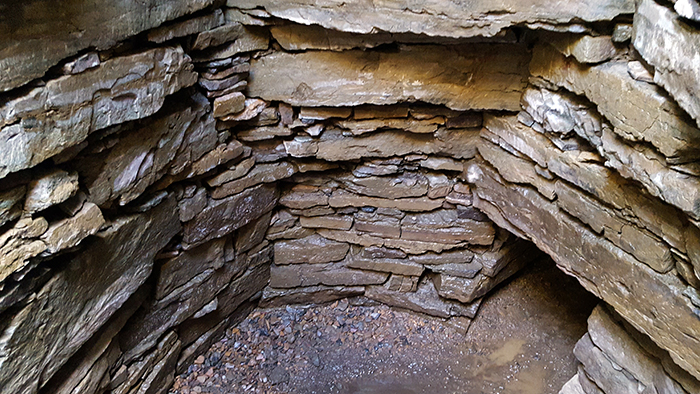
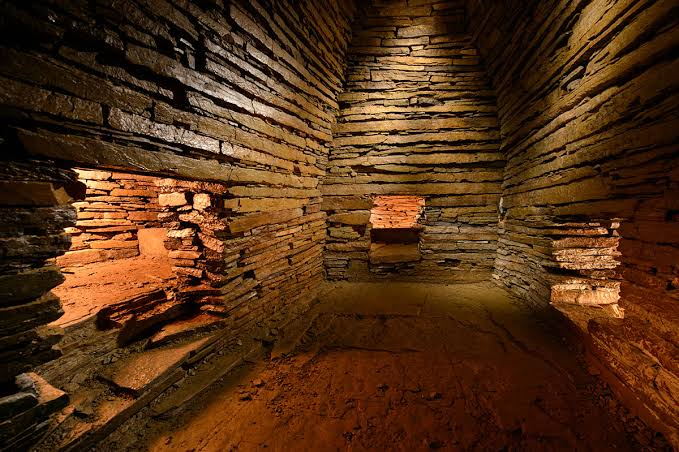
Wideford Hill, overlooking the landscape of Mainland Orkney, contains a significant Neolithic chambered cairn.

The monument belongs to the extraordinary funerary tradition of prehistoric Orkney, where communities constructed stone burial monuments that could serve as places of remembrance, ritual, and connection with ancestors.

Chambered Cairns

A chambered cairn is a stone-built funerary monument containing one or more internal chambers.

The structure was usually covered with a mound of stone.

People could enter the chamber through an organized passage.

Monumental Construction

Building a cairn required:

  • quarrying stone;

  • transporting blocks;

  • designing chambers;

  • constructing walls;

  • and creating the outer mound.

The labor required demonstrates substantial communal cooperation.

Burial Practices

Chambered cairns could contain human remains.

The dead were sometimes placed within the chamber over extended periods.

This suggests that the monument could function as a collective ancestral space rather than simply a single grave.

Passage and Chamber

The architecture created a transition between:

outside world → passage → inner chamber.

This physical movement may have had symbolic significance.

The interior could represent a special or sacred space.

The Dead and the Living

Neolithic communities did not necessarily separate the dead completely from everyday life.

Returning to ancestral monuments could reinforce:

  • family identity;

  • territorial claims;

  • social memory;

  • and community traditions.

Orkney's Monumental Landscape

Wideford Hill belongs to a much larger collection of Neolithic monuments.

Orkney contains:

  • chambered cairns;

  • standing stones;

  • stone circles;

  • settlements;

  • and ceremonial complexes.

The monuments were part of an interconnected cultural landscape.

Astronomy

Some Orkney monuments appear to have been deliberately aligned with astronomical events.

Researchers have examined orientations toward:

  • the setting Sun;

  • the winter solstice;

  • and lunar positions.

However, astronomical interpretations must be supported by architectural evidence rather than assumed automatically.

Landscape Position

Wideford Hill's elevated location is particularly significant.

The monument would have been visible across a substantial area.

This visibility may have helped establish it as a landmark.

Construction Materials

Local stone was the primary building material.

The ability to construct substantial monuments using locally available resources demonstrates technological adaptation.

Ritual Activity

Activities around chambered cairns may have included:

  • funerary ceremonies;

  • offerings;

  • communal gatherings;

  • and ancestral rituals.

The exact ceremonies are unknown.

Why Wideford Hill Matters

The cairn contributes to our understanding of:

  • Neolithic burial;

  • ancestor worship;

  • monument construction;

  • landscape organization;

  • and community identity.

Conclusion

Wideford Hill's chambered cairn is more than an ancient grave.

It represents a society that invested enormous effort in creating monuments intended to preserve connections between the living and the dead.

Within the wider Neolithic landscape of Orkney, such monuments helped transform the natural environment into a cultural landscape filled with ancestral memory and ritual meaning.

Cuween Hill: Orkney's Dog Bone Chambered Cairn

August 31, 2026

Cuween Hill, on Mainland Orkney, contains one of the most unusual chambered cairns in the British Isles.

The monument is a Neolithic burial structure containing human remains and the bones of several dogs.

The presence of the dog remains is particularly intriguing because it suggests that dogs may have had an important symbolic or practical role in the community that used the monument.

The Chambered Cairn

Cuween Hill is a stone-built passage grave.

A narrow passage leads into a central chamber.

Smaller side cells extend from the central area.

This architectural arrangement resembles other Neolithic chambered cairns in Orkney.

Human Remains

The cairn contained the remains of multiple individuals.

The accumulation of remains suggests that the monument was used over time rather than representing a single burial event.

This pattern is common in prehistoric communal tombs.

The Dog Bones

The discovery of dog remains is what makes Cuween Hill particularly unusual.

The remains represent several animals.

Their placement within the cairn suggests that dogs were intentionally included rather than simply appearing accidentally.

Why Were Dogs Buried Here?

Several interpretations are possible.

Dogs may have been:

  • hunting companions;

  • livestock guardians;

  • household animals;

  • symbols of social identity;

  • or ritual animals.

The archaeological evidence cannot tell us exactly which explanation is correct.

Dogs in Neolithic Society

Dogs had already been domesticated for thousands of years by the Neolithic.

They could assist humans in:

  • hunting;

  • guarding;

  • managing livestock;

  • and protecting settlements.

Their usefulness would have made them valuable companions.

Symbolic Importance

The deliberate burial of dogs could indicate emotional attachment.

It could also reflect symbolic associations.

Dogs might have been viewed as:

  • protectors;

  • guides;

  • companions;

  • or intermediaries between humans and the supernatural.

These interpretations remain hypotheses.

Architecture and Ritual

The cairn's internal design suggests that the monument was not merely a practical burial container.

Its passage and chambers created a carefully organized ritual environment.

Entering the tomb required deliberate movement from the outside into an enclosed interior.

The Dead as Ancestors

The repeated use of the cairn may indicate that the community maintained a relationship with ancestors.

Burial monuments could help establish:

  • lineage;

  • territorial claims;

  • community identity;

  • and social continuity.

Orkney's Dog Symbolism

The presence of dogs at Cuween Hill fits within a broader archaeological record showing that animals could occupy symbolic roles in prehistoric societies.

However, the specific meaning of dogs in Neolithic Orkney remains unknown.

Modern Scientific Analysis

Modern archaeological techniques can extract considerable information from human and animal remains.

Researchers can study:

  • age;

  • sex;

  • health;

  • diet;

  • trauma;

  • and genetic relationships.

Isotopic analysis can also provide information about mobility and diet.

Why Cuween Hill Matters

Cuween Hill is important because it provides evidence for:

  • communal burial;

  • Neolithic ritual;

  • human-animal relationships;

  • and the social importance of dogs.

Conclusion

Cuween Hill is one of the most fascinating burial monuments in Orkney because it brings humans and animals together within a sacred prehistoric structure.

The dog remains raise questions that archaeology cannot completely answer.

Were these animals beloved companions, hunting partners, guardians, ritual symbols, or something more?

Whatever their precise meaning, their presence demonstrates that dogs occupied an important position within the social and symbolic world of Neolithic Orkney.

The cairn therefore preserves not only the memory of the dead, but also evidence of the relationships between humans and animals more than 5,000 years ago.

Unstan Chambered Cairn: Orkney's Hybrid Tomb

August 31, 2026

The Unstan Chambered Cairn is one of the most distinctive Neolithic funerary monuments in Orkney, Scotland. Located near the shores of the Loch of Stenness on Mainland Orkney, the monument is particularly important because its architecture combines characteristics associated with different types of chambered tombs.

Dating to the Neolithic period, Unstan provides valuable evidence for how prehistoric communities in Orkney developed different approaches to burial, monument construction, and relationships with the dead.

A Monument of the Orkney Neolithic

Around 5,000 years ago, Orkney was home to farming communities that constructed substantial stone buildings and monumental structures.

These communities:

  • cultivated crops;

  • raised livestock;

  • exploited marine resources;

  • produced pottery;

  • constructed houses;

  • and built elaborate funerary monuments.

The Unstan cairn belongs to this broader tradition of monumental construction.

What Is a Chambered Cairn?

A chambered cairn is a stone-built funerary monument containing an internal burial chamber.

The chamber was generally covered by a mound of stones.

Unlike an ordinary grave, the structure could be reused and visited by members of the community.

This suggests that the monument served as a long-term place of remembrance.

Why Unstan Is Considered a Hybrid

Unstan is architecturally unusual because it combines features associated with different Orkney tomb traditions.

Its chamber includes characteristics of what archaeologists classify as Maeshowe-type and Orkney-Cromarty-type structures.

This makes the monument especially valuable for studying the evolution of Neolithic funerary architecture.

The Importance of Architecture

Architecture provides clues about prehistoric cultural relationships.

If monuments in different areas share architectural features, it may indicate:

  • cultural interaction;

  • movement of people;

  • shared religious traditions;

  • or the spread of architectural ideas.

Unstan demonstrates that prehistoric builders were not necessarily following a single standardized design.

The Burial Chamber

The internal chamber provided a controlled space for the deposition of human remains.

The dead may have been placed inside over an extended period.

This suggests that the monument could function as a collective ancestral space.

Collective Burial

Neolithic chambered tombs often contain the remains of several individuals.

This differs from the modern expectation of one grave per individual.

The monument could instead represent:

  • a family;

  • a lineage;

  • a community;

  • or a group with shared ancestry.

The Dead and Ancestors

The construction of a permanent monument around human remains suggests that the dead remained important to the living.

The tomb could serve as a physical connection between:

ancestors → living community → landscape.

It may have helped reinforce identity and continuity.

Pottery Connections

Unstan is also associated with a distinctive pottery tradition commonly known as Unstan Ware.

These vessels are important because pottery styles allow archaeologists to compare settlements and monuments.

Unstan Ware has been identified at several Orkney sites.

What Was the Pottery Used For?

The vessels may have been used for:

  • food preparation;

  • storage;

  • serving;

  • or ritual activities.

Their exact function varied.

The discovery of pottery within funerary contexts also raises the possibility that vessels formed part of ceremonies connected with the dead.

The Landscape Around Unstan

The monument stands within a remarkable prehistoric landscape.

Nearby are:

  • the Stones of Stenness;

  • the Ring of Brodgar;

  • Maeshowe;

  • and other prehistoric monuments.

This concentration demonstrates that the area was an important center of Neolithic activity.

Why Was So Much Monument Building Concentrated Here?

The area around the Lochs of Harray and Stenness provided:

  • fertile land;

  • water;

  • good visibility;

  • abundant stone;

  • and access to major travel routes.

It may also have held considerable symbolic significance.

Why Unstan Matters

Unstan is valuable because it demonstrates that Neolithic communities experimented with architectural forms.

Instead of constructing identical monuments, they adapted existing traditions to local circumstances.

Conclusion

The Unstan Chambered Cairn is a remarkable example of Neolithic experimentation in architecture and funerary practice.

Its hybrid design demonstrates that prehistoric communities were connected through shared traditions while still developing distinctive local expressions.

The monument therefore provides insight into how Neolithic Orcadians understood death, ancestry, architecture, and their place within the wider landscape.

Maeshowe: Orkney's 5,000-Year Winter Solstice Tomb

August 31, 2026

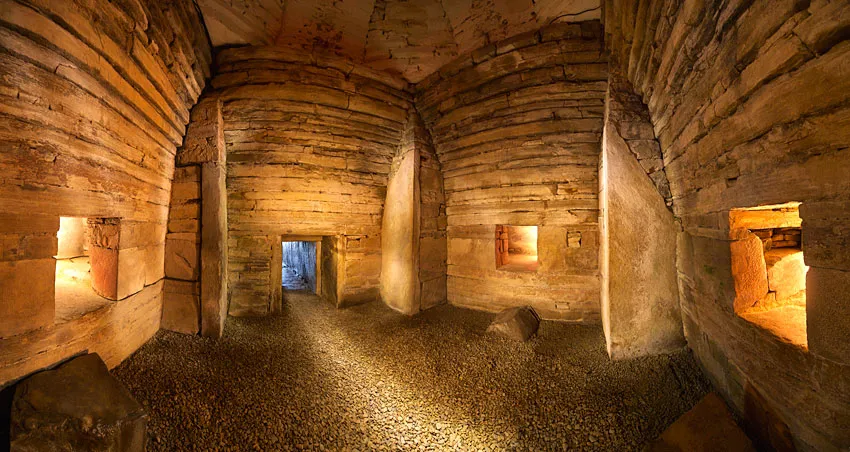
Maeshowe is one of the greatest prehistoric monuments in Scotland and one of the most sophisticated Neolithic passage graves in Europe.

Constructed approximately 5,000 years ago, the monument was deliberately designed so that sunlight from the setting winter sun could enter its long passage and illuminate the central chamber.

Its architecture demonstrates extraordinary knowledge of stone construction, geometry, landscape orientation, and possibly astronomy.

The Construction of Maeshowe

Maeshowe consists of a large artificial mound covering a central stone chamber.

A long passage leads from outside into the interior.

The builders constructed the monument using enormous stone slabs.

The Passage

The entrance passage is unusually long and carefully aligned.

During the winter solstice period, the setting Sun shines down the passage and illuminates the interior chamber.

This alignment is one of Maeshowe's most famous features.

The Winter Solstice

The winter solstice occurs when the Sun reaches its southernmost apparent position in the sky.

In the Northern Hemisphere, it marks the shortest day and longest night of the year.

For agricultural societies, seasonal cycles were extremely important.

The solstice could have represented:

  • the turning of the year;

  • renewal;

  • death and rebirth;

  • or the return of increasing daylight.

We cannot know exactly what the builders believed, but the deliberate alignment demonstrates that seasonal sunlight mattered.

Astronomical Knowledge

Maeshowe demonstrates that Neolithic builders carefully observed the movement of the Sun.

They did not need modern astronomy to recognize predictable seasonal patterns.

By observing:

  • sunrise;

  • sunset;

  • shadows;

  • and the position of the Sun on the horizon,

people could establish reliable seasonal markers.

Engineering

The construction of Maeshowe was a major engineering achievement.

Workers had to:

  • quarry stone;

  • transport massive slabs;

  • build stable walls;

  • create a roof;

  • construct the mound;

  • and maintain the alignment of the passage.

The Central Chamber

The central chamber is relatively small compared with the enormous mound outside.

The chamber was built with large upright slabs.

Some stones weigh several tons.

Funerary Function

Maeshowe is generally interpreted as a funerary monument.

However, its precise use remains debated.

Human remains were apparently present historically, but the monument was disturbed long before modern archaeological excavation.

The Meaning of the Mound

The mound would have been highly visible across the surrounding landscape.

Its size transformed it into a major landmark.

People approaching the area could identify the monument from a distance.

A Monument in a Sacred Landscape

Maeshowe was not isolated.

It sits within the broader Neolithic landscape of central Orkney.

Nearby monuments include:

  • the Ring of Brodgar;

  • the Stones of Stenness;

  • Barnhouse;

  • and the Ness of Brodgar.

This suggests that the entire landscape was organized around ceremonial activity.

Viking Graffiti

Maeshowe was entered by Vikings in the twelfth century.

They carved numerous runic inscriptions into the walls.

These inscriptions provide fascinating evidence of medieval interaction with the much older monument.

The Vikings did not build Maeshowe, but they recognized it as an extraordinary ancient structure.

What the Graffiti Reveals

The runes include:

  • names;

  • statements;

  • references to treasure;

  • and personal messages.

They demonstrate that Maeshowe continued to attract visitors thousands of years after its construction.

Preservation

The thick stone and earth structure helped preserve the monument.

However, modern conservation requires careful management of:

  • humidity;

  • visitor access;

  • stone surfaces;

  • and structural stability.

Why Maeshowe Matters

Maeshowe demonstrates that Neolithic communities possessed sophisticated knowledge of:

  • astronomy;

  • architecture;

  • engineering;

  • geometry;

  • and landscape planning.

Conclusion

Maeshowe is one of the clearest examples of prehistoric architecture deliberately connected to the movement of the Sun.

Its winter-solstice alignment, monumental mound, massive stones, and central chamber demonstrate an extraordinary combination of engineering and symbolism.

The monument continued to attract people for thousands of years, as shown by the Viking inscriptions carved into its walls.

Maeshowe therefore connects several historical periods within a single structure: Neolithic engineering, prehistoric ritual, and medieval Norse exploration.

Ness of Brodgar: Orkney's 5,000-Year Ritual Complex

August 31, 2026

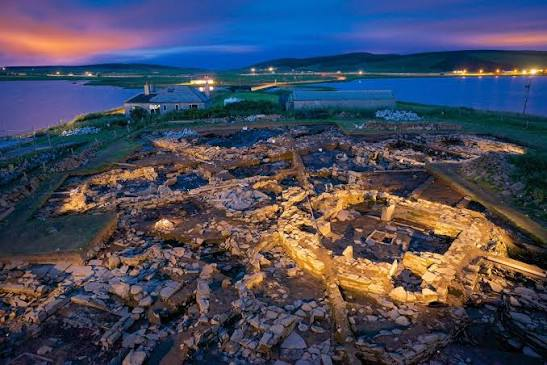
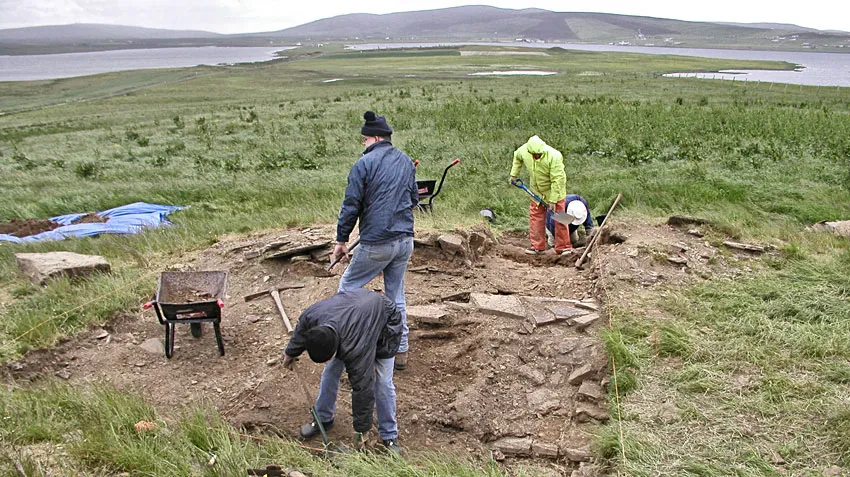
The Ness of Brodgar is one of the most remarkable archaeological discoveries in Britain.

Located between the Lochs of Harray and Stenness in Orkney, the site contains the remains of a large Neolithic complex occupied approximately 5,000 years ago.

The scale and sophistication of the architecture have led archaeologists to consider it a major ceremonial and social center.

A Vast Neolithic Complex

The Ness of Brodgar contains:

  • monumental stone buildings;

  • decorated stonework;

  • painted walls;

  • pottery;

  • animal remains;

  • tools;

  • and evidence of repeated ceremonial activity.

The scale is unusual for prehistoric Britain.

The Location

The Ness lies on a narrow strip of land between two major bodies of water.

This position may have been significant.

The surrounding landscape includes several monumental sites.

These include:

  • Maeshowe;

  • the Ring of Brodgar;

  • the Stones of Stenness;

  • and Barnhouse.

Monumental Architecture

The buildings at the Ness are much larger and more complex than ordinary houses.

Some structures contained:

  • massive walls;

  • carefully laid floors;

  • internal chambers;

  • decorated stones;

  • and large entrances.

Why Build Such Large Structures?

Large buildings require enormous investments of labor.

Communities had to organize:

  • quarrying;

  • transportation;

  • construction;

  • food supply;

  • and maintenance.

This suggests that the site had considerable social importance.

Painted Stone

Some stones at the Ness of Brodgar preserve traces of red and yellow pigment.

Painted architecture is extremely rare in British prehistory.

The use of color may have helped create a visually striking ceremonial environment.

Animal Feasting

Large quantities of animal bone have been discovered.

These include remains of:

  • cattle;

  • sheep;

  • deer;

  • and other animals.

Some deposits appear to represent large-scale feasting.

Feasting and Social Organization

Feasts can serve important social purposes.

They can:

  • strengthen alliances;

  • celebrate rituals;

  • reinforce political relationships;

  • redistribute food;

  • and establish community identity.

The evidence suggests that food consumption at the Ness could have been part of major communal events.

Pottery

Large quantities of pottery have been recovered.

Some vessels belong to the Grooved Ware tradition.

Their presence links the Ness to other major Neolithic sites in Britain.

Stone Tools

Archaeologists have discovered tools associated with:

  • woodworking;

  • food preparation;

  • hunting;

  • and craft production.

These artifacts reveal the range of activities carried out at the site.

A Ritual Center

The Ness was probably not simply a village.

Its monumental buildings and location among major ceremonial monuments suggest that it functioned as an important gathering place.

People may have traveled considerable distances to participate in ceremonies.

The Broader Landscape

The surrounding monuments form one of Europe's most impressive prehistoric ceremonial landscapes.

The arrangement of:

  • settlements;

  • tombs;

  • standing stones;

  • and circles

suggests that the landscape itself was carefully organized.

Abandonment

The Ness of Brodgar was eventually abandoned.

Some buildings were deliberately closed or filled.

This raises fascinating questions about ritual termination.

A building could be destroyed or buried as part of a ceremony rather than simply left to decay.

Why the Site Matters

The Ness of Brodgar has changed our understanding of Neolithic Britain.

It demonstrates that prehistoric communities could create:

  • monumental architecture;

  • ceremonial centers;

  • large-scale feasts;

  • artistic environments;

  • and complex social institutions.

Conclusion

The Ness of Brodgar is one of the clearest indications that Neolithic Orkney was a major center of cultural innovation.

Its enormous buildings, painted stones, feasting deposits, and relationship with nearby monuments reveal a society capable of organizing large communities around shared ceremonial activities.

The site transforms our understanding of prehistoric Britain from a landscape of isolated farming villages into one containing sophisticated ceremonial centers and interconnected communities.

Ring of Brodgar: Orkney's 5,000-Year Stone Circle

August 31, 2026

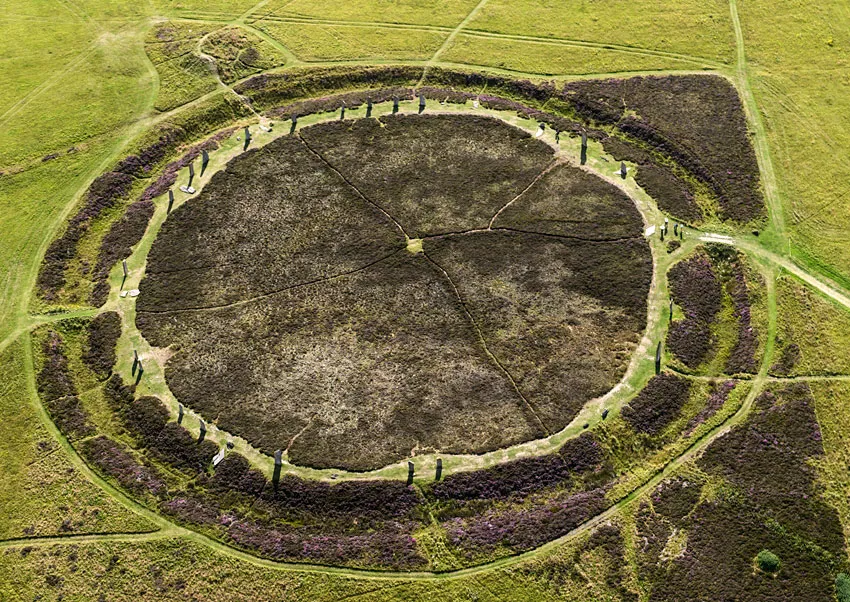
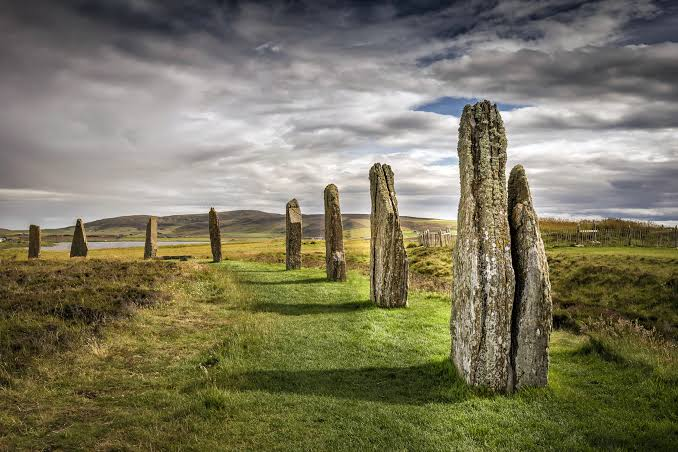
The Ring of Brodgar is one of the most spectacular prehistoric stone circles in Britain.

Located on the Orkney Mainland between the Lochs of Harray and Stenness, the monument forms part of the extraordinary Heart of Neolithic Orkney landscape.

Its enormous circular arrangement of standing stones demonstrates the ability of Neolithic communities to organize labor, transport heavy materials, and create monuments with powerful visual and symbolic effects.

The Stone Circle

The Ring of Brodgar originally contained many standing stones arranged in a large circle.

Although some stones have fallen or disappeared, a substantial number survive.

The circle is surrounded by a large ditch.

The Ditch

The ditch was excavated into the underlying rock.

Creating it required enormous quantities of labor.

The ditch may have helped define the monument as a special or separate space.

Monumental Labor

Moving and erecting standing stones was difficult.

Workers needed to:

  1. locate suitable stones;

  2. extract or transport them;

  3. move them across the landscape;

  4. prepare the ground;

  5. raise them;

  6. and stabilize them.

This required cooperation among many people.

Why Make a Circle?

The exact purpose of the Ring of Brodgar remains uncertain.

Possibilities include:

  • ceremonial gatherings;

  • seasonal rituals;

  • astronomical observation;

  • social meetings;

  • or religious ceremonies.

The monument may have served several purposes simultaneously.

Astronomy

Researchers have investigated possible astronomical relationships at Brodgar.

The positions of stones and surrounding monuments may relate to:

  • the Sun;

  • the Moon;

  • seasonal events;

  • and horizon positions.

However, identifying intentional astronomical alignments requires careful statistical analysis.

The Surrounding Landscape

The Ring of Brodgar forms part of a remarkable cluster.

Nearby are:

  • the Stones of Stenness;

  • Maeshowe;

  • the Ness of Brodgar;

  • and Barnhouse.

The proximity of these sites suggests that the area was a major ceremonial center.

Visibility

The monument is highly visible across the surrounding landscape.

Standing stones can serve as powerful landmarks.

Their visibility may have helped people identify gathering places and establish relationships between different communities.

Ritual Space

The ditch and circle could have separated the interior from the surrounding landscape.

Entering the monument may therefore have involved a transition from ordinary space into a ceremonial environment.

Neolithic Community

The builders were farming communities.

They cultivated crops and raised animals while continuing to exploit marine resources.

The monument demonstrates that agricultural societies could devote substantial labor to activities that were not directly related to food production.

Preservation

Orkney's harsh climate presents conservation challenges.

Wind, rain, frost, and biological growth can affect the stones and surrounding archaeological deposits.

Modern preservation therefore requires careful management.

UNESCO Recognition

The Ring of Brodgar is part of the Heart of Neolithic Orkney World Heritage Site.

Its importance is recognized internationally because of the extraordinary concentration of prehistoric monuments in the region.

Why the Ring Matters

The monument demonstrates:

  • engineering skill;

  • social cooperation;

  • ritual organization;

  • landscape planning;

  • and cultural continuity.

Conclusion

The Ring of Brodgar is one of the most powerful surviving monuments of Neolithic Britain.

Its immense circular arrangement, surrounding ditch, and relationship with nearby tombs and settlements reveal a society capable of organizing large-scale communal projects.

Although its exact purpose remains unknown, the monument clearly occupied an important place within the ceremonial landscape of Neolithic Orkney.

Stones of Stenness: Orkney's Neolithic Henge

August 31, 2026

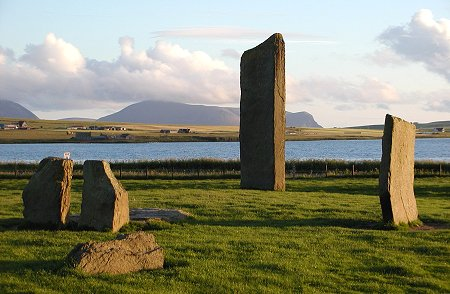
The Stones of Stenness are among the oldest and most dramatic stone monuments in the British Isles.

Located in central Orkney, the surviving standing stones form part of a prehistoric ceremonial landscape that includes the Ring of Brodgar, Maeshowe, the Ness of Brodgar, and Barnhouse.

The monument demonstrates the extraordinary importance of communal ritual in Neolithic Orkney.

One of Britain's Earliest Stone Circles

The Stones of Stenness date to the Neolithic period.

The monument is generally considered earlier than or broadly contemporary with other major Orkney ceremonial structures.

Its massive stones were deliberately positioned within a defined ceremonial space.

The Henge

The monument belongs to the broad category known as a henge.

Henges typically consist of:

  • an enclosed area;

  • a ditch;

  • and an external bank.

However, their exact functions varied considerably.

Massive Stones

The surviving stones are enormous.

Their size would have made transportation and erection a major engineering challenge.

The builders needed to coordinate:

  • manpower;

  • ropes;

  • timber;

  • stone movement;

  • and construction planning.

The Central Hearth

Archaeological evidence suggests that activities took place within the ceremonial enclosure.

A large central hearth or stone setting may have been associated with ritual activity.

Ritual Gatherings

The monument could have hosted gatherings involving:

  • feasting;

  • ceremonies;

  • music;

  • dancing;

  • storytelling;

  • and social negotiation.

We cannot reconstruct the exact rituals, but the scale of the monument indicates that communal activity was important.

The Landscape Connection

The Stones of Stenness are visually connected with other major monuments.

This creates an interconnected ceremonial landscape.

People moving across central Orkney would encounter:

  • standing stones;

  • burial mounds;

  • villages;

  • and monumental enclosures.

Astronomy

Like several Orkney monuments, Stenness has been examined for possible astronomical alignments.

The orientation of stones and entrances may correspond to seasonal solar positions.

However, not every alignment necessarily had an astronomical purpose.

The Importance of Stone

Stone has exceptional durability.

A monument made from stone could survive for thousands of years.

This allowed communities to create enduring landmarks that outlasted individual generations.

Ancestors and Memory

Standing stones may have helped communities maintain connections with the past.

A monument could represent:

  • ancestral memory;

  • territorial identity;

  • shared history;

  • or collective religious beliefs.

Later History

The monument continued to attract people long after its construction.

Medieval and early modern communities interacted with the stones.

Some stones were removed or damaged over time.

Why Stenness Matters

The Stones of Stenness provide evidence for:

  • monumental construction;

  • social organization;

  • ritual gathering;

  • landscape planning;

  • and long-term cultural memory.

Conclusion

The Stones of Stenness demonstrate that Neolithic Orkney was a society capable of monumental communal projects.

The standing stones were not simply isolated objects.

They formed part of a carefully organized landscape containing settlements, tombs, ceremonial centers, and other monuments.

Barnston: Orkney's Bronze Age Cairn Circle

August 31, 2026

The name Barnston is associated with the prehistoric archaeological landscape of Orkney, although specific site identification and terminology should be treated carefully because several prehistoric cairns and circular monuments across the islands have similar descriptive names.

The broader phenomenon of Bronze Age cairn circles provides important evidence for changing burial traditions after the Neolithic monumental period.

From Neolithic to Bronze Age

The transition from the Neolithic into the Bronze Age brought major social and technological changes.

Communities increasingly used:

  • copper;

  • bronze;

  • new forms of pottery;

  • and different burial practices.

However, many older traditions continued.

Bronze Age Cairns

A cairn is a mound made primarily from stones.

Bronze Age cairns could function as:

  • burial monuments;

  • commemorative structures;

  • territorial landmarks;

  • or ceremonial sites.

Circular Design

Circular monuments were particularly common in prehistoric Britain.

A circular form may have had symbolic associations with:

  • the Sun;

  • cycles;

  • seasons;

  • or community identity.

However, the meaning of the circle cannot be known with certainty.

Burial Practices

Bronze Age burial customs varied.

People could be buried:

  • individually;

  • collectively;

  • in cists;

  • beneath cairns;

  • or after cremation.

Cremation became increasingly important in many parts of Britain.

Cists

A stone cist is a small box-like burial structure made from stone slabs.

The deceased or cremated remains could be placed inside before the structure was covered.

Bronze Objects

Some Bronze Age burials contain objects such as:

  • knives;

  • axes;

  • pins;

  • ornaments;

  • and weapons.

These objects can provide evidence for technological development and social status.

Orkney's Landscape

Orkney remained an important agricultural region during the Bronze Age.

Communities continued to use:

  • farmland;

  • grazing areas;

  • coastal resources;

  • and earlier monumental landscapes.

Reuse of Earlier Monuments

Bronze Age communities sometimes reused Neolithic monuments.

This suggests that older monuments retained significance.

People could reinterpret ancestral structures according to changing beliefs.

Environmental Change

During the Bronze Age, climate and vegetation patterns changed.

These changes affected:

  • agriculture;

  • grazing;

  • woodland;

  • and settlement patterns.

Why Cairn Circles Matter

Cairn circles reveal how communities transformed the landscape through burial and commemoration.

Their construction required labor and organization even when the structures were smaller than earlier monumental complexes.

Conclusion

Bronze Age cairn circles such as those represented in the Orkney archaeological landscape demonstrate that monumental traditions continued after the great Neolithic ceremonial period.

The people of the Bronze Age inherited an already ancient landscape and added their own burial monuments, technologies, and traditions.

Their cairns provide evidence for changing beliefs about death, identity, ancestry, and the landscape.

Bookan Chambered Cairn: Orkney's Tripartite Tomb

August 31, 2026

The Bookan Chambered Cairn is a prehistoric funerary monument on Mainland Orkney associated with the island's remarkable Neolithic chambered-tomb tradition.

Its internal organization and relationship to other Orkney monuments make it important for understanding how prehistoric communities designed burial spaces and maintained relationships with the dead.

Chambered Tombs

Chambered cairns were among the most important monuments built by Neolithic communities.

They combined:

  • stone architecture;

  • burial;

  • ritual;

  • and landscape symbolism.

The Tripartite Arrangement

The description “tripartite tomb” refers to the division of the internal monument into multiple spaces.

Such divisions could create different ritual zones.

The architecture controlled how people moved through the tomb.

Passage and Chamber

A typical chambered cairn could contain:

  • an entrance;

  • a passage;

  • and internal chambers.

The movement from the exterior into the interior may have had symbolic significance.

Collective Burial

These monuments often received multiple individuals.

The tomb could therefore serve as a communal ancestral space.

Rather than representing one person's final resting place, it may have represented a group's relationship with its predecessors.

The Importance of Ancestors

Ancestors could provide communities with a sense of:

  • identity;

  • continuity;

  • belonging;

  • and connection to the land.

A monumental tomb created a permanent physical reminder of those relationships.

Construction

The builders used local stone.

Large slabs had to be:

  • quarried;

  • transported;

  • positioned;

  • and stabilized.

The construction process required coordinated labor.

The Orkney Tomb Tradition

Bookan belongs to a much larger family of prehistoric monuments across Orkney.

Other important examples include:

  • Maeshowe;

  • Unstan;

  • Cuween Hill;

  • Quoyness;

  • Taversoe Tuick;

  • and Knowe of Yarso.

Pottery and Artifacts

Archaeological material from chambered cairns can include:

  • pottery;

  • stone tools;

  • animal remains;

  • and human remains.

These artifacts help researchers reconstruct how monuments were used.

Landscape Position

Orkney's tombs were frequently placed in prominent landscapes.

A monument could be visible from:

  • settlements;

  • fields;

  • coastlines;

  • and neighboring monuments.

This visibility may have reinforced its role as a territorial or ancestral landmark.

Ritual Activities

Possible activities included:

  • burial ceremonies;

  • offerings;

  • feasting;

  • and visits to ancestral remains.

The archaeological evidence does not preserve the spoken words, songs, or beliefs that accompanied these activities.

Why Bookan Matters

Bookan contributes to our understanding of:

  • Neolithic funerary architecture;

  • collective burial;

  • ritual movement;

  • social identity;

  • and landscape organization.

Conclusion

Bookan Chambered Cairn demonstrates how Neolithic communities used architecture to structure relationships with death and ancestry.

Its divided internal spaces were not simply practical burial chambers.

They formed part of a broader ceremonial system in which architecture, human remains, community identity, and the surrounding Orkney landscape were closely connected.

Quoyness Chambered Cairn: Sanday's Maeshowe-Type Tomb

August 31, 2026

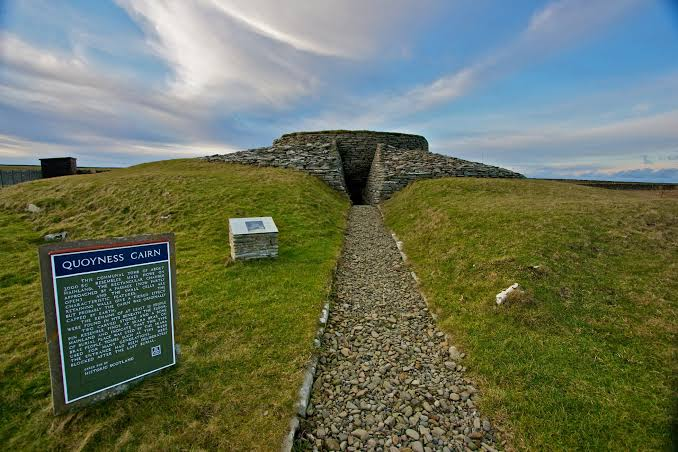
The Quoyness Chambered Cairn, located on the island of Sanday in Orkney, is an important Neolithic passage tomb.

Its architectural design is associated with the Maeshowe-type tradition, making it valuable for understanding the development and distribution of sophisticated funerary architecture across prehistoric Orkney.

The Island of Sanday

Sanday is one of Orkney's northern islands.

Its landscape includes:

  • fertile farmland;

  • beaches;

  • dunes;

  • wetlands;

  • and coastal resources.

The island offered diverse opportunities for prehistoric communities.

The Chambered Cairn

Quoyness consists of a stone-built cairn covering a central burial chamber.

A passage provides access to the interior.

The architecture required substantial engineering knowledge.

Maeshowe-Type Architecture

Maeshowe-type tombs generally feature:

  • long entrance passages;

  • substantial central chambers;

  • and carefully constructed stone walls.

These monuments demonstrate a sophisticated approach to architectural design.

The Central Chamber

The central chamber could contain human remains.

The space may have been reused repeatedly.

This suggests that the tomb was connected to long-term ancestral traditions.

Human Remains

The discovery of human remains within chambered cairns provides evidence for communal burial practices.

Individuals may have been deposited over generations.

The monument could therefore preserve the remains of a community's ancestors.

Ritual Access

The passage controlled entry.

This means that people could not simply walk into the central chamber casually.

Entering required deliberate movement.

This may have created a ritual experience.

Solstice Connections

Some Maeshowe-type tombs show evidence of astronomical orientation.

The alignment of entrances may have been connected with the seasonal movement of the Sun.

Whether Quoyness itself had a precise astronomical function requires careful archaeological analysis.

Construction Materials

Local stone formed the primary building material.

The availability of stone made durable architecture possible on Sanday.

Coastal Environment

The tomb's location within an island landscape also connected it to:

  • the sea;

  • farmland;

  • settlements;

  • and other monuments.

The placement of the tomb therefore contributed to the cultural organization of the landscape.

Why Quoyness Matters

Quoyness demonstrates that sophisticated monumental traditions extended beyond central Mainland Orkney.

Its architecture shows that island communities participated in broader cultural systems.

Conclusion

Quoyness Chambered Cairn is a powerful example of Neolithic funerary architecture on Sanday.

Its Maeshowe-type design demonstrates that prehistoric communities across Orkney shared architectural ideas while adapting them to their own local landscapes.

The tomb preserves evidence of collective burial, ritual movement, engineering skill, and the importance of ancestors in Neolithic society.

Taversoe Tuick: Rousay's Two-Story Neolithic Tomb

August 31, 2026

Taversoe Tuick, located on the island of Rousay in Orkney, is one of the most unusual chambered tombs in Britain.

Its most remarkable feature is its two-level construction, with separate chambers arranged vertically.

This unusual architecture provides evidence for the diversity and complexity of Neolithic funerary traditions in Orkney.

An Unusual Tomb

Most chambered cairns are organized horizontally.

Taversoe Tuick is different.

It contains:

  • an upper chamber;

  • a lower chamber;

  • and associated passages.

The vertical arrangement makes the monument particularly distinctive.

Why Build Two Levels?

The reason for the two-story design is unknown.

Possible explanations include:

  • different burial phases;

  • different ritual functions;

  • architectural experimentation;

  • or symbolic distinctions between spaces.

No interpretation can currently be confirmed.

Collective Burial

Like many Neolithic chambered tombs, Taversoe Tuick was used for multiple individuals.

The monument therefore represents a communal approach to burial.

The Upper Chamber

The upper level would have been accessible from the surface.

It formed part of the monument's overall ritual architecture.

The Lower Chamber

The lower chamber is particularly interesting because it created a more enclosed and subterranean environment.

Moving downward could have carried symbolic significance.

Architecture and Ritual

Prehistoric architecture often manipulated:

  • light;

  • darkness;

  • movement;

  • visibility;

  • and enclosure.

The transition from the outside world into an enclosed chamber could have created a dramatic ritual experience.

The Landscape of Rousay

Rousay contains numerous prehistoric monuments.

These include:

  • Knowe of Yarso;

  • Blackhammer;

  • Taversoe Tuick;

  • and other chambered cairns.

The concentration demonstrates that the island was an important center of Neolithic activity.

Farming Communities

The people who constructed these monuments were agriculturalists.

They raised livestock and cultivated crops while also exploiting:

  • fish;

  • shellfish;

  • birds;

  • and wild plants.

Monument Construction

Building the tomb required:

  • stone quarrying;

  • transportation;

  • engineering;

  • and communal labor.

The effort demonstrates strong social organization.

Ancestors and Identity

A tomb used by generations could become a central symbol of group identity.

It could connect living communities with:

  • ancestors;

  • territory;

  • and shared history.

Why Taversoe Tuick Matters

The tomb demonstrates that Neolithic builders did not follow a single architectural formula.

They experimented with unusual spatial arrangements.

This diversity suggests that ritual architecture was flexible and responsive to local traditions.

Conclusion

Taversoe Tuick is remarkable because its two-story design challenges the assumption that prehistoric tombs were architecturally simple.

The monument demonstrates careful planning and sophisticated manipulation of space.

Its upper and lower chambers created different environments within one structure, providing prehistoric communities with multiple spaces for burial and ritual activity.

Knowe of Yarso: Rousay's Stalled Cairn

August 31, 2026

The Knowe of Yarso is a Neolithic chambered cairn on the island of Rousay in Orkney.

It belongs to the distinctive stalled cairn tradition found particularly in Orkney and northern Scotland.

The monument provides valuable evidence for prehistoric burial practices, architectural design, and the social importance of ancestors.

What Is a Stalled Cairn?

A stalled cairn contains a long chamber divided by upright stone slabs or “stalls.”

These stones create separate compartments within the main chamber.

The architecture resembles a series of internal bays.

The Purpose of the Stalls

The exact purpose of these divisions remains uncertain.

They may have:

  • separated groups of human remains;

  • organized burial deposits;

  • structured ritual movement;

  • or symbolically divided the chamber.

Collective Burial

The Knowe of Yarso contained numerous human remains.

This is consistent with the use of stalled cairns as collective burial monuments.

The individuals may have belonged to several generations of the same community.

Handling of Human Remains

Neolithic burial practices could be very different from modern customs.

Bodies may have been:

  • placed in tombs;

  • allowed to decompose;

  • rearranged;

  • and sometimes moved within the monument.

This suggests that the relationship with the dead was an ongoing process.

Ancestor Ritual

The cairn may have been used to maintain connections with deceased members of the community.

Ritual visits could reinforce:

  • lineage;

  • identity;

  • territorial relationships;

  • and collective memory.

Architecture

The monument's construction required carefully arranged stone.

The builders needed to create:

  • stable walls;

  • internal divisions;

  • a roof;

  • and an outer cairn.

The engineering knowledge involved was substantial.

Rousay's Neolithic Landscape

Knowe of Yarso is part of a remarkable concentration of prehistoric monuments on Rousay.

Other important sites include:

  • Taversoe Tuick;

  • Blackhammer;

  • and other chambered cairns.

This concentration suggests that the island had a significant prehistoric population and ceremonial tradition.

Farming and Food

The communities who built the cairn practiced agriculture and animal husbandry.

They raised livestock and cultivated cereals.

They also exploited the sea and wild resources.

Visibility and Landscape

The location of a burial monument could communicate its importance.

A cairn placed prominently in the landscape could act as:

  • a territorial marker;

  • an ancestral landmark;

  • and a reminder of community history.

Comparison With Other Tombs

Stalled cairns differ architecturally from:

  • Maeshowe-type tombs;

  • passage graves;

  • and other chambered monuments.

This diversity demonstrates that prehistoric Orkney contained multiple funerary traditions.

Why Knowe of Yarso Matters

The monument is valuable for studying:

  • collective burial;

  • architecture;

  • social organization;

  • ancestor traditions;

  • and regional cultural diversity.

Conclusion

Knowe of Yarso provides a remarkable glimpse into how Neolithic communities treated their dead.

Its internal stone stalls divided the chamber into organized spaces, while the monument itself transformed human remains into a permanent feature of the landscape.

Together with other tombs on Rousay, it demonstrates that Neolithic Orkney was home to sophisticated communities with diverse architectural and funerary traditions.

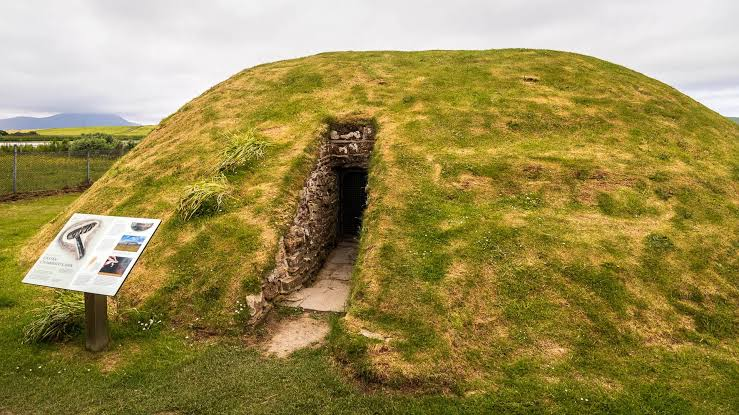
The Knowe of Yarso ultimately reminds us that prehistoric monuments were not simply structures of stone. They were places where communities expressed identity, remembered ancestors, and connected generations to the landscapes they inhabited.

Midhowe Chambered Cairn: Rousay's Longest Tomb

August 31, 2026

The Midhowe Chambered Cairn on the island of Rousay in Orkney is one of the most impressive prehistoric burial monuments in Scotland. Sometimes described as one of the longest and most elaborate stalled chambered cairns in Orkney, the monument provides exceptional evidence for Neolithic funerary architecture and the ways prehistoric communities organized relationships with their dead.

Located within a landscape containing numerous prehistoric monuments, Midhowe demonstrates that Rousay was an important center of Neolithic activity.

The Architecture of Midhowe

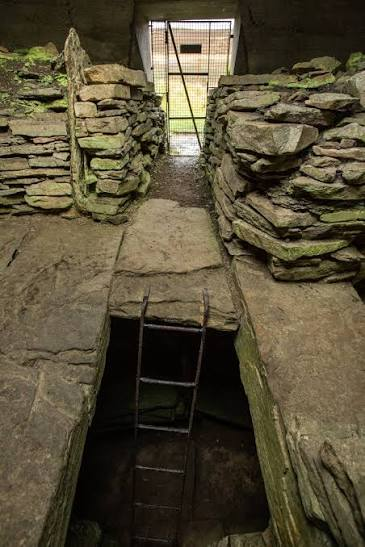
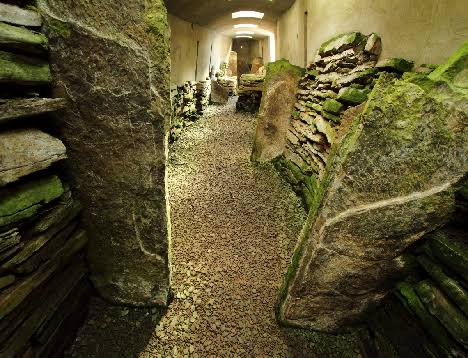
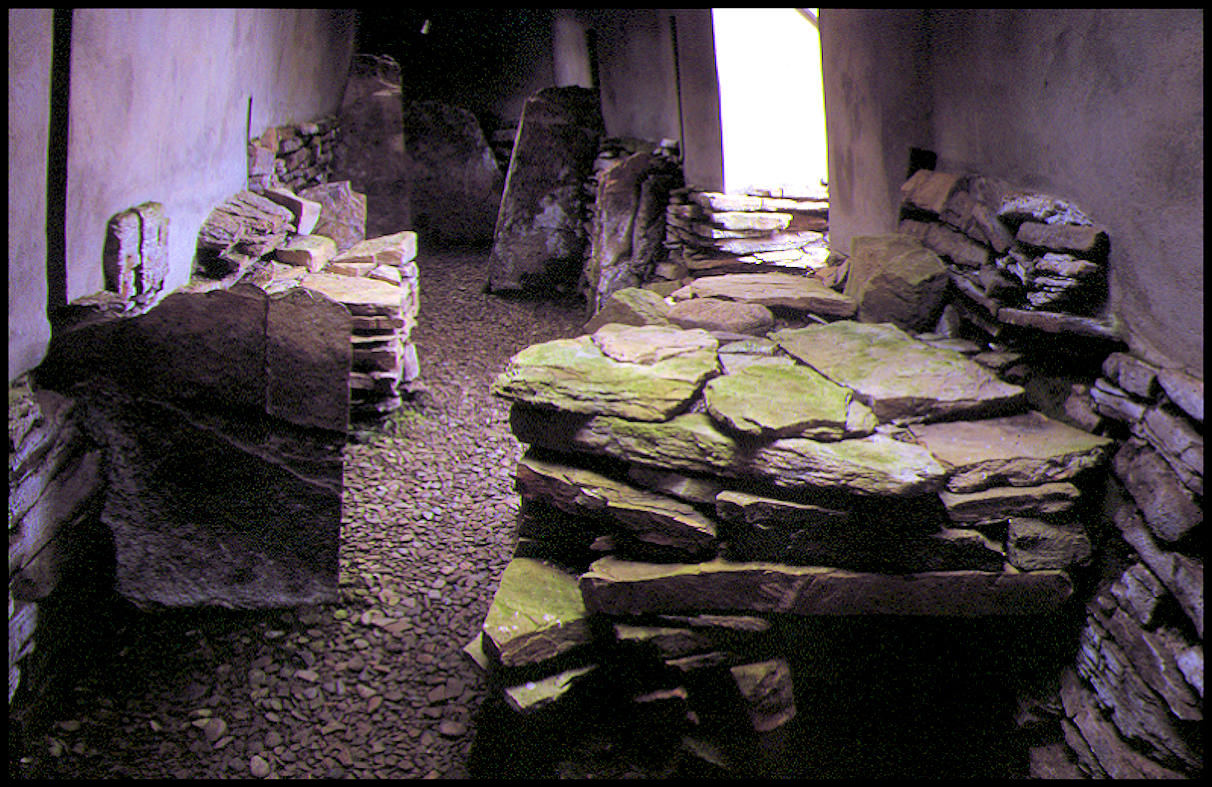
Midhowe is a long, stone-built chambered cairn.

Its internal chamber is divided by upright stone slabs, creating a series of compartments or “stalls.”

This architectural feature gives the monument its classification as a stalled cairn.

The structure originally had a substantial stone covering, creating a large cairn visible across the surrounding landscape.

A Monument Built for the Dead

Midhowe was a funerary monument rather than an ordinary dwelling.

The chamber was used for the deposition of human remains.

Multiple individuals were associated with the monument, demonstrating that it was probably used repeatedly rather than serving as the tomb of a single person.

Collective Burial

The presence of numerous human remains is important because it indicates a collective approach to burial.

Instead of each individual receiving a completely separate grave, members of a community could become part of a shared ancestral monument.

This may have reinforced ideas of:

  • family;

  • lineage;

  • community;

  • ancestry;

  • and territorial identity.

The Stalls

The internal upright stones divide the long chamber into separate spaces.

Archaeologists do not know exactly why these divisions were created.

They may have helped organize:

  • individual burial deposits;

  • different groups of remains;

  • ritual activities;

  • or movement through the monument.

The architecture therefore controlled how people interacted with the dead.

Construction

Building Midhowe required substantial labor.

Workers had to:

  • locate suitable stone;

  • quarry or extract it;

  • transport it;

  • build the chamber walls;

  • position the internal stalls;

  • construct the roof;

  • and cover the structure with a large cairn.

Such work could only have been accomplished through coordinated community activity.

Farming Communities

The people who built Midhowe lived during the Neolithic period.

They practiced agriculture and animal husbandry.

Their economy included:

  • cereal cultivation;

  • cattle keeping;

  • sheep and goat husbandry;

  • fishing;

  • shellfish collection;

  • and hunting.

The Sea Around Rousay

Rousay's island environment provided access to rich marine resources.

The surrounding waters could provide:

  • fish;

  • shellfish;

  • seabirds;

  • and marine mammals.

This complemented agricultural production.

A Monumental Landscape

Midhowe was not isolated.

Rousay contains a remarkable concentration of Neolithic chambered tombs.

These include:

  • Taversoe Tuick;

  • Knowe of Yarso;

  • Blackhammer;

  • and other monuments.

The density of monuments suggests that the island was a significant prehistoric cultural landscape.

Visibility

Large cairns were highly visible.

Their presence could mark important locations and establish connections between communities and the land.

A tomb could therefore function simultaneously as:

  • a burial place;

  • a landmark;

  • a ritual location;

  • and a symbol of ancestral ownership.

Why Midhowe Matters

Midhowe is particularly important because of its impressive length and internal organization.

It demonstrates that Neolithic builders were capable of creating complex architectural spaces for collective funerary activity.

Conclusion

Midhowe Chambered Cairn is one of Rousay's greatest prehistoric monuments.

Its long chamber, internal stone stalls, human remains, and monumental construction demonstrate that Neolithic communities possessed sophisticated architectural skills and strong traditions surrounding ancestry and death.

The monument is ultimately evidence not only of how people buried their dead, but of how they organized society, memory, and relationships with the landscape

Blackhammer Chambered Cairn: Rousay's Passage Grave

August 31, 2026

The Blackhammer Chambered Cairn is another remarkable Neolithic monument on Rousay.

It belongs to the rich funerary tradition of Orkney's chambered cairns and provides evidence for the sophisticated architectural techniques used by prehistoric communities to create permanent monuments for collective burial.

Its carefully constructed passage and chamber demonstrate how movement through a tomb could be deliberately controlled.

The Chambered Cairn Tradition

Across Neolithic Orkney, communities constructed different types of chambered tombs.

These included:

  • stalled cairns;

  • passage graves;

  • Maeshowe-type tombs;

  • and other local variations.

Blackhammer belongs to this diverse architectural tradition.

The Passage

The entrance passage creates a transition between the outside landscape and the enclosed burial chamber.

This arrangement may have had practical and symbolic functions.

Visitors had to move deliberately through the passage before reaching the interior.

The Burial Chamber

The chamber provided a controlled space for human remains.

Multiple individuals could be deposited within the monument over time.

This indicates that the tomb probably served a community rather than one individual.

Collective Ancestry

The use of a shared tomb suggests that the dead remained socially important after death.

Ancestors may have helped communities establish:

  • identity;

  • continuity;

  • lineage;

  • and connections to territory.

Construction

The monument's stone walls required careful planning.

Builders had to create stable structures capable of supporting the cairn above.

The engineering involved demonstrates considerable knowledge of:

  • stone weight;

  • balance;

  • pressure;

  • and structural stability.

Light and Darkness

Passage graves create a dramatic contrast between the bright outside world and the darker interior.

Although we cannot know whether this was deliberately symbolic, such architectural transitions may have influenced ritual experiences.

Farming and Settlement

The people who constructed Blackhammer were farmers.

They raised livestock and cultivated crops.

They also continued to exploit wild and marine resources.

Rousay's Prehistoric Population

The number of chambered cairns on Rousay indicates repeated occupation and substantial population during the Neolithic.

The island was clearly part of a wider cultural network.

Relationship With Other Monuments

Blackhammer can be studied alongside:

  • Midhowe;

  • Taversoe Tuick;

  • Knowe of Yarso;

  • and other Rousay monuments.

Comparing their architecture allows archaeologists to investigate changing funerary traditions.

Why Blackhammer Matters

Blackhammer provides evidence for:

  • collective burial;

  • ritual architecture;

  • stone engineering;

  • social organization;

  • and ancestral traditions.

Conclusion

Blackhammer Chambered Cairn demonstrates how Neolithic communities transformed stone and earth into carefully organized funerary spaces.

The passage and chamber created a controlled journey into the monument, while the collective burial tradition connected generations of people to one another.

Its survival helps reveal the complex social and ritual world of prehistoric Rousay.

Knowe of Rowie: Rousay's Wedge-Shaped Cairn

August 31, 2026

The Knowe of Rowie is part of the extraordinary prehistoric archaeological landscape of Rousay in Orkney.

The monument is associated with the island's chambered-cairn tradition and is notable for its distinctive wedge-shaped form.

Its architecture contributes to our understanding of how Neolithic communities adapted funerary monument designs to local landscapes and cultural traditions.

What Is a Wedge-Shaped Cairn?

A wedge-shaped cairn is a type of prehistoric funerary monument in which the structure gradually narrows toward one end.

The shape gives the monument its characteristic wedge-like appearance.

Funerary Function

Like other chambered cairns, the monument was associated with burial and the treatment of human remains.

The dead could be placed within internal chambers or compartments.

Monumental Construction

Even relatively small cairns required coordinated labor.

Builders had to:

  • gather stone;

  • transport it;

  • create internal chambers;

  • build supporting walls;

  • and construct the outer cairn.

Local Architectural Traditions

The variety of tomb forms across Orkney demonstrates that Neolithic communities did not follow one universal design.

Different groups could develop:

  • stalled chambers;

  • passage graves;

  • wedge-shaped cairns;

  • and more elaborate passage tombs.

Rousay as a Monumental Center

Rousay is exceptional because numerous chambered tombs survive on the island.

This suggests a strong local tradition of monument building.

The monuments may represent different communities or different generations.

The Landscape

The tombs were built within landscapes containing:

  • farmland;

  • hills;

  • coastlines;

  • settlements;

  • and other monuments.

Their placement was therefore part of a larger spatial system.

Ancestors and Territory

A permanent burial monument could establish a relationship between a community and a particular place.

Ancestors buried within the landscape could become part of its social memory.

The monument could therefore help communicate claims of belonging.

Farming Society

The builders practiced agriculture and animal husbandry.

They cultivated cereals and maintained livestock.

Marine resources provided additional food.

Why the Shape Matters

Architecture is not merely decorative.

The shape of a monument determines:

  • how people move around it;

  • what they see;

  • how the structure appears from a distance;

  • and how internal space is organized.

The wedge shape therefore formed part of the monument's identity.

Conclusion

The Knowe of Rowie illustrates the diversity of Neolithic funerary architecture in Orkney.

Its wedge-shaped form demonstrates that prehistoric communities experimented with monument design while maintaining broader traditions of collective burial and ancestor remembrance.

Together with Rousay's other tombs, it reveals an island landscape deeply shaped by prehistoric ideas about death, community, and place.

Holm of Papa Westray: Orkney's Neolithic Farmstead

August 31, 2026

The Holm of Papa Westray is associated with the prehistoric settlement and agricultural landscape of Papa Westray in Orkney.

The island contains important evidence for Neolithic farming and domestic life, providing insight into how prehistoric communities established settlements within a challenging northern island environment.

Neolithic Life on Papa Westray

By approximately 5,000 years ago, communities in Orkney had developed agricultural economies.

They combined:

  • crop cultivation;

  • livestock raising;

  • fishing;

  • shellfish collection;

  • and gathering.

The Farmstead

A Neolithic farmstead would have required permanent or semi-permanent structures.

These could include:

  • houses;

  • storage areas;

  • working spaces;

  • animal areas;

  • and food-processing facilities.

Stone Architecture

Stone was the primary building material in Orkney.

The islands had limited woodland, making timber less suitable for large permanent buildings.

Stone provided:

  • durability;

  • insulation;

  • and protection from wind.

Agriculture

Cereals were important.

Barley was especially well suited to the cool climate.

People could grind grain into meal using stone tools.

Livestock

Animals provided multiple resources.

Cattle, sheep, goats, and pigs could provide:

  • meat;

  • milk;

  • hides;

  • bones;

  • and labor.

Marine Resources

Farming did not eliminate coastal exploitation.

People living on Papa Westray could obtain:

  • fish;

  • shellfish;

  • seabirds;

  • and marine mammals.

The Importance of Islands

Island communities had to carefully manage resources.

They could not always depend on importing food.

This encouraged diversified economies.

Seasonal Activity

Some resources were strongly seasonal.

For example:

  • seabirds nested during particular periods;

  • fish populations changed seasonally;

  • crops were harvested at specific times;

  • and livestock management followed annual cycles.

Community Organization

Building stone houses and maintaining agricultural land required cooperation.

Families or households had to coordinate:

  • farming;

  • construction;

  • food storage;

  • and animal management.

Why Farmsteads Matter Archaeologically

Large monuments often dominate archaeological discussions.

However, farmsteads reveal how ordinary people lived.

They provide evidence for:

  • cooking;

  • sleeping;

  • farming;

  • storage;

  • craft production;

  • and household organization.

Conclusion

The Neolithic farmstead landscape of Papa Westray demonstrates that prehistoric Orkney was not only a place of monumental tombs and stone circles.

It was also a landscape of farms and households.

People created durable homes, cultivated crops, raised animals, and exploited the sea, establishing a sustainable way of life in one of northern Europe's most demanding environments.

Knap of Trewieglen: Westray's Neolithic Houses

August 31, 2026

The Knap of Trewieglen is associated with the Neolithic settlement landscape of Westray in Orkney.

The site's houses provide valuable evidence for the domestic architecture of prehistoric island communities and help demonstrate how Neolithic Orcadians created permanent living spaces from locally available stone.

Westray's Neolithic Communities

Westray was home to farming communities thousands of years ago.

The island offered:

  • fertile land;

  • grazing areas;

  • marine resources;

  • freshwater;

  • and abundant building stone.

Stone Houses

The houses were constructed from stone rather than relying heavily on timber.

This was a logical response to the local environment.

Stone walls provided excellent protection against:

  • wind;

  • rain;

  • and cold temperatures.

Internal Organization

Neolithic houses could contain:

  • central hearths;

  • sleeping platforms;

  • storage areas;

  • and working spaces.

The arrangement of these features reveals how domestic activities were organized.

The Hearth

The hearth was often the center of household life.

It provided:

  • heat;

  • light;

  • cooking;

  • and a place for social interaction.

Food Production

The inhabitants combined agriculture with other food sources.

Their diet could include:

  • cereals;

  • livestock;

  • fish;

  • shellfish;

  • and wild plants.

Pottery

Ceramic vessels were essential for food preparation and storage.

Pottery fragments can help archaeologists reconstruct:

  • cooking practices;

  • cultural traditions;

  • and trade connections.

Tools

Stone tools were used for:

  • woodworking;

  • butchering;

  • food processing;

  • hunting;

  • and craft production.

Households

A house was not simply a physical structure.

It was the center of:

  • family life;

  • food production;

  • social relationships;

  • and identity.

Coastal Connections

Westray's residents could access the sea relatively easily.

This created an economy combining:

farm + coast + livestock + marine resources.

Why the Houses Matter

Domestic structures provide an alternative perspective to monumental archaeology.

Instead of focusing on tombs and ceremonial sites, they reveal everyday life.

Conclusion

The Neolithic houses associated with the Knap of Trewieglen demonstrate how Westray's inhabitants adapted architecture to the northern island environment.

Their stone homes provided protection, while their agricultural and marine economy allowed them to establish stable communities.

These houses remind us that behind Orkney's famous monuments were ordinary households whose daily activities made monumental society possible.

Pool Site: Sanday's Multi-Period Settlement

August 31, 2026

The Pool archaeological site on Sanday in Orkney is important because it preserves evidence of human activity across multiple periods.

Rather than representing a single moment in history, multi-period sites such as Pool allow archaeologists to investigate how settlement, economy, and technology changed over thousands of years.

A Long Archaeological Sequence

The Pool site contains evidence associated with prehistoric occupation extending across different periods.

This makes it particularly valuable for understanding:

  • continuity;

  • abandonment;

  • rebuilding;

  • technological change;

  • and environmental transformation.

Neolithic Activity

Early occupation reflects the development of farming communities.

People cultivated crops and raised livestock while continuing to exploit marine resources.

Bronze Age Changes

Later communities introduced new technologies and cultural practices.

Bronze became increasingly important.

Burial traditions also changed.

Iron Age Occupation

Iron Age societies developed more complex forms of:

  • metalworking;

  • agriculture;

  • settlement organization;

  • and trade.

The site provides evidence for the continuation of human activity through these transformations.

Houses and Structures

Different phases of occupation can leave:

  • foundations;

  • hearths;

  • walls;

  • floors;

  • storage areas;

  • and refuse deposits.

By studying their sequence, archaeologists can reconstruct how settlements changed.

Food

Animal bones and plant remains reveal diet.

Researchers can identify:

  • cattle;

  • sheep;

  • pigs;

  • fish;

  • shellfish;

  • and cereals.

Changes in diet can indicate economic or environmental changes.

Pottery

Ceramic traditions changed over time.

Different forms and decorative styles can help archaeologists distinguish occupation phases.

Metalworking

Later prehistoric settlements could include evidence for metal production.

Ironworking required:

  • ore;

  • fuel;

  • furnaces;

  • and specialized knowledge.

Environmental Evidence

Soil layers preserve information about past environments.

Pollen, seeds, charcoal, and animal remains can reveal:

  • vegetation;

  • farming;

  • woodland;

  • climate;

  • and land use.

Why Multi-Period Sites Matter

A single-period site gives a snapshot.

A multi-period site provides a sequence.

It allows archaeologists to ask:

What changed?

and

What remained the same?

Continuity

Even when technology changes, certain aspects of life can remain stable.

Communities may continue using the same:

  • fields;

  • coastlines;

  • water sources;

  • or settlement locations.

Conclusion

The Pool site is valuable because it demonstrates that Orkney's archaeological record is not simply a collection of isolated prehistoric monuments.

People repeatedly returned to productive places and adapted them to changing circumstances.

The site's long sequence provides a window into the transformation of Orkney society from early farming communities through later prehistoric periods.

Scar Boat Burial: Sanday's Viking Ship Grave

August 31, 2026

The Scar Boat Burial on the island of Sanday is one of the most remarkable Viking Age archaeological discoveries in Orkney.

Dating to approximately the late ninth or early tenth century, the burial contained a boat, human remains, animal remains, and numerous objects.

The discovery provides extraordinary evidence for Norse society in Orkney and demonstrates the importance of maritime identity in the Viking Age.

The Boat Burial

The burial involved a small boat placed within a grave.

The vessel formed the central element of the burial structure.

Boat burials were powerful expressions of Viking identity because boats represented:

  • travel;

  • warfare;

  • trade;

  • fishing;

  • and social status.

Human Remains

The burial contained several individuals.

The presence of multiple people raises questions about their relationships and roles.

Modern scientific techniques can examine:

  • age;

  • sex;

  • ancestry;

  • diet;

  • and genetic relationships.

Grave Goods

The burial contained numerous objects.

These included items associated with:

  • weapons;

  • clothing;

  • household activity;

  • fishing;

  • and personal identity.

Weapons

Weapons in Viking burials could include:

  • swords;

  • spears;

  • shields;

  • or axes.

Their presence could communicate martial identity or social status.

Household Objects

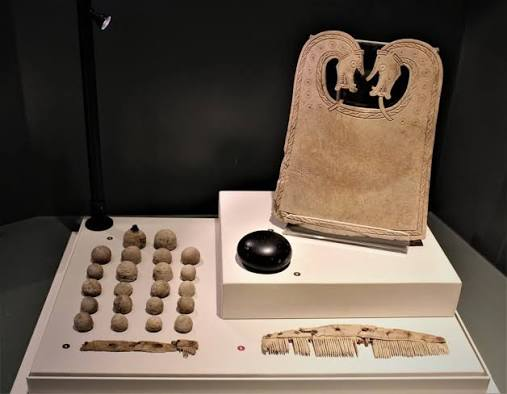
Other objects could include:

  • combs;

  • tools;

  • containers;

  • and domestic equipment.

These provide insight into everyday life.

Textiles and Clothing

Preserved artifacts can reveal aspects of Viking clothing and appearance.

Brooches, buckles, and other fittings may indicate how garments were worn.

Animals

Animal remains were also associated with the burial.

Animals could have practical or symbolic roles.

They might represent:

  • food;

  • transportation;

  • status;

  • companionship;

  • or ritual offerings.

Viking Orkney

By the Viking Age, Norse settlers had established themselves throughout Orkney.

They interacted with existing populations and transformed the islands politically and culturally.

Maritime Society

The sea was fundamental to Viking life.

Ships allowed people to:

  • trade;

  • raid;

  • migrate;

  • fish;

  • and maintain political connections.

A boat burial therefore expressed more than transportation technology.

It represented an entire way of life.

Burial and Status

Elaborate burials required substantial resources.

The construction of the grave and provision of goods could communicate the importance of the deceased.

Why Scar Matters

The Scar burial provides a rare combination of:

  • boat archaeology;

  • human remains;

  • animal remains;

  • weaponry;

  • domestic artifacts;

  • and clothing evidence.

Conclusion

The Scar Boat Burial is one of the most important Viking Age graves in Scotland.

It demonstrates how boats were central to Norse identity and how burial ceremonies could combine people, animals, objects, and maritime symbolism.

The grave provides an unusually intimate glimpse into Viking society in Orkney, where Scandinavian traditions became deeply embedded in the islands' history.

← Newer Posts Older Posts →
Featured
image_2026-09-03_000349313.png
September 4, 2026
Eday Manse: Eday's Stone Circles
September 4, 2026
Read more →
September 4, 2026
image_2026-09-03_000437014.png
September 4, 2026
Eday Church: Eday's Viking Graves
September 4, 2026
Read more →
September 4, 2026
image_2026-09-03_000510565.png
September 4, 2026
Redland: Eday's Farm Mound
September 4, 2026
Read more →
September 4, 2026
image_2026-09-03_000540698.png
September 4, 2026
Sandhill Smithy: Eday's Neolithic Site
September 4, 2026
Read more →
September 4, 2026
image_2026-09-03_000618857.png
September 4, 2026
Stove: Eday's Broch
September 4, 2026
Read more →
September 4, 2026
image_2026-09-03_000702424.png
September 4, 2026
Vinquoy: Eday's Chambered Cairn
September 4, 2026
Read more →
September 4, 2026
read more

Powered by The archaeologist