Introduction
Rock engravings are an important part of southern Africa’s archaeological heritage. Unlike paintings, which apply pigment to a surface, engravings are created by cutting, pecking, scratching, or abrading designs into rock. They can preserve evidence of artistic practice, relationships with animals, and the ways people used and understood particular landscapes.
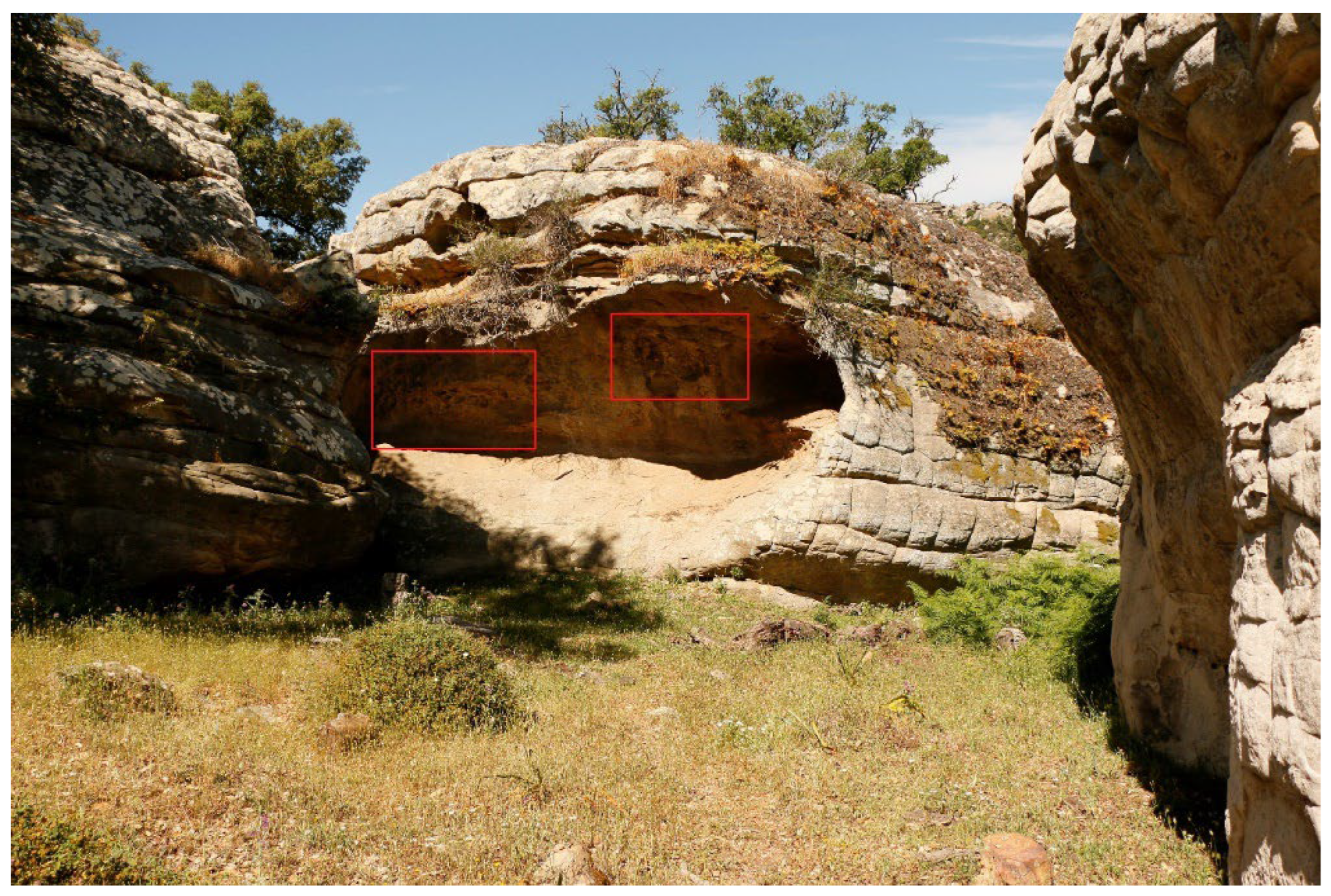
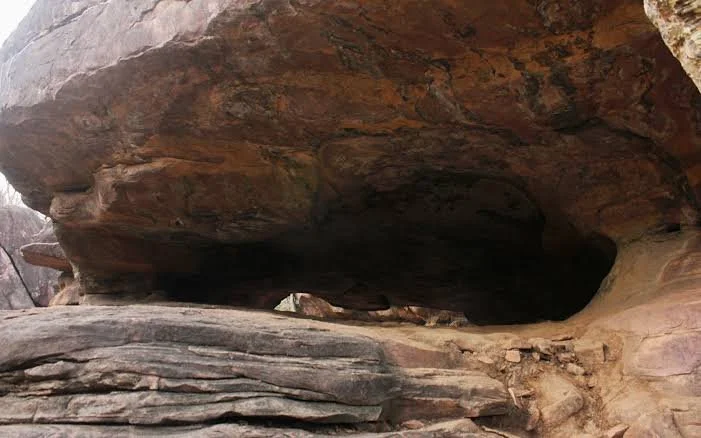
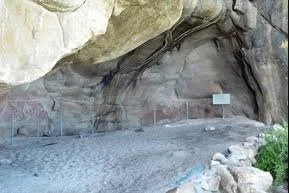
The title “Faraone Shelter: South Africa's Rock Engravings” identifies a particular shelter, but the exact site name and its archaeological documentation need to be verified before specific claims can be made about its engravings. A reliable account should establish the location, published site description, and nature of the recorded images rather than assume that the title alone confirms a recognised archaeological locality.
The broader subject remains significant: southern African rock engravings provide a valuable record of Indigenous artistic traditions and the long history of human interaction with the region’s rocky landscapes.
What Are Rock Engravings?
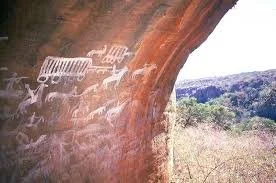
Rock engravings are images or marks created by physically modifying a rock surface. Artists may have used stone tools to peck small depressions into the rock, cut lines into the surface, or abrade areas to create outlines and filled forms.
The appearance of an engraving depends on the rock type, the technique used, and the degree of weathering that has occurred since it was made. Some engravings are deeply incised and easily visible, while others are faint and difficult to distinguish from natural marks.
Researchers examine the shape of individual marks, their depth, the sequence of overlapping lines, and the relationship between the artwork and the surrounding rock surface. These observations can help distinguish deliberate designs from natural fractures and accidental damage.
Documentation commonly involves detailed photography, scaled drawings, surface mapping, and, where appropriate, digital three-dimensional recording. Such records allow researchers to analyse an engraving without repeatedly touching or altering the original surface.
Rock Engraving Traditions in Southern Africa
Southern Africa contains several important rock art traditions. Painted and engraved images occur in different landscapes, and their forms, subjects, and cultural contexts vary across the region.
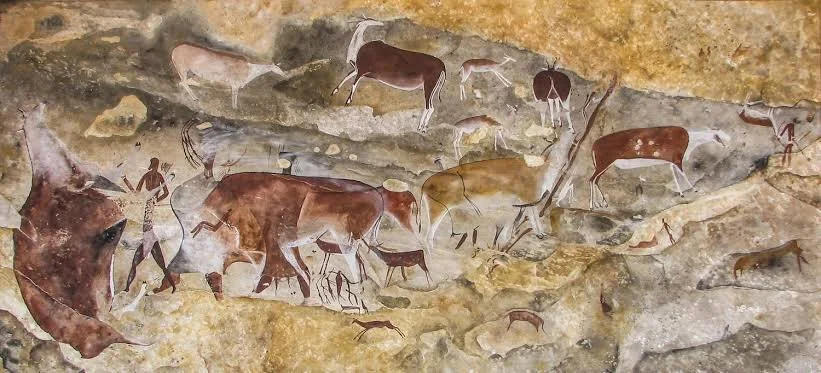
Some engravings depict animals, including wild mammals, while others show tracks, geometric designs, or abstract forms. The subjects may relate to observation of the natural world, artistic conventions, social meanings, or spiritual beliefs.
It is important not to assume that every engraving was produced for the same purpose. A naturalistic animal image and an abstract pattern may have different histories and meanings. Even similar images at different sites may have been created by people with distinct traditions.
Research into San rock art has demonstrated the importance of spiritual and ritual interpretations for some southern African paintings. However, those interpretations should not automatically be transferred to every engraving. Each artwork must be studied within its own archaeological and cultural context.
Identifying the Site and Its Context
Before describing the engravings at Faraone Shelter in detail, researchers would need to confirm the site’s location and establish that the name corresponds to a documented archaeological locality.
The next step would be to identify published descriptions, photographs, survey records, or heritage inventories that refer to the shelter. These sources could establish the types of images present, the condition of the rock surface, and any known information about the age or cultural attribution of the engravings.
Without such documentation, it would be inappropriate to invent specific motifs, dates, or ritual interpretations. The existence of rock engravings elsewhere in southern Africa does not prove that a particular named shelter contains them.
This is a general principle of archaeological writing: regional evidence can provide context, but claims about an individual site require evidence from that site.
How Archaeologists Study the Age of Engravings
Dating rock engravings is challenging because the marks themselves may contain no organic material suitable for radiocarbon dating. Researchers therefore often rely on indirect methods.
The relationship between an engraving and a dated archaeological deposit may provide chronological information if the association is secure. In some circumstances, scientists can study mineral crusts that formed over or beneath the engraved surface. The age of such a crust may help constrain when the engraving was made, although the result depends on the mineral and the precise relationship between the deposit and the mark.
Stylistic comparison can also provide useful context, but it rarely establishes an exact date by itself. Similar designs may be produced in different periods, and artistic traditions can persist for long periods.
Weathering is another source of evidence, but it is not a simple clock. Rock surfaces weather at different rates depending on their mineral composition, exposure, moisture, and other conditions.
Consequently, an accurate date often requires several lines of evidence rather than a single measurement.
Interpreting Images and Their Meanings
The interpretation of rock art involves more than identifying the objects depicted. Researchers consider the arrangement of figures, repeated motifs, the physical location of the artwork, and its relationship to other archaeological evidence.
An image of an animal might record close observation of wildlife, but it could also have symbolic significance. A geometric design might be decorative, representational, or connected to a meaning that is no longer recoverable.
Ethnographic accounts and Indigenous knowledge can provide valuable context, especially when they come from communities with continuing cultural relationships to the landscape. However, researchers must acknowledge that traditions change and that the meaning of an ancient image cannot always be reconstructed with certainty.
A responsible interpretation distinguishes what can be observed directly from what is inferred. The physical characteristics of an engraving may be clear even when its original meaning remains unknown.
Rock Art, Landscape, and Memory
Rock art sites are often located in places that have practical or cultural significance. Shelters provide protection, while prominent rock surfaces may be visible from travel routes or gathering places.
An engraving could become part of a landscape used repeatedly by different generations. The artwork might contribute to how people remembered a place, recognised a route, or connected a location with stories and traditions.
However, the presence of art at a shelter does not prove that it was permanently occupied or used exclusively for ceremonies. People may have visited a location for different reasons, and the archaeological evidence must be considered before assigning a specific function.
The broader study of rock art helps demonstrate that landscapes are not merely physical environments. They can also carry social, historical, and cultural meaning.
Conservation of Engravings
Rock engravings are vulnerable to weathering, vandalism, graffiti, and damage caused by people touching or tracing the marks. Once the surface has been altered, the original evidence may be impossible to recover.
Conservation includes recording the condition of the artwork, managing access, preventing damage, and educating visitors about the site’s significance. Digital recording can preserve detailed information about the surface, although it cannot replace the protection of the original rock.
Heritage management should also respect the cultural significance of Indigenous rock art. The interests and perspectives of communities connected to the region should be considered when deciding how sites are interpreted, accessed, and presented to the public.
Conclusion
Rock engravings are an important source of evidence for the artistic and cultural history of southern Africa. Their study combines archaeology, geology, documentation, and careful interpretation of images and landscapes.
For Faraone Shelter specifically, the exact location and archaeological record should be verified before attributing particular engravings, dates, or cultural meanings to the site. The broader regional context explains why rock engravings matter, but it cannot substitute for site-specific evidence.
Through accurate documentation, respectful interpretation, and careful conservation, southern Africa’s rock art can continue to contribute to understanding the relationships between Indigenous communities, artistic traditions, and the landscapes they have known across generations.