How Many Hominin Species Migrated Out of Africa?

SÃO PAULO, BRAZIL—A report from Phys.org explains that Victory Nery of the University of São Paulo, along with his research team, proposes that fossils uncovered at the Dmanisi site in the Republic of Georgia between 1999 and 2005 belong to two separate species. This collection includes hundreds of fossils, among them five skulls, which have been dated to around 1.85 to 1.77 million years ago. Since Homo erectus is believed to have left Africa approximately 1.8 million years ago, the researchers questioned whether other hominin species may have migrated out of Africa during the same period.

The Dmanisi skulls show notable differences from Homo erectus and do not all closely resemble one another, particularly in terms of size. Because of this variation, the researchers concentrated on examining the surface area of the premolars and molars from three of the Dmanisi skulls. They compared the size and shape of these teeth with an existing database containing dental information from Australopithecus and several other hominin species. In total, nearly 600 hominin teeth were analyzed, and a statistical sorting method was used to create a biological map distinguishing different species.

The results of this analysis suggest that the three individuals from Dmanisi did not all belong to the same group. One specimen, known as Dmanisi Skull 5, which has a relatively small braincase and a large, projecting face, was classified as more apelike. In contrast, the teeth from the other two skulls were found to be more similar to those of modern humans. The team also compared the Dmanisi teeth with those of great apes, which typically show size differences between males and females. Based on this comparison, Nery and his colleagues determined that sexual dimorphism could not explain the range of variation seen in the Dmanisi fossils. As a result, they propose that the more apelike individual be identified as Homo georgicus, while the more human-like individuals be classified as Homo caucasi.

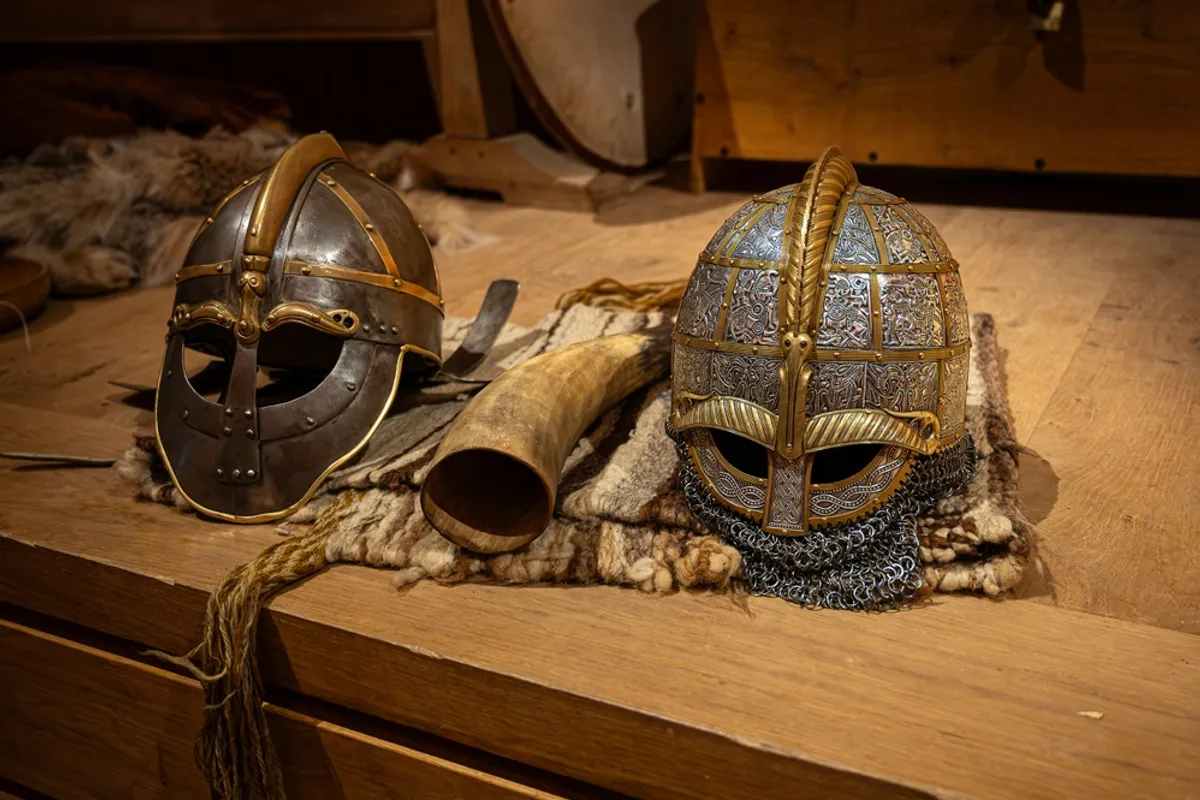
No, Vikings Didn’t Have Horns On Their Helmets — Here’s The True Origins of the Myth

Learn more about the Vikings, their lifestyle, and where the stereotypical horned helmet originated from.

Representations of Viking helmets 

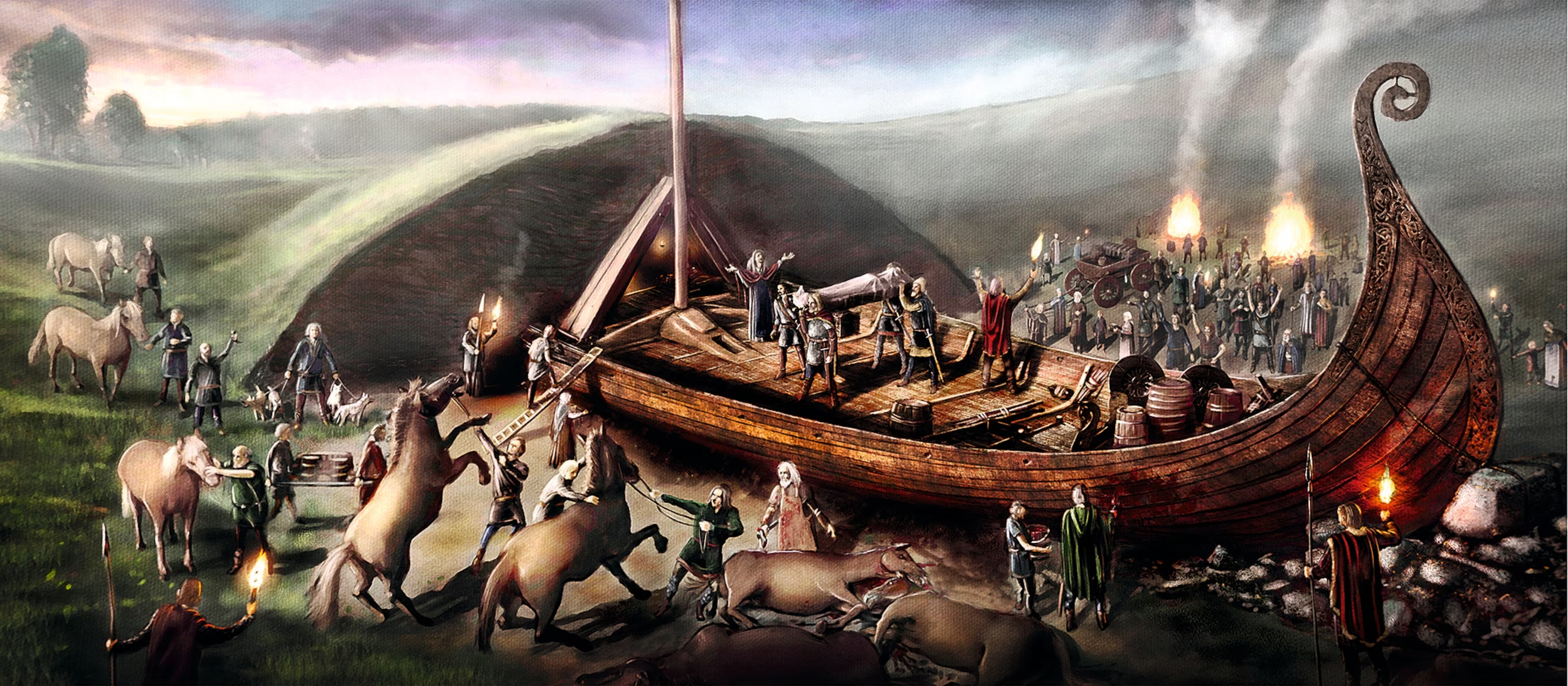
Over the past century, Vikings have often been portrayed in highly inaccurate ways. They are frequently described as male-dominated, excessively violent, culturally uniform, and famously depicted wearing horned helmets. In reality, their society was far more complex, and while horned helmets may have existed, there is no evidence they were worn by Vikings themselves.

The Vikings were seafaring Norse peoples who, during the early Middle Ages, traveled, raided, traded with, and settled among other societies across Europe and the North Atlantic, including Iceland, Greenland, and even Newfoundland, according to research from Smith College. Importantly, they were not a single, uniform group but rather a combination of various North Germanic tribes.

As Colin Connors, a postdoctoral fellow at the University of Oslo’s Institute for Archaeology, Conservation, and History, explains, the term “Viking” referred to an activity rather than a shared ethnic identity. People living in Scandinavia at the time did not identify themselves as Vikings; instead, the term was used to describe individuals who took part in raiding and piracy.

“It was essentially a job title,” Connors notes.

Myths about Viking violence

Although the Norse gained a reputation for brutality, they were not significantly more violent than other societies of the same era. Warfare and bloodshed were common throughout medieval Europe, not unique to the Viking world.

“It’s misleading to claim that the Norse were exceptionally violent,” Connors says.

Likewise, the idea that Vikings were unmatched warriors is exaggerated. While they achieved victories, they also suffered severe defeats and violent deaths. Their reputation for extreme cruelty largely stems from historical records written by Christian monks who were frequent targets of Viking raids.

When monks were killed by pagan raiders, they were often regarded as martyrs, which elevated the significance of their deaths and sometimes led to sainthood. If they were killed by fellow Christians, however, the act was simply considered murder. As a result, attacks carried out by Vikings were more likely to be documented in detail.

“For Christian writers, recording pagan attacks was advantageous,” Connors explains, noting that such accounts reinforced religious narratives and moral contrasts.

For a long time, popular culture has portrayed Vikings in ways that are largely inaccurate. They are often shown as uniformly violent, male-dominated, and culturally identical warriors, almost always wearing horned helmets. In reality, Viking society was far more complex and less exaggerated than these stereotypes suggest—and horned helmets were not actually part of their everyday gear.

The Vikings were seafaring Norse people who, during the early Middle Ages, traveled widely to explore, raid, trade, and settle across Europe and the North Atlantic. Their journeys took them to places such as Iceland, Greenland, and even Newfoundland. However, they were not a single, uniform group. Instead, Viking society was made up of various North Germanic tribes, each with its own local identities and customs.

Importantly, the term “Viking” did not refer to an ethnic group. According to Colin Connors, a postdoctoral researcher at the University of Oslo, the word described an activity rather than a people.

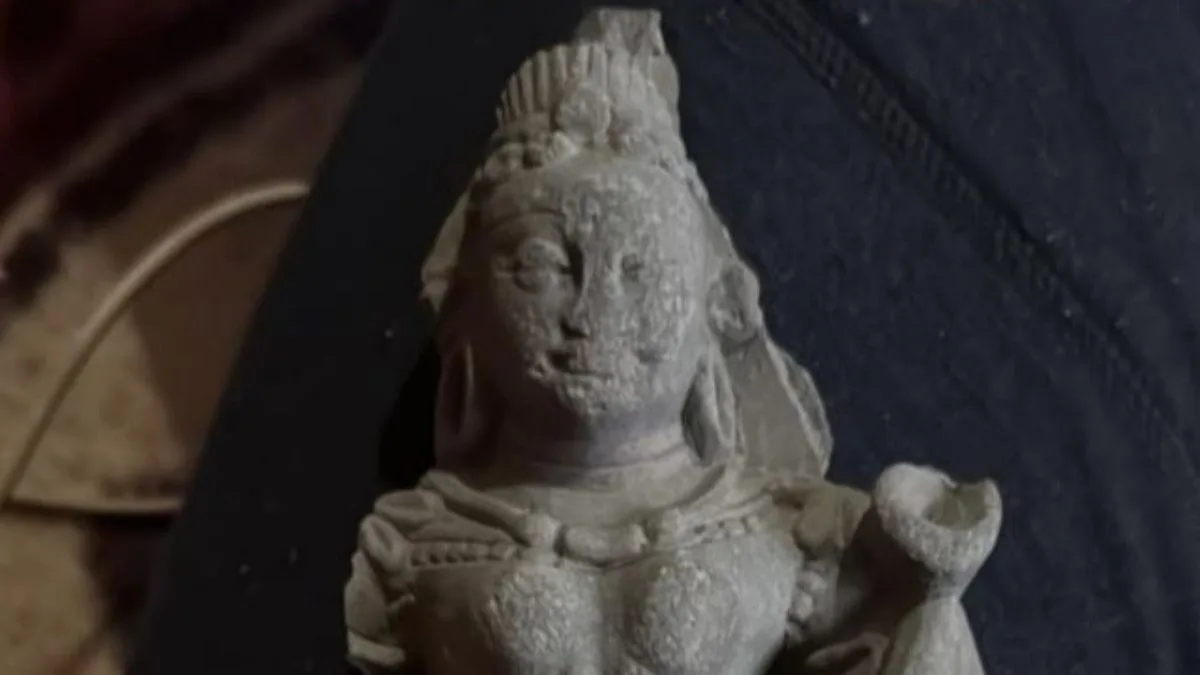
Ancient idol of goddess Durga found in Kashmir’s Jhelum river

Police said on Friday that on Thursday, a fisherman identified as Nazir Ahmad Latoo, a resident of Shaltang/Zogyar, reported to Police Station Sheeri, Baramulla, that he had recovered a stone sculpture while fishing in the River Jhelum.

A significant archaeological discovery was made in Baramulla district, North Kashmir, when an ancient stone sculpture of Goddess Durga, believed to be over 1,200 years old, was recovered from the River Jhelum.

According to police reports, the find occurred on Thursday when Nazir Ahmad Latoo, a fisherman from Shaltang/Zogyar, came across the sculpture while fishing. He immediately informed Police Station Sheeri in Baramulla, and the sculpture was taken into safe custody at the station.

On 26 December, following proper procedures and official directions from the Directorate of Archives, Archaeology & Museums, J&K, Baramulla Police formally handed over the sculpture—identified as Goddess Durga—to officials of the Archaeology Wing in Srinagar through an official handover process.

The recovery adds to a growing number of similar finds in the region, highlighting the rich cultural heritage of Kashmir. Over recent years, several idols of Hindu gods and goddesses have been retrieved from the Jhelum and other water bodies across south, central, and north Kashmir. For instance, in August 2021, police recovered another sculpture of Goddess Durga in Budgam, dating to the 7th–8th century AD. That sculpture, carved from black stone and measuring 12 by 8 inches, depicted the goddess seated on a lion throne, accompanied by four attendants.

Authorities have emphasized the importance of preserving such historical artifacts and urged citizens to promptly report any discoveries of archaeological or cultural significance.