The Arch of Titus, located on the Via Sacra in the Roman Forum, is one of the most significant monuments of the Roman Empire. Constructed around 81 CE by the Emperor Domitian to honor his brother, the late Emperor Titus, it commemorates the Roman victory in the Jewish War (66–74 CE) and the subsequent destruction of Jerusalem in 70 CE.
I. The Relief of the Spoils
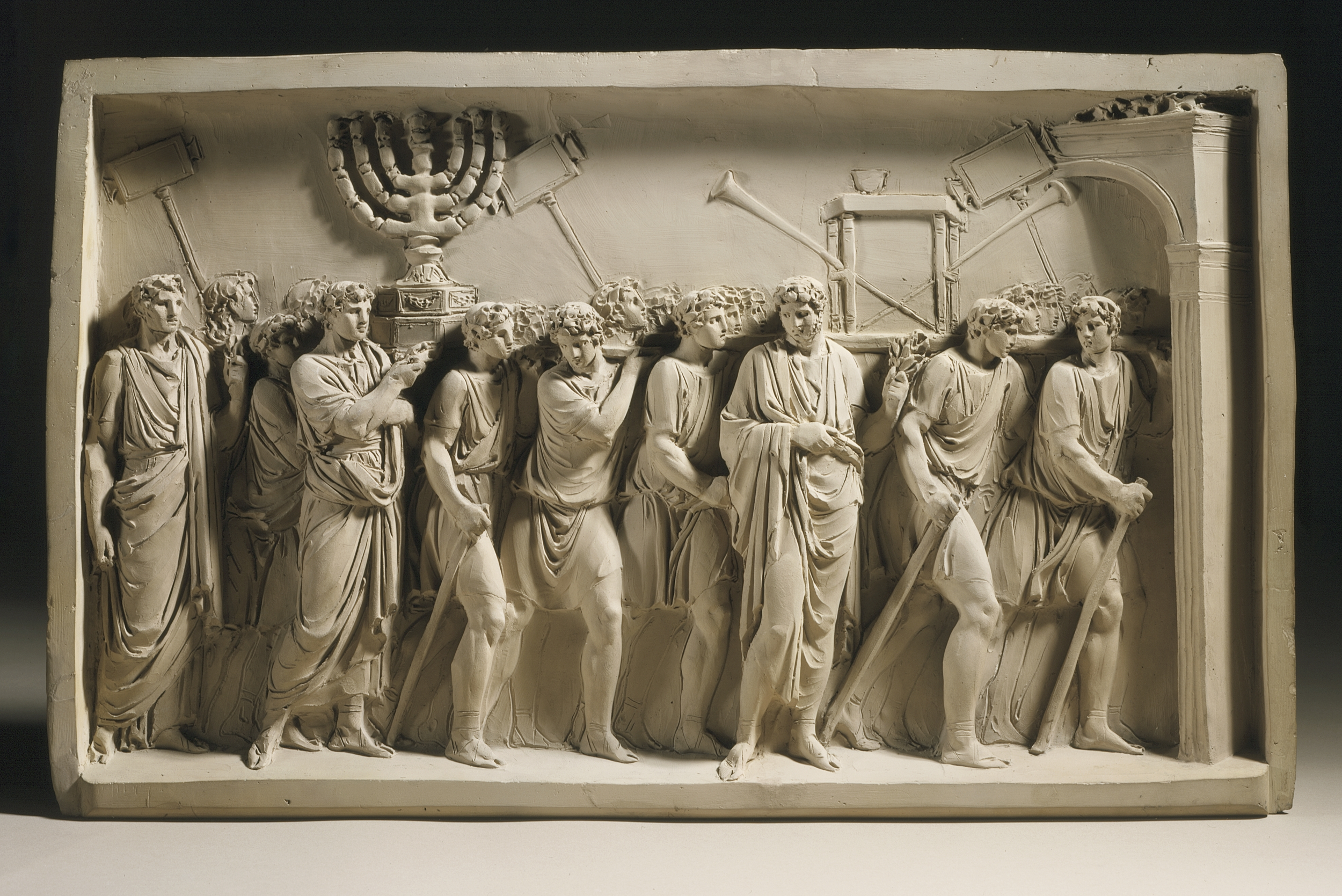
The most famous element of the arch is the bas-relief panel inside the passageway, which depicts the triumphal procession of 71 CE. This panel serves as a primary visual record of the treasures looted from the Second Temple in Jerusalem.
Key Artifacts: The relief shows Roman soldiers carrying the sacred vessels and treasures taken from the Temple, intended for display in the Temple of Peace in Rome.
The Menorah: The most prominent item is the seven-branched golden lampstand (menorah). Its depiction on the arch is highly significant, as it remains one of the few contemporary representations of this sacred object. Because of its historical and religious importance, it was adopted in 1949 as the official emblem of the State of Israel.
Table of the Showbread: Beside the menorah, soldiers are shown carrying the golden table upon which the showbread (or "bread of the presence") was placed.
Silver Trumpets: The relief also depicts the ritual silver trumpets used in Temple services.
Artistic Innovation: This panel is celebrated in art history for its early attempt to create an illusion of space and movement. By carving central figures in higher relief and background figures in shallower relief, and by positioning the scene on a slight curve, the sculptors gave the procession a sense of depth as it "passes through" the arch.
II. Historical Significance and Context
The arch functioned as a powerful piece of political and religious propaganda, signaling the restoration of order under the new Flavian dynasty.
Triumphal Propaganda: The procession was a central ritual in Roman life, allowing the emperor to showcase his power and the wealth of the conquered territories. By prominently displaying the most sacred items of the Jewish Temple, the Romans demonstrated the total defeat of the Jewish revolt and the dominance of the Roman state over local cults.
Symbol of Defeat and Survival: For centuries, the arch stood as a stark symbol of Jewish defeat. Tradition even held that Roman Jews would avoid walking under the arch because it memorialized the destruction of their holy site. However, in the modern era, the arch has been reclaimed in symbolic fashion—often serving as a backdrop for declarations of the endurance of the Jewish people.
Materiality: Recent research and digital analysis have revealed that the arch was not originally a stark white marble monument. It was once richly decorated with bright, vivid pigments, with the menorah itself painted in a striking golden yellow.