• MAIN PAGE
  • LATEST NEWS
    • Lost Cities
    • Archaeology's Greatest Finds
    • Underwater Discoveries
    • Greatest Inventions
    • Studies
    • Blog
  • PHILOSOPHY
  • HISTORY
  • RELIGIONS
    • Africa
    • Anatolia
    • Arabian Peninsula
    • Balkan Region
    • China - East Asia
    • Europe
    • Eurasian Steppe
    • Levant
    • Mesopotamia
    • Oceania - SE Asia
    • Pre-Columbian Civilizations of America
    • Iranian Plateau - Central Asia
    • Indus Valley - South Asia
    • Japan
    • The Archaeologist Editor Group
    • Scientific Studies
    • Aegean Prehistory
    • Historical Period
    • Byzantine Middle Ages
    • Predynastic Period
    • Dynastic Period
    • Greco-Roman Egypt
  • Rome
  • PALEONTOLOGY
  • About us
Menu

The Archaeologist

  • MAIN PAGE
  • LATEST NEWS
  • DISCOVERIES
    • Lost Cities
    • Archaeology's Greatest Finds
    • Underwater Discoveries
    • Greatest Inventions
    • Studies
    • Blog
  • PHILOSOPHY
  • HISTORY
  • RELIGIONS
  • World Civilizations
    • Africa
    • Anatolia
    • Arabian Peninsula
    • Balkan Region
    • China - East Asia
    • Europe
    • Eurasian Steppe
    • Levant
    • Mesopotamia
    • Oceania - SE Asia
    • Pre-Columbian Civilizations of America
    • Iranian Plateau - Central Asia
    • Indus Valley - South Asia
    • Japan
    • The Archaeologist Editor Group
    • Scientific Studies
  • GREECE
    • Aegean Prehistory
    • Historical Period
    • Byzantine Middle Ages
  • Egypt
    • Predynastic Period
    • Dynastic Period
    • Greco-Roman Egypt
  • Rome
  • PALEONTOLOGY
  • About us
No results found

Cueva de Maltravieso: Spain's 64,000-Year Hand Stencils

August 18, 2026

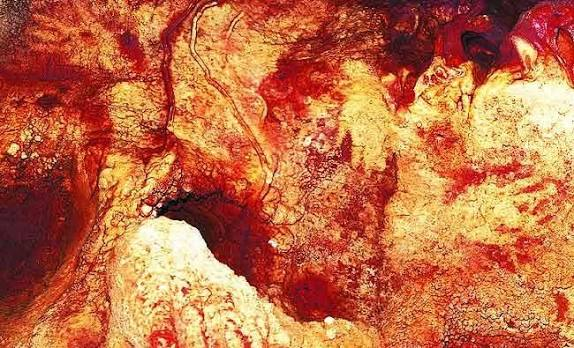
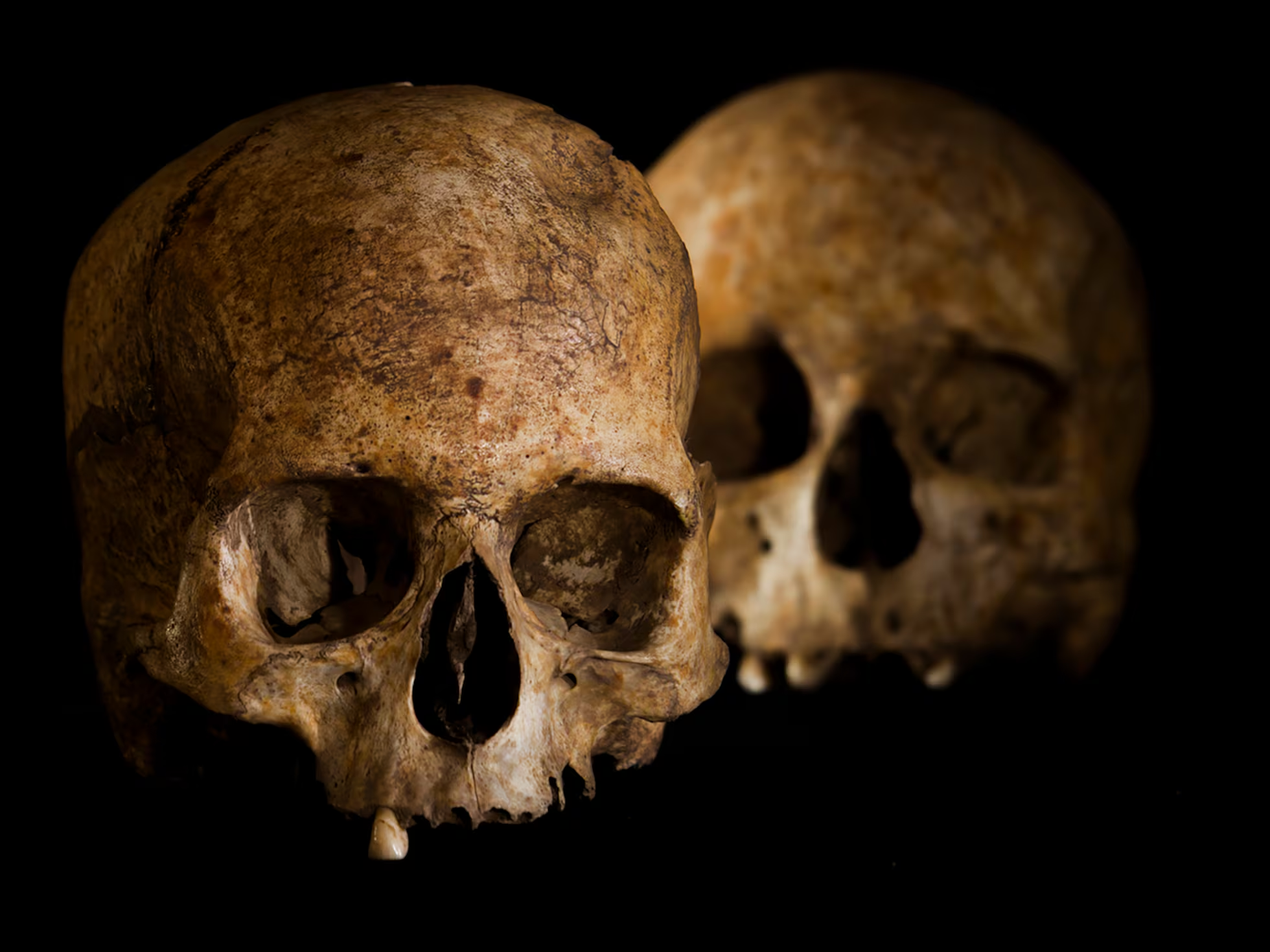
Cueva de Maltravieso, located in Cáceres in western Spain, is one of the most remarkable prehistoric cave art sites in Europe. The cave is particularly famous for its large collection of hand stencils, created when prehistoric people placed their hands against a cave wall and sprayed or blew pigment around them.

The result was a striking negative image: the outline of a human hand preserved against the stone.

Some scientific dating has suggested that certain hand stencils and related red pigment features are older than approximately 64,000 years. If this interpretation is correct, the images would predate the widespread arrival of Homo sapiens in western Europe.

This would make Neanderthals the most likely creators.

The possibility has made Cueva de Maltravieso one of the central sites in the debate over whether Neanderthals possessed symbolic and artistic traditions.

The Cave and Its Archaeological Importance

Cueva de Maltravieso is located in Extremadura, a region of western Spain with a rich prehistoric landscape.

The cave contains numerous examples of prehistoric imagery, including:

  • hand stencils,

  • red painted marks,

  • geometric forms,

  • and other symbolic images.

The abundance of hand representations makes the site particularly important.

Hands are among the most direct forms of prehistoric imagery because they preserve a physical connection between the artist and the image.

A painted bison represents an observed animal.

A hand stencil, however, records the actual outline of a human hand.

For modern observers, this creates a particularly powerful connection with prehistoric individuals.

How Were Hand Stencils Created?

The basic process of creating a hand stencil involved placing a hand against the rock surface.

Pigment was then applied around it.

When the hand was removed, the covered area remained unpainted, producing a negative silhouette.

The pigment may have been applied by:

  • blowing powdered pigment directly,

  • using the mouth to spray a mixture,

  • blowing pigment through a hollow tube,

  • or using another spraying method.

The technique required deliberate preparation.

The artist needed:

  1. A suitable pigment.

  2. A method of preparing it.

  3. A suitable cave surface.

  4. A source of illumination.

  5. A technique capable of applying pigment around the hand.

The resulting image was therefore the product of intentional planning.

The Significance of Red Pigment

Many of the hand stencils at Maltravieso were created using red pigments.

Red ochre, composed largely of iron oxides, was widely available in prehistoric environments and could be processed into powder.

The color red appears repeatedly in prehistoric archaeology.

It has been found in:

  • cave paintings,

  • burials,

  • decorated objects,

  • body-related practices,

  • and other symbolic contexts.

The widespread use of red does not necessarily mean that it had the same meaning everywhere.

Different prehistoric communities may have used the color for different purposes.

Nevertheless, its repeated selection suggests that pigments were culturally important materials.

Dating the Hand Stencils

The proposed early dates at Maltravieso are based primarily on scientific analysis of mineral deposits associated with painted surfaces.

Thin carbonate formations can develop on cave walls over long periods.

If a mineral layer forms on top of a painted image, the underlying artwork must be older than that layer.

Some uranium-thorium dating results have provided minimum ages of more than 60,000 years for certain painted features.

The famous date of approximately 64,000 years is particularly important because it would place the artwork before Homo sapiens became widespread in western Europe.

Why the Date Matters

The identity of the artist depends heavily on chronology.

If the hand stencil was created after modern humans became established in the region, Homo sapiens could be the creator.

If it was demonstrably created tens of thousands of years earlier, Neanderthals become the most likely candidate.

This makes accurate dating essential.

The debate is not simply about the age of a painting.

It concerns the cognitive and cultural capabilities of an entire human population.

Neanderthals as Artists

Traditional portrayals often described Neanderthals as primitive relatives of modern humans who lacked sophisticated symbolic behavior.

Modern archaeology has challenged this stereotype.

Neanderthals:

  • manufactured complex stone tools,

  • controlled fire,

  • hunted large animals,

  • adapted to diverse environments,

  • used pigments,

  • and may have produced ornaments and symbolic markings.

The hand stencils of Maltravieso, if securely attributed to Neanderthals, would provide especially powerful evidence because they involve deliberate representation.

Creating a hand stencil means using one's own body as part of the artistic process.

Why Hands Were Important

The exact meaning of prehistoric hand stencils is unknown.

However, researchers have proposed several possibilities.

Hands may have represented:

  • personal identity,

  • group membership,

  • ritual participation,

  • communication,

  • social presence,

  • or a symbolic connection with a particular place.

A hand stencil could also be understood as a form of physical trace.

The person who created it may have wanted to leave evidence that they had entered and interacted with that particular space.

It is also possible that hand images had meanings that modern researchers cannot reconstruct.

The Cave as a Symbolic Space

Creating art inside a cave required people to enter a dark environment.

This was not an activity that occurred accidentally.

People needed to carry light and prepare materials.

The journey itself may have been meaningful.

Some cave art is located in areas that are difficult to reach, suggesting that the physical environment was part of the experience.

The underground world may have had cultural or symbolic importance.

However, archaeologists must remain cautious.

A difficult location does not automatically prove the existence of religion or ritual.

It does demonstrate deliberate human movement into spaces beyond those necessary for ordinary daylight activities.

Individual Variation in Hand Stencils

At prehistoric sites, hand stencils can potentially preserve information about different individuals.

The size and shape of hands may vary according to:

  • age,

  • biological development,

  • and individual anatomy.

However, identifying the exact sex or identity of an individual from a stencil alone is extremely difficult.

Earlier attempts to classify prehistoric hand stencils simply as male or female based on finger proportions are now treated with considerable caution.

Human hand shapes vary substantially.

Maltravieso in the History of Cave Art

The hand stencils of Maltravieso belong to a much broader global tradition.

Hand images have been discovered in prehistoric caves in:

  • Europe,

  • Indonesia,

  • Australia,

  • and other regions.

This demonstrates that the human impulse to leave bodily marks on rock surfaces developed in different cultural contexts.

The technique is simple in concept but powerful in effect.

A prehistoric individual could place a hand against stone and leave a recognizable human presence that survived for tens of thousands of years.

Conservation and Preservation

Cave art is extremely fragile.

Changes in humidity, temperature, and carbon dioxide can affect ancient surfaces.

Human contact can also cause serious damage.

Modern conservation practices therefore limit access to sensitive areas.

Researchers increasingly rely on:

  • high-resolution photography,

  • 3D documentation,

  • digital scanning,

  • and non-invasive scientific analysis.

These technologies allow the artwork to be studied while reducing the risk of physical damage.

Conclusion

Cueva de Maltravieso provides one of the most compelling examples of prehistoric hand imagery in Europe.

The possibility that some of its hand stencils are more than 64,000 years old has made the cave central to the reassessment of Neanderthal behavior.

If the early dating is confirmed and correctly interpreted, the images demonstrate that Neanderthals deliberately entered caves, prepared pigments, used their own bodies as artistic subjects, and created lasting visual marks.

Whether viewed as art, communication, ritual, identity, or another form of symbolic behavior, the hand stencils remain a remarkable connection to prehistoric individuals.

Tens of thousands of years later, the outlines of their hands still survive on the walls of Cueva de Maltravieso.
Cueva de Antón: Spain's Mousterian Tools

August 18, 2026

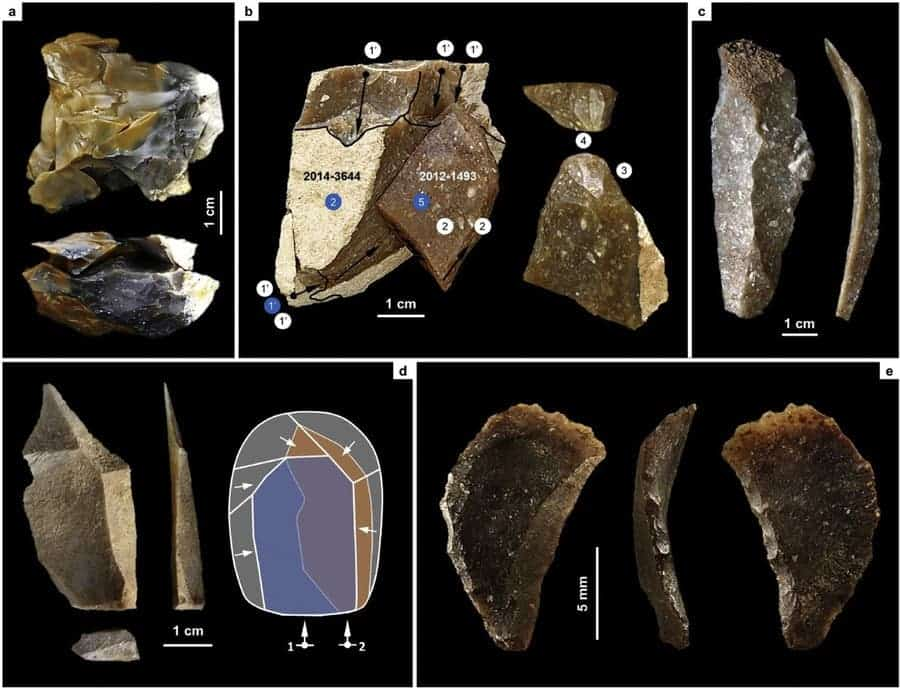
Cueva de Antón is an important prehistoric site in southeastern Spain associated with the Mousterian, a Middle Paleolithic stone-tool tradition strongly connected with Neanderthal populations in Europe.

The site provides evidence for the technological abilities of prehistoric hunter-gatherers who lived long before agriculture, cities, writing, or metalworking.

The stone tools associated with the Mousterian tradition demonstrate that Neanderthals possessed detailed knowledge of raw materials and sophisticated techniques for producing useful implements.

Cueva de Antón is particularly valuable because it forms part of the wider archaeological landscape of southeastern Iberia, a region that has produced important evidence for Neanderthal life and behavior.

What Is the Mousterian?

The Mousterian is an archaeological term used to describe a range of Middle Paleolithic stone-tool industries found across parts of Europe, western Asia, and North Africa.

In Europe, the Mousterian is most closely associated with Neanderthals.

However, it is important to understand that the term describes a technological tradition rather than a biological species.

A Mousterian stone tool is identified according to its manufacturing techniques and archaeological context.

Mousterian toolkits commonly included:

  • scrapers,

  • points,

  • cutting flakes,

  • denticulated tools,

  • and other modified stone implements.

The Technology Behind Mousterian Tools

Stone tools were not created randomly.

Producing a useful tool required planning.

A prehistoric craftsperson first needed to select an appropriate type of stone.

Depending on the local environment, suitable materials could include:

  • flint,

  • chert,

  • quartzite,

  • and other workable stones.

The material then needed to be struck in controlled ways to produce sharp flakes.

The Levallois Technique

One of the most famous stone-working methods associated with the Middle Paleolithic is the Levallois technique.

This method involved carefully preparing a stone core before removing a predetermined flake.

The final flake could be shaped and used as a tool.

The technique demonstrates planning because the desired result influenced how the core was prepared before the final strike.

A toolmaker needed to understand:

  • the shape of the stone,

  • the direction of force,

  • the location of striking platforms,

  • and the expected form of the resulting flake.

This was a highly skilled technological process.

Types of Mousterian Tools

Mousterian toolkits were diverse.

Different tools could be used for different activities.

Scrapers

Scrapers were often created by retouching the edge of a stone flake.

They could be used for:

  • processing animal hides,

  • working wood,

  • cleaning meat from bones,

  • and other tasks requiring a durable edge.

Points

Stone points could potentially be used in hunting equipment or as cutting implements.

Some points may have been attached to wooden shafts to create spears.

Cutting Flakes

Sharp stone flakes could function like prehistoric knives.

They could be used to cut:

  • meat,

  • plant materials,

  • hides,

  • and other substances.

Life at a Middle Paleolithic Cave Site

A cave such as Cueva de Antón could provide shelter from weather and a protected location for activities.

However, prehistoric cave occupation was often temporary.

Hunter-gatherers moved across landscapes according to the availability of resources.

A group may have occupied a cave for:

  • a short hunting episode,

  • seasonal activity,

  • tool production,

  • food processing,

  • or temporary shelter.

The archaeological remains left behind provide clues about what occurred during those visits.

Stone Tools as Evidence of Daily Life

A stone tool is not simply an object.

Its edges may preserve microscopic traces of use.

Modern archaeologists can study these marks to determine how a tool may have been used.

Microscopic wear analysis can sometimes reveal whether an edge was used to work:

  • animal hide,

  • wood,

  • bone,

  • or other materials.

This allows researchers to move beyond identifying tools and begin reconstructing prehistoric activities.

Neanderthals as Skilled Toolmakers

The Mousterian evidence associated with Neanderthals demonstrates considerable technological ability.

Neanderthals understood:

  • the physical properties of stone,

  • how to select raw materials,

  • how to plan sequences of actions,

  • and how to maintain useful tools.

They also transported stone materials across landscapes in some circumstances.

This indicates that tool production was connected to mobility and planning.

Cueva de Antón and the Iberian Neanderthals

Southeastern Spain was an important region during the Middle Paleolithic.

The Iberian Peninsula contained diverse environments, including:

  • mountains,

  • river valleys,

  • coastal areas,

  • and open landscapes.

Neanderthal groups adapted to these different environments.

The archaeological sites of Iberia demonstrate that Neanderthals were capable of surviving under changing climatic conditions.

Hunting and Animal Processing

Stone tools were essential for obtaining and processing food.

After an animal was killed, sharp flakes could be used to:

  • remove meat,

  • separate joints,

  • process hides,

  • and extract useful materials.

Animal remains from archaeological sites can sometimes preserve cut marks created by stone tools.

These marks provide direct evidence of prehistoric butchery.

The Importance of Raw Material Sources

The location of useful stone influenced prehistoric movement.

A group might obtain raw materials near a campsite or transport them from another location.

By studying the geological origin of stone artifacts, archaeologists can sometimes reconstruct patterns of mobility.

This reveals that prehistoric people had detailed knowledge of their landscapes.

They knew where useful resources could be found.

Mousterian Technology and Human Intelligence

The production of Mousterian tools demonstrates several important cognitive abilities.

A toolmaker needed to:

  1. Recognize suitable raw materials.

  2. Plan a sequence of actions.

  3. Prepare the stone.

  4. Control striking force.

  5. Modify the resulting flake.

  6. Maintain or replace the tool when necessary.

These processes demonstrate planning and learned technical knowledge.

The ability to produce tools was also social.

Skills needed to be transmitted between individuals and generations.

Why Cueva de Antón Matters

Cueva de Antón contributes to the study of Neanderthal technology and Middle Paleolithic life in Iberia.

Its archaeological evidence demonstrates that prehistoric hunter-gatherers used sophisticated stone-working methods to adapt to their environment.

The Mousterian tools provide direct evidence of daily activities that would otherwise be invisible.

Through stone artifacts, archaeologists can reconstruct aspects of:

  • hunting,

  • food preparation,

  • hide processing,

  • mobility,

  • and technological knowledge.

Conclusion

Cueva de Antón represents an important part of Spain's Middle Paleolithic archaeological heritage.

Its Mousterian tools demonstrate the technological sophistication of Neanderthal populations and challenge simplistic portrayals of them as primitive or incapable.

Every carefully prepared stone flake represents a sequence of decisions and learned skills.

The tools of Cueva de Antón therefore provide a lasting record of prehistoric intelligence and adaptation.

Long before metal tools or written technology existed, Neanderthal communities were already transforming natural stone into specialized instruments capable of helping them survive in a complex and changing world.

Cueva Horá: Spain's Gravettian Burials

August 18, 2026

Cueva Horá, located in southern Spain, is associated with evidence from the Upper Paleolithic and forms part of the broader archaeological record of prehistoric communities in the Iberian Peninsula. The title “Spain's Gravettian Burials” highlights the importance of examining how Upper Paleolithic populations treated their dead and what archaeological burial evidence can reveal about social and symbolic behavior.

The Gravettian, generally dated to approximately 33,000 to 24,000 years ago in Europe, was one of the major cultural traditions of the Upper Paleolithic. Gravettian communities were Homo sapiens hunter-gatherers who lived during a period of major climatic and environmental change.

Across Europe, Gravettian archaeological sites have produced evidence of sophisticated technologies, artistic traditions, personal ornaments, and, at some locations, carefully treated human burials.

Burials associated with this period provide some of the most direct evidence for prehistoric attitudes toward death, identity, and social relationships.

Understanding the Gravettian Period

The Gravettian developed after earlier Upper Paleolithic traditions and before the Solutrean and Magdalenian periods in western Europe.

Gravettian populations were widespread across large parts of Europe.

They occupied environments ranging from:

  • the plains of central Europe,

  • river valleys,

  • mountain regions,

  • Mediterranean landscapes,

  • and areas affected by Ice Age conditions.

Despite these environmental differences, Gravettian archaeology shares certain broad technological characteristics.

Stone tools often included narrow blades and distinctive projectile points.

Bone, antler, and ivory were also used for tools and artistic objects.

The Importance of Burials in Archaeology

Human burials are particularly valuable because they can provide information about both biological individuals and cultural practices.

A skeleton can potentially reveal information about:

  • age,

  • health,

  • injury,

  • physical activity,

  • diet,

  • and biological relationships.

The burial context can reveal additional information.

Archaeologists examine:

  • the position of the body,

  • the presence of pigments,

  • associated objects,

  • grave structures,

  • and evidence of deliberate preparation.

A deliberately arranged burial may indicate that the treatment of the dead followed cultural traditions.

What Makes a Burial Deliberate?

Not every ancient human skeleton represents a formal burial.

A body may have been naturally covered by sediment, moved by water, or deposited through another process.

To identify intentional burial, archaeologists look for evidence such as:

  • an organized body position,

  • a grave pit,

  • consistent orientation,

  • associated artifacts,

  • red ochre,

  • or other deliberate modifications.

Interpretation requires caution because thousands of years of geological activity can disturb the original context.

The Role of Red Ochre

Red ochre is frequently associated with Upper Paleolithic burials.

The mineral pigment may have been sprinkled over bodies or placed within graves.

Why prehistoric people used red ochre is not fully understood.

Possible interpretations include associations with:

  • transformation,

  • identity,

  • death,

  • ancestry,

  • ritual,

  • or symbolic beliefs.

However, archaeologists cannot assume that ochre had one universal meaning.

Its significance may have varied between communities.

The repeated appearance of ochre nevertheless demonstrates that color could play an important role in prehistoric treatment of the dead.

Grave Goods and Personal Identity

Some Upper Paleolithic burials across Europe contain objects placed with the deceased.

These may include:

  • beads,

  • animal teeth,

  • ivory objects,

  • stone tools,

  • ornaments,

  • and other materials.

The presence of such objects suggests deliberate selection.

These materials may have represented personal identity or social relationships.

However, the presence of an object does not automatically mean that the deceased held high status.

A grave may reflect the beliefs and actions of the people conducting the burial rather than the individual's position during life.

Gravettian Communities and Social Complexity

The Gravettian archaeological record demonstrates that Upper Paleolithic hunter-gatherers had complex social worlds.

They created:

  • sophisticated stone tools,

  • personal ornaments,

  • figurative art,

  • symbolic objects,

  • and, in some cases, carefully prepared burials.

These activities required knowledge and cooperation.

A burial could involve multiple members of a community.

The preparation of a body, collection of pigments, and placement of objects all required time and effort.

Caves and the Treatment of the Dead

Caves could serve many functions in prehistoric societies.

They might be used for:

  • temporary shelter,

  • food processing,

  • tool production,

  • artistic activity,

  • storage,

  • or the placement of the dead.

The use of a cave as a burial location may have held practical or symbolic significance.

A protected underground space could preserve human remains, but the choice of location may also have reflected cultural traditions.

The exact meaning of prehistoric cave burials is difficult to reconstruct because the people responsible left no written explanations.

Upper Paleolithic Southern Spain

Southern Spain provided an important range of environments for Upper Paleolithic communities.

The region included:

  • mountain landscapes,

  • caves,

  • river systems,

  • coastal areas,

  • and access to diverse animal and plant resources.

Hunter-gatherers adapted their activities according to local conditions.

They were highly mobile and possessed detailed knowledge of seasonal changes.

Caves such as Cueva Horá formed part of a much larger network of places used across the landscape.

Burials as Evidence of Social Memory

The deliberate treatment of the dead suggests that prehistoric people maintained some form of social relationship with deceased individuals.

A burial transforms a dead body into something culturally organized.

The position of the body, the application of pigment, and the placement of objects can all represent deliberate choices.

Such practices may have helped communities preserve memory or reinforce shared traditions.

The Difficulty of Interpreting Prehistoric Death

It is tempting to interpret every ancient burial as evidence of religion or a belief in an afterlife.

However, archaeology cannot directly prove such beliefs.

A deliberate burial demonstrates care and cultural behavior, but the specific ideas behind the action may remain unknown.

The people who buried an individual could have acted for many reasons.

Scientific interpretation must therefore distinguish between:

what the archaeological evidence demonstrates and what modern researchers believe may be possible.

This distinction is particularly important when studying Paleolithic societies.

Gravettian Burials Across Europe

The Gravettian period has produced some of Europe's most extraordinary prehistoric burials.

Sites in different regions have revealed individuals buried with:

  • elaborate ornaments,

  • thousands of beads,

  • animal remains,

  • tools,

  • and red ochre.

These discoveries demonstrate that some Upper Paleolithic communities invested substantial resources in the treatment of the dead.

They also reveal significant variation.

Not every individual received the same treatment.

This may reflect differences in:

  • age,

  • social identity,

  • cultural traditions,

  • circumstances of death,

  • or other factors that are now impossible to fully reconstruct.

Why Burial Evidence Is So Important

Burials provide a rare opportunity to study prehistoric individuals as people rather than simply as toolmakers or hunters.

A skeleton represents someone who:

  • lived within a community,

  • experienced a particular environment,

  • ate certain foods,

  • suffered injuries or illnesses,

  • and was ultimately treated by others after death.

This makes prehistoric burials uniquely powerful archaeological evidence.

Cueva Horá and the Study of Upper Paleolithic Life

Evidence associated with Cueva Horá contributes to the broader study of Upper Paleolithic occupation in Spain.

The site's significance lies within a larger archaeological context that includes other caves, open-air settlements, artistic sites, and burial locations.

Together, these sites demonstrate that prehistoric Iberia was home to diverse communities with sophisticated technological and symbolic traditions.

The Legacy of Gravettian Burial Traditions

The Gravettian period represents an important stage in the development of human cultural complexity.

By this time, Homo sapiens in Europe were already producing art, ornaments, specialized technologies, and elaborate forms of social behavior.

Burial practices demonstrate another dimension of this complexity.

The dead were not always abandoned to natural processes.

In some cases, they were deliberately positioned, colored, decorated, or accompanied by objects.

These actions demonstrate that death had social significance.

Conclusion

Cueva Horá and the broader archaeological evidence associated with Gravettian burial traditions provide an important perspective on Upper Paleolithic life in Spain.

Burials allow archaeologists to investigate not only how prehistoric people lived but also how communities responded to death.

The treatment of the dead may have involved deliberate positioning, pigments, ornaments, and carefully selected objects. Although the precise beliefs behind these practices can no longer be known with certainty, the archaeological evidence demonstrates that Gravettian communities possessed complex social and symbolic traditions.

The people of the Upper Paleolithic were not simply hunters struggling against an Ice Age environment. They were also members of communities with memories, relationships, cultural knowledge, artistic traditions, and meaningful ways of responding to death.

Taklamakan Mummies: China's 4,000-Year Tarim Basin Beauties

August 18, 2026

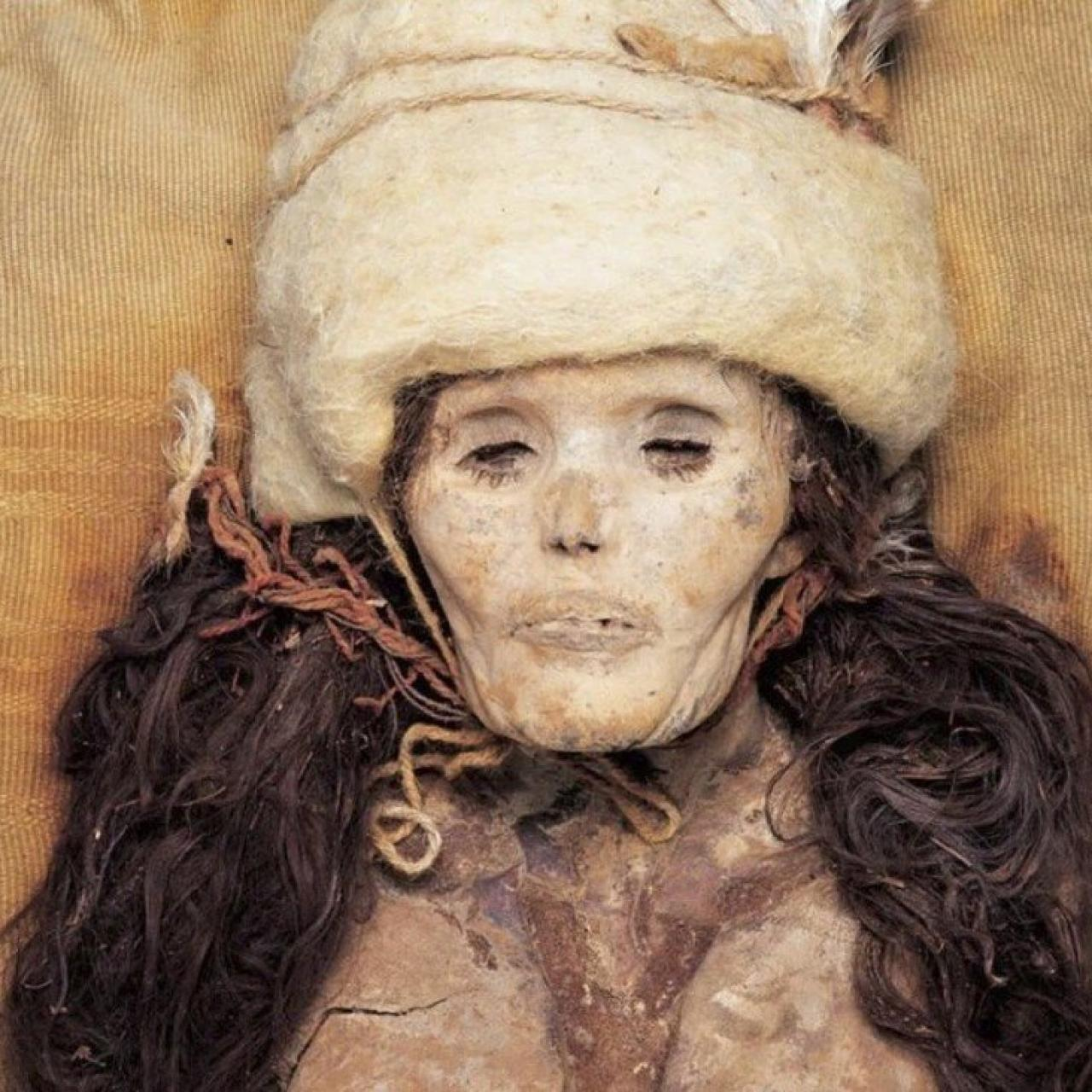
The mummies of the Tarim Basin are among the most extraordinary archaeological discoveries in Central Asia. Found in the extremely dry deserts of present-day Xinjiang, northwestern China, some of these individuals survived for nearly four millennia because of the region's exceptionally arid environment. Unlike the deliberately embalmed mummies of ancient Egypt, many of the Tarim Basin mummies were naturally preserved. Dry air, salty soils, and other environmental conditions slowed the decomposition of soft tissues, allowing archaeologists to recover remarkably detailed evidence of prehistoric and early historic populations.

The discovery of these mummies transformed the study of ancient Xinjiang. Their preservation allows researchers to investigate not only skeletal remains but also hair, clothing, textiles, food residues, burial objects, and, increasingly, ancient DNA. Together, these sources have revealed a complex history of human communities living at the intersection of eastern Eurasia, the Eurasian steppe, and the routes that would eventually become associated with the Silk Road.

The Tarim Basin and Its Extreme Environment

The Tarim Basin is a vast geographical region surrounded by some of Asia's most dramatic mountain systems. At its center lies the Taklamakan Desert, one of the world's largest sandy deserts.

For prehistoric communities, this was a demanding environment. Permanent settlement depended heavily on access to water, particularly around rivers, oases, and the edges of the basin.

Yet the same dry environment that made life challenging also created exceptional conditions for archaeological preservation. Organic materials that would normally decay—including wood, leather, wool, and human tissue—could survive for thousands of years.

This preservation has made the Tarim Basin an archaeological archive unlike almost any other.

Natural Mummification

The Tarim Basin mummies were generally not preserved through artificial embalming in the Egyptian sense.

Instead, environmental conditions played the primary role.

The process of natural mummification was aided by factors such as:

  • extremely low humidity,

  • dry desert air,

  • saline soils,

  • rapid dehydration of bodies,

  • and limited biological activity capable of causing decomposition.

As moisture disappeared from the body, the tissues dried and became naturally preserved.

In some cases, facial features, hair, and clothing remained recognizable after thousands of years.

What Did the Mummies Look Like?

The physical appearance of some early Tarim Basin mummies attracted enormous attention because several individuals possessed features that earlier observers associated with western Eurasian populations, including light or brown hair and particular facial characteristics.

For many years, these observations led to theories suggesting that the earliest inhabitants of the region were recent migrants from western Eurasia.

However, appearance alone cannot reliably determine ancestry.

Modern ancient-DNA research has significantly changed the discussion by showing that the genetic history of the Tarim Basin's ancient populations was more complex than earlier interpretations suggested.

Ancient DNA and the Tarim Basin

Genetic studies of ancient individuals from the Tarim Basin have provided important evidence about their ancestry.

Research has indicated that some Early Bronze Age populations of the region were genetically distinctive and carried substantial ancestry connected to deeply ancient northern Eurasian populations rather than representing a simple recent migration from western Europe or the Eurasian steppe.

This finding is important because it demonstrates the difference between cultural connections and biological ancestry.

A population may adopt technologies, clothing styles, agricultural practices, or trade relationships from neighboring societies without being directly descended from those groups.

The Tarim Basin therefore illustrates the danger of making historical conclusions based solely on physical appearance or material culture.

Clothing and Textile Technology

One of the most remarkable aspects of the Tarim Basin mummies is the preservation of clothing.

Archaeologists have recovered materials including:

  • wool textiles,

  • felt,

  • leather,

  • fur,

  • woven garments,

  • and carefully constructed footwear.

These materials reveal advanced knowledge of textile production.

The creation of woven cloth required access to raw fibers, knowledge of spinning, and techniques for producing durable fabrics.

Clothing was essential in the extreme climate of Central Asia, where temperatures could vary dramatically between seasons.

At the same time, clothing could also communicate cultural identity.

Patterns, colors, and styles may have reflected community traditions or social practices.

Agriculture and Animal Husbandry

The ancient communities of the Tarim Basin were not isolated from broader developments in Eurasian food production.

Archaeological evidence indicates the use of domesticated crops and animals.

Different populations interacted with agricultural traditions originating in both eastern and western parts of Eurasia.

Important food resources included grains such as:

  • wheat,

  • barley,

  • and millet in various regional and chronological contexts.

The spread of crops across Eurasia represents one of the most important processes of prehistoric cultural exchange.

Plants that originated in one part of the continent could eventually be cultivated thousands of kilometers away.

Dairy and Animal Resources

Some archaeological evidence from the Tarim Basin also indicates the importance of domesticated animals and dairy-related practices.

Herding could provide communities with:

  • meat,

  • milk,

  • hides,

  • wool,

  • and transportation.

The relationship between agriculture and pastoralism allowed ancient communities to adapt to the difficult environmental conditions of Central Asia.

Rather than relying on a single economic strategy, populations could combine different methods of obtaining food.

Burial Practices

The Tarim Basin mummies were often buried with carefully selected objects.

Burial goods can include:

  • clothing,

  • baskets,

  • food,

  • wooden objects,

  • animal materials,

  • and other personal or symbolic items.

These objects provide evidence about how communities responded to death.

However, archaeologists must be cautious when interpreting burial goods. An object placed beside a deceased individual may have held practical, social, ritual, or symbolic significance.

Without written records from the earliest periods, the precise meaning cannot always be recovered.

The Importance of the Tarim Basin Mummies

The Tarim Basin mummies are important because they preserve multiple forms of evidence in one archaeological context.

Researchers can study:

  • human biology,

  • genetics,

  • clothing,

  • technology,

  • agriculture,

  • diet,

  • and burial customs.

Few prehistoric discoveries provide such a detailed picture of ancient daily life.

The mummies also demonstrate that ancient Central Asia was not an empty space between major civilizations.

It was home to communities with their own histories, technologies, and cultural traditions long before the development of the famous Silk Road networks.

Conclusion

The Tarim Basin mummies provide an extraordinary window into life in prehistoric Xinjiang. Naturally preserved by the extreme environment of the Taklamakan region, these individuals have survived for thousands of years alongside the objects and clothing associated with their lives and burials.

Modern archaeological and genetic research has shown that their history cannot be explained through simple assumptions about appearance or migration. Instead, the ancient Tarim Basin was shaped by distinctive local populations and long-distance cultural connections.

These remarkably preserved individuals continue to reshape our understanding of prehistoric Eurasia, revealing that even one of the world's harshest deserts was home to complex and resilient human communities.

Xiaohe Cemetery: Xinjiang's Boat Coffins and Wheat

August 18, 2026

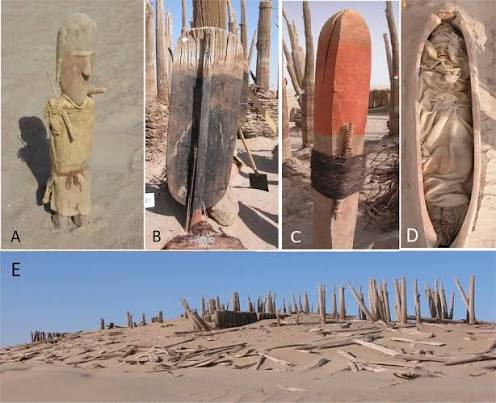
Xiaohe Cemetery is one of the most distinctive Bronze Age burial sites ever discovered in the Tarim Basin. Located in the Xinjiang region of northwestern China, the cemetery became famous for its unusual wooden coffins, many of which have been described as boat-shaped.

The dry desert environment preserved not only human remains but also wood, textiles, plant materials, and other organic objects that would normally disappear from the archaeological record.

Xiaohe offers an exceptional opportunity to study a prehistoric community in remarkable detail.

The Discovery and Rediscovery of Xiaohe

The site became known to modern archaeology during the early twentieth century, although its remote location made systematic research difficult.

Later expeditions and archaeological investigations revealed the scale and complexity of the cemetery.

Xiaohe contained numerous burials arranged within a distinctive mortuary landscape.

The preservation of wooden structures was especially remarkable because wood rarely survives for thousands of years in most environments.

In the Taklamakan region, however, extreme dryness acted as a natural preservative.

The Famous Boat Coffins

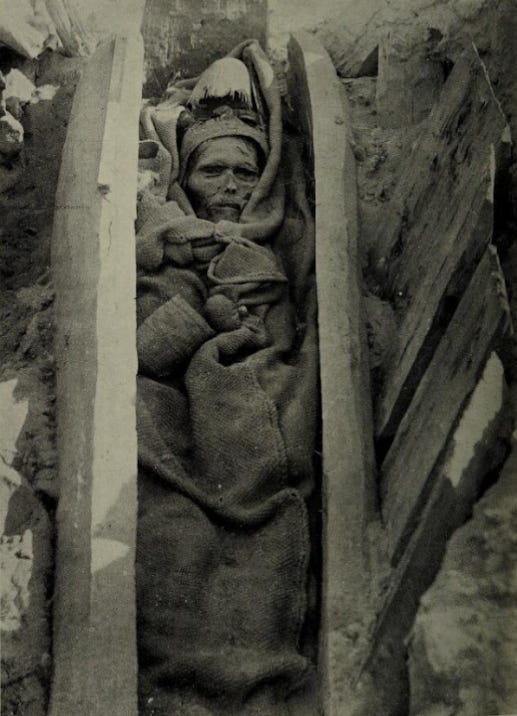
The most recognizable feature of Xiaohe Cemetery is its use of wooden coffins shaped in a form often compared to overturned boats.

The bodies were placed within these structures and covered or enclosed using additional materials.

The boat-like form has generated considerable discussion.

Researchers must be careful, however, not to assume that the coffins necessarily represented literal boats.

Their shape may have had practical, traditional, or symbolic significance.

Without written explanations, the beliefs behind the burial design remain uncertain.

Wooden Posts and the Cemetery Landscape

Many Xiaohe burials were associated with upright wooden markers.

These posts created a striking visual landscape.

The use of such structures demonstrates that the cemetery was deliberately organized and repeatedly used.

The placement of markers may have helped identify particular graves or contributed to broader ceremonial practices.

Because the site was located in an extremely dry environment, these wooden elements survived far longer than would normally be possible.

Wheat and the Archaeology of Food

One of the important discoveries associated with prehistoric Xinjiang is evidence for the movement of agricultural crops across Eurasia.

Wheat was originally domesticated in Southwest Asia and eventually spread eastward through networks of migration, exchange, and cultural contact.

The presence of wheat-related evidence in Bronze Age contexts demonstrates that prehistoric communities were already participating in long-distance processes of agricultural transmission.

This occurred thousands of years before the formal Silk Road became famous.

A Crossroads Before the Silk Road

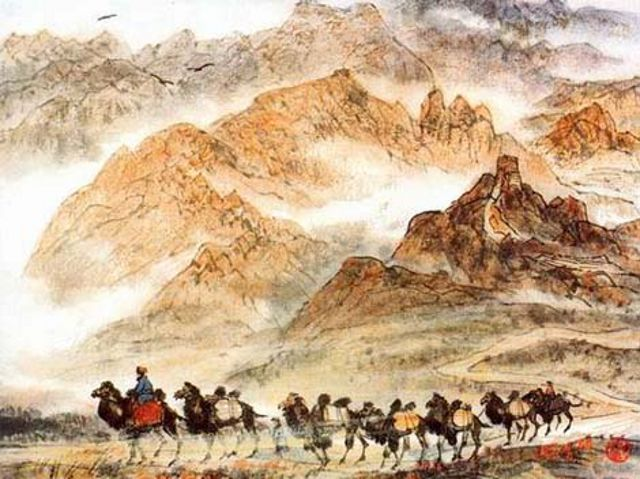
The Tarim Basin is often associated with the Silk Road, the historical network that linked East Asia with Central Asia, South Asia, the Middle East, and Europe.

However, archaeological evidence shows that long-distance contact existed in Eurasia long before the Silk Road of later historical periods.

The movement of:

  • crops,

  • livestock,

  • technologies,

  • textiles,

  • and cultural practices

demonstrates that prehistoric communities were already connected through wide networks of exchange.

Xiaohe is therefore important for understanding the deeper history of Eurasian interaction.

Human Remains and Ancient DNA

The preservation of human remains at Xiaohe has allowed scientists to investigate the ancestry of the population using ancient DNA.

Research indicates that the people of the early Tarim Basin formed a distinctive population with deep ancestry in northern Eurasia.

This challenged earlier explanations that interpreted the community simply as recent migrants from western Eurasia.

The results demonstrate that cultural exchange and genetic ancestry do not always follow the same pattern.

A community can adopt wheat, animal husbandry, or textile technologies through interaction without being genetically identical to the populations from which those practices originated.

Burial Objects and Symbolism

The burials at Xiaohe contained a range of associated materials.

These could include:

  • baskets,

  • textiles,

  • wooden objects,

  • animal materials,

  • plant remains,

  • and other carefully placed items.

The deliberate inclusion of these materials suggests that burial was an organized cultural activity.

However, the precise symbolic meaning of individual objects cannot always be determined.

Archaeology can identify patterns of behavior, but reconstructing beliefs requires caution.

Life in the Tarim Basin

Living near the Taklamakan Desert required detailed environmental knowledge.

Communities depended on access to water and needed strategies for obtaining food and raw materials.

Agriculture and herding could be combined with the collection of local resources.

The inhabitants of the region were therefore not simply isolated desert dwellers.

They participated in technological and cultural networks extending across prehistoric Eurasia.

Why Xiaohe Cemetery Is So Important

Xiaohe is important because of the extraordinary preservation of organic material.

At many prehistoric cemeteries, archaeologists recover only stone, pottery, and skeletal remains.

At Xiaohe, the desert environment preserved much more.

This allows researchers to investigate:

  • clothing,

  • woodworking,

  • food,

  • burial practices,

  • plant use,

  • and human genetics.

The site provides one of the most detailed archaeological records of Bronze Age life in Central Asia.

Conclusion

Xiaohe Cemetery is an extraordinary archaeological monument preserved by the harsh environment of the Tarim Basin. Its boat-shaped coffins, wooden markers, naturally preserved bodies, and evidence of agricultural connections reveal a complex prehistoric community.

The presence of crops such as wheat demonstrates that long-distance cultural exchange was occurring across Eurasia thousands of years before the historical Silk Road.

Xiaohe reminds us that ancient connections between distant societies did not begin with famous empires or commercial caravans. Long before those developments, prehistoric communities were already exchanging knowledge, technologies, and resources across enormous distances.

Gumugou Cemetery: Xinjiang's Proto-Tocharian Burials

August 18, 2026

Gumugou Cemetery is an important Bronze Age burial site in the Tarim Basin of Xinjiang. The cemetery forms part of the broader archaeological record that has contributed to debates about the early populations of Central Asia and the later emergence of Indo-European-speaking communities in the region.

The term “Proto-Tocharian” is often used cautiously in discussions of ancient populations connected with the broader cultural and linguistic background of the Tarim Basin. However, archaeological remains alone cannot prove that a particular prehistoric population spoke a specific language.

This distinction is essential.

Burial customs, genetics, and material culture can provide evidence about ancient populations, but language must usually be reconstructed through later written records and linguistic analysis.

The Archaeological Context of Gumugou

Gumugou lies within the broader Tarim Basin cultural landscape.

The region contains numerous ancient cemeteries whose exceptional preservation has provided evidence for Bronze Age communities.

The dry environment allowed the survival of:

  • human remains,

  • wooden structures,

  • textiles,

  • and other organic materials.

These discoveries have allowed archaeologists to reconstruct aspects of prehistoric life with unusual detail.

Burial Practices

The graves at Gumugou reflect organized mortuary traditions.

The treatment of the dead involved deliberate placement within a cemetery landscape.

Burial practices can provide evidence about:

  • social organization,

  • cultural identity,

  • attitudes toward death,

  • and relationships between communities.

However, the exact beliefs behind these practices cannot be directly recovered.

A burial pattern may reflect tradition without revealing the specific stories or religious ideas associated with it.

The Question of the Tocharians

The Tocharians are historically known from manuscripts written in an Indo-European branch of languages discovered in the Tarim Basin.

These texts date to much later periods than the earliest Bronze Age cemeteries.

Because of this chronological gap, archaeologists cannot automatically identify early Bronze Age populations such as those associated with Gumugou as direct speakers of Tocharian languages.

The relationship between ancient populations, genetics, material culture, and language remains complex.

Genetics and Cultural Identity

Ancient DNA has demonstrated that the population history of the Tarim Basin was highly distinctive.

Early communities were not simply straightforward migrants from western Eurasia, despite older interpretations based partly on physical appearance and cultural similarities.

This has important implications for discussions of Proto-Tocharian identity.

A language can spread through:

  • migration,

  • trade,

  • intermarriage,

  • political influence,

  • or cultural interaction.

Therefore, genetic ancestry and language do not always correspond.

Textiles and Material Culture

The preservation of textiles in Tarim Basin cemeteries has provided important evidence about ancient craftsmanship.

Producing clothing required knowledge of:

  • fiber collection,

  • spinning,

  • weaving,

  • sewing,

  • and garment construction.

Textiles could also express cultural traditions through patterns and styles.

The people buried in these cemeteries were part of societies that possessed substantial technical knowledge.

Agriculture and Herding

Bronze Age populations in Xinjiang made use of both agricultural and pastoral resources.

Communities could cultivate crops while also raising animals.

This flexible economic strategy was particularly useful in the challenging environments surrounding the Tarim Basin.

Herding provided:

  • meat,

  • milk,

  • hides,

  • wool,

  • and transportation.

Agriculture added additional sources of food.

Why the Site Matters

Gumugou is important because it contributes to a larger picture of prehistoric Central Asia.

The Tarim Basin was not culturally isolated.

Communities interacted with neighboring populations and participated in the movement of technologies and agricultural practices across Eurasia.

At the same time, ancient-DNA research demonstrates that these communities retained distinctive population histories.

The Limits of Archaeological Labels

Terms such as “Proto-Tocharian” can be useful for organizing historical questions, but they should not be treated as proven identities when direct evidence is unavailable.

Archaeologists must distinguish between:

  • what a burial reveals,

  • what genetics reveals,

  • what language evidence reveals,

  • and what remains hypothetical.

This careful approach is particularly important in prehistoric studies.

Conclusion

Gumugou Cemetery provides valuable evidence for the Bronze Age communities of the Tarim Basin. Its burials, preserved materials, and broader archaeological context contribute to ongoing debates about population history, cultural interaction, and the possible origins of later societies in Xinjiang.

The connection between early Bronze Age populations and the later Tocharian-speaking world remains a complex historical question rather than a simple identification.

Gumugou is therefore important not only because of its archaeological remains but because it demonstrates how carefully archaeologists must separate evidence from interpretation.

Loulan Kingdom: Taklamakan's Desert Silk Road City

August 18, 2026

The ancient kingdom of Loulan was one of the most strategically important settlements in the history of the eastern Silk Road. Located near the northeastern edge of the Tarim Basin, Loulan occupied a position where routes connecting China with Central Asia passed through an extremely difficult desert environment.

For centuries, the kingdom served as a point of contact between different cultures, languages, political powers, and commercial networks.

Today, the ruins of Loulan stand in an arid landscape that demonstrates how dramatically environmental change can transform human settlements.

The Strategic Location of Loulan

Travel across the Tarim Basin was shaped by geography.

The vast Taklamakan Desert was difficult to cross directly, so long-distance routes generally followed chains of oases and waterways.

Loulan occupied a strategically valuable location near ancient routes associated with the Lop Nur region.

Travelers moving between eastern China and Central Asia could pass through or near this region.

As a result, Loulan became important for:

  • trade,

  • taxation,

  • diplomacy,

  • military movement,

  • and communication.

Loulan and the Silk Road

The term “Silk Road” describes a network rather than a single road.

Goods, people, technologies, and ideas moved through multiple interconnected routes.

Loulan occupied a position within these networks.

Products moving across Eurasia included:

  • silk,

  • textiles,

  • horses,

  • metals,

  • spices,

  • glass,

  • and other valuable materials.

However, the movement of ideas was equally important.

Religious traditions, artistic styles, languages, and administrative practices also traveled through Central Asia.

A Multicultural Frontier

Archaeological and historical evidence demonstrates that the communities of the Tarim Basin were culturally diverse.

Different languages and writing systems appeared in the region over time.

Loulan became connected with wider political developments involving Chinese dynasties and Central Asian powers.

Its location made it valuable but also vulnerable.

Control over an oasis settlement could influence the movement of travelers and the security of trade routes.

The Role of Water

The survival of Loulan depended on water.

In an arid environment, settlements could flourish only where rivers, lakes, or irrigation systems provided reliable resources.

Changes in waterways could therefore have catastrophic consequences.

Environmental shifts affecting the Lop Nur region likely contributed to the decline and eventual abandonment of settlements associated with Loulan.

Why Loulan Was Abandoned

The disappearance of Loulan has fascinated historians and archaeologists.

The decline was likely connected to environmental changes, particularly shifts in water systems that affected the region.

Without sufficient water, agriculture and permanent settlement became increasingly difficult.

Trade routes may also have shifted toward other corridors.

The decline of a city is rarely caused by only one factor.

Environmental change, political instability, economic transformation, and changes in transportation routes can interact over time.

Archaeological Discoveries

Archaeological work in the Loulan region has revealed evidence of:

  • buildings,

  • administrative documents,

  • textiles,

  • household objects,

  • and other materials.

Written documents are particularly valuable because they provide direct evidence of administration and daily life.

They demonstrate that the region was connected to wider systems of literacy and governance.

Life on the Edge of the Desert

The inhabitants of Loulan lived in a challenging environment.

Daily survival required careful management of:

  • water,

  • food,

  • agriculture,

  • and trade connections.

Yet the city also benefited from its strategic location.

Caravans traveling through the region needed places to rest, obtain supplies, and exchange goods.

This created economic opportunities for oasis settlements.

Loulan as a Meeting Point of Civilizations

The historical importance of Loulan lies partly in its role as a cultural crossroads.

The city existed between major regions of Eurasia.

Influences from East Asia, Central Asia, South Asia, and the wider western world could reach the Tarim Basin through networks of movement and exchange.

Loulan demonstrates that the Silk Road was not merely a route for luxury goods.

It was a system through which cultures interacted and changed one another.

The Modern Archaeological Landscape

Today, the ruins of Loulan are surrounded by an environment very different from the flourishing settlement that once existed there.

Wind and desert conditions have affected the surviving structures.

The site is also vulnerable to environmental damage and human disturbance.

Archaeological conservation is therefore essential.

Conclusion

Loulan Kingdom was one of the great oasis centers of the eastern Silk Road. Its strategic location allowed it to participate in long-distance networks connecting China with Central Asia and beyond.

Yet Loulan's history also demonstrates the vulnerability of human settlements in arid environments.

The same waterways that allowed the kingdom to flourish could shift or disappear, transforming a once-important settlement into ruins surrounded by desert.

Today, Loulan remains a powerful symbol of the interconnected history of Eurasia and the ability of environmental change to reshape civilizations.

Subashi Temple: Xinjiang's Buddhist Cliff Carvings

August 18, 2026

Subashi Temple, also known as the Subashi Buddhist ruins, is one of the most important archaeological monuments associated with the Buddhist history of the Tarim Basin. Located in the region historically connected with the ancient kingdom of Kucha, in present-day Xinjiang, the site reflects the period when Central Asia became a major crossroads for Buddhism, trade, translation, and artistic exchange.

The ruins demonstrate that Buddhism was not simply transmitted directly from India to China. Instead, religious ideas traveled through a vast network of communities stretching across South Asia and Central Asia. Monasteries, translators, merchants, pilgrims, and local rulers all contributed to this process.

Subashi became part of this remarkable cultural world.

The Buddhist Kingdom of Kucha

The region surrounding Subashi was historically associated with Kucha, one of the major oasis kingdoms of the northern Tarim Basin.

Kucha occupied a strategically important position along routes connecting China with Central Asia.

Because of its location, the kingdom became a meeting point for different populations and cultural traditions.

Its inhabitants participated in networks involving:

  • trade,

  • diplomacy,

  • Buddhism,

  • artistic exchange,

  • and the translation of religious texts.

Buddhism became particularly influential in Kucha, and the region eventually developed an important monastic culture.

The Importance of the Subashi Complex

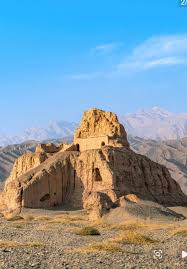
Subashi was a major Buddhist settlement rather than a single isolated building.

The archaeological remains include the ruins of:

  • temples,

  • stupas,

  • monastic structures,

  • residential spaces,

  • and other religious buildings.

The site demonstrates the scale of Buddhist institutional life in the Tarim Basin.

Monasteries served several functions. They were places where monks and religious specialists could live, study, worship, and teach.

They could also provide services to travelers moving along the trade routes.

Buddhism Along the Silk Road

The spread of Buddhism across Asia was closely connected with long-distance networks of movement.

Merchants traveled between regions, while monks and pilgrims carried religious teachings and texts.

The Silk Road routes therefore became channels for cultural exchange.

Buddhist ideas moved from South Asia into Central Asia and eventually into China, Korea, Japan, and other parts of East Asia.

However, the process was not one-directional.

As Buddhism moved, it changed.

Different communities translated religious texts, developed new artistic traditions, and adapted Buddhist practices to local cultures.

Architecture and Religious Space

The buildings at Buddhist sites such as Subashi were designed for specific religious functions.

Stupas could contain sacred relics or serve as important monuments for devotion.

Temple spaces could house religious images and provide locations for ceremonies.

Monastic buildings provided accommodation for religious communities.

The layout of a monastery therefore reflected the organization of religious life.

Archaeological remains can reveal:

  • how buildings were arranged,

  • how communities moved through the site,

  • and how different spaces were used.

Buddhist Art and Carvings

The title of Subashi as a site of Buddhist artistic heritage reflects the wider tradition of religious imagery that developed throughout the Tarim Basin.

Artists working in Central Asian Buddhist communities produced images of:

  • the Buddha,

  • bodhisattvas,

  • monks,

  • donors,

  • heavenly beings,

  • and scenes from Buddhist narratives.

These artistic traditions were influenced by multiple regions.

Indian, Iranian, Central Asian, and Chinese artistic elements could interact and combine.

This makes the Buddhist art of Xinjiang especially important for understanding cultural exchange.

Kucha as a Center of Translation

The kingdom of Kucha became famous for its contribution to the transmission of Buddhist knowledge.

One of the most important figures associated with the region was Kumārajīva.

Kumārajīva played a major role in translating Buddhist texts into Chinese and helped make Buddhist teachings more accessible within Chinese intellectual and religious life.

His career demonstrates the importance of Central Asian communities in the spread of Buddhism.

Religious ideas that later became central to East Asian Buddhism often passed through cultural intermediaries in regions such as Kucha.

Monastic Life

The monks who lived at Buddhist complexes followed organized religious routines.

Daily life could include:

  • prayer,

  • meditation,

  • study,

  • teaching,

  • recitation,

  • and the maintenance of the monastery.

Monasteries also depended on relationships with surrounding communities.

Food, construction materials, and other resources could be provided through donations or economic connections.

Religious institutions were therefore connected to the broader social and economic life of the oasis.

The Decline of the Buddhist Centers

The religious and political landscape of Xinjiang changed over time.

New political powers emerged, trade networks shifted, and Islam gradually became the dominant religion across much of the region.

Many Buddhist institutions eventually declined or were abandoned.

The ruins of Subashi therefore preserve evidence of a religious landscape that once played a major role in Central Asian history.

Why Subashi Temple Is Important

Subashi is important because it provides evidence for the role of Central Asia in the transmission of Buddhism.

The site demonstrates that Xinjiang was not merely a distant frontier between larger civilizations.

It was an active cultural region in its own right.

Monasteries such as Subashi helped connect:

  • India,

  • Central Asia,

  • China,

  • and the wider Buddhist world.

Conclusion

Subashi Temple represents an important chapter in the history of Buddhism along the Silk Road.

Its ruins preserve evidence of a major monastic community located within the cultural landscape of ancient Kucha.

The site reminds us that Buddhism reached East Asia through a complex network of travelers, translators, artists, merchants, and religious communities.

Subashi stands as archaeological evidence of that process—a place where the spiritual traditions of Asia crossed deserts, languages, and political boundaries.

Kumtura Caves: Xinjiang's Rock-Cut Monasteries

August 18, 2026

The Kumtura Caves are another major Buddhist archaeological complex in the Tarim Basin. Located in the historical region associated with the ancient kingdom of Kucha, the caves preserve evidence of monastic life, religious architecture, and Buddhist artistic traditions.

The site forms part of a larger network of cave monasteries that developed along the northern routes of the Tarim Basin.

Together with sites such as Kizil, Kumtura demonstrates the importance of Central Asia in the transmission and transformation of Buddhism.

The Creation of a Rock-Cut Monastery

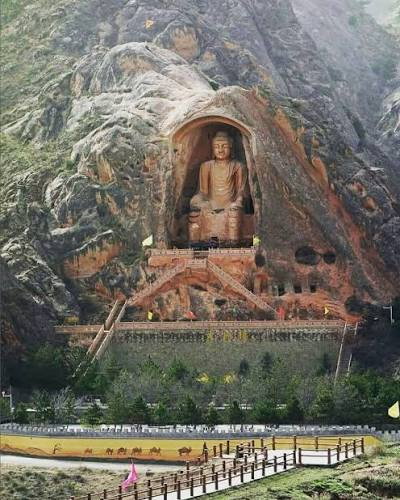
A rock-cut monastery began with the landscape itself.

Builders selected suitable cliffs and excavated chambers directly into the stone.

Different rooms could serve different functions.

A complex might include:

  • assembly halls,

  • meditation chambers,

  • shrines,

  • residential rooms,

  • and spaces associated with religious imagery.

Creating these structures required planning and specialized labor.

The excavation process involved the gradual removal of rock using available tools.

The finished chamber could then be covered with prepared surfaces and decorated.

Religious Architecture

The design of Buddhist caves often reflected religious concepts.

Some chambers included central structures or architectural features that guided the movement of worshippers.

Others were designed primarily for meditation or the display of sacred images.

The organization of space therefore contributed to religious experience.

Architecture was not simply functional.

It helped create an environment appropriate for Buddhist worship and monastic life.

The Art of Kumtura

The caves preserve Buddhist murals and other forms of artistic decoration.

These works depict sacred figures and religious narratives.

As at other Central Asian cave sites, the artistic traditions of Kumtura reveal cultural interaction.

Different stylistic influences could coexist.

Over time, artistic traditions also changed as political conditions and cultural contacts evolved.

Buddhism and the Oasis Kingdoms

The oasis kingdoms of the Tarim Basin were important centers of Buddhism.

Settlements depended on irrigation and agriculture, but their position along major travel routes also created opportunities for cultural exchange.

Monasteries could benefit from the movement of merchants and pilgrims.

A traveler might carry new religious texts, artistic ideas, or technologies from one oasis to another.

This created a network of cultural communication across the deserts of Central Asia.

The Role of Monasteries

Buddhist monasteries were more than isolated religious retreats.

They could function as:

  • centers of education,

  • repositories of religious knowledge,

  • places of worship,

  • and institutions connected with local communities.

Monks depended on relationships with lay supporters.

Donations of food, land, labor, or wealth could help maintain religious institutions.

Changing Artistic Traditions

The Kumtura Caves were used over long periods.

As a result, different caves and paintings may represent different stages in the history of Buddhist art.

Changes in artistic style can reflect:

  • new cultural influences,

  • political transformations,

  • changes in religious practice,

  • and the movement of artists between regions.

The site therefore allows archaeologists and art historians to study cultural change over time.

Preservation and Archaeological Study

Like many ancient cave complexes, Kumtura faces challenges from natural deterioration.

Rock surfaces can crack, water can damage painted layers, and environmental changes can affect the preservation of murals.

Human activity has also contributed to the loss or removal of archaeological material.

Modern documentation and conservation are therefore essential.

Digital photography, mapping, and other technologies allow researchers to study the caves while reducing unnecessary physical contact.

Why Kumtura Is Important

Kumtura is important because it demonstrates that Buddhist Central Asia was supported by a network of regional religious institutions.

The caves were not isolated monuments.

They formed part of a cultural landscape extending across the Tarim Basin.

The site contributes to the understanding of:

  • Buddhist architecture,

  • monastic life,

  • artistic exchange,

  • and the history of the Silk Road.

Conclusion

The Kumtura Caves preserve the remains of a Buddhist world that once flourished along the oasis routes of Central Asia.

Their rock-cut chambers and painted walls provide evidence of the communities that transformed cliffs into monasteries and religious sanctuaries.

Kumtura reminds us that Buddhism spread not simply through armies or political empires but through networks of teachers, artists, travelers, donors, and local communities.

The caves remain a lasting record of that extraordinary cultural exchange.

Kirghiz Tombs: Xinjiang's Ancient Kyrgyz Kurgans

August 18, 2026

The highlands and steppe regions of Xinjiang contain archaeological evidence associated with many different ancient pastoral and nomadic communities. Among the most recognizable forms of archaeological monuments are kurgans, burial mounds constructed from combinations of earth, stone, and other materials.

The term “Kirghiz tombs” is often connected with burial traditions associated with Kyrgyz or related Turkic-speaking populations in the broader region. However, archaeological identification must be approached carefully because a particular mound cannot automatically be assigned to a specific ethnic group solely on the basis of its location or shape.

Kurgans were used by many populations across Eurasia over thousands of years.

What Is a Kurgan?

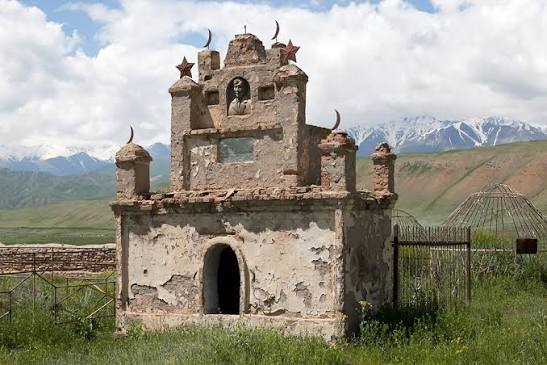
A kurgan is generally a burial mound constructed above or around a grave.

The structure could range from a small mound to a large monument.

Construction methods varied.

A kurgan might contain:

  • earth,

  • stones,

  • wooden structures,

  • grave chambers,

  • and associated objects.

The size and complexity of the mound could depend on local traditions and available resources.

Burial Mounds Across Eurasia

Kurgan traditions developed across vast regions of the Eurasian steppe.

Archaeological examples exist from areas stretching across:

  • Central Asia,

  • Siberia,

  • Kazakhstan,

  • Mongolia,

  • southern Russia,

  • and other regions.

Because the tradition was geographically widespread and continued for long periods, identifying the builders of an individual kurgan requires detailed archaeological evidence.

The Kyrgyz and the Central Asian Landscape

Kyrgyz populations became important participants in the history of Inner Asia.

Their historical development was connected with the movement of pastoral communities across steppe and mountain environments.

Xinjiang's geography—including high mountains, grasslands, and desert margins—created landscapes suitable for mobile pastoralism.

Communities could move animals seasonally between grazing areas.

Pastoral Life

Pastoral economies depended heavily on domesticated animals.

Herds could provide:

  • meat,

  • milk,

  • wool,

  • hides,

  • transport,

  • and other resources.

The seasonal movement of herds required detailed knowledge of:

  • water sources,

  • grazing conditions,

  • weather,

  • and mountain routes.

Nomadic or semi-nomadic life was therefore highly organized rather than random movement.

What Can a Tomb Reveal?

A burial mound can provide information about:

  • funerary practices,

  • technology,

  • diet,

  • animal use,

  • trade,

  • and social organization.

Archaeologists examine the position of human remains and the objects associated with them.

These may include:

  • weapons,

  • horse equipment,

  • jewelry,

  • ceramics,

  • and animal remains.

However, interpretation requires caution.

The presence of an object does not automatically reveal the occupation or social status of the deceased.

Horses and Steppe Societies

Horses played an important role in many Central Asian societies.

They could be used for:

  • transportation,

  • herding,

  • communication,

  • hunting,

  • and warfare.

Horse equipment discovered in burials can therefore provide important evidence about technological and cultural practices.

The relationship between humans and horses was central to the history of the Eurasian steppe.

Kurgans as Monuments

A burial mound was visible within the landscape.

This visibility may have given it social importance.

A community could create a monument that remained recognizable long after the burial ceremony ended.

Kurgans may therefore have contributed to:

  • collective memory,

  • territorial identity,

  • ancestry,

  • and the relationship between communities and landscapes.

The exact meaning varied between societies.

Archaeology and Ethnic Identity

One of the major challenges in Central Asian archaeology is the relationship between material culture and ethnic identity.

Archaeologists cannot simply assume that:

one type of pottery = one ethnic group

or that:

one burial style = one language or population.

Communities could share technologies and burial customs.

People also migrated, intermarried, traded, and adopted cultural practices.

For this reason, identifying a tomb as “Kyrgyz” requires multiple forms of evidence, including chronology and historical context.

Why These Tombs Matter

Ancient burial monuments in Xinjiang demonstrate the long history of human movement through Central Asia.

They provide evidence for societies that adapted to mountain and steppe environments through pastoralism, mobility, and regional exchange.

The archaeological record helps reconstruct histories that often predate extensive written documentation.

Conclusion

The kurgans associated with the ancient pastoral landscapes of Xinjiang represent an important part of Central Asia's archaeological heritage.

These burial monuments provide evidence of communities whose lives were connected with animals, mobility, mountains, and the open steppe.

At the same time, they demonstrate the importance of careful interpretation.

A burial mound can reveal extraordinary details about ancient life, but identifying its builders requires more than assigning a modern ethnic name to an ancient archaeological structue

Dzungaria Petroglyphs: Xinjiang's Bronze Age Hunters

August 18, 2026

The Dzungarian region of northern Xinjiang contains an extensive archaeological landscape shaped by mountains, grasslands, deserts, and ancient migration routes. Among its most fascinating remains are petroglyphs—images carved, pecked, or engraved directly into rock surfaces.

These ancient images provide evidence of how prehistoric and early historic communities represented animals, hunting, human activity, and symbolic ideas.

Many petroglyph traditions in Inner Asia span long periods, from the Bronze Age into later historical eras. For this reason, individual images must be carefully dated according to style, archaeological context, and comparison with other evidence.

What Is a Petroglyph?

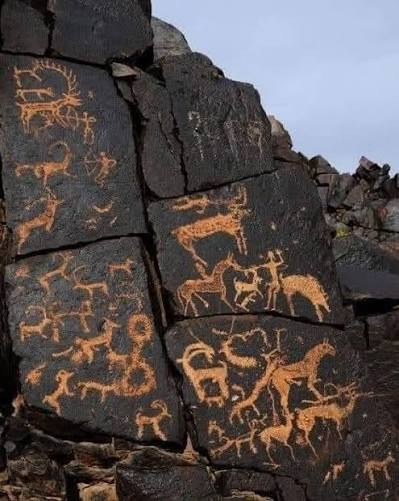
A petroglyph is an image created by modifying a rock surface.

Ancient artists could produce these images through techniques such as:

  • pecking,

  • carving,

  • incising,

  • and abrading.

Unlike paintings, petroglyphs do not depend on pigments.

Instead, the image is created by physically altering the stone.

Over time, the newly exposed surface may weather differently from the surrounding rock.

Hunting Scenes

One of the most common subjects in Eurasian rock art is hunting.

Images may show:

  • human figures,

  • deer,

  • wild sheep,

  • goats,

  • horses,

  • and other animals.

Some scenes appear to represent groups of hunters pursuing animals.

These images provide important evidence about the relationship between prehistoric people and the natural environment.

The Importance of Animals

Animals were essential to Bronze Age communities.

Wild animals provided:

  • meat,

  • hides,

  • bones,

  • and other resources.

At the same time, animals could have symbolic importance.

A carved deer may represent a hunted animal, but it may also have been connected with stories, beliefs, or group traditions.

Archaeologists cannot always determine which interpretation is correct.

Bronze Age Technology

The Bronze Age was characterized by the growing use of metal technologies involving copper alloys.

However, the adoption of bronze did not eliminate older technologies.

Stone, bone, wood, and other materials continued to be important.

Communities could combine different technological systems depending on their needs and available resources.

Rock Art as Communication

Petroglyphs were created in visible landscapes.

A rock face could become a location where communities repeatedly added images over generations.

This means that rock art may have functioned as a form of communication.

Possible purposes include:

  • recording important activities,

  • marking landscapes,

  • expressing identity,

  • transmitting stories,

  • or participating in ritual practices.

No single explanation applies to every image.

The Landscape of Dzungaria

Dzungaria occupies an important geographical position between Central Asia and eastern Eurasia.

The region includes mountain corridors and open areas that facilitated the movement of:

  • people,

  • animals,

  • technologies,

  • and cultural traditions.

This made the region an important zone of interaction.

The petroglyphs form part of this larger history.

Dating Rock Art

Dating petroglyphs can be difficult.

Unlike organic materials, carved rock cannot always be directly dated.

Researchers may use:

  • stylistic comparison,

  • superimposition,

  • archaeological context,

  • weathering patterns,

  • and associated artifacts.

An image placed on top of another can provide relative chronological information.

However, assigning an exact date is often challenging.

Why Hunting Was More Than Survival

For prehistoric communities, hunting required cooperation and detailed environmental knowledge.

Hunters needed to understand:

  • animal behavior,

  • seasonal movement,

  • terrain,

  • weather,

  • and the capabilities of weapons.

The representation of hunting scenes may therefore have celebrated an important social activity.

Hunting could also involve teaching younger individuals and strengthening cooperation within a group.

Rock Art and Cultural Memory

A petroglyph can survive for centuries or millennia.

Later communities may encounter images created by people whose language and identity have disappeared.

The rock surface therefore becomes a form of cultural archive.

Different generations may add new images beside older ones.

Over time, the landscape accumulates layers of human memory.

Why Dzungaria's Petroglyphs Matter

The rock art of Dzungaria provides evidence for prehistoric societies that left few written records.

Through these images, archaeologists can study:

  • animals,

  • hunting,

  • artistic traditions,

  • technology,

  • and landscape use.

The petroglyphs demonstrate that prehistoric people were actively representing their experiences and surroundings.

Conclusion

The petroglyphs of Dzungaria preserve traces of ancient communities that lived and traveled through the landscapes of northern Xinjiang.

Their images of hunters and animals provide evidence of practical survival, artistic expression, and possible symbolic traditions.

Although the precise meaning of many carvings may never be known, the rock art remains a powerful record of how prehistoric people understood and represented their world.

Baicheng Tar Pits: Xinjiang's Mammoth Traps

August 18, 2026

The idea of prehistoric “tar pits” immediately brings to mind famous fossil sites where natural asphalt trapped animals over long periods. In Xinjiang, geological features containing bitumen and other petroleum-related substances have also attracted scientific interest because of the region's complex environmental and geological history.

However, the description “Baicheng Tar Pits: Xinjiang's Mammoth Traps” should be treated carefully. The interpretation of a natural bitumen deposit as a prehistoric mammoth trap requires direct fossil and geological evidence. It should not be assumed merely because a site contains tar-like material or large-animal remains.

The scientific importance of such localities lies in their potential to preserve evidence about extinct animals, ancient environments, and geological processes.

What Are Tar Pits?

A tar pit is an area where natural petroleum or bitumen reaches the surface.

The material can be extremely sticky.

Animals that step into it may become trapped.

Their struggles can attract predators or scavengers, which may also become trapped.

Over long periods, this process can create unusually rich fossil deposits.

The Preservation of Fossils

Natural asphalt can preserve bones because it protects them from some forms of environmental exposure.

Fossils recovered from such deposits can include:

  • large herbivores,

  • predators,

  • birds,

  • and smaller animals.

The resulting collection may provide a detailed picture of an ancient ecosystem.

However, the interpretation of fossil assemblages requires careful study.

Not every animal found near bitumen died because it became trapped.

Some remains may have been transported by water or deposited through other processes.

Mammoths in Ice Age Eurasia

Different species of mammoths inhabited parts of Eurasia during the Pleistocene.

These enormous relatives of modern elephants adapted to a variety of environments.

The best-known species include the woolly mammoth, which became strongly associated with cold Ice Age landscapes.

Mammoths could survive in parts of northern and central Eurasia where they fed on grasses and other vegetation.

Their fossils provide important evidence about Pleistocene ecosystems.

Could Mammoths Become Trapped?

Large animals could potentially become immobilized in natural hazards such as:

  • mud,

  • marshes,

  • sinkholes,

  • ice,

  • and sticky petroleum deposits.

Once trapped, an animal might be unable to escape.

However, proving that a specific fossil animal died in this way requires geological and archaeological evidence.

Scientists examine:

  • the position of bones,

  • sediment layers,

  • associated fossils,

  • and the geological history of the deposit.

The Importance of Geological Context

A fossil without geological context provides limited information.

A bone discovered near a tar deposit does not automatically prove that the animal died there.

Researchers need to determine whether the remains were:

  • deposited directly,

  • transported,

  • disturbed,

  • or accumulated through multiple processes.

This is why careful excavation is essential.

Pleistocene Environments in Xinjiang

During the Ice Age, the landscapes of Central Asia experienced major environmental changes.

Climate affected:

  • glaciers,

  • rivers,

  • grasslands,

  • deserts,

  • and animal populations.

Large herbivores depended on the availability of vegetation, while predators depended on prey.

Fossil sites can therefore provide evidence for entire ecological communities.

Mammoths and Human History

Mammoths were important to prehistoric humans.

In different regions, humans hunted or scavenged mammoths and used their bodies as sources of:

  • meat,

  • fat,

  • hide,

  • bone,

  • and ivory.

Mammoth bones could also be used in construction or toolmaking.

However, the relationship between humans and mammoths varied across time and geography.

The discovery of mammoth remains near a prehistoric site does not automatically prove deliberate hunting.

Evidence such as cut marks, weapon damage, or controlled archaeological context is needed.

Why Fossil Trap Sites Are Important

Natural trap deposits can preserve multiple species from the same environment.

This allows scientists to reconstruct:

  • predator-prey relationships,

  • biodiversity,

  • climate,

  • vegetation,

  • and ecological change.

Large collections of animal remains may reveal which species lived together.

Archaeology, Paleontology, and Geology

The study of a possible fossil trap requires cooperation between several disciplines.

Paleontology identifies and studies extinct animals.

Geology investigates sediments, rock formations, and natural processes.

Archaeology examines evidence of human activity.

Together, these disciplines can determine whether a site represents:

  • a natural trap,

  • a human hunting location,

  • a transported fossil deposit,

  • or another type of geological formation.

Why Caution Is Necessary

Prehistoric sites often acquire dramatic descriptions.

Terms such as “mammoth trap” are memorable, but scientific interpretation must be based on evidence.

A proper investigation asks:

  • Are mammoth fossils actually present?

  • Are they found within the tar or associated sediments?

  • What geological processes formed the deposit?

  • Were humans involved?

  • Can the remains be securely dated?

Without these answers, a dramatic interpretation remains a hypothesis rather than established fact.

Conclusion

The concept of the Baicheng tar pits as prehistoric mammoth traps highlights the fascinating relationship between geology and Ice Age life in Xinjiang. Natural petroleum deposits have the potential to preserve valuable fossil evidence, but determining how individual animals died requires detailed scientific investigation.

Whether a specific deposit represents a true animal trap, a natural fossil accumulation, or another geological phenomenon, such sites are important because they can preserve evidence from landscapes that disappeared thousands of years ago.

The study of fossil deposits reminds us that archaeology is not only about ancient human societies. It also depends on understanding the animals, climates, and geological environments that shaped the world in which prehistoric people lived.

Anyang Oracle Bones: China's Shang Dynasty Divination

August 18, 2026

The oracle bones discovered at Anyang are among the most important archaeological finds in the history of ancient China. These inscribed animal bones and turtle shells provide the earliest large body of surviving Chinese writing and offer an extraordinary direct record of the political, religious, military, and agricultural concerns of the late Shang Dynasty.

The discoveries are especially significant because they allow historians to move beyond later historical traditions and examine records produced by people who actually lived during the Shang period. Through thousands of inscriptions, archaeologists and historians have reconstructed aspects of royal decision-making, ancestor worship, divination, warfare, weather observation, and everyday administration.

Anyang, located in present-day Henan Province, contains the archaeological remains of Yinxu, the last capital of the Shang Dynasty. The oracle bones found there transformed the understanding of early Chinese civilization and demonstrated that a sophisticated writing system was already in use more than three thousand years ago.

What Are Oracle Bones?

Oracle bones were primarily made from two materials:

  • the shoulder blades of cattle, sheep, or other large animals, known as scapulae;

  • and the lower shells of turtles, known as plastrons.

These materials were selected because they could be prepared and heated in a controlled way to produce cracks.

The Shang elite believed that the resulting cracks could provide answers to questions concerning the future or the will of ancestral and spiritual powers.

The practice is known as pyromancy, a form of divination involving the application of heat.

The Divination Process

The Shang divination ritual followed a highly organized procedure.

First, a question was prepared. The question could concern an important royal matter such as:

  • Will rain fall?

  • Will the harvest be successful?

  • Should the king launch a military campaign?

  • Will a royal birth be favorable?

  • Is a particular ancestor responsible for a disaster?

  • Should a ritual sacrifice be performed?

  • Will a journey be successful?

The bone or shell was then carefully prepared. Small pits or hollows were carved into its surface.

A heated object was applied near these prepared areas, causing the material to crack.

The resulting crack patterns were interpreted by diviners, often in connection with the Shang king himself.

Recording the Divination

One of the most remarkable aspects of Shang divination is that many of the events surrounding the ritual were recorded directly on the bone.

A typical inscription could include:

  1. the date;

  2. the name of the diviner;

  3. the question or proposition;

  4. the interpretation or prediction;

  5. and, in some cases, the eventual outcome.

This created an extraordinary archive.

For example, a king might ask whether rain would occur on a certain day. If the event was later recorded, historians can compare the prediction with the outcome.

These inscriptions were not written as historical narratives in the modern sense. Nevertheless, they provide a direct administrative and religious record of royal concerns.

The Discovery of the Oracle Bones

Oracle bones became known to modern scholarship in the late nineteenth century.

According to the well-known account, pieces of inscribed bone were being sold as “dragon bones” for use in traditional medicine. Scholars eventually recognized that the strange markings were an ancient form of Chinese writing.

Further investigation led archaeologists to the area around Anyang.

Excavations eventually revealed that the site was the location of Yinxu, the final capital of the Shang Dynasty.

The discovery was revolutionary because it provided archaeological confirmation for a dynasty that had previously been known largely through later written historical traditions.

Anyang and the Shang Dynasty

The Shang Dynasty ruled parts of ancient China during the Bronze Age. Its final capital was located at Yinxu near present-day Anyang.

The city was a major political and ceremonial center.

Archaeologists have discovered evidence of:

  • royal palaces,

  • workshops,

  • tombs,

  • sacrificial areas,

  • bronze foundries,

  • residential areas,

  • and thousands of oracle bones.

The scale of the site demonstrates that the Shang state possessed a highly developed political and economic system.

The Shang King and Divination

The Shang king occupied a central role in the divinatory system.

Royal authority was closely connected with communication between the human world and the spiritual world.

The king and his court sought answers from ancestral powers and other supernatural forces.

Questions recorded on oracle bones reveal concerns about:

  • military threats,

  • agricultural production,

  • weather,

  • illness,

  • childbirth,

  • hunting,

  • and ritual obligations.

This demonstrates that religion and government were deeply connected.

A military campaign, for example, could involve both practical planning and ritual consultation.

Ancestor Worship

Ancestor worship was a fundamental part of Shang religious life.

The Shang royal family believed that deceased ancestors remained powerful and could influence events in the world of the living.

Ancestors could potentially provide assistance, protection, or punishment.

As a result, the royal court performed rituals and sacrifices to maintain proper relationships with deceased rulers and family members.

Oracle bone inscriptions contain the names of numerous ancestors, allowing historians to reconstruct parts of the Shang royal lineage.

The Highest Spiritual Power

The oracle bone inscriptions also refer to powerful spiritual beings, including Di or Shangdi, a major divine authority associated with natural and political forces.

The precise nature of Shangdi in Shang religion remains a subject of scholarly interpretation.

However, the inscriptions demonstrate that Shang religious thought included a hierarchy of supernatural powers involving ancestors and other spiritual entities.

The king's ability to communicate with these powers reinforced the connection between religion and political authority.

Warfare in the Oracle Bone Records

The Shang Dynasty was frequently involved in military activity.

Oracle inscriptions record concerns about hostile groups, military expeditions, and the success of campaigns.

The Shang king might consult the oracle before:

  • attacking an enemy,

  • sending troops,

  • conducting a military hunt,

  • or traveling to a particular region.

The inscriptions provide evidence that Shang warfare involved organized campaigns rather than isolated conflicts.

They also reveal the importance of divination in military decision-making.

Agriculture and Weather

Agriculture was essential to Shang society.

The royal court closely monitored:

  • rainfall,

  • harvest conditions,

  • crop production,

  • and seasonal changes.

Many oracle bone questions concern whether rain would fall or whether agricultural activities would succeed.

This demonstrates the vulnerability of ancient societies to environmental conditions.

A poor harvest could affect food supplies, political stability, and the ability of the state to support its population.

The Importance of the Oracle Bone Script

The writing found on oracle bones is known as oracle bone script.

Although its appearance differs significantly from modern Chinese characters, many of its signs can be connected with later forms of Chinese writing.

The script demonstrates that by the late Shang period, writing was already a sophisticated system capable of recording:

  • names,

  • dates,

  • places,

  • events,

  • questions,

  • and administrative information.

This is important because writing systems do not normally appear suddenly in a fully developed form.

The sophistication of oracle bone script suggests that earlier stages of writing must have existed, even though much of that earlier material may not have survived.

Why the Oracle Bones Are Historically Important

The Anyang oracle bones provide one of the earliest direct archives from ancient East Asia.

They allow historians to study the Shang Dynasty using records created during the dynasty itself.

Through these inscriptions, researchers can investigate:

  • political organization,

  • royal genealogy,

  • religion,

  • warfare,

  • agriculture,

  • weather,

  • writing,

  • and administration.

Few ancient discoveries provide such a direct connection with the thoughts and concerns of a Bronze Age ruling society.

Conclusion

The oracle bones of Anyang transformed the study of ancient China. What began as mysterious inscribed fragments eventually revealed an enormous archive from the Shang Dynasty.

These bones and turtle shells preserve the questions of kings, diviners, and officials who lived more than three thousand years ago.

Through them, modern readers can see a world in which politics, religion, ancestors, agriculture, warfare, and divination were deeply interconnected. The oracle bones remain one of humanity's most important archaeological records and the earliest major surviving body of Chinese writing.

Erlitou Bronze: China's Proto-Shang Palace Site

August 18, 2026

Erlitou is one of the most important Bronze Age archaeological sites in China. Located in the central Yellow River region, the site has played a major role in debates about the origins of early Chinese states, bronze technology, urban planning, and the possible archaeological background of the legendary Xia Dynasty.

The term “Proto-Shang” is sometimes used to describe Erlitou's importance as a society that preceded or stood near the emergence of the Shang state. However, the precise political identity of the Erlitou culture remains debated. Archaeologists can study its cities, palaces, workshops, tombs, and artifacts, but connecting the site directly to a dynasty described in later historical texts requires interpretation.

Regardless of this debate, Erlitou demonstrates that a highly organized Bronze Age society existed in the Yellow River region before the rise of the mature Shang civilization at sites such as Anyang.

The Erlitou Site

The Erlitou archaeological site is located near the Luo River in present-day Henan Province.

The settlement flourished during the early Bronze Age and eventually developed into a major urban center.

Excavations have revealed evidence of:

  • large planned buildings,

  • palace complexes,

  • roads,

  • bronze workshops,

  • craft-production areas,

  • tombs,

  • and residential zones.

This level of organization suggests the presence of a powerful central authority capable of coordinating labor and controlling important resources.

A Planned Urban Landscape

One of Erlitou's most important features is its apparent urban planning.

The settlement was not simply a collection of unrelated houses.

Different areas appear to have served different functions.

Some were associated with elite architecture, while others were connected with craft production or ordinary residential activity.

Roads and organized spatial arrangements suggest deliberate planning.

The construction of such an urban center required the coordination of:

  • labor,

  • raw materials,

  • transportation,

  • food supplies,

  • and political authority.

The Palace Complexes

Large rammed-earth structures discovered at Erlitou are among the site's most significant features.

These buildings have often been interpreted as palace complexes.

Rammed-earth construction involved placing layers of earth into a form and compacting them repeatedly.

The resulting walls or foundations could be extremely durable.

Constructing a large rammed-earth building required a substantial labor force.

The ability to mobilize this labor suggests increasing political centralization.

Bronze Technology at Erlitou

Erlitou provides important evidence for the development of bronze technology in early China.

Bronze is an alloy produced primarily from copper combined with tin or other metals.

The production of bronze objects required several stages:

  1. locating and acquiring raw materials;

  2. mining or obtaining metal ores;

  3. processing the materials;

  4. producing molds;

  5. melting and combining metals;

  6. casting the final object.

Each stage required specialized knowledge.

The Importance of Bronze Vessels

Among the most significant Erlitou artifacts are early bronze ritual vessels.

In later Shang society, bronze vessels became deeply associated with elite power and ceremonial practices.

The presence of early examples at Erlitou demonstrates that this technological and social tradition had important roots before the mature Shang period.

Bronze was valuable not only because it was useful but because its production required access to rare materials and specialized craftsmen.

Control over bronze production could therefore strengthen political authority.

Turquoise and Elite Craftsmanship

Erlitou is also famous for sophisticated objects incorporating turquoise.

One of the best-known discoveries is a bronze decorative object inlaid with turquoise pieces.

The creation of such an artifact required advanced craftsmanship.

The artisan needed to:

  • shape the bronze object;

  • prepare small turquoise pieces;

  • arrange them into a design;

  • and securely attach them to the surface.

Such luxury objects were likely associated with elite individuals or ceremonial activities.

Was Erlitou the Capital of the Xia Dynasty?

One of the most controversial questions surrounding Erlitou concerns its possible relationship to the Xia Dynasty.

Later Chinese historical traditions describe the Xia as the first dynasty of ancient China, followed by the Shang and Zhou.

However, unlike the Shang Dynasty, which is supported by direct written evidence from oracle bones, no surviving inscription has definitively identified Erlitou as the capital of the Xia.

Some scholars believe Erlitou may represent an archaeological manifestation of the Xia or a related political tradition.

Others argue that archaeology cannot securely connect the site to the later dynastic name.

This debate demonstrates an important principle in archaeology: historical traditions and material evidence can be compared, but they should not automatically be treated as identical.

Craft Specialization

The society at Erlitou contained evidence of specialized craft production.

Producing bronze, turquoise ornaments, ceramics, and other objects required skilled workers.

Craft specialization suggests that not every member of society was producing the same goods.

Some individuals may have focused primarily on particular technologies.

This requires a larger economic system capable of supporting workers who were not constantly engaged in food production.

Social Hierarchy

The differences between elite buildings, luxury objects, and ordinary areas suggest the existence of social hierarchy.

Certain individuals or groups had access to:

  • larger buildings,

  • prestige goods,

  • specialized labor,

  • and valuable materials.

The development of social inequality is a major feature of early state formation.

As societies became larger and more politically centralized, elite groups often gained increasing control over resources and ceremonial authority.

Erlitou and the Rise of the Chinese Bronze Age

Erlitou occupies an important chronological position between earlier Neolithic communities and the highly developed Shang state.

It provides evidence for a period when:

  • cities were becoming more complex,

  • bronze technology was expanding,

  • elite architecture was developing,

  • and political authority was becoming increasingly centralized.

These developments helped create the foundations for later Bronze Age civilizations.

Conclusion

Erlitou is one of the key archaeological sites for understanding the origins of complex society in ancient China.

Its palace complexes, planned urban spaces, specialized workshops, bronze technology, and luxury artifacts reveal a powerful Bronze Age society that existed before the rise of the mature Shang Dynasty.

Whether Erlitou can be identified directly with the Xia Dynasty remains debated. Yet its importance does not depend entirely on that question.

The site demonstrates that long before the oracle bones of Anyang, societies in the Yellow River region were already building monumental architecture, organizing specialized production, and developing the political structures that would shape the history of ancient China.

Yinxu Ruins: China's Late Shang Capital Tombs

August 18, 2026

Yinxu, located near modern Anyang in Henan Province, was the final capital of the Shang Dynasty and one of the most important urban centers of Bronze Age China.

The archaeological site contains a remarkable combination of royal tombs, palace foundations, workshops, sacrificial areas, residential settlements, and oracle bone archives.

Together, these discoveries provide one of the most detailed pictures of an ancient Chinese state.

The name Yinxu means “Ruins of Yin,” referring to the ancient Shang capital that later historical tradition associated with the final phase of the dynasty.

The Rise of Yinxu

The Shang rulers moved their capital to the Anyang region during the later phase of the dynasty.

From this center, the Shang court governed a network of territories and maintained political, military, and religious authority.

Yinxu was not merely a royal residence.

It was a major center of:

  • government,

  • ritual,

  • bronze production,

  • military activity,

  • and elite burial.

Royal Tombs

The royal tombs of Yinxu are among the site's most spectacular archaeological features.

These tombs were large underground structures constructed for members of the Shang elite.

Some were designed as deep vertical shafts with additional chambers and passages.

The construction of a major royal tomb required enormous amounts of labor.

Workers had to excavate large quantities of earth and construct complex burial spaces.

The scale of these tombs demonstrates the political power of the Shang ruling class.

The Tomb of Fu Hao

One of the most important discoveries at Yinxu was the tomb of Fu Hao.

Fu Hao was associated with the Shang royal family and appears in oracle bone inscriptions.

Her tomb is particularly valuable because it was discovered relatively intact compared with many other ancient elite burials.

Archaeologists recovered an extraordinary collection of objects, including:

  • bronze vessels,

  • weapons,

  • jade objects,

  • stone artifacts,

  • and other luxury goods.

The tomb provides direct evidence of the wealth and status of an elite woman in Shang society.

Fu Hao as a Military and Religious Figure

Oracle bone inscriptions suggest that Fu Hao played important roles in both military and religious affairs.

She was associated with military campaigns and ritual activities.

Her example challenges the assumption that all political and military authority in ancient societies was exclusively male.

However, Fu Hao's position should also be understood within the specific structure of Shang royal society rather than treated as evidence that all Shang women possessed similar authority.

Bronze Ritual Vessels

Bronze vessels were among the most important objects recovered from Shang tombs.

These vessels were used in elite ritual practices involving food, drink, and offerings.

Different vessel forms served different purposes.

The complexity of bronze production demonstrates the advanced technical knowledge of Shang craftsmen.

Bronze objects were also symbols of prestige.

Their production required access to:

  • copper,

  • tin,

  • lead,

  • fuel,

  • labor,

  • and specialized skills.

Human and Animal Sacrifice

One of the most disturbing aspects of Yinxu archaeology is the evidence for human and animal sacrifice.

Archaeologists have discovered human remains associated with ritual contexts and elite burials.

Some individuals may have been sacrificed as part of royal ceremonies or funerary practices.

Animals were also used in ritual activity.

The reasons for sacrifice varied and must be interpreted according to archaeological context.

These practices reveal the enormous importance of ritual and the ability of the Shang elite to command human and material resources.

The Palace and Temple Areas

Yinxu contained large areas associated with royal administration and religious ceremonies.

Rammed-earth foundations reveal the locations of important buildings.

Although the original wooden structures have largely disappeared, their foundations allow archaeologists to reconstruct aspects of their size and organization.

The palace and temple areas demonstrate that political and religious authority were closely connected.

Bronze Workshops

The Shang were among the most sophisticated bronze producers of the ancient world.

At Yinxu, archaeologists discovered evidence for workshops where artisans produced bronze objects.

The Shang developed highly advanced piece-mold casting techniques.

Rather than using only a single reusable mold, craftsmen could create carefully designed sections that surrounded a model or core.

This allowed them to produce vessels with highly detailed surface designs.

Writing and Administration

The oracle bones of Yinxu provide direct evidence for the administration of the Shang state.

Writing was used to record divinations, royal concerns, names, dates, and events.

The existence of such records suggests that literacy and writing played an important role in elite administration.

However, writing was probably not widely available to the entire population.

The ability to read and write likely remained concentrated among specialists and members of the political and religious establishment.

Yinxu as an Archaeological City

The site of Yinxu was not limited to palaces and tombs.

It included the spaces necessary to support an urban population.

Archaeologists have identified evidence of:

  • craft production,

  • housing,

  • food preparation,

  • burial activity,

  • and transportation.

This demonstrates the complexity of Shang urban life.

A royal capital required farmers, artisans, laborers, officials, soldiers, religious specialists, and members of the royal household.

The Fall of the Shang Dynasty

The Shang Dynasty eventually fell after conflict with the rising Zhou.

Later Chinese historical traditions describe the final Shang ruler as King Zhou of Shang, whose defeat marked the beginning of the Zhou Dynasty.

The Zhou developed new political ideas concerning legitimate rulership, eventually expressed through the concept of the Mandate of Heaven.

The fall of the Shang did not erase its cultural influence.

Later Chinese civilizations inherited and transformed many earlier Bronze Age traditions.

Why Yinxu Is Important

Yinxu provides an extraordinary archaeological record because multiple forms of evidence survive at the same site.

Historians can compare:

  • oracle bone inscriptions,

  • tombs,

  • architecture,

  • bronze artifacts,

  • human remains,

  • and workshop evidence.

This makes Yinxu one of the best sources for reconstructing the political and religious life of Bronze Age China.

Conclusion

The ruins of Yinxu preserve the final great capital of the Shang Dynasty.

Its royal tombs, oracle bones, bronze workshops, palace foundations, and ritual sites reveal a complex society organized around powerful political and religious institutions.

The discoveries at Yinxu transformed ancient Chinese history from a subject based primarily on later written traditions into one supported by direct archaeological and contemporary written evidence.

Today, the site remains one of the world's most important archaeological windows into the rise of early civilization.

Sanxingdui Masks: Sichuan's 3,000-Year Bronze Aliens

August 18, 2026

The bronze masks of Sanxingdui are among the most visually striking artifacts ever discovered in China. With their enormous eyes, exaggerated ears, projecting features, and unusual proportions, they have sometimes been described in popular media as resembling “aliens.”

However, these objects are not evidence of extraterrestrial visitors.

Their unusual appearance reflects the artistic traditions, religious beliefs, and cultural identity of an ancient civilization that developed in the Sichuan Basin.

Sanxingdui demonstrates that Bronze Age China was not culturally uniform. While the Shang civilization flourished in the Yellow River region, other powerful societies developed distinctive artistic and technological traditions.

The Discovery of Sanxingdui

The Sanxingdui site is located in Sichuan Province near the modern city of Guanghan.

Archaeological discoveries at the site revealed evidence of an important Bronze Age settlement associated with the ancient Shu cultural region.

The site's importance increased dramatically after the discovery of sacrificial pits containing extraordinary artifacts.

These included:

  • bronze masks,

  • bronze heads,

  • gold objects,

  • jade,

  • ivory,

  • bronze trees,

  • and other ceremonial items.

The Giant Bronze Masks

The most famous Sanxingdui artifacts are its large bronze masks.

Some possess exaggerated eyes extending outward from the face.

Others have unusually large ears and sharply stylized features.

The artistic style is dramatically different from the better-known bronze traditions of the Shang Dynasty.

This difference demonstrates the diversity of Bronze Age cultural traditions.

Why Do the Masks Look So Unusual?

The exact meaning of the masks remains uncertain.

Several interpretations have been proposed.

They may represent:

  • deities,

  • ancestors,

  • supernatural beings,

  • ritual figures,

  • or idealized representations connected with Shu religious traditions.

Some scholars have also compared the imagery with later traditions concerning ancient Shu rulers and religious figures.

However, because the people of Sanxingdui left no known written explanation of the artifacts, archaeologists cannot determine their exact meaning with complete certainty.

The Sacrificial Pits

Many of Sanxingdui's most important objects were discovered in specially prepared pits.

The artifacts appear to have been deliberately deposited rather than simply discarded.

Some objects were damaged or burned before burial.

This suggests that the pits were associated with organized ritual activity.

Possible interpretations include:

  • religious offerings,

  • ceremonial disposal of sacred objects,

  • political transformation,

  • or responses to major historical events.

The exact reason remains debated.

Bronze Technology

The Sanxingdui artisans possessed remarkable knowledge of bronze casting.

Some artifacts are extremely large and technically complex.

The famous bronze standing figure and bronze sacred trees demonstrate the ability of artisans to produce monumental objects.

This required:

  • access to raw materials,

  • specialized workshops,

  • skilled craftsmen,

  • fuel for furnaces,

  • and organized labor.

The Bronze Sacred Trees

Among the most extraordinary artifacts discovered at Sanxingdui are bronze trees.

These complex objects include branches, birds, and symbolic elements.

The trees may have represented concepts related to cosmology, mythology, or communication between different realms.

However, without written records explaining the imagery, interpretation remains uncertain.

Their existence demonstrates the sophistication of Sanxingdui religious art.

Gold and Ivory

Sanxingdui also produced remarkable artifacts made from gold and ivory.

Gold masks and decorative objects demonstrate the importance of prestige materials.

Large quantities of ivory indicate connections with long-distance resource networks.

Elephants did not necessarily live near every Bronze Age settlement where ivory was used.

The acquisition of such materials could therefore involve trade or exchange.

The Ancient Shu Civilization

Sanxingdui is associated with the ancient Shu region of Sichuan.

The Sichuan Basin provided fertile land and supported complex agricultural societies.

Its geographical position also allowed interaction with surrounding regions.

However, Sanxingdui developed distinctive artistic traditions rather than simply copying the cultures of the Yellow River.

This demonstrates that ancient Chinese civilization developed through multiple regional centers.

Sanxingdui and the Shang World

Sanxingdui existed during a period when the Shang Dynasty was powerful in northern China.

The two regions were not culturally identical.

Nevertheless, similarities in bronze technology and the movement of valuable materials suggest that long-distance interaction may have occurred.

The relationship between Sanxingdui and other Bronze Age societies continues to be investigated.

The “Alien” Myth

The description of Sanxingdui masks as “alien” is a modern interpretation based on their appearance.

The artifacts are unusual because they do not fit modern expectations of what ancient Chinese art should look like.

Their exaggerated features are evidence of a distinctive artistic tradition, not proof of extraterrestrial contact.

The temptation to explain unfamiliar ancient art through science-fiction ideas can distract from the real achievements of the people who created it.

The Sanxingdui civilization was fully capable of producing extraordinary and imaginative religious art without outside supernatural assistance.

Why Sanxingdui Changed Archaeology

The discovery of Sanxingdui forced scholars to reconsider simplified ideas about the development of ancient Chinese civilization.

It demonstrated that major Bronze Age centers existed outside the Yellow River heartland.

The ancient past of China included multiple cultural traditions that interacted but maintained distinctive identities.

Conclusion

The bronze masks of Sanxingdui are not evidence of ancient aliens. They are evidence of something more historically important: the creativity and complexity of a Bronze Age civilization whose religious world was dramatically different from that of its neighbors.

The huge eyes, unusual faces, gold masks, sacred trees, and ritual pits reveal a society with advanced technology and a powerful symbolic imagination.

Sanxingdui remains one of the most extraordinary archaeological discoveries in Asia and continues to reshape our understanding of the diversity of ancient Chinese civilization.

Jinsha Gold: Chengdu's Ancient Shu Kingdom Hoard

August 18, 2026

The Jinsha archaeological site, located in the modern Chengdu area of Sichuan, is one of the most important discoveries associated with the ancient Shu civilization. The site produced an extraordinary collection of gold, jade, bronze, ivory, stone, and other ceremonial objects.

Jinsha is particularly significant because it appears to represent a major cultural center that emerged after the decline of Sanxingdui. Together, the two sites provide evidence for the development and transformation of Bronze Age civilization in the Sichuan Basin.

The Discovery of Jinsha

The Jinsha site was discovered during modern construction activity in the Chengdu area.

Archaeological investigations revealed a large and complex settlement containing evidence of residential life, craft activity, burial practices, and ritual behavior.

One of the most important discoveries was a concentration of valuable ceremonial objects.

The scale and quality of these artifacts demonstrated that Jinsha had been a major political and religious center.

Gold at Jinsha

Gold was one of the most remarkable materials recovered from the site.

The most famous object is the Sun and Immortal Birds Gold Ornament, a thin circular gold object decorated with a central sun-like design surrounded by four birds.

The artifact demonstrates remarkable craftsmanship.

Creating such an object required:

  • obtaining gold,

  • refining or preparing the metal,

  • shaping it into a thin form,

  • and carefully cutting or decorating the design.

The result is one of the most recognizable symbols associated with ancient Shu culture.

The Meaning of the Sun and Birds

The exact meaning of the Sun and Immortal Birds ornament remains uncertain.

The design has been interpreted in relation to:

  • solar symbolism,

  • cosmology,

  • religious beliefs,

  • and ancient concepts concerning birds.

Bird imagery also appears at Sanxingdui and other sites.

This suggests that birds may have held important symbolic roles in the religious traditions of the ancient Shu region.

However, without surviving texts from the creators, archaeologists must distinguish between evidence and interpretation.

Jade and Ritual Power

Jade was another important prestige material at Jinsha.

In ancient Chinese societies, jade could be associated with:

  • status,

  • ritual,

  • political authority,

  • and cultural identity.

Jade was difficult to shape because of its hardness.

Crafting an object required grinding and abrasion rather than simple cutting.

This made finely produced jade artifacts evidence of substantial labor and technical skill.

Ivory and Long-Distance Exchange

Large quantities of ivory were discovered at Jinsha.

The use of ivory demonstrates access to valuable animal materials.

Obtaining ivory could involve connections with regions where elephants were present or the movement of materials through exchange networks.

The presence of such materials demonstrates that the ancient Shu civilization was connected to wider systems of trade and interaction.

Jinsha and Sanxingdui

One of the major questions surrounding Jinsha concerns its relationship with Sanxingdui.

Sanxingdui was an earlier major center in the Sichuan Basin.

After its decline, Jinsha emerged as an important regional center.

The two sites share some artistic and cultural characteristics.

This has led many researchers to interpret Jinsha as representing a later development of the ancient Shu cultural tradition.

The transition, however, was likely complex.

Political centers can shift because of:

  • environmental changes,

  • political conflict,

  • economic transformation,

  • population movement,

  • or changes in religious authority.

Ritual Deposits

Many valuable objects at Jinsha appear to have been deliberately deposited in ritual contexts.

This suggests that the site contained important ceremonial spaces.

Objects could be offered as part of rituals and then intentionally buried or deposited.

Such practices demonstrate that valuable artifacts were not always created for everyday use.

Some objects may have had primarily religious or ceremonial functions.

Ancient Shu Religion

The religion of the ancient Shu civilization remains difficult to reconstruct because no large body of contemporary writing has survived.

However, archaeological evidence suggests that symbolism involving:

  • the sun,

  • birds,

  • animals,

  • masks,

  • trees,

  • and other powerful images

played an important role.

These motifs may have been connected to myths or cosmological beliefs that are now lost.

Chengdu and the Sichuan Basin

The location of Jinsha within the Chengdu Plain was important.

The Sichuan Basin provided fertile agricultural land and access to river systems.

Agricultural production could support large populations and the development of complex political institutions.

The region was also connected with mountain corridors leading toward other parts of East and Central Asia.

Why Jinsha Is Important

Jinsha provides evidence for the continuation and transformation of Bronze Age civilization in Sichuan.

The site demonstrates:

  • advanced metalworking,

  • jade craftsmanship,

  • ritual activity,

  • long-distance resource acquisition,

  • and complex social organization.

It also helps historians understand that the ancient history of China was shaped by multiple regional centers.

Conclusion

The gold treasures of Jinsha preserve the artistic and religious imagination of the ancient Shu civilization.

The Sun and Immortal Birds ornament, jade artifacts, ivory deposits, and ritual objects reveal a sophisticated society that flourished in the Chengdu region thousands of years ago.

Jinsha demonstrates that the ancient Shu world did not disappear with Sanxingdui. Instead, cultural traditions continued and transformed as new political and religious centers emerged.

Today, the site stands as one of the most important archaeological windows into the diverse civilizations that formed ancient China.

Dian Kingdom: Yunnan's Bronze Drum Culture

August 18, 2026

The ancient Dian Kingdom was a powerful society that developed around the region of Lake Dian in present-day Yunnan Province. Flourishing during the late first millennium BCE and into the early imperial period, Dian became known for its distinctive bronze objects, elaborate burial practices, and artistic depictions of human and animal life.

The archaeological remains of Dian demonstrate that southwestern China possessed complex societies with cultural traditions that differed significantly from those of the Yellow River heartland.

The Land Around Lake Dian

Lake Dian provided an important environmental setting for ancient communities.

The surrounding region offered access to:

  • freshwater,

  • agricultural land,

  • fish,

  • animal resources,

  • and transportation routes.

These resources helped support permanent settlements and increasingly complex political structures.

Yunnan's position also connected it with regions to the south and west, making it an important zone of cultural interaction.

The Dian Kingdom in Historical Records

The Dian Kingdom appears in historical sources associated with the expansion of the Han Empire into southwestern China.

Chinese historical accounts describe Dian as an established political entity.

Eventually, the Han government incorporated the region into its expanding imperial system.

Archaeological discoveries provide an independent source of evidence for understanding Dian society.

Bronze Technology

Bronze played a central role in Dian material culture.

Artisans produced:

  • weapons,

  • vessels,

  • ornaments,

  • animal figures,

  • and elaborate ceremonial objects.

The quality and complexity of these objects demonstrate highly developed metallurgical knowledge.

Bronze casting required specialized craftsmen and access to valuable raw materials.

Bronze Drums

Bronze drums are among the most famous objects associated with ancient Southeast Asia and southwestern China.

These large drums were cast from bronze and often decorated with complex designs.

They could serve multiple purposes, including:

  • ritual ceremonies,

  • communication,

  • displays of authority,

  • and elite status.

The manufacture of a large bronze drum required advanced technical skill.

A failed casting could waste valuable materials, making successful production a significant achievement.

Images of Daily Life

One of the most valuable aspects of Dian bronze art is its representation of human activities.

Some bronze objects depict scenes involving:

  • warfare,

  • hunting,

  • agriculture,

  • animals,

  • ceremonies,

  • and elite authority.

These images provide rare visual evidence for a society that left relatively limited written records of its own.

Social Hierarchy

The archaeological evidence suggests that Dian society was socially stratified.

Elite tombs contained large quantities of prestige goods.

These included:

  • bronze objects,

  • weapons,

  • ornaments,

  • and ceremonial artifacts.

The concentration of valuable objects in certain burials suggests differences in wealth and status.

Animals in Dian Art

Animals appear frequently in Dian artifacts.

Bronze artists created detailed representations of:

  • cattle,

  • horses,

  • birds,

  • tigers,

  • and other creatures.

These animals may have represented practical aspects of life, religious symbolism, or political power.

The exact meaning of individual images can vary.

Dian and Long-Distance Trade

The location of Yunnan allowed Dian society to participate in networks extending toward:

  • central China,

  • Southeast Asia,

  • the Himalayan region,

  • and other parts of Inner Asia.

The movement of goods and technologies helped shape the region's cultural development.

Dian was therefore not isolated.

It participated in a broader world of exchange.

The Han Expansion

During the Han Dynasty, Chinese imperial power expanded into southwestern regions.

The relationship between the Han state and Dian involved diplomacy, political incorporation, and administrative change.

Over time, the political independence of the Dian Kingdom declined.

However, local cultural traditions did not simply disappear overnight.

Archaeological evidence demonstrates that cultural interaction and transformation were gradual processes.

Conclusion

The Dian Kingdom was one of the great Bronze Age and early historic societies of southwestern China.

Its bronze drums, artistic depictions, elite tombs, and sophisticated metalwork reveal a complex culture shaped by the geography of Yunnan and its connections with neighboring regions.

The archaeology of Dian demonstrates that ancient Chinese history cannot be understood solely through the civilizations of the Yellow River. Regional societies such as Dian developed their own political traditions, artistic styles, and technological achievements.

Shizhaishan Tombs: Yunnan's Cloud Dream Coffins

August 18, 2026

The Shizhaishan tomb complex is one of the most important archaeological sites associated with the ancient Dian culture of Yunnan. Located near Lake Dian, the site contains elite burials that produced a remarkable collection of bronze, gold, silver, jade, and other artifacts.

The tombs provide some of the most detailed archaeological evidence for the political hierarchy, artistic traditions, and ritual practices of the Dian Kingdom.

The phrase “Cloud Dream Coffins” evokes the extraordinary richness of these burials, although the archaeological importance of Shizhaishan lies primarily in its evidence for Dian elite society rather than in a single standardized “cloud dream” burial type.

The Discovery of Shizhaishan

Archaeological excavations at Shizhaishan revealed numerous tombs containing valuable objects.

Many of the graves belonged to individuals of high social status.

The richness of the burial goods immediately demonstrated the existence of a powerful elite.

The site became central to the archaeological study of the Dian Kingdom.

Elite Burials

Elite tombs contained objects that were not available equally to every member of society.

These included:

  • bronze drums,

  • weapons,

  • ornaments,

  • animal sculptures,

  • gold objects,

  • and ritual vessels.

The quantity and quality of these materials suggest that social status was expressed through burial.

Funerals may have served not only as ceremonies for the dead but also as public demonstrations of political authority.

Coffins and Burial Construction

The construction of an elite burial required significant labor.

Workers had to prepare the grave, construct or arrange the burial space, and place the deceased alongside selected objects.

Organic materials such as wood often decay, meaning that the surviving archaeological evidence may represent only part of the original burial.

Archaeologists must therefore reconstruct burial practices using traces preserved in the soil.

Bronze Drums as Prestige Objects

Bronze drums were among the most important objects found in the Dian cultural region.

Because of the technical difficulty involved in their production, they represented considerable wealth and skill.

A drum could function as:

  • a musical instrument,

  • a ceremonial object,

  • a symbol of authority,

  • or an item of prestige.

Its placement in a tomb could emphasize the status of the deceased.

The Art of Dian Bronze

Shizhaishan produced bronze objects with highly detailed imagery.

Some depict human beings and animals in active scenes.

These artifacts provide evidence about clothing, weapons, transportation, and social activities.

For archaeologists, such imagery is especially valuable because it supplements the information obtained from bones and artifacts.

Horses and Warfare

Horse imagery and equipment indicate the importance of horses in Dian society.

Horses could serve in:

  • transportation,

  • elite display,

  • communication,

  • and military activity.

Weapons recovered from tombs demonstrate that warfare was also an important aspect of political life.

Control of military resources could help maintain elite authority.

Gold and Silver

The presence of gold and silver objects demonstrates access to valuable materials and skilled craftsmanship.

Precious metals were often associated with elite identity.

The ability to obtain and control such materials suggests participation in wider networks of exchange.

The Dian King's Seal

One of the most famous discoveries associated with Dian archaeology is a gold seal linked with the King of Dian.

The seal provides important evidence because it connects archaeological material with the historical relationship between the Dian Kingdom and the Han Empire.

Objects such as seals were instruments of political authority.

They could authenticate documents and symbolize official recognition.

Death and Political Authority

Elite burials often provide information about how political authority was expressed.

The objects placed with an important individual could communicate:

  • wealth,

  • military power,

  • religious significance,

  • family identity,

  • and political status.

The tomb therefore became a permanent statement about the position of the deceased within society.

Why Shizhaishan Matters

Shizhaishan is essential for understanding the Dian Kingdom because it preserves an unusually rich collection of elite material culture.

The site demonstrates:

  • social hierarchy,

  • advanced bronze production,

  • long-distance exchange,

  • ritual practices,

  • and political development.

Conclusion

The Shizhaishan tombs preserve the material world of the ancient Dian elite.

Their bronze drums, weapons, precious metals, animal figures, and ceremonial objects reveal a complex society organized around political power and social hierarchy.

The site provides a powerful reminder that Yunnan was home to sophisticated ancient civilizations with their own artistic traditions and political institutions.

Lijiashan: Yunnan's Bronze Sword Cache

August 18, 2026

Lijiashan is an important archaeological site associated with the ancient Dian cultural world of Yunnan. The site became especially notable for its discoveries of bronze weapons and other objects that demonstrate the advanced metallurgical traditions of southwestern China.

The description of Lijiashan as a “bronze sword cache” reflects the importance of weapons among its archaeological finds, although such discoveries must be understood within their full burial and cultural context.

Weapons were not simply tools of war. In ancient societies, they could also function as symbols of authority, prestige, and identity.

Bronze Weapons in Ancient Yunnan

Bronze technology allowed artisans to produce durable weapons with carefully controlled shapes.

A bronze sword required:

  • access to copper and other metals,

  • knowledge of alloy composition,

  • the creation of a mold,

  • controlled casting,

  • and finishing work.

The production process required considerable skill.

A poorly made weapon could break or bend during use.

Swords and Social Status

In many ancient societies, weapons were associated with elite identity.

A finely produced sword could communicate:

  • military authority,

  • wealth,

  • craftsmanship,

  • and social status.

When swords were placed in burials, they may have represented the identity or status of the deceased.

However, the presence of a weapon does not automatically prove that the individual was a professional warrior.

Weapons could have ceremonial or symbolic roles.

The Dian Military World

The archaeological evidence from the Dian region includes weapons and artistic scenes associated with conflict.

These indicate that warfare and political competition were important parts of society.

Control over territory and resources could produce conflict between communities.

The possession of weapons was therefore closely connected with political power.

Metallurgical Knowledge

Bronze production required careful management of materials.

Copper alone can be relatively soft for certain applications.

Adding tin or other metals can change the properties of the final alloy.

Ancient metalworkers developed practical knowledge through generations of experimentation.

They learned how different mixtures affected:

  • hardness,

  • durability,

  • casting behavior,

  • and appearance.

Weapon Workshops

The production of large numbers of weapons suggests organized craft activity.

Specialized artisans may have worked in workshops supported by political elites.

The organization of production could involve:

  • miners or suppliers,

  • transporters,

  • furnace operators,

  • mold makers,

  • and finishing specialists.

This demonstrates that weapon production was connected with wider economic systems.

Weapons Beyond Warfare

A bronze sword could remain important even when it was no longer used in battle.

Weapons could be inherited, exchanged, offered in rituals, or buried with important individuals.

The symbolic life of an object could therefore continue long after its practical use ended.

Lijiashan and Archaeological Context

The interpretation of a weapon cache depends heavily on archaeological context.

Researchers examine:

  • where the weapons were found,

  • whether they were associated with burials,

  • their arrangement,

  • nearby artifacts,

  • and the chronological layer.

A group of weapons buried deliberately may have a different meaning from weapons abandoned after conflict.

Dian Artistic Traditions

The broader material culture associated with the Dian Kingdom demonstrates that warfare existed alongside highly developed artistic traditions.

Bronze objects could depict both practical and ceremonial scenes.

This combination reveals that metallurgy was used for:

  • weapons,

  • ritual objects,

  • musical instruments,

  • ornaments,

  • and artistic sculpture.

Why Lijiashan Is Important

Lijiashan contributes to the understanding of ancient Yunnan's technological and political development.

Its bronze artifacts demonstrate the importance of metallurgy in:

  • military organization,

  • elite identity,

  • craft specialization,

  • and regional exchange.

Conclusion

The bronze weapons associated with Lijiashan reveal the technological sophistication of the ancient societies of Yunnan.

Swords were practical instruments, but they could also represent power, prestige, and social identity.

By studying these objects within their archaeological context, researchers can reconstruct aspects of the political and economic systems that supported the ancient Dian world.

← Newer Posts Older Posts →
Featured
image_2026-09-01_150407961.png
September 9, 2026
Dunadd Fort: Argyll's Inauguration Rock Carvings
September 9, 2026
Read more →
September 9, 2026
image_2026-09-01_150445885.png
September 9, 2026
Kilmartin Glen: Argyll's 5,000-Year Megalithic Landscape
September 9, 2026
Read more →
September 9, 2026
image_2026-09-01_150523753.png
September 9, 2026
Nether Largie: Argyll's Clyde Tomb Alignment
September 9, 2026
Read more →
September 9, 2026
image_2026-09-01_150612586.png
September 9, 2026
Ri Cruin: Argyll's Bronze Age Cairn Circle
September 9, 2026
Read more →
September 9, 2026
image_2026-09-01_150753980.png
September 9, 2026
Barnaluasgan: Argyll's Standing Stones
September 9, 2026
Read more →
September 9, 2026
image_2026-09-01_150644895.png
September 9, 2026
Ballymeanoch: Argyll's Kerbed Cairn
September 9, 2026
Read more →
September 9, 2026
read more

Powered by The archaeologist