• MAIN PAGE
  • LATEST NEWS
    • Lost Cities
    • Archaeology's Greatest Finds
    • Underwater Discoveries
    • Greatest Inventions
    • Studies
    • Blog
  • PHILOSOPHY
  • HISTORY
  • RELIGIONS
    • Africa
    • Anatolia
    • Arabian Peninsula
    • Balkan Region
    • China - East Asia
    • Europe
    • Eurasian Steppe
    • Levant
    • Mesopotamia
    • Oceania - SE Asia
    • Pre-Columbian Civilizations of America
    • Iranian Plateau - Central Asia
    • Indus Valley - South Asia
    • Japan
    • The Archaeologist Editor Group
    • Scientific Studies
    • Aegean Prehistory
    • Historical Period
    • Byzantine Middle Ages
    • Predynastic Period
    • Dynastic Period
    • Greco-Roman Egypt
  • Rome
  • PALEONTOLOGY
  • About us
Menu

The Archaeologist

  • MAIN PAGE
  • LATEST NEWS
  • DISCOVERIES
    • Lost Cities
    • Archaeology's Greatest Finds
    • Underwater Discoveries
    • Greatest Inventions
    • Studies
    • Blog
  • PHILOSOPHY
  • HISTORY
  • RELIGIONS
  • World Civilizations
    • Africa
    • Anatolia
    • Arabian Peninsula
    • Balkan Region
    • China - East Asia
    • Europe
    • Eurasian Steppe
    • Levant
    • Mesopotamia
    • Oceania - SE Asia
    • Pre-Columbian Civilizations of America
    • Iranian Plateau - Central Asia
    • Indus Valley - South Asia
    • Japan
    • The Archaeologist Editor Group
    • Scientific Studies
  • GREECE
    • Aegean Prehistory
    • Historical Period
    • Byzantine Middle Ages
  • Egypt
    • Predynastic Period
    • Dynastic Period
    • Greco-Roman Egypt
  • Rome
  • PALEONTOLOGY
  • About us
No results found

Roman Provincial Government: The Role of the Proconsul

June 9, 2026

Roman Provincial Government: The Role of the Proconsul

Introduction

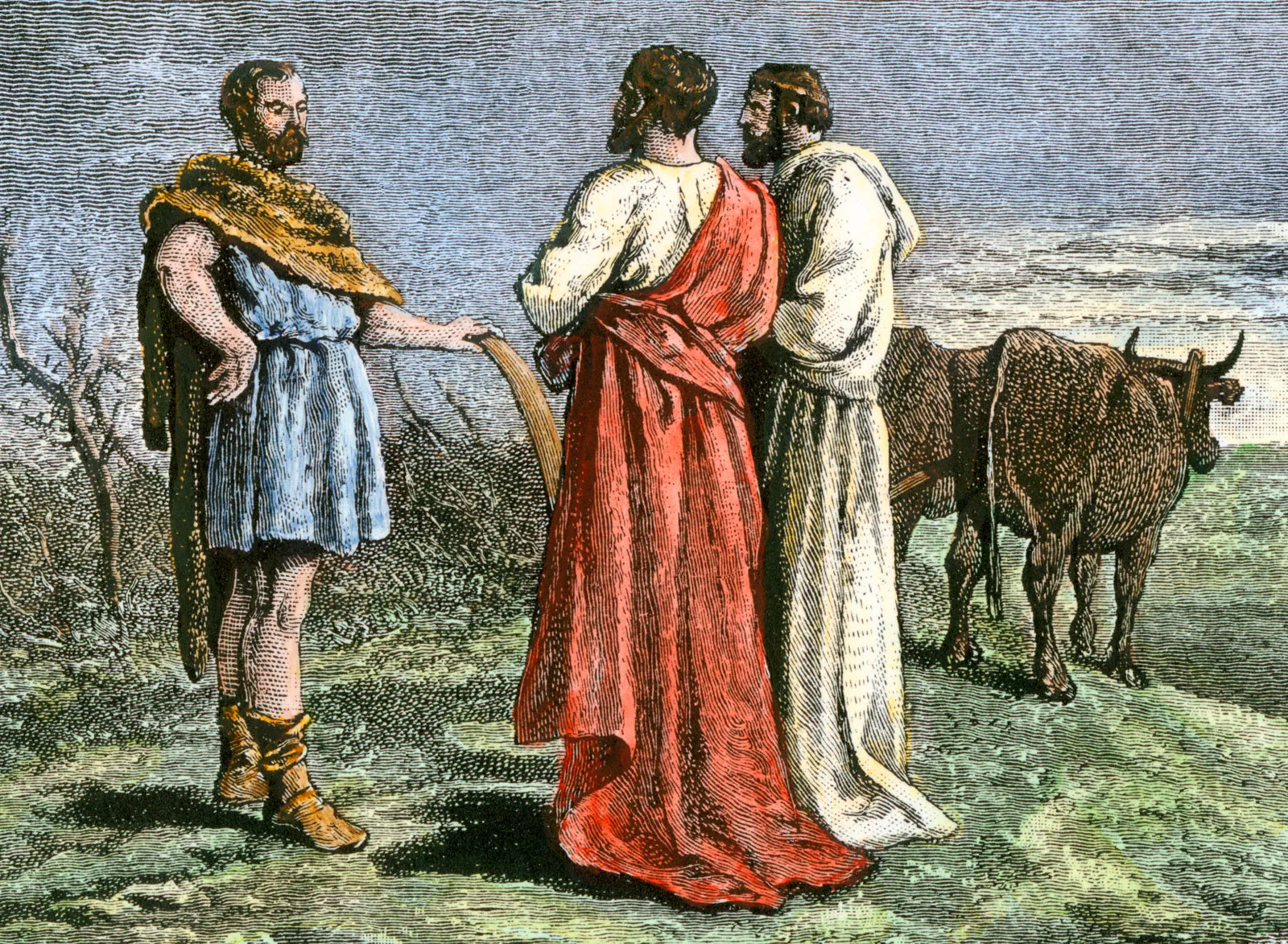
As the Roman Empire expanded, it needed an efficient system to govern distant territories. One of the most important officials in this system was the proconsul, a high-ranking governor who ruled provinces on behalf of Rome. The office was especially significant during the late Republic and early Empire, when Rome controlled vast and diverse lands.

What Was a Proconsul?

A proconsul was originally a former consul (Rome’s highest elected magistrate) whose authority was extended to govern a province.

Key points:

  • Held imperium (command authority)

  • Governed provinces outside Italy

  • Served typically for one year or longer

  • Acted as both civil administrator and military commander

In essence, the proconsul was Rome’s regional representative with near-absolute authority in his province.

Provincial Administration

A proconsul was responsible for managing all aspects of provincial life:

Civil Duties

  • Collecting taxes and tributes

  • Enforcing Roman law

  • Supervising local governments

  • Maintaining public order

Judicial Duties

  • Acting as chief judge in legal disputes

  • Hearing appeals from local courts

  • Punishing crimes and corruption

Military Duties

  • Commanding provincial legions

  • Defending borders and suppressing rebellions

  • Maintaining security in unstable regions

Organization of Provinces

Roman provinces were divided into two main types:

  • Senatorial provinces: governed by proconsuls appointed by the Senate

  • Imperial provinces: governed by imperial legates appointed by the emperor

Proconsuls typically governed more peaceful provinces, while frontier provinces required stronger military control.

The Role of the Proconsul in Governance

The proconsul acted as a bridge between Rome and local populations:

  • Enforced Roman authority

  • Worked with local elites and councils

  • Integrated conquered regions into Roman systems

  • Promoted Roman law, language, and culture

This helped stabilize newly acquired territories.

Power and Corruption Risks

Because proconsuls had extensive authority, abuses were common:

  • Excessive taxation

  • Bribery and corruption

  • Exploitation of local populations

  • Personal enrichment through provincial resources

Famous legal cases in Rome often involved accusations against former governors.

Famous Proconsuls in History

Some well-known figures served as proconsuls:

  • Julius Caesar – governed Gaul before becoming dictator

  • Cicero – served as proconsul in Cilicia

  • Various governors in Asia Minor, Africa, and Hispania who expanded Roman influence

These roles often shaped political careers in Rome.

Relationship with the Emperor

Under the Empire:

  • The emperor held ultimate authority over provinces

  • Proconsuls acted with delegated power

  • Imperial oversight increased over time

  • Governors were expected to remain loyal to the emperor

This system helped centralize control while maintaining local administration.

Importance in Roman Expansion

Proconsuls were crucial to Rome’s success because they:

  • Maintained order in conquered territories

  • Ensured tax revenue for the empire

  • Supported military expansion and defense

  • Spread Roman law and culture

Without them, Rome could not effectively manage its vast territories.

Conclusion

The proconsul was one of the most powerful and influential officials in Roman provincial government. Acting as administrator, judge, and military commander, he ensured that Roman authority was maintained across distant lands. While the position brought stability and efficiency, it also carried risks of corruption and abuse. Nevertheless, the proconsul system was essential to the functioning and expansion of the Roman Empire.
Ancient Egyptian Astronomy: The Alignment of the Temples to the Stars

June 9, 2026

Ancient Egyptian Astronomy: The Alignment of the Temples to the Stars

Introduction

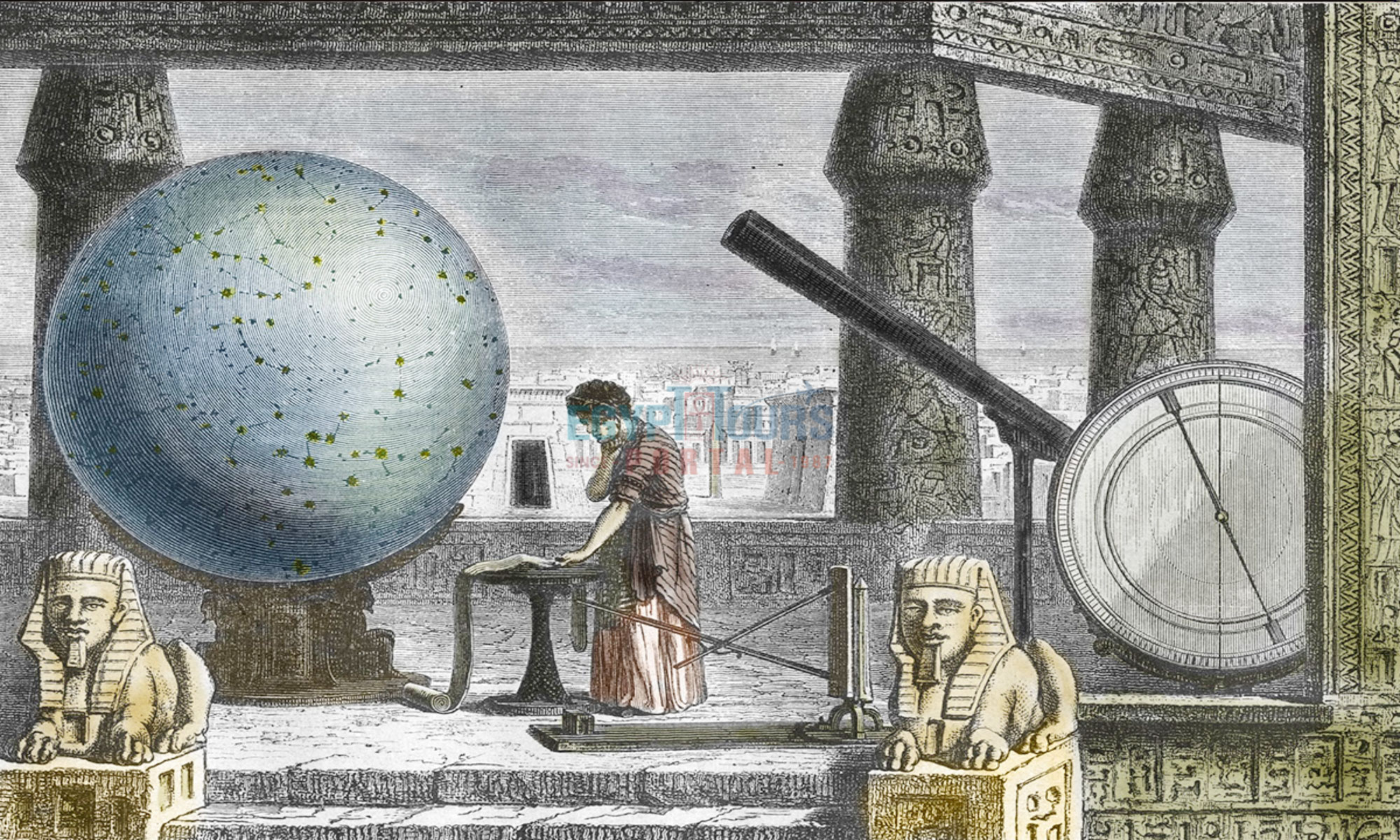
Ancient Egyptians were keen observers of the night sky. Their knowledge of astronomy influenced religion, agriculture, timekeeping, and architecture. Many temples, pyramids, and sacred monuments were carefully aligned with celestial bodies, reflecting the belief that the heavens were closely connected to the divine order of the universe.

Astronomy in Ancient Egypt

The civilization of Ancient Egypt depended heavily on astronomical observations.

Astronomy helped Egyptians:

  • Predict the annual flooding of the Nile

  • Develop calendars

  • Determine religious festival dates

  • Orient temples and monuments

  • Connect earthly structures with the realm of the gods

The sky was viewed as a sacred manifestation of cosmic order.

The Importance of Stellar Alignment

Egyptian architects often aligned temples with:

  • Specific stars

  • Constellations

  • The rising or setting sun

  • Solstices and equinoxes

  • Cardinal directions

These alignments reinforced religious symbolism and linked temples to divine powers.

The Star Sirius and the Nile

One of the most important stars in Egyptian astronomy was Sirius, known to the Egyptians as Sopdet.

Significance of Sirius

  • Its heliacal rising occurred shortly before the annual Nile flood

  • It marked the beginning of the Egyptian New Year

  • It was associated with the goddess Isis

The appearance of Sirius served as both an astronomical and agricultural signal.

Temple Alignments and Solar Events

Many temples were oriented toward significant solar events.

Abu Simbel

The famous temple of Abu Simbel was designed so that sunlight illuminated the inner sanctuary on specific days of the year.

These events are commonly associated with:

  • The king's birthday

  • His coronation anniversary

The phenomenon demonstrates the precision of Egyptian architectural planning.

Karnak and Celestial Orientation

The vast temple complex of Karnak Temple Complex also shows evidence of astronomical alignment.

Features include:

  • Orientation toward the rising sun at certain times of year

  • Axes linked to ceremonial processions

  • Connections between celestial and religious symbolism

The temple evolved over centuries while maintaining important astronomical relationships.

Circumpolar Stars and Eternal Life

The Egyptians paid special attention to circumpolar stars—stars that never set below the horizon.

These stars were important because:

  • They appeared eternal and unchanging

  • They symbolized immortality

  • They were associated with the afterlife

Some scholars believe certain pyramids were aligned toward these stars to assist the pharaoh's journey into the heavens.

Astronomical Tools and Observation

Egyptian priests used simple but effective instruments, including:

  • Sighting rods

  • Plumb lines

  • Measuring cords

  • Observation platforms

These tools helped establish accurate alignments for major structures.

Religion and the Cosmos

Egyptian religion emphasized Ma'at, the principle of cosmic order and balance.

Astronomical alignment reflected this belief by:

  • Connecting temples with heavenly bodies

  • Reinforcing divine authority

  • Symbolizing harmony between earth and sky

Architecture became a physical expression of the universe's sacred order.

Modern Archaeological Evidence

Archaeologists and archaeoastronomers continue to study Egyptian monuments to understand their celestial orientations.

Research has revealed:

  • Deliberate alignments with stars and solar events

  • Sophisticated observational knowledge

  • Integration of astronomy into religious architecture

These findings demonstrate that Egyptian builders possessed remarkable precision despite lacking modern instruments.

Conclusion

The alignment of Egyptian temples to stars and celestial events reflects the deep connection between astronomy, religion, and architecture in ancient Egypt. By orienting sacred structures toward significant heavenly bodies such as Sirius and the circumpolar stars, the Egyptians expressed their belief that divine order governed both the cosmos and human life. These achievements remain among the most impressive examples of astronomical architecture in the ancient world.

The Roman Emperor Augustus: The Ara Pacis Augustae

June 9, 2026

The Roman Emperor Augustus: The Ara Pacis Augustae

Introduction

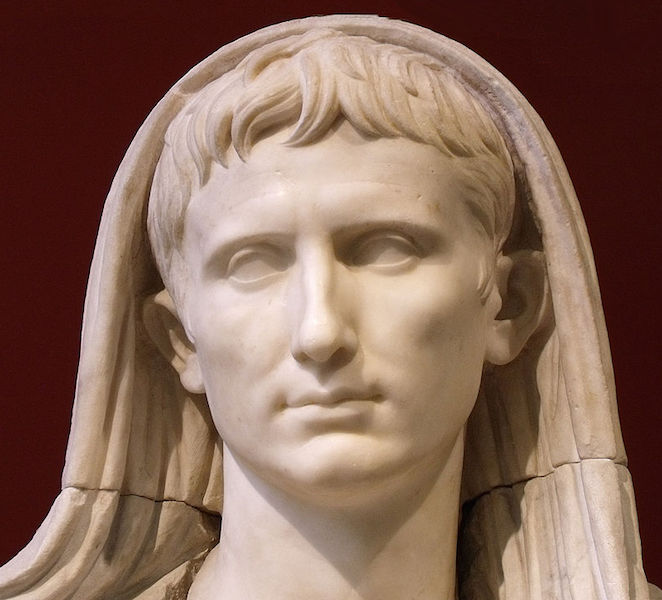
The Augustus transformed Rome from a republic torn by civil wars into a stable empire. One of the most important monuments celebrating his rule was the Ara Pacis Augustae, or "Altar of Augustan Peace." Dedicated in 9 BCE, it symbolized the peace, prosperity, and stability that Augustus claimed to have brought to the Roman world.

Historical Background

After decades of conflict, including the assassination of Julius Caesar and subsequent civil wars, Augustus emerged as Rome's sole ruler.

His victories:

  • Ended prolonged internal warfare

  • Secured Rome's borders

  • Established the beginning of the Pax Romana (Roman Peace)

To commemorate these achievements, the Roman Senate ordered the construction of the Ara Pacis.

Construction and Dedication

The altar was commissioned in 13 BCE and dedicated in 9 BCE.

It was built:

  • In the Campus Martius area of Rome

  • To celebrate Augustus' return from campaigns in Spain and Gaul

  • As a public monument honoring peace and imperial success

The monument served both religious and political purposes.

Architectural Design

Overall Structure

The Ara Pacis consists of:

  • A rectangular marble enclosure

  • An open-air sacrificial altar at its center

  • Richly carved exterior and interior reliefs

Although relatively modest in size, its artistic detail is extraordinary.

Decorative Reliefs

The monument is famous for its sculpted panels depicting:

  • Mythological scenes

  • Religious ceremonies

  • Members of the imperial family

  • Roman priests and officials

These carvings communicated powerful political messages.

Symbolism of Peace

The central theme of the Ara Pacis was peace.

However, Roman peace meant more than the absence of war.

It represented:

  • Political stability

  • Prosperity under Roman rule

  • Security provided by military strength

  • Harmony between the gods and the state

Augustus portrayed himself as the bringer of this new era.

The Processional Friezes

One of the most celebrated features is the processional frieze.

It shows:

  • Augustus and members of his family

  • Senators and priests

  • Men, women, and children participating in a religious ceremony

This was unusual because Roman state monuments traditionally focused on military victories rather than family life.

The imagery emphasized:

  • Dynastic continuity

  • Moral values

  • Civic unity

Mythological Imagery

Several reliefs connect Augustus to Rome's legendary past.

Important figures include:

Aeneas

Aeneas

  • Shown performing a sacrifice

  • Symbolized Roman piety and destiny

Romulus and Remus

The legendary founders of Rome were also referenced through mythological scenes.

These connections strengthened Augustus' claim to legitimate authority.

Political Propaganda

The Ara Pacis functioned as a sophisticated piece of political messaging.

It promoted:

  • Augustus' leadership

  • Loyalty to the imperial family

  • Traditional Roman religious values

  • The benefits of imperial rule

The monument helped shape public perception of Augustus as a wise and benevolent ruler.

Rediscovery and Preservation

Over time, the Ara Pacis was buried beneath later construction.

Fragments were rediscovered beginning in the Renaissance, and major excavations occurred in the 19th and 20th centuries.

Today, the reconstructed monument is housed in the Museo dell'Ara Pacis, where it remains one of the finest surviving examples of Roman art.

Historical Importance

The Ara Pacis is significant because it:

  • Celebrates the beginning of the Pax Romana

  • Demonstrates the artistic achievements of Augustan Rome

  • Reveals how art served political purposes

  • Provides insight into Roman religion, family life, and imperial ideology

It remains one of the most influential monuments of the ancient world.

Conclusion

The Ara Pacis Augustae stands as a powerful symbol of Augustus' vision for Rome. Through its elegant reliefs and carefully crafted imagery, it celebrated peace, prosperity, and the legitimacy of imperial rule. More than two thousand years later, it continues to offer valuable insight into the politics, religion, and art of the early Roman Empire.

Ancient Greek Warfare: The Peltast and the Change in Military Tactics

June 9, 2026

Ancient Greek Warfare: The Peltast and the Change in Military Tactics

Introduction

For much of Greek history, warfare was dominated by heavily armed hoplites fighting in dense phalanx formations. However, during the 5th and 4th centuries BCE, a new type of soldier—the peltast—began to transform Greek military tactics. Their speed, flexibility, and effectiveness in rough terrain challenged the traditional dominance of the hoplite and contributed to major changes in how wars were fought.

Who Were the Peltasts?

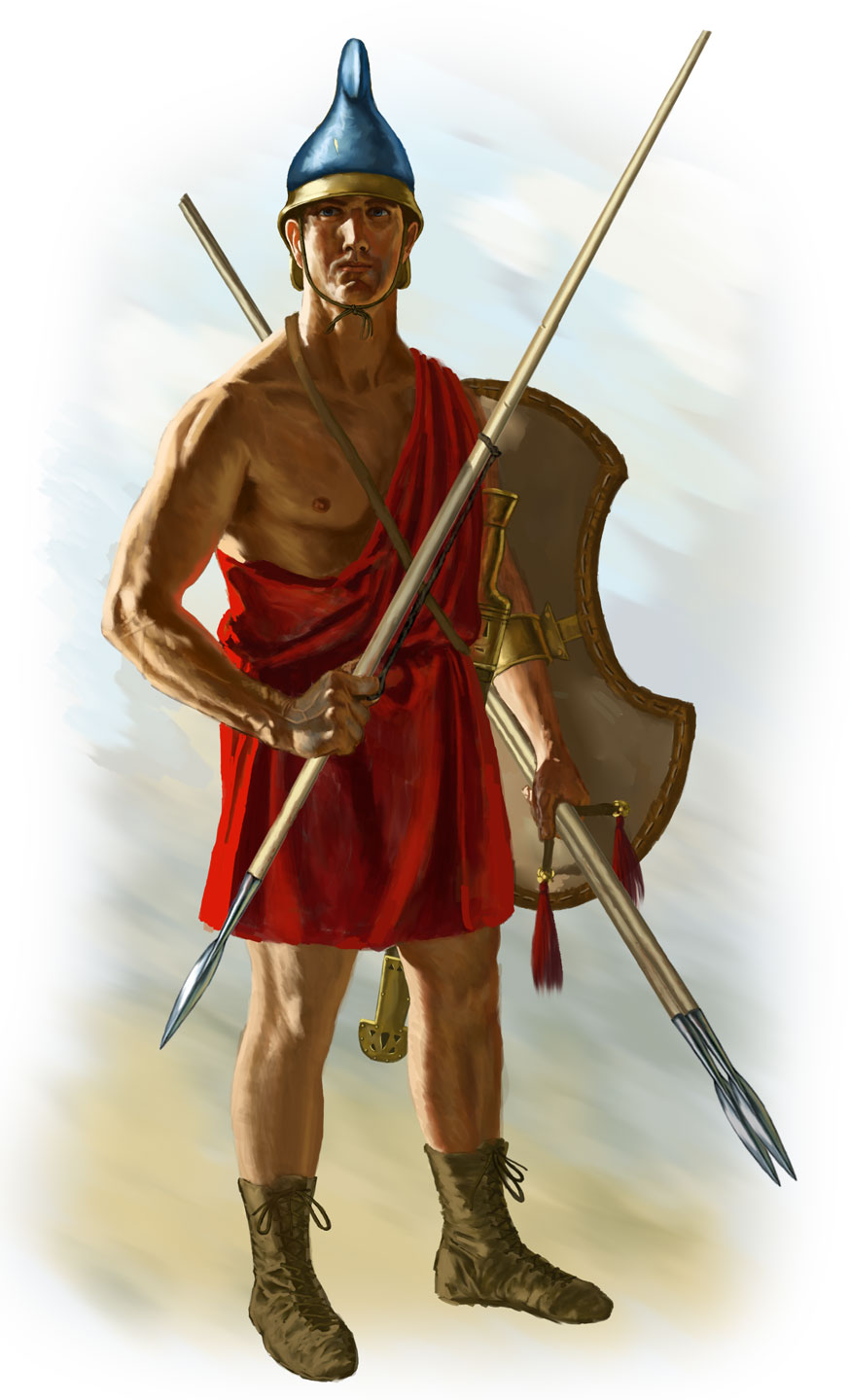
A peltast was a light infantry soldier named after the pelte, a small crescent-shaped or round shield that he carried.

Typical equipment included:

  • A light shield (pelte)

  • Several javelins for throwing

  • A short sword or dagger as a secondary weapon

  • Light clothing or minimal armor

Unlike hoplites, peltasts prioritized mobility over protection.

Origins of the Peltast

Peltast warfare was strongly influenced by the peoples of Thrace, whose warriors were known for their skill with javelins and light infantry tactics.

Greek armies gradually adopted these methods after witnessing their effectiveness.

How Peltasts Fought

Hit-and-Run Tactics

Peltasts rarely engaged in direct hand-to-hand combat with hoplites.

Instead, they:

  • Threw javelins from a distance

  • Harassed enemy formations

  • Retreated before heavy infantry could catch them

  • Repeated attacks to wear down opponents

Their mobility made them difficult targets.

Fighting in Difficult Terrain

Unlike hoplites, who performed best on flat open ground, peltasts excelled in:

  • Hills

  • Forests

  • Rocky landscapes

  • Narrow passes

This allowed commanders greater tactical flexibility.

The Weakness of the Traditional Phalanx

The hoplite phalanx was powerful but had limitations:

Strengths

  • Strong frontal defense

  • Discipline and cohesion

  • Effective in open-field battles

Weaknesses

  • Slow movement

  • Difficulty maneuvering

  • Vulnerability to harassment by light troops

Peltasts exploited these weaknesses effectively.

The Battle of Lechaeum

One of the most famous demonstrations of peltast effectiveness occurred at the Battle of Lechaeum.

What Happened?

  • A Spartan hoplite force was attacked by Athenian peltasts.

  • The peltasts repeatedly threw javelins and withdrew.

  • The heavily armored Spartans could not catch them.

  • Continuous attacks exhausted and weakened the Spartans.

The result was a surprising defeat for one of Greece's most respected hoplite armies.

The Reforms of Iphicrates

A key figure in the development of peltast warfare was Iphicrates.

His innovations included:

  • Improved training for light infantry

  • Longer spears and lighter equipment

  • Greater emphasis on mobility

  • Integration of different troop types

These reforms influenced later Greek and Macedonian armies.

Combined-Arms Warfare

As peltasts became more important, Greek armies increasingly combined:

  • Hoplites

  • Peltasts

  • Archers

  • Slingers

  • Cavalry

This created more flexible and adaptable military forces.

Influence on Macedonian Warfare

The tactical changes introduced by peltasts helped pave the way for the military reforms of Philip II of Macedon.

His armies combined:

  • The Macedonian phalanx

  • Light infantry

  • Cavalry

  • Specialized troops

This balanced approach was later perfected by Alexander the Great.

Historical Significance

The rise of the peltast demonstrated that:

  • Mobility could overcome heavy armor

  • Flexibility was as important as strength

  • Different troop types worked best together

  • Warfare was evolving beyond the traditional hoplite battle

These lessons reshaped military strategy throughout the Greek world.

Conclusion

The peltast was one of the most important military innovations in ancient Greek warfare. By introducing speed, flexibility, and new tactical possibilities, peltasts challenged the dominance of the hoplite phalanx and transformed the battlefield. Their success encouraged more sophisticated military systems and helped lay the foundations for the powerful armies of Macedon and the Hellenistic world.

The Mycenaean Palaces: The Megaron as the Center of Government

June 9, 2026

The Mycenaean Palaces: The Megaron as the Center of Government

Introduction

The Mycenaean civilization flourished in mainland Greece from approximately 1600 to 1100 BCE and is best known for its fortified palaces, warrior culture, and extensive trade networks. At the heart of every major Mycenaean palace was the megaron, a large ceremonial hall that served as the political, administrative, and symbolic center of government.

The Mycenaean Palace System

Mycenaean civilization was organized around powerful palace centers that controlled surrounding territories.

Major palace sites included:

  • Mycenae

  • Pylos

  • Tiryns

  • Thebes

These palaces functioned as centers of administration, storage, religion, and political authority.

What Was the Megaron?

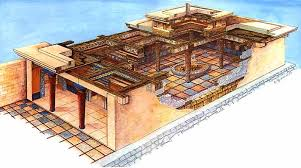
The megaron was the principal hall within a Mycenaean palace complex.

Its typical layout included:

  1. An entrance porch

  2. A vestibule (anteroom)

  3. A large central hall

The central hall usually contained:

  • A circular hearth in the middle

  • Four columns supporting the roof

  • A throne positioned against a wall

This design became one of the most influential architectural forms in Greek history.

Architectural Features

Central Hearth

The large hearth served several purposes:

  • Heating the hall

  • Providing light

  • Hosting ceremonial activities

  • Acting as a symbolic center of authority

The hearth often featured elaborate decorative designs.

Throne Room

The ruler's throne was typically placed in a prominent position.

This area was used for:

  • Receiving visitors

  • Conducting official business

  • Diplomatic meetings

  • Ceremonial events

The throne emphasized the ruler's status and power.

Decorative Elements

Many megarons contained:

  • Painted wall frescoes

  • Decorative plasterwork

  • Religious symbols

  • Scenes of warfare, hunting, and ritual activities

These artworks reinforced political and cultural authority.

Government and Administration

The megaron was the administrative heart of the palace.

Officials working under the ruler managed:

  • Tax collection

  • Agricultural production

  • Trade and commerce

  • Distribution of resources

  • Military organization

Evidence from Linear B tablets shows that palace administrators carefully recorded economic activities.

The Wanax and Political Authority

The ruler of a Mycenaean kingdom was known as the wanax.

The wanax:

  • Controlled the palace administration

  • Directed military operations

  • Oversaw religious ceremonies

  • Managed economic resources

The megaron served as the physical location where this authority was exercised.

Religious Functions

The megaron was not solely a government building.

Religious activities included:

  • Ritual feasts

  • Offerings to deities

  • Ceremonial gatherings

  • Sacred observances linked to kingship

Political and religious authority were closely connected in Mycenaean society.

Influence on Later Greek Architecture

The megaron's design had a lasting impact on Greek architecture.

Many scholars believe it influenced:

  • Early Greek temple layouts

  • Monumental public buildings

  • Concepts of ceremonial space

The rectangular hall with a columned entrance can be seen as a precursor to later Greek temple design.

Decline of the Palace System

Around 1200–1100 BCE, the Mycenaean palace system collapsed.

Possible causes include:

  • Internal conflict

  • Economic disruption

  • Natural disasters

  • External invasions

As the palaces fell, the administrative role of the megaron disappeared, although its architectural influence endured.

Conclusion

The megaron was the political and ceremonial heart of the Mycenaean palace system. Serving as the residence of the wanax, the center of administration, and a place of religious activity, it embodied the authority of Mycenaean government. Its importance extended beyond the Bronze Age, influencing the architecture and political culture of later Greek civilization.

Roman Domestic Spaces: The Atrium and the Peristyle Garden

June 9, 2026

Roman Domestic Spaces: The Atrium and the Peristyle Garden

Introduction

The houses of wealthy Romans were carefully designed to reflect social status, family life, and cultural values. Two of the most important features of a traditional Roman house (domus) were the atrium and the peristyle garden. Together, these spaces formed the architectural and social heart of the home, combining practicality, beauty, and prestige.

The Roman Domus

A domus was the urban residence of wealthy Roman families, especially during the Republican and Imperial periods.

Typical features included:

  • Entrance hall (fauces)

  • Atrium

  • Reception rooms

  • Dining rooms (triclinia)

  • Bedrooms (cubicula)

  • Peristyle garden

  • Household shrines

The layout balanced public and private life within a single residence.

The Atrium: The Public Heart of the Home

What Was the Atrium?

The atrium was the central hall immediately inside the entrance.

It served as:

  • The main reception area

  • A place for meeting guests and clients

  • The symbolic center of family identity

Visitors entering the house would first encounter the atrium, making it a powerful display of wealth and status.

Architectural Features

Most atria included:

  • An opening in the roof called the compluvium

  • A shallow basin beneath called the impluvium

  • Decorative columns, paintings, and sculptures

  • Family portraits and ancestral masks

The compluvium allowed rainwater to enter, while the impluvium collected it for household use.

Social Functions

The atrium was where the head of the household (paterfamilias):

  • Received clients and visitors

  • Conducted business affairs

  • Demonstrated social influence

  • Displayed family heritage

In many ways, it functioned as a public space within a private home.

The Peristyle Garden: A Private Retreat

What Was a Peristyle?

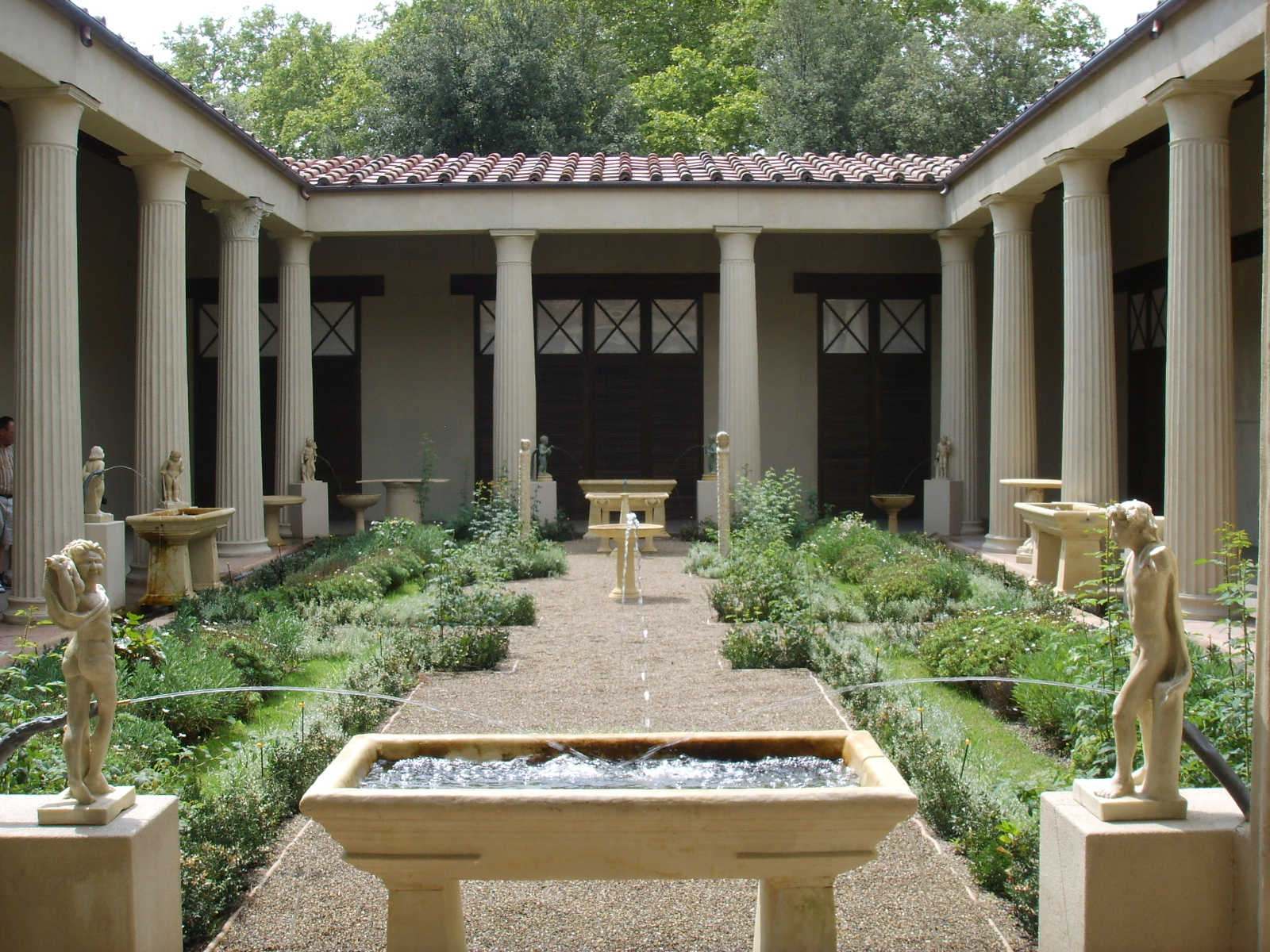
Behind the atrium was often the peristyle, a garden courtyard surrounded by columns.

This feature was influenced by Greek architecture and became increasingly popular among wealthy Romans.

Design Elements

Peristyle gardens often contained:

  • Flower beds

  • Trees and shrubs

  • Fountains

  • Statues

  • Decorative mosaics

  • Walking paths

The surrounding colonnade provided shade and elegance.

Purpose of the Garden

The peristyle offered:

  • Privacy from the busy street

  • A peaceful environment for relaxation

  • Space for family gatherings

  • Areas for dining and entertainment

Unlike the atrium, which was relatively public, the peristyle was primarily for family and invited guests.

Greek Influence on Roman Homes

Roman peristyles were heavily inspired by Greek courtyard houses.

Greek influence can be seen in:

  • Columned walkways

  • Garden-centered design

  • Decorative sculptures

  • Emphasis on symmetry and beauty

As Rome expanded, Greek artistic and architectural ideas became increasingly fashionable.

Archaeological Evidence

Many examples survive in sites such as:

  • Pompeii

  • Herculaneum

The preservation of these cities after the eruption of Mount Vesuvius in 79 CE has provided valuable insights into Roman domestic architecture.

Symbolism and Status

Both the atrium and peristyle communicated social standing:

Atrium

  • Public prestige

  • Family reputation

  • Political influence

Peristyle

  • Wealth and refinement

  • Appreciation of art and nature

  • Cultural sophistication

The larger and more elaborate these spaces were, the greater the owner's prestige.

Conclusion

The atrium and peristyle garden were central elements of the Roman domus. The atrium served as the public face of the household, while the peristyle provided a private and elegant retreat. Together, they reveal how Roman architecture balanced social obligations, family life, and aesthetic beauty, creating homes that were both functional and impressive.

The Viking Age Runestones: The Jelling Stones and the Christianization of Denmark

June 6, 2026

The Viking Age Runestones: The Jelling Stones and the Christianization of Denmark

Introduction

The Viking Age saw the widespread use of runestones as memorials and political statements. Among the most important are the Jelling Stones, often called “Denmark’s birth certificate.” Erected in the 10th century CE, they mark a crucial moment in the transformation of Scandinavian society: the shift from Norse paganism to Christianity.

The Jelling Site

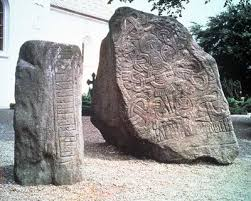
The Jelling Stones are located in Jelling, which became a royal center of power for the early Danish kings.

The site also includes burial mounds and a church, showing its long-term religious and political importance.

King Gorm the Old and Queen Thyra

The smaller of the two stones was raised by Gorm the Old in memory of his wife Thyra.

Features of the Smaller Stone:

  • Runic inscription commemorating Queen Thyra

  • Traditional Norse pagan symbolism

  • Emphasis on royal lineage and authority

This reflects the final stage of pre-Christian Viking culture in Denmark.

King Harald Bluetooth and the Larger Stone

The larger Jelling Stone was erected by Harald Bluetooth, son of Gorm the Old.

It is one of the most important artifacts in Scandinavian history.

Inscription Highlights:

  • Harald united Denmark and Norway

  • He conquered parts of Scandinavia

  • He “made the Danes Christian”

This inscription marks the official introduction of Christianity in Denmark.

The Christianization of Denmark

The Jelling Stones are central evidence for the conversion process in Scandinavia.

Key Changes:

  • Replacement of Norse gods with Christianity

  • Construction of churches instead of pagan temples

  • Adoption of Christian burial practices

  • Integration into European Christian kingdoms

The conversion was both religious and political, strengthening royal power.

Iconography of the Stones

The larger Jelling Stone includes both pagan and Christian imagery:

  • A depiction of Christ

  • Interlaced animal-style Viking art

  • Runic inscriptions in Old Norse

This combination shows a transitional period where old and new beliefs coexisted.

Political Significance

The stones were not just religious markers—they were political propaganda.

They demonstrate that Harald Bluetooth:

  • Centralized royal authority

  • Strengthened Denmark as a unified kingdom

  • Aligned Denmark with Christian Europe

  • Increased legitimacy through religion

Historical Importance

The Jelling Stones are important because they:

  • Mark the official Christianization of Denmark

  • Represent early Danish national identity

  • Show the transition from Viking Age paganism to medieval Christianity

  • Provide key written evidence from the Viking Age

Legacy

Today, the Jelling Stones are:

  • A UNESCO World Heritage Site

  • A national symbol of Denmark’s origins

  • One of the most important runic inscriptions in the world

They also inspired modern cultural symbols, including the name “Bluetooth” technology, derived from Harald Bluetooth.

Conclusion

The Jelling Stones represent a turning point in Scandinavian history. Through their inscriptions and symbolism, they record the transformation of Denmark from a Viking pagan kingdom into a Christian European state. They stand as powerful monuments of political authority, religious change, and cultural identity during the Viking Age.

Ancient Egyptian Funerary Art: The Fayum Mummy Portraits

June 6, 2026

Ancient Egyptian Funerary Art: The Fayum Mummy Portraits

Introduction

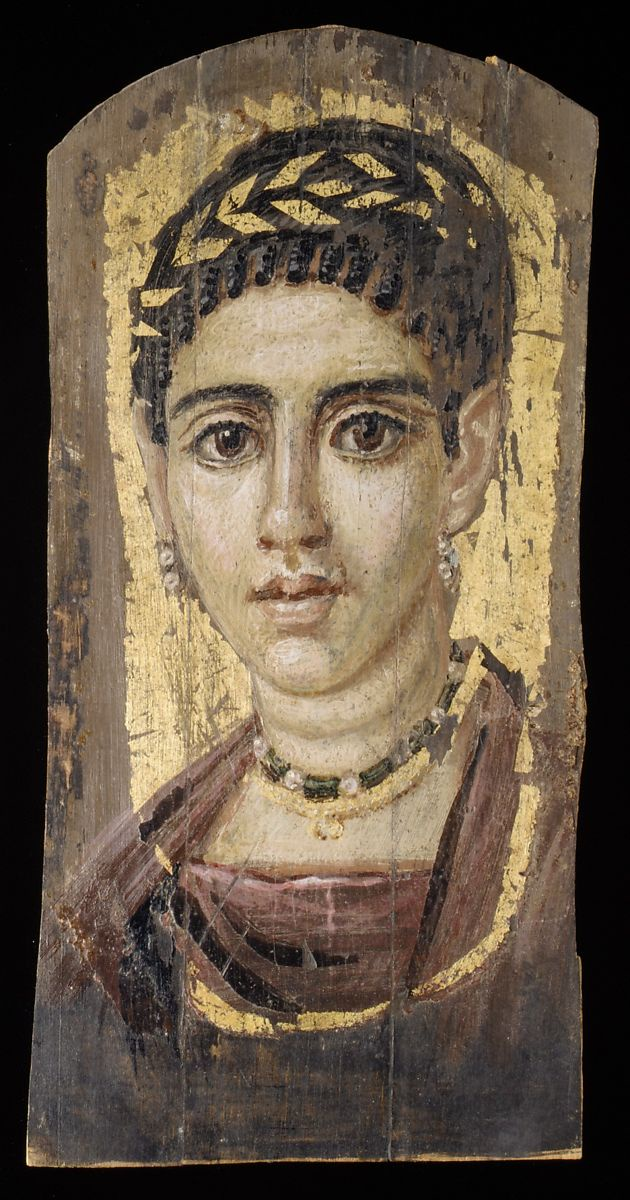
The Fayum mummy portraits are among the most striking examples of ancient funerary art. Created during the Roman period in Egypt (roughly 1st–3rd century CE), these lifelike painted portraits were attached to mummies, blending Egyptian burial traditions with Greco-Roman artistic styles.

Historical Context

These portraits were produced in the region of Faiyum Oasis, a culturally diverse area under Roman rule.

During this period, Egypt was part of the Roman Empire, and society included Egyptians, Greeks, and Romans living together. This cultural mix strongly influenced funerary practices.

What Are Fayum Portraits?

Fayum portraits were realistic painted images of deceased individuals. They were:

  • Painted on wooden panels or linen

  • Attached over the face of mummified bodies

  • Created while the person was still alive or shortly after death

They represent a shift from traditional Egyptian stylized art to more naturalistic portraiture.

Artistic Style and Technique

Materials

Artists used:

  • Encaustic painting (wax-based pigments)

  • Tempera (egg-based paints)

  • Wooden panels (often imported cedar or local wood)

Style

  • Highly realistic facial features

  • Detailed shading and highlights

  • Individualized expressions

  • Hairstyles and clothing reflecting Roman fashion

The result is one of the earliest known traditions of realistic portrait painting.

Cultural Blending

Fayum portraits reflect a unique cultural fusion:

  • Egyptian belief in the afterlife and mummification

  • Greek artistic traditions of realism

  • Roman fashion and social identity

This combination shows how deeply interconnected Mediterranean cultures had become under Roman rule.

Purpose and Meaning

The portraits were not just decoration. They served important religious and social functions:

  • Preserving the identity of the deceased

  • Ensuring recognition in the afterlife

  • Displaying social status and wealth

  • Connecting Roman-Egyptian elites to both traditions

They acted as a visual “bridge” between life and death.

Archaeological Discovery

Most Fayum portraits were discovered in burial sites in the Faiyum region during modern excavations in the 19th and 20th centuries.

They were often found:

  • Still attached to mummies

  • Well-preserved due to Egypt’s dry climate

  • In both elite and middle-class graves

Historical Importance

Fayum portraits are significant because they:

  • Represent some of the earliest realistic portraits in history

  • Show cultural blending in Roman Egypt

  • Provide insight into hairstyles, clothing, and identity

  • Bridge Egyptian funerary traditions with Greco-Roman art

Decline of the Tradition

The practice declined around the 3rd century CE due to:

  • Economic changes in Roman Egypt

  • Spread of new religious beliefs

  • Decline of traditional mummification practices

Eventually, simpler burial customs replaced elaborate mummy portraits.

Conclusion

The Fayum mummy portraits are a remarkable fusion of art, culture, and belief. They capture the faces of real individuals from Roman Egypt, preserving their identities across two thousand years. As a blend of Egyptian funerary tradition and Greco-Roman realism, they remain one of the most important artistic achievements of the ancient world.

The Roman Theater of Aspendos: The Best Preserved Roman Stage

June 6, 2026

The Roman Theater of Aspendos: The Best Preserved Roman Stage

Introduction

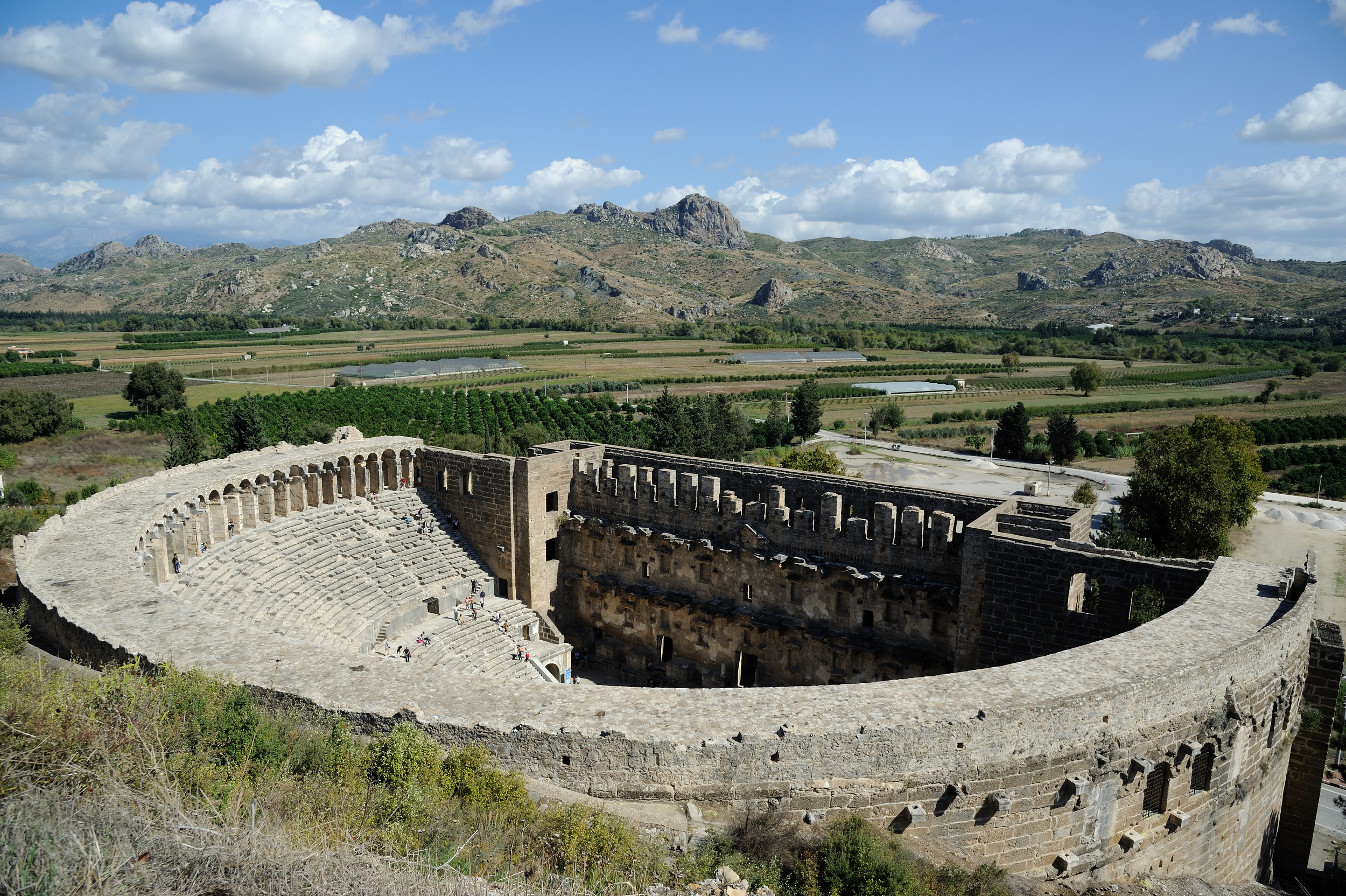
The Aspendos Theatre is one of the best-preserved Roman theaters in the world. Built during the reign of Emperor Marcus Aurelius in the 2nd century CE, it showcases the height of Roman engineering, acoustics, and architectural design. Located in the ancient city of Aspendos in modern-day Turkey, it remains remarkably intact and is still used for performances today.

Historical Background

Aspendos was originally a prosperous city in the region of Pamphylia, an area that became part of the Roman Empire.
The theater was commissioned under the Roman emperor Marcus Aurelius, though its design is often attributed to the architect Zenon, a local engineer.

Its construction reflects the Roman emphasis on public entertainment and civic pride.

Architectural Design

Structure

The theater follows the classic Roman semicircular design:

  • A large seating area (cavea)

  • An orchestra space at the center

  • A highly decorated stage building (scaenae frons)

It could accommodate approximately 15,000–20,000 spectators.

Engineering Excellence

The theater is famous for:

  • Perfect acoustic design, allowing sound to travel clearly to the top seats

  • Precise stone construction without modern mortar techniques

  • Advanced drainage and structural stability

  • Carefully calculated sightlines for spectators

Even whispers from the stage can be heard in the upper rows.

The Stage Building

The scaenae frons (stage façade) is richly decorated with:

  • Columns in multiple tiers

  • Sculptural reliefs

  • Niches for statues

  • Ornamental arches

This grand backdrop created a dramatic setting for performances and imperial ceremonies.

Function and Use

The Aspendos Theatre was used for:

  • Dramatic performances (comedies and tragedies)

  • Public speeches

  • Civic ceremonies

  • Musical events and festivals

It played an important role in Roman cultural life in the eastern provinces.

Preservation and Survival

Unlike many ancient theaters, Aspendos survived almost intact because:

  • It was continuously maintained during the Byzantine period

  • Later used as a caravanserai and fortress

  • Built with exceptionally durable stonework

Its preservation makes it a key example of Roman architectural longevity.

Modern Significance

Today, the theater is still used for:

  • Cultural festivals

  • Concerts

  • Opera and ballet performances

Its continued use highlights the lasting effectiveness of Roman design.

Archaeological Importance

Aspendos provides valuable insight into:

  • Roman provincial architecture

  • Engineering techniques in large public structures

  • Entertainment culture in the Roman Empire

  • The spread of Roman urban traditions into Anatolia

Conclusion

The Aspendos Theatre stands as one of the greatest achievements of Roman architectural engineering. Its near-perfect preservation allows modern visitors to experience the scale, acoustics, and grandeur of Roman public entertainment. As both a historical monument and a living performance space, it remains a powerful symbol of Roman cultural and engineering excellence.

Ancient Greek Sanctuaries: The Oracle of the Dead at Ephyra

June 6, 2026

Ancient Greek Sanctuaries: The Oracle of the Dead at Ephyra

Introduction

In ancient Greece, sanctuaries were not only places of worship but also sites where people sought guidance from the divine. One of the most mysterious of these was the Necromanteion of Ephyra, known as the “Oracle of the Dead.” Unlike other oracles that communicated with gods like Apollo, this sanctuary was believed to allow contact with the spirits of the dead.

Location and Setting

The sanctuary was located near ancient Ephyra in northwestern Greece, close to the confluence of the Acheron, Cocytus, and Pyriphlegethon rivers—names strongly associated with the underworld in Greek mythology.

These rivers were believed to form a gateway to Hades, the realm of the dead.

The dramatic landscape reinforced the idea that the site was a portal between the living world and the underworld.

Purpose of the Necromanteion

The Necromanteion was used for rituals of necromancy, meaning communication with the dead.

Visitors came to:

  • Seek guidance from deceased relatives

  • Ask questions about the future

  • Receive prophecies from spirits

  • Perform purification rituals before entering

It functioned similarly to other Greek oracles but focused on the underworld rather than the Olympian gods.

Ritual Process

Preparation

Before entering, pilgrims often:

  • Fasted for several days

  • Underwent purification rituals

  • Made offerings to chthonic (underworld) deities

Descent into the Sanctuary

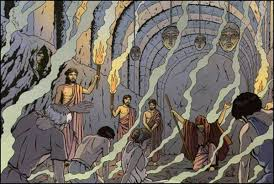
The architecture was designed to resemble a descent into the underworld:

  • Narrow corridors

  • Dark chambers

  • Labyrinth-like passages

Communication with Spirits

Priests may have used:

  • Hallucination-inducing substances

  • Acoustics and lighting effects

  • Mechanical devices or staged rituals

These techniques created the impression of communicating with the dead.

Religious Context

The Necromanteion was closely linked to chthonic religion, which focused on gods and spirits of the underworld.

Key associations include:

  • Offerings to the dead

  • Fear and respect for ancestral spirits

  • Belief in prophecy from beyond death

This contrasts with more common oracles like Apollo, such as the Oracle of Delphi.

Archaeological Debate

Modern archaeology has raised questions about the site’s exact function.

Some scholars argue:

  • It was truly a necromantic oracle center
    Others suggest:

  • It may have been a fortified farmhouse or storage complex later reinterpreted as sacred

Despite debate, its mythological association remains strong.

Cultural Significance

The idea of communicating with the dead reflects important Greek beliefs:

  • The dead could influence the living

  • The underworld was structured and accessible

  • Fate and prophecy were central to decision-making

The Necromanteion shows how mythology and ritual shaped ancient religious experience.

Decline of the Site

The sanctuary likely fell out of use during the Hellenistic or Roman periods as:

  • Religious practices changed

  • Rational philosophy became more influential

  • Traditional oracle sites declined in importance

Conclusion

The Necromanteion of Ephyra stands as one of the most enigmatic religious sites in ancient Greece. Whether viewed as a true oracle of the dead or a symbolic ritual space, it reflects the deep Greek fascination with the afterlife, fate, and communication with the unseen world.

The Minoan Civilization: The Social Status of Women in Crete

June 6, 2026

The Minoan Civilization: The Social Status of Women in Crete

Introduction

The Minoan civilization is often noted for its unique social structure compared to many other ancient societies. One of the most debated topics among historians is the role and status of women in Minoan society, particularly in religious, social, and possibly political life.

Evidence from Art and Archaeology

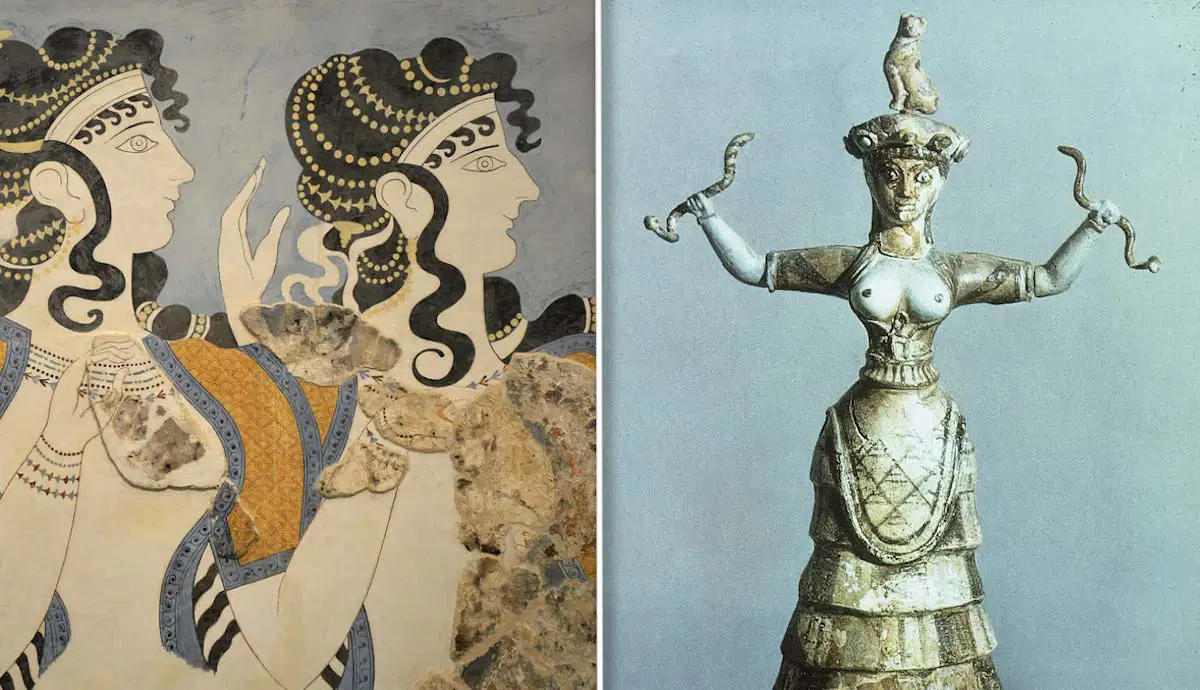
Much of what we know about Minoan women comes from frescoes, figurines, and seal impressions found in palaces such as Knossos.

Depictions of Women

Women are frequently shown:

  • Participating in religious ceremonies

  • Wearing elaborate clothing and jewelry

  • Appearing in public ritual spaces

  • Possibly holding prominent positions in rituals

Unlike many contemporary societies, women are not hidden from public imagery.

Religious Role of Women

Religion appears to have been a central sphere where women held important roles.

Possible Priestesses

Many scholars believe women served as:

  • Priestesses in temple rituals

  • Participants in sacred ceremonies

  • Figures associated with fertility and nature cults

Religious imagery often highlights female figures more prominently than male ones.

Social Status and Daily Life

Clothing and Appearance

Minoan women are often depicted wearing:

  • Elaborate layered skirts

  • Open bodices (a distinctive artistic feature)

  • Jewelry and decorative hairstyles

This suggests a culture that valued display, status, and ceremonial presentation.

Participation in Society

Evidence suggests women may have:

  • Taken part in public festivals and gatherings

  • Had visibility in civic and religious life

  • Possibly held influential family or household roles

However, exact political authority remains uncertain.

Comparison with Other Ancient Civilizations

Compared to contemporary societies such as:

  • Mycenaean Greece

  • Ancient Egypt (in most periods)

  • Mesopotamia

The Minoans appear to show:

  • Greater visibility of women in art

  • More emphasis on female ritual roles

  • Less focus on warfare imagery and male dominance

This has led some scholars to suggest a relatively more balanced gender representation, though this is still debated.

The “Mother Goddess” Theory

Early interpretations of Minoan religion emphasized a dominant mother goddess figure.

However, modern scholarship is more cautious:

  • Many figurines may represent multiple deities or ritual roles

  • There is no definitive proof of a single supreme goddess

  • Minoan religion likely included a complex pantheon

Still, female imagery remains highly significant.

Limitations of Evidence

Understanding women’s status is difficult because:

  • The Linear A script remains undeciphered

  • Most evidence is visual, not textual

  • Artistic representation may be symbolic rather than realistic

  • Archaeology cannot fully reveal legal or political structures

Therefore, conclusions remain interpretative.

Decline and Transition

After the decline of Minoan civilization, influence shifted to the Mycenaean civilization, where male warrior culture became more dominant.

This shift likely changed gender roles in the Aegean world significantly.

Conclusion

The social status of women in Minoan Crete remains one of the most intriguing topics in ancient history. While evidence suggests women played visible and possibly influential roles in religion and society, the lack of written records makes full understanding difficult. Nevertheless, the Minoan civilization stands out in the ancient world for its distinctive and prominent representation of women in art and ritual life.

Roman Military Strategy: The Use of the Testudo Formation

June 6, 2026

Roman Military Strategy: The Use of the Testudo Formation

Introduction

The Roman army was famous for its discipline, organization, and tactical innovation. One of its most recognizable battlefield formations was the testudo, or “tortoise” formation. This tactic was designed to protect soldiers from missiles during sieges and assaults.

What is the Testudo Formation?

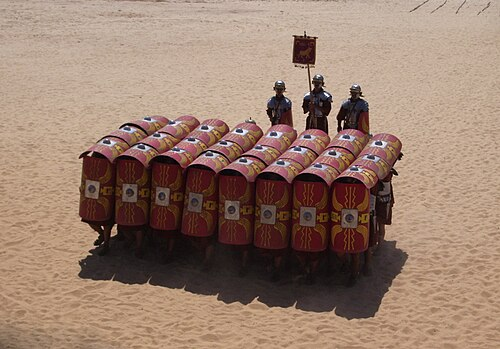
The testudo formation was a defensive arrangement used by Roman infantry, especially the Roman legions.

In this formation:

  • Soldiers stood tightly packed together

  • Shields were held overhead and at the sides

  • The group formed a nearly sealed protective shell

This made the unit resemble a turtle or tortoise, hence the name testudo.

How It Worked

Formation Structure

  • Front row held shields forward

  • Side ranks protected flanks

  • Rear ranks covered the top with overlapping shields

This created a strong barrier against:

  • Arrows

  • Javelins

  • Stones

  • Other projectiles

Movement

Even while fully protected, soldiers could slowly advance as a unit. However, movement was:

  • Slow

  • Highly coordinated

  • Vulnerable to close combat if disrupted

When the Testudo Was Used

The testudo was mainly used in:

Siege Warfare

Roman troops used it to approach enemy walls safely during:

  • Assaults on fortified cities

  • Gate breaches

  • Defensive counterattacks

Defensive Maneuvers

It protected soldiers when:

  • Crossing open ground under missile fire

  • Approaching enemy artillery

  • Retreating under pressure

Advantages of the Testudo

  • Excellent protection against ranged weapons

  • High discipline and unit cohesion

  • Effective in controlled siege environments

  • Reduced casualties during approach phases

Disadvantages

Despite its strength, the formation had weaknesses:

  • Very slow movement

  • Limited visibility and mobility

  • Vulnerable to flanking attacks

  • Ineffective in close-quarters combat

  • Requires highly trained soldiers to maintain

If the formation broke, it could quickly become disorganized.

Role in Roman Military Success

The testudo reflects broader Roman military strengths:

  • Strict training and discipline

  • Ability to coordinate large groups of soldiers

  • Adaptation to siege warfare

  • Engineering and tactical planning

It was not used in every battle, but it became a symbol of Roman military precision.

Historical Depictions

Ancient writers such as Julius Caesar described formations similar to the testudo during campaigns like the conquest of Gaul, especially in siege situations.

Reliefs such as those on Roman monuments also depict soldiers using shield formations during assaults.

Legacy

The testudo formation influenced:

  • Later medieval shield wall tactics

  • Modern military riot control formations

  • Popular depictions of Roman armies in film and literature

It remains one of the most iconic symbols of Roman military organization.

Conclusion

The testudo formation demonstrates the Roman army’s ability to combine discipline, coordination, and practical engineering on the battlefield. Though slow and specialized, it provided crucial protection during sieges and helped the Roman legions succeed in some of the most challenging military operations of the ancient world.

The Viking Age Paganism: The Temple at Uppsala

June 6, 2026

The Viking Age Paganism: The Temple at Uppsala

Introduction

The religious life of the Viking Age was deeply rooted in Norse pagan beliefs centered on gods, rituals, and sacred places. One of the most famous religious sites described in medieval sources is the Temple at Uppsala, a major center of worship in pre-Christian Scandinavia.

Although its exact archaeological form is debated, it is strongly associated with large-scale ritual activity dedicated to the Norse gods.

Norse Pagan Beliefs

The Vikings practiced a polytheistic religion that included many deities and spirits.

Major Gods

  • Odin – god of wisdom, war, and death

  • Thor – protector of humanity

  • Freyr – associated with harvest and peace

Religion was closely tied to nature, fate, and honor.

The Temple at Uppsala

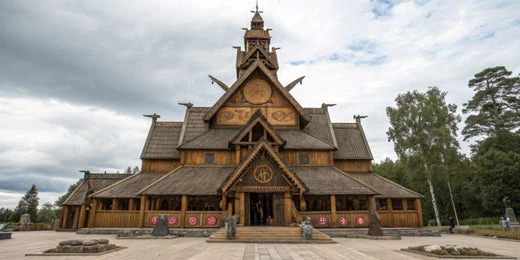
According to medieval accounts, especially the writings of Adam of Bremen, the Temple at Uppsala was a major religious center in what is now Sweden.

Description of the Site

  • A large wooden temple structure

  • Three central statues of Odin, Thor, and Freyr

  • Surrounding sacred grove of trees

  • Ritual halls and gathering spaces

The temple was believed to be a focal point for worship across Scandinavia.

Ritual Practices

Sacrifices (Blót)

One of the most important religious practices was blót, a sacrificial ritual that could include:

  • Animals such as horses, pigs, or cattle

  • Offerings of food, weapons, or valuables

  • In rare accounts, human sacrifice during major ceremonies

These rituals were performed to gain favor from the gods.

The Great Festivals

Large seasonal gatherings were held at sacred sites like Uppsala.

These included:

  • Winter festivals for survival and protection

  • Spring rituals for fertility and planting

  • Summer gatherings for war blessings and voyages

Feasting, storytelling, and oath-making were central parts of these events.

Political and Religious Power

The temple at Uppsala was not only religious but also political.

  • Kings and chieftains reinforced authority through rituals

  • Religious leaders (priests or chieftains) controlled ceremonies

  • The site functioned as a regional assembly center

Religion and governance were deeply connected in Viking society.

Archaeological Debate

Unlike Roman or Egyptian temples, no confirmed structure matching the legendary Temple at Uppsala has been definitively excavated.

Scholars debate whether:

  • It was a large wooden temple complex

  • It was more symbolic than architectural

  • It consisted of multiple ritual sites rather than one building

Despite this uncertainty, its importance in written sources is significant.

Christianization and Decline

By the 11th–12th centuries, Scandinavia began converting to Christianity.

This led to:

  • Gradual abandonment of pagan rituals

  • Destruction or repurposing of sacred sites

  • Replacement of old beliefs with churches and Christian practices

The Temple at Uppsala symbolized the last major center of organized Norse pagan worship.

Legacy

Even after its decline, the Temple at Uppsala remains a powerful symbol of Viking religion.

Its legacy includes:

  • Inspiration for Norse mythology studies

  • Cultural identity in Scandinavian history

  • Modern reconstructions of Viking religion and rituals

Conclusion

The Temple at Uppsala represents the heart of Viking Age paganism, where gods like Odin, Thor, and Freyr were worshipped through ritual sacrifice and seasonal festivals. Whether fully historical or partly legendary, it reflects the spiritual world of the Vikings and their deep connection between religion, nature, and power.

Ancient Egyptian Artisans: The Tomb of the Vizier Ramose

June 6, 2026

Ancient Egyptian Artisans: The Tomb of the Vizier Ramose

Introduction

The Tomb of Ramose is one of the most important examples of New Kingdom Egyptian tomb art. It belonged to Ramose, a high-ranking official who served as vizier—one of the most powerful positions under the pharaoh. The tomb, located in the necropolis of Thebes, showcases a turning point in Egyptian artistic style during the late 18th Dynasty.

Who Was Ramose?

Ramose was a vizier under two major pharaohs:

  • Amenhotep III

  • Akhenaten

As vizier, he was responsible for:

  • Administration of the state

  • Justice and legal matters

  • Oversight of construction projects

  • Acting as the pharaoh’s chief advisor

His position placed him among the most elite officials in Egypt.

Location and Structure

The tomb is located in the necropolis of Thebes, specifically in the area known as the Valley of the Nobles.

Layout

  • A forecourt open to the sky

  • A decorated entrance corridor

  • A burial chamber (unfinished in parts)

  • Wall reliefs and painted scenes

Unlike royal tombs in the Valley of the Kings, Ramose’s tomb reflects elite but non-royal status.

Artistic Significance

The Tomb of Ramose is famous for showing two contrasting artistic styles:

Traditional Style

  • Symmetrical, formal depictions of figures

  • Idealized proportions

  • Standard Old Kingdom artistic conventions

Amarna Influence

  • More naturalistic and fluid figures

  • Softer body forms and movement

  • Early elements of the radical style introduced under Akhenaten

This combination makes the tomb a key source for understanding the transition to the Amarna Period.

Wall Scenes and Decoration

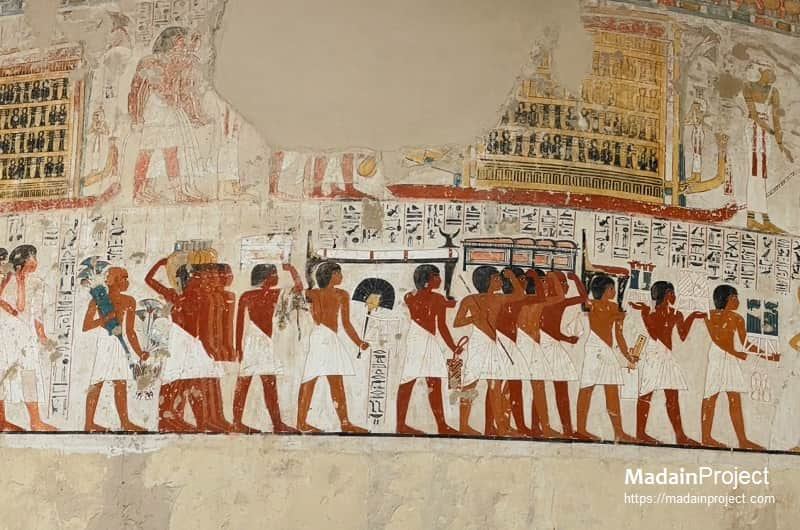
The tomb contains scenes depicting:

  • Ramose receiving honors from the pharaoh

  • Funeral and offering rituals

  • Processions of servants and officials

  • Scenes of daily administrative life

These images emphasize both Ramose’s authority and his loyalty to the state.

Historical Importance

The tomb is important because it:

  • Shows the power of high-ranking non-royal officials in Egypt

  • Documents artistic change during a politically unstable period

  • Reflects the transition between traditional and Amarna art

  • Provides insight into New Kingdom administration

The Amarna Connection

The shift in artistic style is linked to the religious reforms of Akhenaten, who promoted worship of the sun disk Aten.

This period led to:

  • Changes in artistic representation

  • More realistic human proportions

  • Reduced emphasis on traditional gods

Ramose’s tomb captures this transition in progress.

Preservation and Legacy

Today, the tomb remains one of the most studied non-royal tombs in Egypt. Its partially unfinished decoration gives scholars a rare glimpse into:

  • Artistic workshops at work

  • Changing royal ideologies

  • The lives of elite officials

Conclusion

The Tomb of Ramose stands as a powerful testament to Ancient Egyptian artistry and political structure. As the resting place of a high-ranking vizier, it reflects both traditional Egyptian values and the artistic transformation of the Amarna period. It remains a crucial source for understanding the evolution of Egyptian art and governance during the New Kingdom.

The Roman Arch of Septimius Severus: A Landmark of the Forum

June 6, 2026

Introduction

The Arch of Septimius Severus is one of the best-preserved triumphal arches in ancient Rome. Built in 203 CE, it commemorates the military victories of Emperor Septimius Severus and his sons Caracalla and Geta in the Parthian Wars. Standing prominently in the Roman Forum, it symbolized imperial power and military success.

Historical Background

Septimius Severus rose to power after a period of civil war known as the Year of the Five Emperors (193 CE). Once he secured control of the empire, he launched campaigns in the East against the Parthian Empire.

Key events:

  • Campaigns in Mesopotamia (late 190s CE)

  • Capture of key cities such as Ctesiphon

  • Expansion of Roman influence in the East

To celebrate these victories, the Senate dedicated a monumental arch in his honor.

Design and Structure

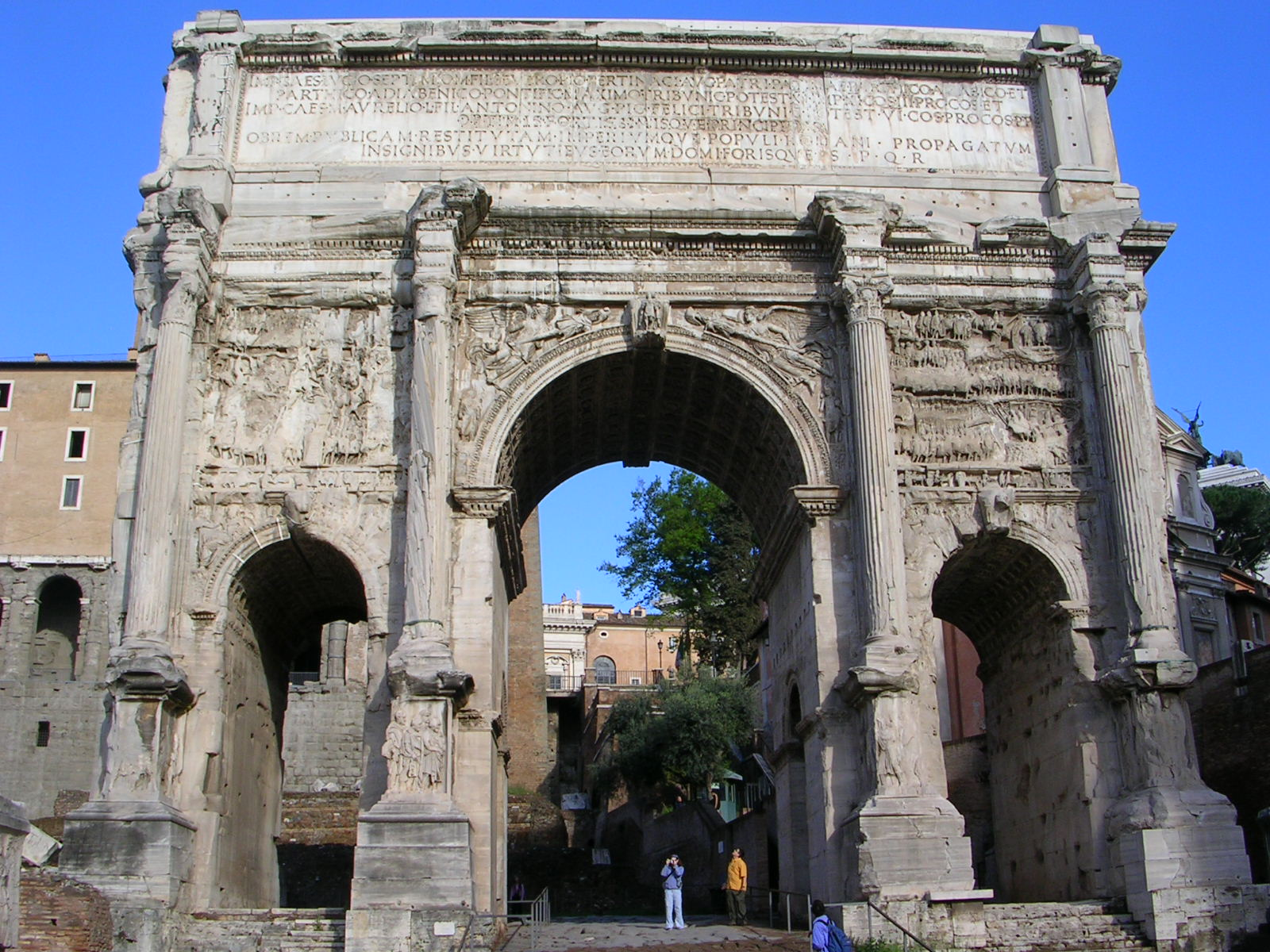
The Arch of Septimius Severus is a large, white marble structure featuring three passageways:

Main Features

  • A central large arch flanked by two smaller side arches

  • High relief sculptural panels depicting military scenes

  • Corinthian columns attached to the structure

  • An inscription dedicating the monument to the emperor and his sons

Reliefs and Decoration

The arch is richly decorated with detailed reliefs showing:

  • Scenes from the Parthian campaigns

  • Roman soldiers in battle formations

  • Sieges and military victories

  • The emperor addressing troops

These carvings serve as visual propaganda, emphasizing Roman strength and divine favor.

Political Symbolism

The arch was not only a celebration of military victory but also a political statement.

Key Messages:

  • The Severan dynasty’s legitimacy and authority

  • Unity between the emperor and his sons

  • Rome’s dominance over eastern enemies

  • The stability restored after civil war

Interestingly, after Geta was assassinated by his brother Caracalla, his images were erased from many monuments in a practice known as damnatio memoriae.

Role in the Roman Forum

As part of the Roman Forum, the arch stood in one of the most important civic spaces in Rome.

The Forum was used for:

  • Political speeches

  • Religious ceremonies

  • Public gatherings

  • Legal and economic activity

The arch’s placement ensured maximum visibility to citizens and officials.

Artistic and Engineering Significance

The arch reflects Roman mastery in:

  • Stone construction and stability

  • Relief sculpture techniques

  • Urban monument design

  • Integration of architecture and propaganda

Its survival in relatively good condition makes it an important example of Roman imperial art.

Conclusion

The Arch of Septimius Severus stands as a powerful symbol of Roman military achievement and imperial propaganda. Located in the heart of the Roman Forum, it commemorates victory, reinforces political legitimacy, and showcases the artistic and engineering skill of the Roman Empire.
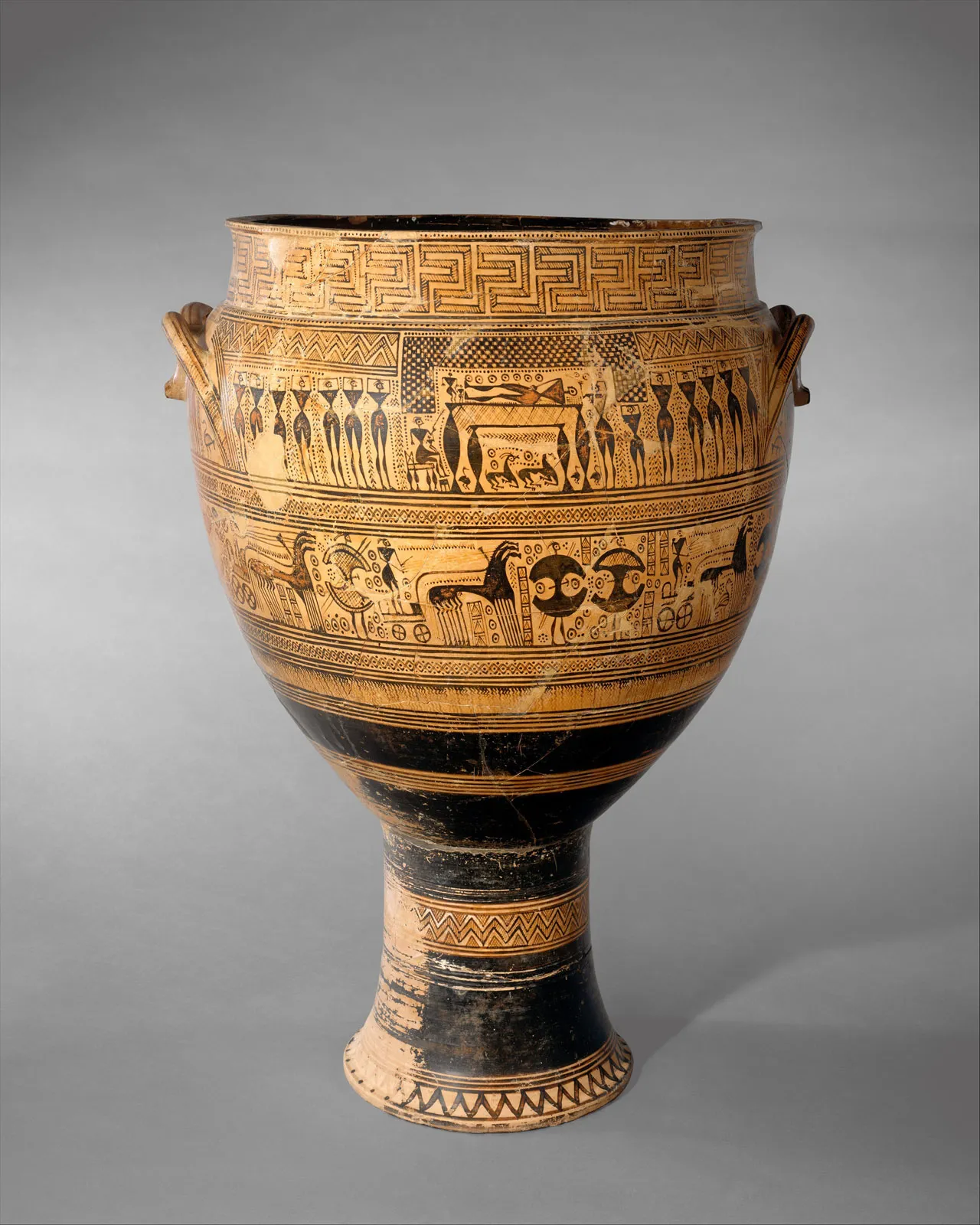
Ancient Greek Pottery: The Proto-Geometric and Geometric Styles

June 6, 2026

Ancient Greek Pottery: The Proto-Geometric and Geometric Styles

Introduction

Ancient Greek pottery is one of the most important sources of information about early Greek society. After the collapse of the Mycenaean civilization, pottery styles changed significantly. Two key phases in this development are the Proto-Geometric and Geometric styles, which mark the cultural recovery and growth of Greece during the early Iron Age (c. 1050–700 BCE).

Proto-Geometric Style (c. 1050–900 BCE)

The Proto-Geometric period represents the earliest phase of post-Mycenaean artistic revival.

Characteristics

  • Simple geometric shapes (circles, semicircles, arcs)

  • Use of compasses and multiple brushes for precision

  • Dark painted bands on light clay backgrounds

  • Highly symmetrical designs

  • Limited decoration focused mainly on vessel shape

Techniques and Innovation

Potters introduced improved firing techniques that allowed:

  • More consistent black glaze

  • Cleaner and more refined surfaces

  • Greater control over decorative patterns

Function of Pottery

Proto-Geometric pottery was used for:

  • Storage of food and liquids

  • Funerary urns

  • Everyday domestic use

It reflects a society rebuilding after the collapse of the Bronze Age world.

Geometric Style (c. 900–700 BCE)

The Geometric period marks a major artistic expansion and increasing social complexity in ancient Greece.

Characteristics

  • Elaborate geometric patterns covering the entire surface

  • Repeating motifs such as meanders (Greek key patterns)

  • Zigzags, triangles, and checkerboard designs

  • Increased complexity and symmetry

Human and Animal Figures

Later in the Geometric period, artists began to include:

  • Stylized human figures

  • Horses, birds, and mythological scenes

  • Funeral processions and battles

These figures were highly abstract, often composed of simple geometric shapes.

Cultural Meaning of Geometric Pottery

Geometric pottery reflects major changes in Greek society:

Social Structure

  • Growth of aristocratic elites

  • Increased importance of burial rituals

  • Rise of competitive status display

Religious and Funerary Use

Many large Geometric vases were used as grave markers or funerary offerings. Scenes often depicted:

  • Mourning rituals

  • Chariot processions

  • Heroic imagery related to emerging Greek identity

Artistic Development

The Geometric style shows the beginning of narrative art in Greece:

  • Movement from purely abstract designs to storytelling

  • Early visual representation of myth and society

  • Foundation for later Classical Greek art

Transition to Orientalizing Period

By the late 8th century BCE, Greek pottery began to shift into the Orientalizing period, influenced by contact with the Near East. This led to:

  • Introduction of new animal motifs (sphinxes, lions)

  • More naturalistic figures

  • Increased complexity in storytelling imagery

Conclusion

The Proto-Geometric and Geometric pottery styles represent a crucial transformation in ancient Greek art and society. From simple post-collapse designs to complex narrative scenes, these ceramics reflect the rebirth of Greek civilization and the foundations of its artistic identity.

The Mycenaean Civilization: The Legend of the Trojan War

June 6, 2026

The Mycenaean Civilization: The Legend of the Trojan War

Introduction

The Mycenaean civilization was one of the earliest advanced civilizations in mainland Greece. It is closely linked to the legendary stories of the Trojan War, a conflict immortalized in Greek epic poetry, especially the Iliad attributed to Homer. While the war itself blends myth and possible historical memory, it reflects the culture, warfare, and power structures of Mycenaean Greece.

The Mycenaean World

The Mycenaeans flourished during the Late Bronze Age and built fortified palace centers across Greece.

Major Centers

  • Mycenae

  • Tiryns

  • Pylos

  • Thebes

These cities were ruled by warrior-kings known as wanaktes.

Characteristics of Mycenaean Society

  • Strong military aristocracy

  • Palace-based economy

  • Advanced trade networks across the Mediterranean

  • Use of Linear B writing for administration

  • Heavy emphasis on warfare and prestige goods

Mycenaean Warfare

Mycenaean warriors were heavily armed and highly organized.

Common Features

  • Bronze armor and weapons

  • Chariots used in battle

  • Fortified citadels with massive “cyclopean” walls

  • Elite warrior class controlling political power

This militarized society forms the historical backdrop of later Greek heroic legends.

The Trojan War Tradition

The Trojan War centers on the legendary city of Troy, located in western Anatolia (modern-day Turkey).

The Story in Myth

According to Greek mythology:

  • Paris of Troy abducted Helen of Sparta

  • Greek kings formed a coalition to recover her

  • A long siege followed at Troy

  • Heroes such as Achilles, Hector, and Odysseus fought in the conflict

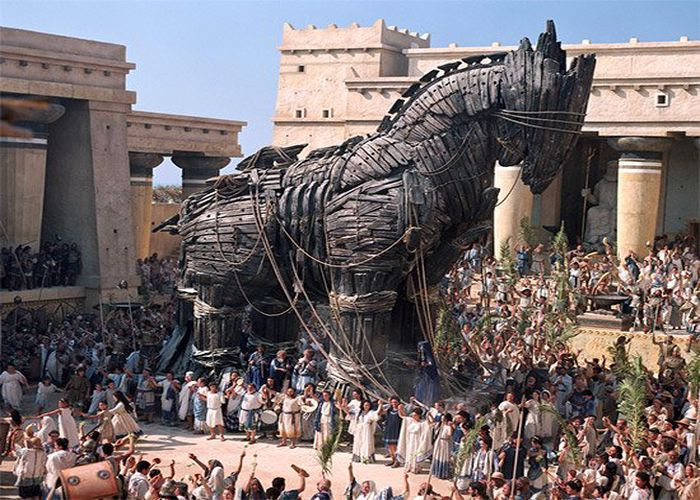
  • The war ended with the Greeks using the “Trojan Horse” to enter the city

Possible Historical Basis

While the myth is legendary, many scholars believe it may reflect real Late Bronze Age conflicts.

Possible historical elements:

  • Trade rivalry between Mycenaean Greeks and Anatolian cities

  • Regional warfare in western Anatolia

  • The collapse of Bronze Age civilizations around 1200 BCE

  • Archaeological evidence of destruction layers at Troy

Archaeology of Troy

Excavations at Troy have revealed multiple settlement layers, showing the city was rebuilt many times.

Key findings:

  • Fortified walls and gates

  • Evidence of destruction by fire in some layers

  • Artifacts suggesting trade with Mycenaean Greece

  • A wealthy and strategically located city

These findings support the idea that Troy was a real and significant Bronze Age settlement.

The Legacy of the Trojan War

The story of the Trojan War became central to Greek identity and literature.

Cultural Impact

  • Foundation of Homeric epics (Iliad and Odyssey)

  • Influence on Greek ideas of heroism and honor

  • Inspiration for later Roman literature (Aeneid)

  • Continued use in art, drama, and storytelling

Decline of the Mycenaeans

Around 1200 BCE, Mycenaean civilization collapsed due to a combination of:

  • Possible invasions or internal conflict

  • Natural disasters such as earthquakes

  • Economic breakdown and loss of trade networks

  • Widespread instability in the eastern Mediterranean

This collapse led to the Greek “Dark Age.”

Conclusion

The Mycenaean civilization forms the historical foundation of many Greek myths, including the legendary Trojan War. Whether viewed as history, legend, or a blend of both, the story reflects a world of warrior-kings, fortified cities, and epic struggles that shaped the cultural memory of ancient Greece for centuries.

Roman Mosaics in Syria: The Lost City of Apamea

June 6, 2026

Roman Mosaics in Syria: The Lost City of Apamea

Introduction

The ancient city of Apamea was one of the most important urban centers of the Roman East. Located in modern-day Syria, it became famous for its enormous colonnaded streets and, most notably, its stunning Roman mosaics. These artworks reveal the wealth, culture, and artistic sophistication of the Roman provinces.

The City of Apamea

Apamea was originally founded during the Hellenistic period and later flourished under Roman rule as part of Roman Syria.

Key Features of the City

  • A long, straight colonnaded main street (over 1.8 km long)

  • Large public buildings and baths

  • A major commercial and administrative center

  • Strong military and strategic importance

Apamea became a wealthy city due to trade routes connecting the Mediterranean with the East.

Roman Influence and Urban Design

Under Roman rule, Apamea was rebuilt with classical Roman urban planning:

  • Grid-like street systems

  • Monumental architecture

  • Public gathering spaces such as forums and baths

  • Decorative mosaics in wealthy homes and public buildings

This transformation reflected the Romanization of Syrian cities.

The Mosaics of Apamea

Apamea is especially famous for its floor mosaics, which are among the best preserved in the Roman world.

Themes of the Mosaics

The mosaics often depict:

  • Mythological scenes (Greek and Roman gods)

  • Hunting scenes featuring wild animals

  • Geometric and floral patterns

  • Everyday life and rural landscapes

Artistic Style

  • Highly detailed tesserae (small colored stones)

  • Strong use of perspective and movement

  • Bright colors made from natural stone and glass

  • Influence from both Greek and Roman artistic traditions

These mosaics decorated wealthy villas, baths, and civic buildings.

The Great Colonnade

One of Apamea’s most famous features is its massive colonnaded street:

  • Approximately 1.85 km long

  • Lined with thousands of columns

  • Served as the city’s main commercial artery

This street symbolized Roman power and urban sophistication in the eastern provinces.

Cultural Importance

Apamea was a meeting point of cultures:

  • Greek heritage from the Hellenistic period

  • Roman political and architectural influence

  • Local Syrian traditions

This blending of cultures is clearly reflected in its mosaics and architecture.

Decline of Apamea

The city declined due to:

  • Earthquakes damaging infrastructure

  • Political instability in the Late Roman and Byzantine periods

  • Shifts in trade routes

  • Later Islamic conquests and changing regional centers

Over time, Apamea was gradually abandoned and buried, preserving many of its mosaics.

Archaeological Significance

Today, Apamea is one of the most important archaeological sites in Syria. Its mosaics provide valuable insight into:

  • Daily life in Roman provincial cities

  • Artistic techniques of mosaic craftsmen

  • Wealth and cultural identity of the Roman East

Conclusion

Apamea stands as a powerful example of Roman influence in the East. Its magnificent mosaics and monumental architecture reflect a city of great wealth, artistic achievement, and cultural blending. Though now a “lost city,” its remains continue to tell the story of Roman Syria’s vibrant past.

The Viking Age Mercenaries: The Varangian Guard in Byzantium

June 6, 2026

The Viking Age Mercenaries: The Varangian Guard in Byzantium

Introduction

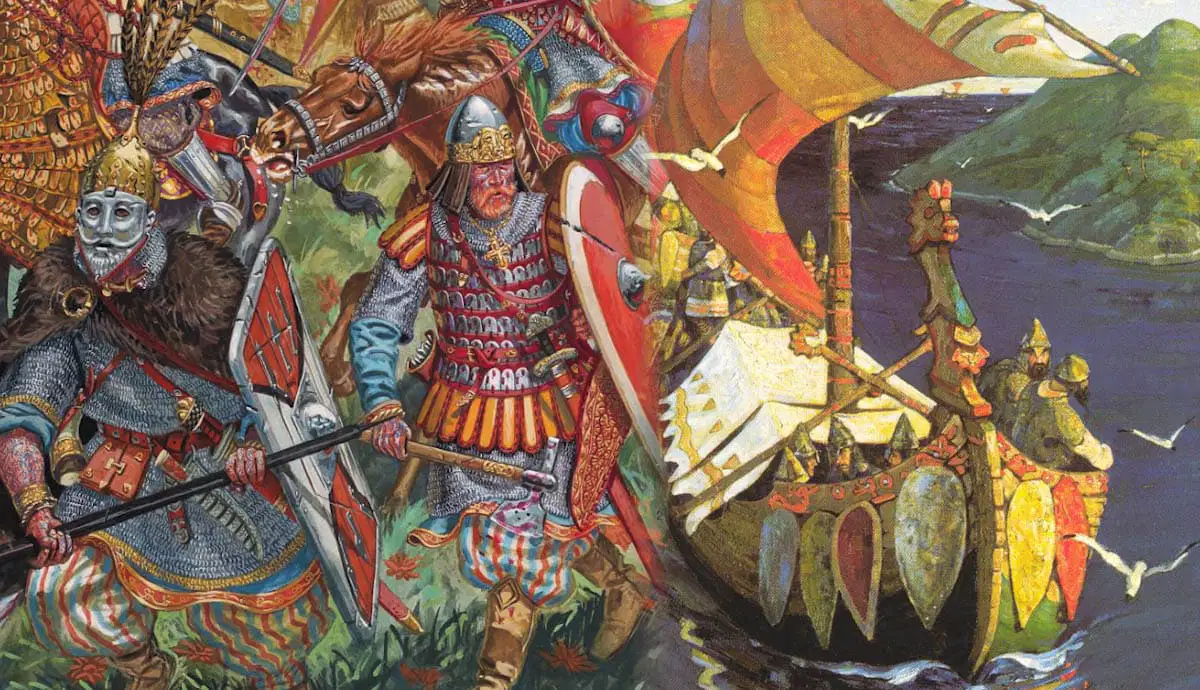
The Varangian Guard was one of the most famous mercenary units of the medieval world. Formed in the Byzantine Empire, it was primarily composed of warriors from Scandinavia and later Anglo-Saxon England. These warriors were known for their loyalty, strength, and fearsome reputation in battle.

Origins of the Varangian Guard

The Guard emerged in the late 10th century CE under the Byzantine emperor Basil II.

Why Foreign Warriors?

The Byzantines preferred foreign mercenaries because:

  • They were less likely to be involved in court politics

  • They had strong battlefield reputations

  • They were considered highly loyal to the emperor who paid them

Many early Varangians came from the Viking world of Scandinavia and the Kievan Rus’.

Role in the Byzantine Empire

The Varangian Guard served as elite protectors of the emperor in Byzantine Empire.

Duties Included:

  • Personal bodyguard of the emperor

  • Participation in major military campaigns

  • Guarding imperial palaces and treasures

  • Enforcing imperial authority in critical situations

Their loyalty was famously directed to the emperor rather than local factions.

Weapons and Fighting Style

Varangians were known for their heavy infantry combat style.

Common Weapons:

  • Large two-handed axes

  • Swords and spears

  • Heavy shields

They were often used as shock troops in battles, breaking enemy lines with powerful axe strikes.

The Varangians in Constantinople

The capital of the Byzantine Empire, Constantinople, was where the Varangian Guard was stationed.

They were present during:

  • Imperial ceremonies

  • Coronations

  • Court security operations

  • Defense of the imperial palace complex

Their distinctive appearance and foreign origin made them both feared and respected.

Famous Varangian Warriors

One of the most well-known groups of Varangians came from England after the Norman Conquest of 1066. Many displaced Anglo-Saxon warriors joined the Guard, seeking service in Byzantium.

Reputation and Loyalty

The Varangian Guard gained a reputation for:

  • Extreme loyalty to the emperor

  • Brutal effectiveness in combat

  • Resistance to corruption and bribery

Byzantine sources often describe them as the emperor’s “axe-bearing protectors.”

Decline of the Varangian Guard

Over time, the Guard became less distinctively Norse as recruitment expanded to other groups.

Their importance declined after:

  • The weakening of Byzantine power after the Fourth Crusade (1204 CE)

  • Increasing reliance on local and Latin mercenaries

  • Political instability within the empire

Legacy

The Varangian Guard remains one of the most iconic mercenary units in history. It represents the blending of Viking martial culture with Byzantine imperial tradition.

Their legacy includes:

  • Strong Norse influence in medieval Mediterranean warfare

  • Cultural exchange between Northern Europe and Byzantium

  • A lasting image of Viking warriors serving in imperial courts

Conclusion

The Varangian Guard symbolized loyalty, strength, and cultural fusion in the medieval world. Serving as elite protectors of the Byzantine emperors, these Viking-origin warriors became an essential part of imperial power in Constantinople and left a lasting mark on both Norse and Byzantine history.

Ancient Egyptian Dynasties: The Old Kingdom and the Pyramid Age

June 6, 2026

Ancient Egyptian Dynasties: The Old Kingdom and the Pyramid Age

Introduction

The Old Kingdom of Egypt is often called the “Pyramid Age” because it was the period when Egypt built its most iconic monumental tombs. During this era, pharaohs strengthened centralized government, developed complex religious beliefs about the afterlife, and commissioned massive stone pyramids that still stand today.

Rise of the Old Kingdom

The Old Kingdom began after the unification of Upper and Lower Egypt under earlier dynasties. Power became increasingly centralized in the hands of the pharaoh, who was considered both a political ruler and a divine figure.

Key developments included:

  • Strong centralized administration

  • Expansion of state-controlled agriculture and labor

  • Growth of religious institutions supporting the pharaoh’s divine status

The capital during much of this period was near modern-day Memphis.

The Pyramid Age

The Old Kingdom is best known for the construction of pyramids as royal tombs. These structures reflected beliefs in eternal life and the divine nature of kingship.

The Step Pyramid

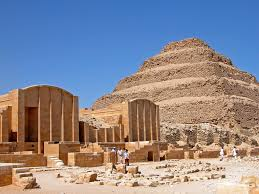
One of the earliest major stone monuments was the Step Pyramid of Djoser, designed by the architect Imhotep at Saqqara.

This pyramid marked a major shift from mudbrick mastabas to large-scale stone construction.

The Great Pyramids of Giza

The most famous achievements of the Old Kingdom are the pyramids built at Giza by:

  • Khufu

  • Khafre

  • Menkaure

These pyramids were part of a larger complex including temples, causeways, and the Great Sphinx.

Religion and the Afterlife

Religious beliefs played a major role in pyramid construction. Egyptians believed that:

  • The pharaoh’s soul needed a preserved body (mummification)

  • Tombs ensured safe passage to the afterlife

  • Offerings sustained the ruler in the next world

The pyramids were designed as eternal homes for the king’s spirit.

Government and Society

The Old Kingdom was highly organized, with a strong bureaucracy.

Social Structure

  • Pharaoh at the top

  • Viziers and high officials

  • Scribes who managed records and taxation

  • Farmers and laborers forming the majority of the population

Labor System

Contrary to popular myths, pyramid builders were not slaves but often skilled workers and seasonal laborers organized by the state.

Decline of the Old Kingdom

The Old Kingdom eventually declined due to:

  • Weakening central authority

  • Economic difficulties

  • Regional power struggles among local governors (nomarchs)

  • Possible environmental stress such as drought

This collapse led to the First Intermediate Period, a time of political fragmentation.

Legacy of the Pyramid Age

Despite its decline, the Old Kingdom left a lasting legacy:

  • The Great Pyramids remain among the world’s greatest architectural achievements

  • Egyptian ideas of kingship and afterlife influenced later dynasties

  • Advances in engineering, administration, and art shaped future civilizations

Conclusion

The Old Kingdom was a defining era in Ancient Egyptian history. Known as the Pyramid Age, it showcased the power of the pharaohs, the skill of Egyptian engineers, and the deep religious beliefs that shaped society. Its monuments continue to symbolize the enduring legacy of one of the world’s earliest great civilizations.

← Newer Posts Older Posts →
Featured
image_2026-06-13_215346224.png
June 14, 2026
The Mycenaean Civilization: The Influence of the Minoan Culture
June 14, 2026
Read more →
June 14, 2026
image_2026-06-13_215237071.png
June 14, 2026
The Viking Age Trade Centers: The Town of Ribe and the Early Market
June 14, 2026
Read more →
June 14, 2026
image_2026-06-13_215150532.png
June 14, 2026
Ancient Egyptian Religion: The Importance of the Afterlife and the Heart
June 14, 2026
Read more →
June 14, 2026
image_2026-06-13_215112949.png
June 14, 2026
The Roman Emperor Marcus Aurelius: The Column of Marcus Aurelius
June 14, 2026
Read more →
June 14, 2026
image_2026-06-13_215017490.png
June 14, 2026
Ancient Greek Philosophy: The Stoics, Epicureans, and Skeptics
June 14, 2026
Read more →
June 14, 2026
image_2026-06-13_214932674.png
June 14, 2026
The Minoan Civilization: The Architecture of the Cretan Palaces
June 14, 2026
Read more →
June 14, 2026
read more

Powered by The archaeologist