• MAIN PAGE
  • LATEST NEWS
    • Lost Cities
    • Archaeology's Greatest Finds
    • Underwater Discoveries
    • Greatest Inventions
    • Studies
    • Blog
  • PHILOSOPHY
  • HISTORY
  • RELIGIONS
    • Africa
    • Anatolia
    • Arabian Peninsula
    • Balkan Region
    • China - East Asia
    • Europe
    • Eurasian Steppe
    • Levant
    • Mesopotamia
    • Oceania - SE Asia
    • Pre-Columbian Civilizations of America
    • Iranian Plateau - Central Asia
    • Indus Valley - South Asia
    • Japan
    • The Archaeologist Editor Group
    • Scientific Studies
    • Aegean Prehistory
    • Historical Period
    • Byzantine Middle Ages
    • Predynastic Period
    • Dynastic Period
    • Greco-Roman Egypt
  • Rome
  • PALEONTOLOGY
  • About us
Menu

The Archaeologist

  • MAIN PAGE
  • LATEST NEWS
  • DISCOVERIES
    • Lost Cities
    • Archaeology's Greatest Finds
    • Underwater Discoveries
    • Greatest Inventions
    • Studies
    • Blog
  • PHILOSOPHY
  • HISTORY
  • RELIGIONS
  • World Civilizations
    • Africa
    • Anatolia
    • Arabian Peninsula
    • Balkan Region
    • China - East Asia
    • Europe
    • Eurasian Steppe
    • Levant
    • Mesopotamia
    • Oceania - SE Asia
    • Pre-Columbian Civilizations of America
    • Iranian Plateau - Central Asia
    • Indus Valley - South Asia
    • Japan
    • The Archaeologist Editor Group
    • Scientific Studies
  • GREECE
    • Aegean Prehistory
    • Historical Period
    • Byzantine Middle Ages
  • Egypt
    • Predynastic Period
    • Dynastic Period
    • Greco-Roman Egypt
  • Rome
  • PALEONTOLOGY
  • About us
No results found

Malta's Ħal Saflieni Hypogeum: Prehistoric Sound Chambers

June 18, 2026

Deep beneath the suburban streets of Paola, Malta, sits a subterranean architectural marvel that challenges our understanding of Neolithic engineering, acoustic science, and spiritual life: The Ħal Saflieni Hypogeum.

Discovered accidentally in 1902 by stonemasons cutting cisterns for a new housing development, this massive, three-tiered underground sanctuary was carved entirely out of solid globigerina limestone between 3600 and 2500 BCE. While it served as a monumental collective tomb—housing the skeletal remains of an estimated 7,000 individuals—its most staggering feature is its highly sophisticated acoustic design, particularly within a room known globally as the Oracle Chamber.

1. The Architecture of the Underworld: Mirroring the Above

The Hypogeum (literally meaning "underground" in Greek) is not a chaotic network of rough caves. Instead, the prehistoric builders painstakingly carved the solid rock to mimic the grand, open-air megalithic temples they were constructing simultaneously on the surface, such as Ħaġar Qim and Tarxien.

Spanning three distinct, descending levels that reach a depth of roughly 10 meters ($33\text{ feet}$), the complex features beautifully smooth, curved walls, monumental lintels, and trilithon doorways. In the Main Chamber, the masons went so far as to carve false corbelled domes into the solid ceiling rock, creating an optical illusion of open, vaulted roofs where none existed. Through this intense expenditure of labor using nothing but flint, obsidian, and antler picks, they successfully transformed a dark, subterranean void into a highly structured, majestic theater for the dead.

2. The Oracle Chamber: The Physics of Sub-Woofer Resonance

The absolute apex of the Hypogeum’s intellectual design is found on the middle level inside the Oracle Chamber. This relatively small, rectangular room features a unique, small oval niche carved into the wall at face height.

For over a century, acoustic physicists and archaeoacousticians have studied this room because of its mind-boggling sound manipulation properties. If a person speaks into the room normally, very little happens. However, if a male voice drops his pitch to a specific low-frequency resonance—precisely 110 Hz—the entire subterranean complex reacts like a giant, stone sub-woofer.

   [ LOW-FREQUENCY VOCALIZATION ] ──► Chanted into the Custom Oval Wall Niche
                                                 │
                                   (The Acoustic Resonance Loop)
                                                 │
                                                 ▼
   [ 110 HZ SOUND WAVELENGTHS ] ◄──── Amplified by Curving Rock Facets / Echoes through Tier Grid

This precise acoustic resonance is achieved through several deliberate structural factors:

  • The Amplification Niche: The oval niche acts as a natural megaphone, concentrating the sound waves and projecting them outward.

  • The Curving Ceiling Facets: The ceiling of the chamber is carved with unique, sweeping curves that prevent sound waves from flat-lining or scattering. Instead, it channels the sound, causing it to bounce and amplify exponentially as it rolls through the room.

  • The Continuous Echo: A single low chant in this room generates a powerful, vibrating echo that travels seamlessly through all three levels of the complex, making the sound feel as though it is emerging out of the very earth itself.

3. Archaeoacoustics: The Neurological Impact of 110 Hz

Why did these Neolithic builders spend centuries carving a room perfectly tuned to 110 Hz? While we have no written texts to confirm their motives, modern cognitive neurology and archaeoacoustics offer a fascinating, scientific hypothesis.

In 2008, a pilot study conducted by the Mantra Consortium monitored the brain activity of healthy adults exposed to different acoustic frequencies. The results revealed that when the human brain is subjected to a sustained 110 Hz frequency, a striking neurological shift occurs:

  • Deactivation of the Language Center: Activity in the left prefrontal cortex—the region responsible for logical processing, language, and linear thought—suddenly drops.

  • Activation of Emotional Processing: The brain shifts its activity toward the right prefrontal cortex, which governs creativity, abstract visualization, and intense emotional states.

  • The Trance State: This specific frequency mimics the brainwave states associated with deep meditation, religious ecstasy, and trance.

To the Neolithic people of Malta, entering the dark, flickering light of the Hypogeum to hear a priest or oracle chant from the hidden wall niche would have been an overwhelming, reality-altering experience. The physical vibration of the stone walls combined with the neurological shift caused by the 110 Hz resonance would induce vivid hallucinations and a profound sense of cosmic detachment—perfectly engineering a space where the living could commune directly with the spirits of their ancestors.

4. Summary of the Hypogeum's Structural Dynamics

  • The Scale: A three-tiered, hand-carved underground necropolis housing 7,000 individuals, chiseled out of solid globigerina limestone using only stone and antler tools.

  • The Architecture: Intentionally mimics the layout, trilithons, and corbelled roofs of Malta’s surface megalithic temples to establish an intentional spatial bridge between the worlds of the living and the dead.

  • The Acoustic Mechanics: Utilizing an integrated wall niche and curved limestone ceiling geometries to isolate and amplify a specific low-frequency resonance of 110 Hz.

  • The Neurological Purpose: Sound design engineered to trigger a shift from logical left-brain thought to right-brain abstract processing, inducing ritualistic, meditative trance states during ceremonies.

The Ħal Saflieni Hypogeum stands as one of our planet's most brilliant early symphonies of architecture and sensory manipulation. It proves that prehistoric societies were not merely primitive builders stacking rocks; they possessed an incredibly nuanced, experimental grasp of structural dynamics, materials, and how the physical geometry of a room can directly alter human consciousness. By turning the dark interior of the earth into a living acoustic instrument, the ancient builders of Malta created a timeless sanctuary where architecture, sound, and the human mind became permanently fused together in the dark.

Richat Structure: Eye of Sahara as Atlantis Epicenter

June 18, 2026

Deep in the windswept deserts of west-central Mauritania sits the Richat Structure, globally recognized as the "Eye of the Sahara." Looking from space, this jaw-dropping geological anomaly resembles a colossal, 40-kilometer-wide ($25\text{-mile}$) bulls-eye or concentric ring network carving directly into the desert floor.

In recent years, the Richat Structure has exploded in popularity across digital media platforms as the supposed physical location of Atlantis, the legendary lost civilization chronicled by the Greek philosopher Plato around 360 BCE. Proponents of this theory point to a series of stunning visual and structural correlations that seem too precise to be mere coincidence.

However, when historians, classicists, and structural geologists analyze the site, the "Atlantis epicenter" theory completely evaporates. The true narrative of the Eye of Sahara does not rely on a sunken maritime empire, but rather on the deep time scales of tectonic magmatism, continental rifting, and selective dome erosion.

1. The Atlantean Argument: Plato’s Blueprint in the Sand

The modern resurgence of the Richat-as-Atlantis theory relies heavily on comparing the physical geography of Mauritania with the literal text of Plato’s dialogues, Timaeus and Critias. Proponents match several key descriptions:

  • The Concentric Rings: Plato described Atlantis as a city built out of alternating, concentric zones of water and land—specifically, three rings of water and two of land. From an aerial view, the Richat Structure displays an identical concentric ring footprint.

  • The Scale and Dimensions: Plato stated that the outer ring of Atlantis measured 127 stadia in diameter. When converted to modern metrics, this equals roughly 23.5 kilometers—a measurement that matches the inner core rings of the Richat anomaly.

  • The Northern Mountains and Southern Plain: Plato noted that the city was sheltered to the north by grand, sweeping mountains noted for their beauty, while opening up to the south into a vast, rectangular agricultural plain. Satellite imagery shows the rugged Atlas and Mauritanian mountain ridges bounding the Richat to the north, sloping down into a vast desert basin to the south.

  • The Colors of the Stone: The dialogues mention that the architects of Atlantis quarried stone that was black, white, and red to construct their monumental palaces. Geologists confirm that the rock strata of the Richat feature black basalts, white limestones, and red iron-rich volcanic breccias.

2. The Geological Reality: The Sinking of a Magmatic Dome

Despite these visual coincidences, mainstream geologists—who have mapped the Richat Structure using field geochemistry, aeromagnetic surveys, and satellite radar—have definitively proven that the structure is completely natural. It is not a excavated city, but a highly unique geological feature known as a deeply eroded alkaline magmatic dome.

Its formation began roughly 100 million years ago during the Cretaceous period, coinciding with the violent breakup of the supercontinent Pangea and the opening of the Atlantic Ocean.

Step 1: The Magmatic Uplift

Deep beneath the Earth's crust, a massive plume of superheated magma forced its way upward into the overlying flat sheets of sedimentary sandstone and limestone. The magma never erupted onto the surface to form a traditional volcano. Instead, it acted like a giant underground piston, pushing the flat surface rock layers upward from below to create a massive, circular blister or dome on the landscape.

Step 2: Hydrothermal Alteration and Collapse

As the magma cooled slowly over millions of years, highly reactive, mineral-rich hydrothermal fluids surged through the cracks in the dome. These fluids chemically dissolved and weakened the internal limestone core of the structure. Deprived of its underlying support, the center of the dome suffered a massive structural collapse, dropping straight down to form a vast central depression.

Step 3: Differential Weathering

Once the dome collapsed, tens of millions of years of wind, rain, and desert sandstorms went to work on the exposed edges of the rock layers. Sandstone is exceptionally hard and resistant to erosion, while limestone and shale are soft and easily hollowed out by the elements.

   [ HIGH-DENSITY MAGMA PISTON ] ──► Pushes Flat Sandstone Layers Upward into a Dome
                                                │
                                   (The Deep Time Weathering)
                                                │
                                                ▼
   [ CONCENTRIC RING RIDGE LINES ] ◄── Hard Sandstone Remains / Soft Limestone Erodes Away

As erosion stripped away the top of the dome, the hard sandstone layers remained standing as high, prominent concentric ridges, while the softer rock layers were swept away entirely, carving out the deep concentric valleys between them. This process of differential weathering manufactured the flawless circular "steps" that alternative theorists mistake for man-made concentric rings.

3. The Flaws in the Myth: Altitude and Archaeology

When the site is evaluated using standard historical method and archaeological science, the Atlantis theory suffers from critical errors:

1. The Altitude Conflict

Plato’s central premise is that Atlantis was an international maritime empire—a low-lying naval power whose canals opened directly into the Atlantic ocean, allowing triremes and merchant ships to sail deep into the city's heart.

The Richat Structure sits at an average altitude of 400 meters ($1,300\text{ feet}$) above sea level and is located more than 500 kilometers ($300\text{ miles}$) inland from the modern Atlantic coast. While the Sahara was considerably greener in the deep past, geophysical mapping confirms that the Richat plateau was never submerged beneath the ocean during any period of human history. Ships could never have sailed into its rings.

2. The Complete Absence of Artifacts

If the Richat were truly the thriving, high-technology capital of a global empire that controlled the western Mediterranean, the soil should be thick with the indestructible trash of human civilization: thousands of tons of metal slag, brick kilns, glass fragments, domestic refuse heaps, and structural foundations.

Instead, extensive archaeological surveys across the Richat have recovered only two types of human materials:

  • A scattered collection of Acheulean stone handaxes and scraping tools dating back hundreds of thousands of years, dropped by early hominids (Homo erectus).

  • Scattered Neolithic arrowheads and spear points left behind by nomadic hunter-gatherers around 4,000 BCE.

There is an absolute, multi-millennial void of any permanent masonry, plumbing, metallurgy, or urban settlement infrastructure.

4. Summary of the Richat Anomaly

  • The Sensation: A theory framing the Eye of the Sahara as the literal epicenter of Plato's Atlantis due to its matching concentric rings, mountain boundaries, and stone color palettes.

  • The Geomorphology: A 40-kilometer-wide alkaline magmatic dome created 100 million years ago by subterranean magma pressure during the rifting of Pangea.

  • The Structural Mechanics: Tens of millions of years of differential weathering, where hard sandstone beds resisted erosion to form high ridges, while soft limestones washed away to form concentric ring trenches.

  • The Archaeological Verdict: Total absence of urban masonry, metals, or domestic infrastructure; the site is situated 400 meters above sea level, making historical maritime ship access physically impossible.

The Richat Structure stands as one of the greatest natural wonders of our planet. By removing the speculative veil of alternative myths, we reveal a far grander scientific truth. The Eye of the Sahara is not a sunken monument to human hubris, but a pristine, open-air laboratory displaying the staggering tectonic forces that tear continents apart and reshape the crust of the earth over deep time. Looking down into its colossal stone rings is not a glance into a forgotten human history, but a profound window into the majestic, patient architecture of the Earth itself.

Bosnian Pyramids: Visoko's Controversial 12,000-Year Structures

June 18, 2026

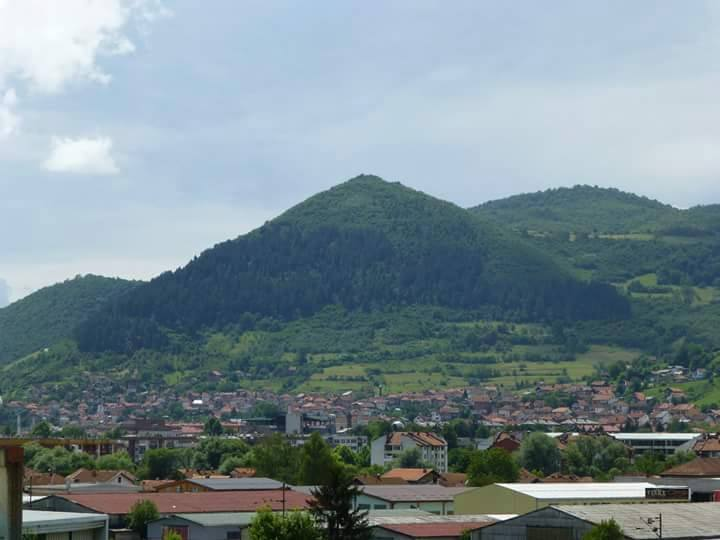
Nestled in the green hills surrounding the town of Visoko, Bosnia and Herzegovina, sits a cluster of landforms that became the center of one of the most persistent archaeological debates of the 21st century: The Bosnian Pyramids.

In 2005, Semir Osmanagić (an entrepreneur and alternative history author) announced that the town’s prominent, angular hills were actually a complex of 12,000-year-old stepped pyramids. Dubbing them the Pyramids of the Sun, Moon, and Dragon, he claimed they were built by a lost European civilization at the end of the last Ice Age, making them far older and larger than the Great Pyramid of Giza.

Despite the immense tourism boom and popular allure surrounding the site, the global scientific community reacted with overwhelming condemnation. In 2006, the European Association of Archaeologists issued a formal declaration labeling the project a "cruel hoax." The true story of Visoko does not involve prehistoric stonemasons, but rather a fascinating collision of tectonic geology, natural sedimentary fracturing, and deep medieval history.

1. The Pro-Pyramid Argument: "Laser-Straight" Geometry

The Bosnian Pyramid of the Sun Foundation, led by Osmanagić, points to several distinct features across Visoko's hills as definitive material proof of human engineering:

  • The Symmetrical Facets: Visočica Hill features four distinct, triangular faces that align remarkably well with the cardinal directions (North, South, East, West).

  • The Interlocking Slabs: Excavations on the hillside exposed vast, multi-layered pavements of flat, rectangular blocks that resemble poured concrete or fitted stone pavers.

  • The Ravne Tunnel Network: A labyrinth of subterranean passages located kilometers away from the hills, which alternative theorists claim was an ancient ventilation and transport network connecting the pyramid complex.

2. The Geological Reality: Flatirons and Conglomerate

When international geologists, sedimentologists, and mining engineers conducted independent structural analyses of Visoko, they concluded that the "pyramids" were entirely natural formations created by the Earth's standard geomorphological forces.

The Physics of Flatirons

The striking, triangular symmetry of Visočica Hill is a well-known geological feature called a flatiron. Millions of years ago, the region sat beneath a massive Miocene-era lake basin. As rivers emptied into the lake, they deposited flat, horizontal layers of sediment over generations.

Later, intense tectonic activity associated with the collision of the African and Eurasian plates buckled the earth, tilting these horizontal sedimentary beds upward at an angle. Over millennia, rainfall and wind eroded the soft, exposed edges of the tilted rock, leaving behind a series of triangular, steep-sloped ridges that mimic the shape of a pyramid entirely naturally.

Nature's Concrete: Breccia and Conglomerate

The "interlocking stone blocks" uncovered by excavators are not prehistoric masonry; they are natural, sedimentary rock formations known as conglomerate and breccia.

As the ancient lake dried up, layers of rounded river pebbles, gravel, and sand were subjected to immense underground pressure. Minerals dissolved in the groundwater acted as a natural glue, cementing the loose stones into massive, horizontal sheets of natural rock.

Because sandstone and conglomerate contract and fracture along clean, perpendicular lines of stress (joints) as they dry and settle, the rock naturally splits into neat, rectangular blocks. To an untrained eye, this looks like a paved stone street or poured concrete. In reality, it is a textbook example of natural geological fracturing.

3. The Ravne Tunnels: Natural Caves Adapted by History

The underground Ravne Tunnels are frequently used by alternative history proponents as proof of a subterranean network. However, British geologist Anthony Harding and local mining experts confirmed that these tunnels are entirely natural.

The tunnels are hollow channels carved out by ancient underground rivers flowing through the soft, loose gravel layers of the conglomerate rock. Furthermore, archaeologists discovered that many sections of the tunnels featured genuine historical artifacts—but they did not date back 12,000 years.

Instead, the tunnels contain remnants from the Middle Ages and the Roman era, when local populations used the natural cave networks for mining, emergency shelter, and military defense.

4. The True Historical Wonder: Stari Grad Visoki

Dismantling the 12,000-year-old pyramid myth does not mean Visoko lacks historical significance. By focusing entirely on a pseudo-scientific fantasy, the project inadvertently overlooks and damages a genuine, incredibly important archaeological site resting on the very peak of the hill: Stari Grad Visoki (The Old Town of Visoko).

   [ THE HILLTOP SUMMIT ] ───► Stari Grad Visoki (14th-Century Medieval Castle)
                                          │
                              (The Cultural Core)
                                          │
                                          ▼
   [ RECEPTION OF CHARTERS ] ◄─── Heart of the Kingdom of Bosnia / Court of King Tvrtko I

During the 14th century, the summit of Visočica Hill was the absolute political and cultural heart of the independent Kingdom of Bosnia. It housed a heavily fortified royal castle where the first Bosnian King, Tvrtko I, signed critical state charters and hosted foreign dignitaries.

The slopes beneath the castle were home to Mile, one of the most important administrative and religious centers of medieval Bosnia, serving as the coronation and burial place of Bosnian kings. Tragically, some early, unregulated volunteer excavations looking for the "pyramid" accidentally cut through and compromised medieval strata, drawing fierce criticism from professional historians fighting to preserve Bosnia’s actual medieval heritage.

5. Summary of the Visoko Controversy

  • The Phenomenon: A viral claim that Visočica Hill is a 12,000-year-old stepped pyramid, serving as the foundation for a lost, prehistoric European empire.

  • The Scientific Verdict: Total rejection by the European Association of Archaeologists, classifying the hills as natural geomorphological structures.

  • The Geomorphology: Natural flatiron ridges formed by tectonically tilted sedimentary rock beds that eroded into sharp, triangular faces.

  • The Lithology: Natural Miocene conglomerate and breccia sheets that fractured along orthogonal joint lines, mimicking artificial concrete blocks.

  • The Authentic History: A vital 14th-century medieval stronghold at the summit (Stari Grad Visoki), acting as the seat of royal power for the Kingdom of Bosnia.

The controversy of the Bosnian Pyramids highlights a powerful sociological phenomenon: the human brain’s natural tendency to find familiar, structured patterns in the chaotic shapes of nature (a psychological trait known as pareidolia). While Visoko's hills are a masterpiece of tectonic tilting and natural rock fracturing rather than ancient engineering, the site remains a deeply compelling landscape. Stripping away the fantasy exposes a rich history, showing how a unique, naturally grand hill served as an inspiring high point of defense, identity, and royalty for the medieval Kingdom of Bosnia.

Piri Reis Map: 1513 Chart Showing Ice-Free Antarctica?

June 18, 2026

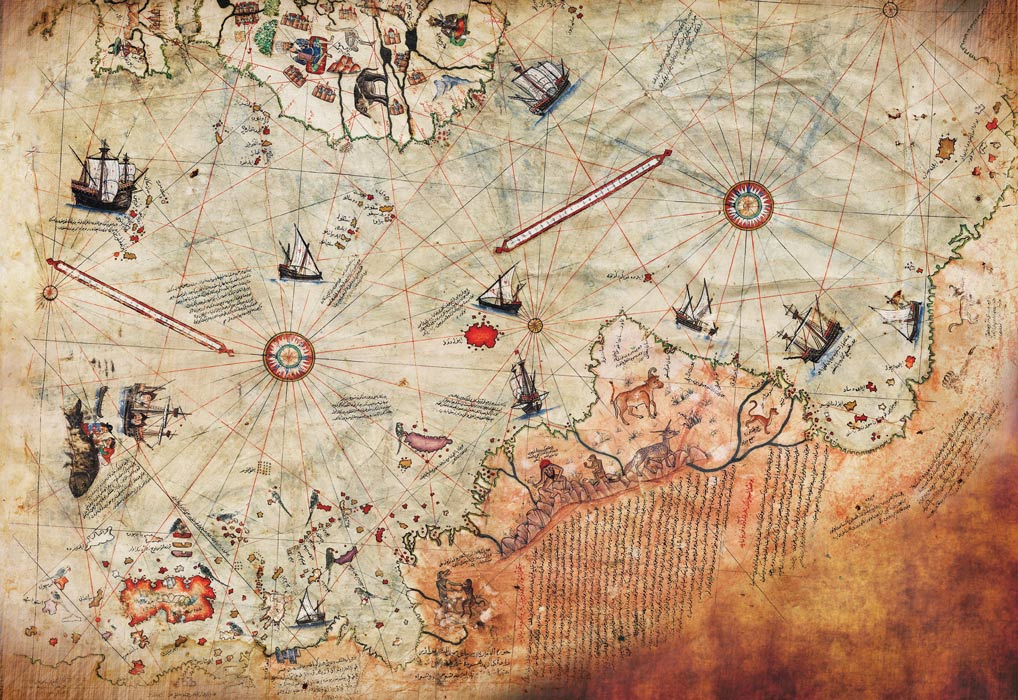
The Piri Reis Map is one of the most famous and beautiful fragments of cartography from the Age of Discovery. Drawn on gazelle skin in 1513 by the Ottoman admiral, geographer, and cartographer Ahmed Muhiddin Piri (better known as Piri Reis), the map compile-synthesized dozens of older charts to map the Atlantic Ocean, the western coasts of Europe and Africa, and the newly discovered eastern coast of South America.

In alternative history circles—popularized by author Erich von Däniken in the 1960s and more recently by Graham Hancock—the map is presented as a profound mystery. They claim that the bottom portion of the map illustrates the Queen Maud Land coast of Antarctica completely free of ice.

Because Antarctica was not officially discovered until 1820, and its sub-glacial coastline has been frozen for millions of years, these authors argue the map proves that an advanced, prehistoric global civilization mapped the planet during the last Ice Age.

However, when historians, geographers, and cartographers actually analyze the map, the mystery vanishes. The true story of the Piri Reis map does not rely on ancient anomalies, but rather on the standard practices of 16th-century mapmaking, geographic distortion, and a heavy reliance on Christopher Columbus.

1. The Core Claim: The Sub-Glacial Coastline

The theory that Piri Reis mapped an ice-free Antarctica relies heavily on the work of Charles Hapgood, an American college professor who published Maps of the Ancient Sea Kings in 1966. Hapgood claimed that the landmass curving out from the bottom of South America matched the coastline of Queen Maud Land, Antarctica, with shocking seismic accuracy.

To alternative theorists, this layout implies:

  • The map must be based on source charts dating back to a time when Antarctica was free of ice ($10,000\text{ BCE}$ or earlier).

  • The creators must have possessed advanced spherical trigonometry to map the earth from an aerial projection point.

2. The Cartographic Reality: Terra Australis Incognita

To understand why the Piri Reis map features a massive landmass at the bottom, one must look at the intellectual mindset of Renaissance cartographers. They were not working with satellite data; they were working with a mixture of raw exploration data and classical Greek philosophy.

the Law of Geometric Balance

Ever since the time of Aristotle and Ptolemy, European and Middle Eastern geographers believed in a concept known as Terra Australis Incognita (the Unknown Southern Land).

The Greeks argued that the world was a sphere that required perfect geometric balance. Because they knew there was a massive weight of landmasses in the Northern Hemisphere (Europe, Asia, Africa), they logically deduced that there must be an equally massive, heavy continent at the bottom of the globe to act as a counterweight. If this southern continent did not exist, they believed, the Earth would literally capsize and tip over in space.

As a result, almost every mapmaker of the 15th and 16th centuries drew a hypothetical, sprawling landmass at the bottom of their charts. They did not need to see it or survey it; their philosophy dictated that it had to be there.

3. The Structural Error: South America Curved

When we strip away the theoretical "Antarctica" label and look closely at the annotations written in Ottoman Turkish on the map itself, a much simpler, more accurate explanation emerges: The bottom of the map is just the lower half of South America, bent sideways to fit the shape of the gazelle skin.

   [ BRAZILIAN COASTLINE ] ───► Continues Down toward Patagonia
                                          │
                             (The Animal Skin Limit)
                                          │
                                          ▼
   [ DISTORTED 90° CURVE ] ───► Bent Eastward along the bottom edge of the parchment

Piri Reis was painting on a precious, limited piece of parchment made from a single gazelle skin. As he mapped the newly discovered coastline of Brazil moving southward, he ran out of physical space at the bottom of the skin.

Rather than stitching on a new piece of leather, he followed a common practice of his era: he distorted the coastline, bending the tip of South America (modern-day Argentina and Patagonia) sharply to the right at a 90-degree angle to run along the natural margin of the parchment.

The Textual Proof

The proof of this distortion is written right on the map. Piri Reis filled his chart with extensive notes explaining his sources. In the text blocks pinned to that controversial "Antarctic" landmass, he mentions that the region is exceptionally hot and filled with large snakes, monstrous beasts, and parrots. This description fits the tropical and subtropical climate of South America perfectly, but it completely rules out a sub-glacial or cold polar landscape.

4. The Columbus Connection

The true historical value of the Piri Reis map lies not in a lost Ice Age civilization, but in the fact that it preserves the lost first-voyage maps of Christopher Columbus.

Columbus’s original personal charts that he drew during his 1492 journey to the Caribbean were lost to history. However, in 1501, Ottoman sailors captured a Spanish ship in the Mediterranean. Inside the ship’s cabin, they found a pilot who had sailed with Columbus, who happened to be carrying copies of Columbus’s original charts.

   [ COLUMBUS'S 1492 VOYAGE ] ──► Original Maps Drawn ──► Lost to European History
                                                                │
                                                    (The Ottoman Interception)
                                                                │
                                                                ▼
   [ PIRI REIS COMPILATION ] ◄─── Copied from captured Spanish Pilot's charts (1501)

Piri Reis explicitly notes on his map that he used "the map of Colombo" to construct the western Caribbean portion of his chart. This explains why the Caribbean section features unique historical errors—such as depicting the island of Cuba as part of the mainland continent, which matches Columbus’s mistaken, lifelong belief that he had reached the coast of Asia.

5. Summary of the Cartographic Analysis

  • The Myth: A 1513 Ottoman chart showing the sub-glacial, ice-free coastline of Antarctica, proving prehistoric high-technology mapping.

  • The Material Constraint: A 90-degree distortion of the Patagonian South American coastline, bent eastward to fit the physical boundary of a single piece of gazelle hide.

  • The Ideological Driver: The insertion of Terra Australis Incognita—a theoretical southern continent invented by Greek philosophers to act as a weight counterweight for the globe.

  • The Historical Value: The preservation of Columbus’s earliest, otherwise-lost navigation charts of the Caribbean and the New World.

The Piri Reis Map remains one of the greatest triumphs of Renaissance geography. By stripping away the pseudo-scientific myths of ancient astronauts or prehistoric mapping lasers, we expose a far more realistic and human wonder. The map shows an brilliant Ottoman admiral sitting in Constantinople, meticulously weaving together captured Spanish charts, Portuguese navigation logs, and ancient Ptolemaic geometry to make sense of a world that was expanding faster than anyone could comprehend. It is an enduring monument to an era when human beings were boldly charting the edge of the unknown using nothing but courage, ink, and a profound curiosity about the shape of the earth.

Gunung Padang: Indonesia's Buried Pyramid Older Than Egypt

June 18, 2026

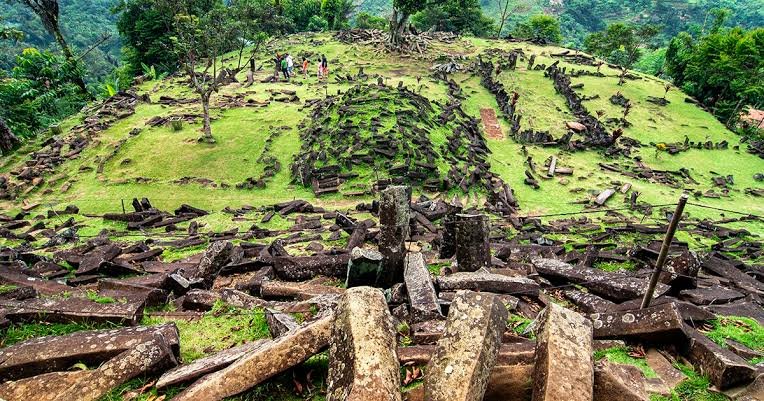
Deep in the lush, terraced highlands of West Java, Indonesia, sits Gunung Padang ("Mountain of Enlightenment"). Crowning the summit of an extinct volcano, this breathtaking archaeological zone is the largest megalithic site in Southeast Asia.

In recent years, Gunung Padang became the center of an explosive global controversy. Pop-culture documentaries and a high-profile 2023 scientific paper claimed that the hill was actually a 27,000-year-old stepped pyramid—built by a lost, advanced Ice Age civilization long before the rise of ancient Egypt or Mesopotamia.

However, science works by testing extraordinary claims against strict evidence. Following an intense international backlash, the scientific journal Archaeological Prospection officially retracted the paper in March 2024. The truth of Gunung Padang does not rely on a lost prehistoric empire, but rather on a brilliant synergy between natural volcanic geology and genuine, highly sophisticated iron-age human engineering.

1. The Anatomy of the 27,000-Year-Old Claim

The sensation surrounding Gunung Padang was driven by an indigenous research team led by geologist Danny Hilman Natawidjaja. Using ground-penetrating radar (GPR), seismic tomography, and core drilling, they proposed that the hill was an engineered pyramid divided into four distinct, subterranean layers:

  • Unit 1 (The Surface): The visible stone terraces, universally accepted to be human-made.

  • Unit 2: A layer a few meters below the surface, claimed to be an arrangement of columnar rocks built around 7,000 BCE.

  • Unit 3: A deeply buried layer containing massive cavities or "hidden chambers," claimed to be artificial masonry dating back to 13,000 BCE.

  • Unit 4: The basalt core at the very bottom, which the team radiocarbon-dated to 25,000 BCE, claiming it was hand-carved by humans during the height of the last Ice Age.

2. The Scientific Pushback: Dating Nearby Dirt

When independent geologists and mainstream archaeologists examined the data, the "world's oldest pyramid" narrative quickly fell apart. The journal's 2024 retraction highlighted a fundamental scientific error: the researchers had mistakenly dated natural volcanic dirt rather than human activity.

The Physics of Columnar Jointing

The entire foundation of Gunung Padang is composed of an extraordinary geological phenomenon known as columnar jointing. When an ancient volcano erupts and its thick basaltic lava cools slowly over time, the stone naturally contracts and fractures into highly geometric, five- or six-sided vertical columns.

To an untrained eye, these neat, interlocking stone pillars look perfectly "carved" or "laid down" by stonemasons. In reality, nature manufactures this precise geometry entirely on its own (a phenomenon also seen at the Giant's Causeway in Ireland).

The Carbon-Dating Error

To prove a structure was built by humans, archaeologists must find organic material—like wood charcoal from a hearth, butchered bones, or tools—directly associated with the building blocks.

The team at Gunung Padang drilled deep into the hill and carbon-dated loose organic soil trapped between the natural volcanic stones. The dates they returned (up to 27,000 years old) were perfectly real, but they simply measured the age of ancient environmental dirt and decomposed plant matter that had naturally filtered down through the rock fractures over millennia. There were no tool marks, no signs of bone or charcoal, and no evidence of human modification in those deep layers. The "chambers" detected by the radar scans were indistinguishable from natural lava tubes and volcanic cavities.

3. The Real Wonder: An Iron Age Masterpiece

Dismantling the 27,000-year-old myth does not make Gunung Padang unremarkable. The genuine archaeological reality of the site is an incredible testament to ancient human devotion and organization.

Around 500 to 200 BCE (the late Bronze to early Iron Age), an ancient Sundanese community climbed to the summit of this extinct volcano. They recognized the spiritual majesty of the landscape and the unique geometry of the natural columnar basalt pillars scattered across the hill.

   [ EXTINCT VOLCANIC SUMMIT ] ──► Natural Columnar Basalt Pillars Exposed
                                              │
                                  (The True Human Effort)
                                              │
                                              ▼
   [ FIVE STEPPED TERRACES ] ◄─── Formed manually to track the stars and Mount Gede

Through massive communal coordination, these ancient builders manually hauled, stacked, and arranged thousands of these multi-ton stone pillars to form five monumental, rising stepped terraces.

They sculpted the natural hill into a grand, open-air terraced sanctuary designed to align directly with neighboring Mount Gede, using the site as a sacred space for ancestor worship, astronomical tracking, and spiritual rituals.

4. Summary of the Gunung Padang Paradox

  • The Sensation: A highly publicized claim that a West Javanese hill was an engineered pyramid dating back 27,000 years, making it the oldest human monument on Earth.

  • The Retraction (2024): Peer-reviewed retraction issued due to a fatal methodology error—the extreme dates belonged to natural, deep-seated environmental soil rather than archeological human strata.

  • The Geological Foundation: High-density, geometric columnar basalt pillars formed entirely by the natural cooling properties of ancient volcanic lava.

  • The Actual Chronology: A highly advanced Iron Age sanctuary (c. 2,500 years old) built by indigenous populations who masterfully manipulated natural stone geometry into a massive terraced holy site.

The controversy of Gunung Padang serves as a powerful cautionary tale for modern science, highlighting the danger of letting national pride or a compelling narrative outpace rigorous data. Yet, stripping away the pseudo-scientific hype exposes an entirely authentic marvel. The true builders of Gunung Padang did not need advanced Ice Age lasers or lost technologies; they simply needed an absolute reverence for their landscape, an advanced understanding of natural geometry, and the collective willpower to transform a rugged volcanic peak into a timeless monument of sacred architecture.

Yonaguni's Sunken Steps: Japan's 10,000-Year-Old Underwater City

June 18, 2026

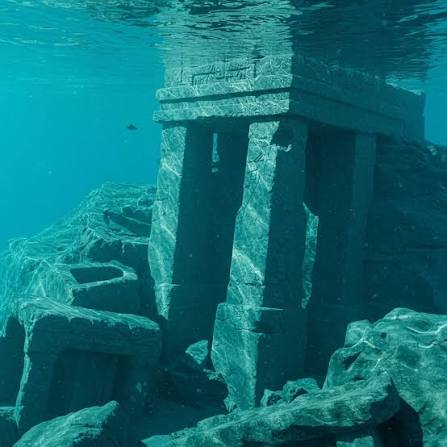
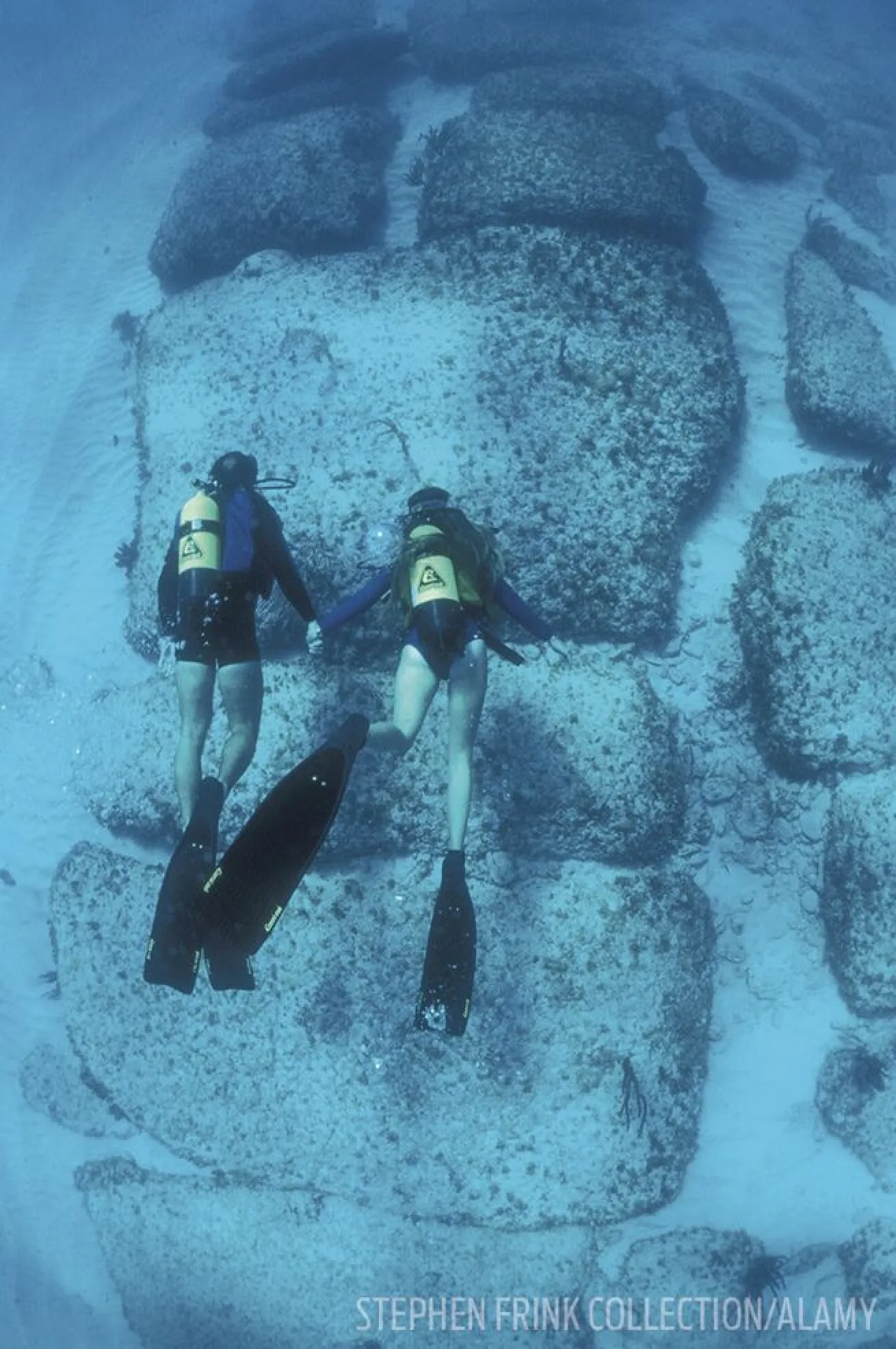
Off the coast of Japan’s southernmost Ryukyu Islands lies the Yonaguni Monument, a massive underwater rock formation that has sparked one of the most polarizing debates in modern marine archaeology. Discovered in 1986 by a local diving instructor looking for hammerhead sharks, this monolithic structure sits roughly 25 meters ($80\text{ feet}$) beneath the waves.

To alternative historians and fringe researchers, Yonaguni is Japan's "Atlantis"—a 10,000-year-old stepped pyramid built by a lost Pacific civilization before being swallowed by rising sea levels at the end of the last Ice Age. However, marine geologists and mainstream archaeologists look at the monument differently. The real story of Yonaguni does not rely on ancient masonry, but rather on a fascinating display of underwater geology, wave energy, and tectonic fracturing.

1. The "Atlantis of Japan" Argument

The theory that Yonaguni is an engineered city was popularized by Masaaki Kimura, a marine geologist at the University of the Ryukyus. Kimura mapped the site and argued that it features several unmistakable hallmarks of human handiwork:

  • The Main Terrace: A massive, tiered structure resembling a stepped pyramid, featuring sharp, 90-degree corners, flat vertical walls, and straight horizontal platforms.

  • The Twin Megaliths: Two massive, upright stone pillars standing side-by-side that appear to have been deliberately carved and erected.

  • The Loop Road: A narrow, flat pathway wrapping around the base of the main structure, which Kimura identified as an ancient stone road.

  • The "Face" Sculpture: A unique section of the rock reef that loosely resembles a stylized human face or a stone idol.

Kimura hypothesized that the structure was carved out of the bedrock during the last glacial maximum (around 10,000 to 12,000 years ago) when sea levels were significantly lower, and was later submerged by catastrophic melting or tectonic shifts.

2. The Geological Reality: Cross-Jointing and Tuff

Despite the seductive allure of a lost underwater city, the overwhelming consensus among international marine geologists—most notably Robert Schoch of Boston University—is that the Yonaguni Monument is a completely natural formation.

The "laser-straight" steps and right angles that look engineered are actually the result of basic structural geology.

The Anatomy of Sandstone and Mudstone

The Yonaguni Monument is composed of Miocene-era sedimentary rocks—primarily thick layers of sandstone interspersed with thin sheets of soft mudstone. When these rock layers were originally deposited millions of years ago, they formed flat, horizontal beds (bedding planes).

Orthogonal Jointing

The Ryukyu island arc sits directly on top of one of the most tectonically volatile regions on Earth, right where the Philippine Sea Plate subducts beneath the Eurasian Plate. Over millennia, continuous, violent earthquakes subjected the Yonaguni sandstone to immense tectonic stress.

When solid sandstone is compressed and twisted by tectonic forces, it does not shatter randomly. Instead, it fractures along clean, parallel lines of stress known as joints. At Yonaguni, the rock fractured along two intersecting sets of parallel joints that meet at almost precise 90-degree angles. This widespread phenomenon is known as orthogonal jointing.

3. Wave Energy and the Architecture of Erosion

Once the rock fractured internally along these perfect, orthogonal grids, nature began to sculpt the "steps" of the monument through a process of selective erosion:

   [ WAVE & HYDROKINETIC FORCE ] ───► Infiltrates Fractured Soft Mudstone Layers
                                                    │
                                      (The Flaking Progression)
                                                    │
   [ VERTICAL GRAVITY PULL ] ────────► Brittle Sandstone Blocks Drop Off Cleanly
                                                    │
                                                    ▼
                             [ PERFECT 90-DEGREE STEPPED TERRACES ]
  1. The Weak Link: Ocean currents and wave energy infiltrated the fractures, systematically grinding away the soft, thin mudstone layers separating the thick sandstone blocks.

  2. The Collapse: Deprived of their supporting mudstone foundations, chunks of brittle sandstone naturally split along their clean, 90-degree joint lines and sheared off completely under the pull of gravity.

  3. The Cleared Terrace: As these massive stone blocks tumbled away down the reef slope, they left behind perfectly crisp, vertical rock faces and flat horizontal steps.

This exact same geological process can be observed above water in various coastal formations around the world, such as the famous Giant's Causeway in Northern Ireland or the Giants' Playground in Taiwan, where nature consistently manufactures seemingly "artificial" geometry.

4. The Missing Hallmarks of Humanity

Mainstream archaeologists point out that if Yonaguni were truly a 10,000-year-old city built by a highly organized, tool-bearing workforce, the site should be littered with the physical garbage of human existence. Yet, extensive diving expeditions have revealed none:

  • No Tool Marks: Unlike Sacsayhuamán or the Lion Gate, where microscopic pitting proves human stone-pounding, Yonaguni's vertical walls are completely free of chisel marks, wedge holes, or hammer scars.

  • No Domestic Debris: Excavators have found zero signs of charcoal hearths, pottery shards, butchered animal bones, or organic refuse anywhere near the monument.

  • Unusable Infrastructure: The "Loop Road" that wraps around the structure is actually a dead-end channel that slopes irregularly, making it functionally useless as a human thoroughfare. Furthermore, many of the "steps" are several feet high, requiring acrobatic climbing rather than normal human walking.

5. Summary of the Yonaguni Controversy

  • The Mythical Premise: A 10,000-year-old submerged stepped pyramid featuring geometric platforms, roads, and monuments carved by a lost prehistoric Pacific dynasty.

  • The Geological Foundation: Natural Miocene sedimentary sandstone layered over mudstone, subjected to extreme tectonic pressures along volatile fault lines.

  • The Structural Mechanics: Fracture lines created by orthogonal jointing, creating pristine 90-degree structural blocks within the rock bed.

  • The Erosive Execution: Wave dynamics and tidal currents hollowed out the soft mudstone, causing the sandstone to split along joint lines and drop off, leaving behind natural terraced stairs.

The Yonaguni Monument stands as a stunning example of nature's capacity to mimic human architecture. While it is disappointing to some that the monument is likely not a lost ancient city, the geological reality is arguably more compelling. It reveals a highly dynamic underwater ecosystem where the raw, crushing power of tectonic plates and the relentless erosion of the Pacific Ocean have conspired to carve a breathtaking stone monolith. Whether viewed as an archaeological mystery or a geological masterpiece, Yonaguni continues to captivate the imagination, serving as a reminder of how beautifully nature can order the world beneath the sea.

Sacsayhuamán: Inca Walls Cut with Laser Precision?

June 18, 2026

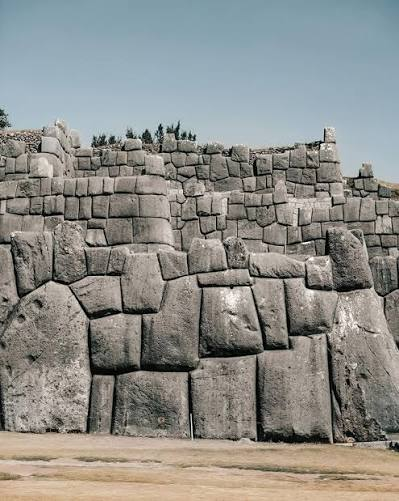
Towering over the northern outskirts of Cusco, Peru, the historic capital of the Inca Empire, sits the monumental fortress-temple complex of Sacsayhuamán (pronounced sack-say-wah-man). Constructed during the 15th century under the direction of the visionary emperor Pachacuti, this architectural wonder features a series of three tiered, zigzagging defensive walls.

In alternative history circles, Sacsayhuamán is frequently cited as definitive proof of lost high technology, ancient astronauts, or "laser cutting." When viewers look at the massive stones—some weighing over 120 tons—fitting together so tightly that a piece of paper cannot be slid between them, it is easy to see why.

However, the reality of how the Inca built Sacsayhuamán does not rely on lasers or extraterrestrials. The true story is far more impressive: a triumph of experimental geology, massive human logistics, and an absolute mastery of stone-on-stone friction mechanics.

1. The Myth of the Laser Cut: Dispelling the Pseudo-Science

The theory that the Inca possessed an advanced thermal or chemical technology capable of melting or laser-cutting solid rock falls apart under geological and physical examination.

  • No Heat Signature: Laser or thermal cutting requires melting rock, which vitrifies the stone's surface into a glossy, volcanic glass-like finish. Microscopic and chemical analyses of the limestone and andesite blocks at Sacsayhuamán show absolutely no signs of thermal alteration or vitrification. The stone retains its native crystalline structure.

  • Tool Marks Exist: When looked at under raking sunlight, the faces and joints of the blocks are not perfectly smooth like machine-sawn slabs. They are covered in thousands of microscopic impact fractures and dimples—the unmistakable physical signature of manual pounding with stone hammers.

2. The Mechanics of Ashlar Masonry: How It Was Actually Done

The Inca achieved their famous, mortarless fit using a highly systematic, labor-intensive process known as Ashlar Masonry or Cyclopean Polygonal Masonry. They did not cut the stones into uniform squares; instead, they allowed the stones to retain their natural, irregular shapes, custom-fitting each block to the contours of the ones around it.

   [ QUARRY INCLINE ] ────► Rough Block Extracted using Bronze Chisels & Wooden Wedges
                                             │
                                 (The Friction Fit Loop)
                                             │
   [ INSTALLATION SITE ] ─► Lower Block with Ropes ──► Pound Joints ──► Lift ──► Repeat
                                             │
                                             ▼
                        [ COMPERFECT INTERLOCKING GEOMETRY ]

The construction sequence relied on a repetitive, brilliant trial-and-error method:

1. Extraction and Transport

Workers quarried the massive limestone blocks from nearby outcrops using bronze levers, wooden wedges soaked in water (which expanded to crack the stone), and heavy stone axes.

They then dragged these multi-ton blocks to the construction site using massive braided grass ropes and wooden rollers. The largest stone at Sacsayhuamán stands over 28 feet tall and weighs an estimated 128 metric tons; moving it required the coordinated muscle power of thousands of draft laborers working under the mit'a (forced state labor tax) system.

2. The Hammer Stone Dressing

The absolute secret weapon of the Inca mason was the hiwaya—a dense, heavy orb of black olivine basalt or hematite sourced from riverbeds. These hammer stones were significantly harder than the limestone they were shaping.

Masons did not swing these hammers blindly; they used a fracturing technique. By systematically dropping or striking the heavy hiwaya against the limestone, they caused the stone to fracture off in small, controlled flakes, slowly sculpting the joint faces.

3. The Copier-Inversion Fitting Loop

To get two multi-ton irregular stones to lock together perfectly, the Inca used a scribe-and-fit technique. A rough block was suspended by ropes over the lower, already-set stones.

Masons would carefully look along the seam, marking the exact high points where the rocks touched. They would then swing the top stone out of the way, use their hammer stones to pound down the high spots on both faces, and lower the top stone back down to check the fit.

This exhausting cycle of lower, mark, lift, pound, and re-test was performed dozens of times for a single block until the two faces matched perfectly across their entire internal surface area.

3. Structural Geopolitics: Built to Survive Earthquakes

Sacsayhuamán’s tight, mortarless, polygonal joints were not born out of pure aesthetic vanity. They were a critical, life-saving structural adaptation designed to combat Peru's violent seismic activity.

The Andes mountains sit directly on top of highly volatile tectonic fault lines. When a major earthquake strikes Cusco, a traditional, rigid European-style brick-and-mortar wall will crack and collapse as the ground shifts.

Inca walls, however, are engineered to dance:

  • Energy Dissipation: Because the stones are mortarless and possess curved, pillow-like faces, they can independently vibrate, slide, and shift against one another during an earthquake, absorbing and dissipating the seismic energy.

  • Self-Centering Geometry: The irregular, interlocking polygonal joints act like puzzle pieces. As the ground shakes, the stones lift slightly, but their unique geometry naturally channels them back down into their original, perfectly locked configurations the moment the tremors stop.

4. Summary of Inca Architectural Paradigms

  • The Material: Rejection of machine-cut uniform shapes; utilization of massive, natural polygonal limestone and andesite blocks custom-fit to one another using hard basalt hammer stones (hiwayas).

  • The Process: A highly repetitive, manual trial-and-error fitting process involving scribing high points, lifting blocks via ropes, pounding down contact spots, and re-testing until achieving complete surface-to-surface friction cohesion.

  • Seismic Design: Engineering walls to be flexible rather than rigid; utilizing mortarless, interlocking joints that shift independently during earthquakes and settle back into position via gravity.

  • Tactical Layout: Arranging the main megalithic walls in a three-tiered, sharp zigzagging configuration to force attackers to expose their unshielded flanks to defenders stationed on the projecting bastions.

Sacsayhuamán stands as a monumental testament to what human organization, patience, and experimental physics can achieve. By completely dispensing with the need for modern lasers or ancient aliens, we expose something far more inspiring: an empire that looked at the raw, volatile chaos of the Andes and developed a structural language that worked with the earth rather than against it. Through the muscle of thousands of workers and the rhythmic strike of river stones, the Inca successfully built a stone fortress so perfectly integrated that time, war, and the violent shaking of the earth have failed to move it a single millimeter.

Nan Madol: Micronesia's Coral Reef Megaliths Defy Logic

June 18, 2026

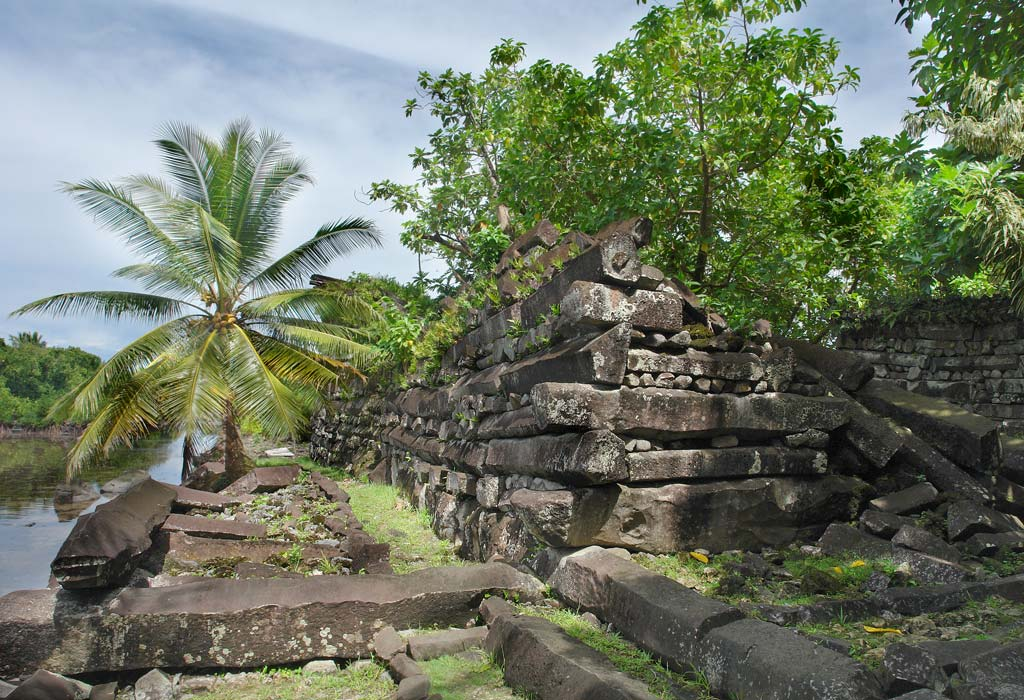
Rising out of the shallow coral lagoons on the eastern coast of the island of Pohnpei, Micronesia, sits Nan Madol. Often dubbed the "Venice of the Pacific," this abandoned archaeological complex is one of the most enigmatic and logistically baffling feats of megalithic architecture in human history.

Constructed entirely on top of a living coral reef, Nan Madol is a sprawling network of 92 artificial islet platforms linked by a maze of tidal canals. Built using hundreds of thousands of tons of naturally formed, hexagonal basalt pillars, this prehistoric city completely challenges our understanding of ancient Pacific seafaring logistics, labor organization, and engineering capability.

1. The Geopolitical Center of the Saudeleur Dynasty

Nan Madol was built to serve as the highly stratified ritual, administrative, and religious capital of the Saudeleur Dynasty, which unified and ruled over the entire island of Pohnpei from roughly 1100 to 1628 CE.

The layout of the city was a masterclass in social engineering and political control. The Saudeleur rulers forced the island's regional chiefs, priests, and elite families to leave their rural territories and live permanently inside the coral city. This served a brilliant tactical purpose: it allowed the central rulers to keep their potential political rivals under constant, close surveillance, preventing provincial rebellions.

The city was strictly segregated into two functional sectors separated by a central waterway:

  • Madol Powe (The Upper Sector): Mortuary and religious islets dedicated to the priesthood, featuring elaborate burial vaults, tombs, and temples to the shark deity, Nahn Samwohl.

  • Madol Pah (The Lower Sector): The administrative core housing the royal palaces of the Saudeleur kings, elite residential complexes, and massive public areas for state banquets.

2. The Logistics Defiance: Moving Volcanic Basalt

The ultimate mystery of Nan Madol rests upon its materials. The city's massive walls are not built out of local coral limestone, but columnar basalt—a heavy volcanic rock that naturally cools into elongated, five- to eight-sided interlocking prismatic pillars.

The engineering challenges associated with these stones defy simple logic:

  • The Distance: There are no volcanic basalt formations anywhere near the coral reef of Nan Madol. The massive pillars had to be quarried from volcanic vents located on the completely opposite, northwestern side of Pohnpei.

  • The Weight: The site contains an estimated 250,000 tons of basalt. Individual structural pillars range from 5 to 20 feet in length, with the heaviest foundation blocks weighing up to 50 tons.

  • The Missing Tools: The ancient Pohnpeians possessed no draft animals, no wheeled carts, no block-and-tackle pulley systems, and no metal tools. They operated entirely within a stone-and-shell technology framework.

According to vibrant Pohnpeian oral histories, the stones were transported to the reef using dark sorcery. The myth states that two twin sorcerers, Olosohpa and Olosihpa, used magic spells to make the gargantuan basalt pillars fly through the air, floating effortlessly across the island to land perfectly in place on top of the reef.

The Maritime Reality

Stripped of myth, modern archaeologists suggest a equally impressive physical feat: maritime transport via specialized bamboo rafts.

   [ BASALT VENTS: NORTHWEST POHNPEI ] ───► Leveled Down via Fire and Water Cracking
                                                   │
                                     (The Raft Transit Logistics)
                                                   │
                                                   ▼
   [ BAMBOO MEGALITH RAFTS ] ────────────► Floated via Ocean Currents Around the Coast
                                                   │
                                                   ▼
   [ CORAL REEF DESTINATION ] ───────────► Rolled up Slanted Palm-Trunk Lever Ramps

Blacksmiths or quarrymen likely used thermal shock—heating the basalt columns with intense fires and quenching them with cold water—to pop the natural joints free. The workers then loaded these multi-ton columns onto massive, multi-layered bamboo outrigger rafts during high tides, floating them down river systems and guiding them along the coastal ocean currents around the island to the shallow eastern reef.

3. Engineering on a Living Reef: The Lincoln-Log Technique

Once the basalt arrived at the eastern lagoon, the Pohnpeians faced an unprecedented architectural challenge: how do you build monumental, permanent stone structures on top of a soft, shifting coral reef constantly battered by ocean tides and waves?

To solve this, they invented a highly specialized underwater masonry technique mimicking a "Lincoln-Log" configuration.

  1. The Coral Foundations: First, workers waded into the shallow water during low tides and laid down massive, wide basalt blocks straight onto the dead coral bedrock to establish a broad, stable footprint.

  2. The Interlocking Framework: Next, they built the walls by systematically alternating the direction of the long basalt pillars. They laid down a parallel row of stones running front-to-back (headers), followed by a perpendicular row running side-to-side (stretchers).

  3. The Core Filling: The hollow square pockets created inside this interlocking wooden-style framework were filled with millions of smaller, broken fragments of coral debris and volcanic gravel, creating a solid, elevated, and well-drained stone platform rising up to 30 feet above the ocean waves.

This design was an engineering triumph. The gaps between the naturally irregular basalt pillars allowed the daily ocean tides to flow harmlessly through the base of the walls rather than crashing against them with full hydraulic force. This prevented the water from building up destructive kinetic pressure, allowing the un-mortared walls to remain structurally stable for centuries.

4. The Megalithic Climax: Nandauwas

The absolute architectural jewel of Nan Madol is Nandauwas, the royal mortuary compound located in the holy upper sector of the city.

Nandauwas features soaring, double-tiered defensive walls rising over 25 feet high, protecting a central courtyard. The main entrance is guarded by a monumental gateway constructed out of some of the longest and straightest basalt pillars at the site, acting as massive stone lintels.

Inside the central courtyard sits a grand, subterranean tomb built out of flat basalt slabs, which served as the final resting place for the Saudeleur kings. The architecture of Nandauwas was engineered to project absolute, terrifying psychological awe; any provincial chief entering this sacred space would be instantly crushed by the sheer physical manifestation of the king’s ability to command human labor.

5. Summary of Nan Madol's Structural Dynamics

  • The Footprint: 92 artificial, hand-built islets constructed directly on top of a shallow coral reef, covering over 18 square kilometers of tidal canals.

  • The Logistics: Transportation of over 250,000 tons of volcanic columnar basalt across the island without draft animals, wheels, or metal tools, utilizing open-ocean bamboo rafting.

  • The Architecture: Utilization of a mortarless, interlocking "Lincoln-Log" technique, alternating basalt headers and stretchers filled with coral gravel to withstand tidal wave currents.

  • The Political Purpose: A centralized, highly monitored fortress city designed to house the elite, using architectural scale as state propaganda to maintain absolute dynasty control.

The collapse of Nan Madol matched the dramatic nature of its construction. Around 1628 CE, an invading warrior named Isokelekel sailed from a neighboring island and overthrew the final, tyrannical Saudeleur king, splitting Pohnpei back into a decentralized system of tribal chiefdoms. Nan Madol was completely abandoned shortly thereafter; without a central, forced labor force to bring fresh water and food from the mainland, the coral city was unlivable.

Today, Nan Madol stands as a haunting, beautiful testament to Pacific Islander engineering. By successfully conquering the boundary between shifting ocean waters and permanent stone monuments, these ancient builders proved that with clear geometric planning and massive communal coordination, human architecture can thrive even where logic dictates it should be completely impossible.

Derinkuyu's Secret Tunnels: Cappadocia's 18-Level Underworld

June 18, 2026

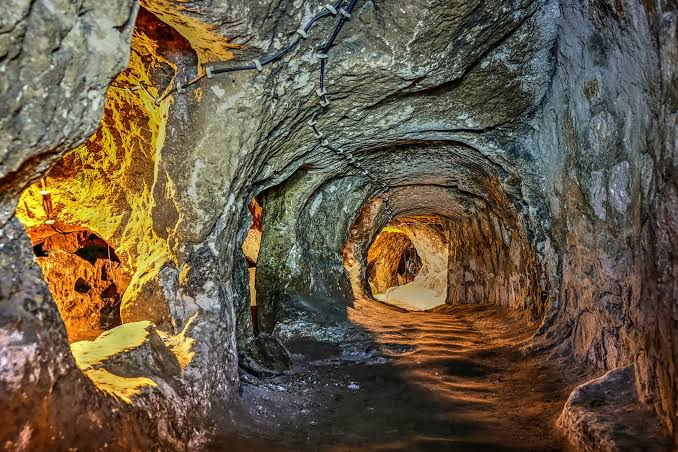
Deep beneath the soft, volcanic landscapes of Cappadocia, Turkey, sits one of the most astonishing engineering marvels of the ancient world: Derinkuyu (originally known as Elengubu). Plunging approximately 85 meters ($280\text{ feet}$) into the earth, this subterranean metropolis features a staggering 18 levels of hand-carved tunnels, living quarters, and municipal infrastructure.

Far from a simple, primitive cave network, Derinkuyu was designed as a highly sophisticated, fully functioning city capable of sheltering up to 20,000 people, along with their livestock and food supplies, completely cut off from the surface world.

1. The Accidental Rediscovery

For centuries, the full scale of Derinkuyu was completely forgotten by the modern world. Its re-emergence in 1963 reads like a work of fiction.

A local homeowner in Nevşehir Province was renovating his stone house and noticed that his chickens kept mysteriously disappearing through a small hairline fracture in his basement wall. Deciding to investigate, he knocked down the masonry wall with a sledgehammer. Behind it, he exposed a dark, hand-hewn stone passage that sloped steeply down into a pitch-black abyss.

He had accidentally reopened the gateway to an ancient underworld that had been sealed shut and abandoned for decades.

2. The Geology of Survival: Carving Pyroclastic Tuff

How did ancient builders excavate an 18-story city without modern steel drills or explosives? The answer lies in Cappadocia’s unique volcanic geology.

Millions of years ago, intense volcanic eruptions blanketed the region in thick layers of ash, which compressed over time into a rock formation known as pyroclastic tuff.

  • The Sieve Effect: When this soft, porous rock is first exposed to air or dampness, it is remarkably pliable and can be hollowed out using simple tools like copper, bronze, or iron picks.

  • The Hardening Process: Remarkably, once the interior stone dries and cures upon exposure to oxygen, it undergoes a chemical stabilizing process. It hardens into a highly durable, self-supporting structure.

The ancient engineers possessed an advanced grasp of static forces; they left behind massive, perfectly balanced rock pillars on every tier to support the unfathomable weight of the earth pressing down from above, preventing catastrophic cave-ins across all 18 levels.

3. Subterranean Urban Architecture

Derinkuyu was not a temporary emergency trench; it was custom-built to sustain organized, daily community life for months at a time during prolonged military sieges or religious persecutions. The levels were organized with strict spatial logic:

  • Levels 1–2 (The Upper Tier): These floors housed vast stables for cattle, horses, and goats. Keeping the livestock near the top minimized the spread of foul odors, made waste disposal easier, and allowed for efficient feeding via surface access points. These levels also featured large communal wine and oil presses, complete with stone troughs and drainage basins.

  • Levels 3–4 (The Living and Educational Core): These tiers contained tightly packed networks of family living quarters, sleeping chambers, and massive storage cellars filled with grain jars. This layer also features a unique, spacious hall topped with a beautifully carved barrel-vaulted ceiling, which archaeologists have identified as a religious school and theological study center.

  • Levels 5–8 and Deeper (The Sacred and Critical Infrastructure): Winding, narrow staircases led down to the deep interior of the complex. The lower floors housed communal meeting refectories, burial chambers, and a grand cruciform Christian chapel carved directly into the rock on the fifth level.

4. Masterclass Engineering: Air, Water, and Defense

To keep 20,000 people alive without electricity, sunlight, or plumbing, Derinkuyu’s builders engineered radical solutions to three existential problems: ventilation, water access, and military defense.

The Self-Propelled Ventilation Network

Human life requires an immense, continuous volume of oxygen. To ventilate the dark corridors, engineers cut more than 50 massive, vertical ventilation shafts extending all the way from the surface down to the deepest chambers.

   [ COLD SURFACE AIR ] ───► Sinks Down Primary 55-Meter Ventilation Shafts
                                                │
                                   (Natural Thermal Siphon)
                                                │
   [ EXHAUST & HEAT ] ◄──── Rises Up and Out Narrow Secondary Air Vent Ducts

By taking advantage of the natural thermal temperature differences between the chilly subterranean air and the warm surface air, they created a self-propelled air-conditioning siphon. Fresh air constantly rushed down the main shafts and circulated laterally through thousands of interconnected horizontal duct pipes, keeping even the lowest levels dry and fully oxygenated.

The Secured Water Tables

The main ventilation shafts pulled double duty as deep water wells. Crucially, the bottom of these wells tapped into deep underground water tables that were entirely separate from the surface water supply. This design protected the hidden population from an invading army’s primary weapon: poisoning or cutting off the city’s water.

Furthermore, the wells could only be accessed from the inside; the bottom sections lacked openings to the topmost floors, preventing enemies on the surface from dropping poison down the shafts.

The Rolling Stone Blast Doors

Derinkuyu was structurally designed to be a fortress of absolute containment. The corridors connecting the individual levels were carved exceptionally narrow and low, forcing any invading soldiers to march in a slow, single-file line while hunched over—making them completely vulnerable to defensive ambushes.

At critical checkpoints, the tunnels were fitted with massive, circular stone wheel doors weighing up to 1,000 pounds ($450\text{ kg}$). These doors sat inside deep wall niches.

  • One-Way Mechanics: Using leverage pockets, defenders on the inside could quickly roll the massive stone disc across the tunnel, completely locking it.

  • The Center Port: The center of each stone wheel featured a small, carved hole. This served a dual purpose: it acted as a viewing porthole to spy on the tunnel, and a defensive firing port through which spears or arrows could be shot at invaders attempting to breach the door. The wheel doors could only be opened from the inside, turning each level into an independent, impregnable bunker.

5. Summary of Subterranean System Dynamics

  • The Architecture: An 18-level urban complex extending 85 meters down, built to fully sustain 20,000 inhabitants and their animals through a grid of stables, kitchens, and schools.

  • The Engineering: Mastery of self-supporting volcanic tuff rock physics, utilizing heavy stone columns to distribute massive upper-crust weight loads.

  • The Life Support: A network of 50+ thermal ventilation shafts drawing clean oxygen deep into the earth, coupled with secure, non-accessible surface wells to combat water poisoning.

  • The Defenses: Intentionally low, single-file choke-point corridors secured by 1,000-pound, one-way rolling stone wheel doors equipped with central weapon ports.

The absolute origins of Derinkuyu remain a subject of fierce archaeological debate. Some scholars suggest the earliest excavations began with the Hittites around 1600 BCE, while others attribute the expansion to the Phrygians in the 8th century BCE. What is completely certain is that the city reached its fully formed, architectural apex during the Byzantine Era (c. 5th–10th centuries CE), when early Christians expanded the grid into a massive, secure sanctuary to survive the Arab-Byzantine wars.

Derinkuyu stands as an incredible testament to human resilience—a monument proving that when faced with overwhelming threats from the horizon, ancient humanity possessed the engineering brilliance to move an entire civilization beneath the stone, carving out an entire world in the dark.

Göbekli Tepe's Hidden Carvings: 2026 Laser Scans Reveal Shamans

June 18, 2026

The ongoing archaeological revolution across the Taş Tepeler (Stone Mounds) region in southeastern Turkey—anchored by Göbekli Tepe and its sister site Karahan Tepe—has entered an entirely new era. Recent fieldwork leveraging advanced 3D laser scanning, geophysical surveys, and digital modeling has profoundly altered our understanding of the world's oldest monumental enclosures.

Rather than uncovering a sudden "2026 revelation" of distinct shaman figures via laser scans, the reality of recent discoveries is far more fascinating. Advanced spatial scanning and targeted excavations have yielded pristine, tangible evidence of life-size human imagery, abstract self-expression, and complex ritual architecture dating back 12,000 years.

1. 3D Laser Scanning and the Spatial Blueprint

Recent geological and geophysical surveys across Göbekli Tepe’s 20-acre artificial mound have confirmed that what we see today is only the tip of an immense prehistoric iceberg.

Researchers have mapped at least 15 more mega-monumental temples and over 200 buried standing stones still waiting beneath the soil. When archaeologists fed precise 3D laser scan data of the existing enclosures into spatial analysis models, the results dismantled the old theory that these massive stones were arranged randomly by primitive hunter-gatherers.

The digital data reveals highly sophisticated layouts with exact geometric proportions, uniform wall thickness, and premeditated architectural axes. This proves that long before the invention of writing or metal tools, humanity possessed an advanced grasp of geometry, structural engineering, and spatial planning.

2. Breaking the "T-Shape" Barrier: The Discovery of Human Faces

For decades, the defining feature of Göbekli Tepe has been its massive, monolithic T-shaped pillars. While scholars long hypothesized that these pillars were highly abstract, stylized representations of the human form—noting the faint carvings of arms, hands, and loincloths on their sides—they noticeably lacked distinct human heads or faces.

Recent discoveries at neighboring Karahan Tepe (part of the same 12,000-year-old cultural complex) have completely filled this missing link.

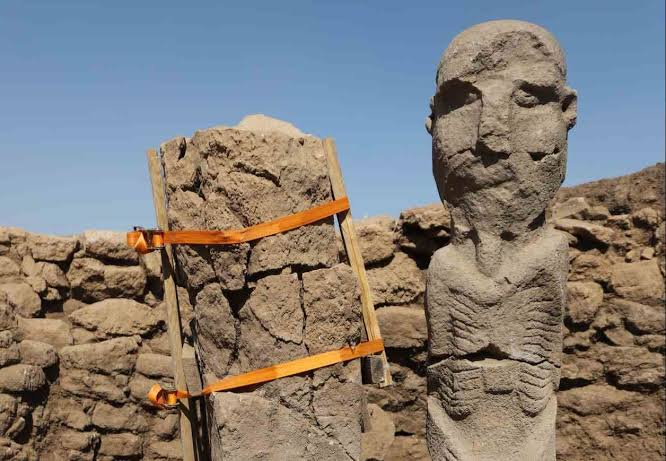
Excavators unearthed a 135 cm-tall standing stone featuring an incredibly detailed human face. Staring out with deep-set eyes, a prominent nose, and a sharp, angular jawline, this find marks the very first time a literal human face has been found integrated directly onto a monumental pillar within the Taş Tepeler network. It serves as undeniable material proof that these ancient stone complexes were built around the explicit symbolic representation of humans, ancestors, or spiritual leaders.

3. The Enigmatic Votive Statues

At Göbekli Tepe itself, newly uncovered artifacts are shedding direct light on the site's intense ceremonial life. During recent excavations, archaeologists discovered a life-size human statue deliberately embedded into a stone wall between Structures B and D.

    [ STONE WALL MASONRY ] ◄─── (Deliberate Architectural Inset) ───► [ HUMAN SCULPTURE ]
                                               │
                                     (Ritual Purpose)
                                               │
                                               ▼
                              [ Votive Offering / Commemoration ]

The sculpture was mounted horizontally directly inside the structural framework of the chamber. Because it was integrated straight into the wall's architecture rather than standing freely, researchers evaluate it as a votive offering—a permanent, physical token left behind to sanctify the structure, commemorate a profound ritual, or honor a revered spiritual guardian of the community.

4. Summary of the Latest Prehistoric Insights

  • The Scale: Geophysical scanning has confirmed the existence of over 15 undiscovered mega-structures and hundreds of standing pillars still buried across the plateau.

  • The Geometry: 3D digital scans reveal highly precise, calculated mathematical proportions across the layout of the stone circles, pointing to a sophisticated understanding of prehistoric engineering blueprints.

  • The Iconography: The discovery of an explicit human face carved onto a monolith at Karahan Tepe confirms that the anonymous T-shaped pillars were designed as grand symbolic representations of the human form.

  • The Rituals: The unearthing of an intact human statue embedded horizontally inside a Göbekli Tepe wall points to a complex system of architectural offerings and spiritual dedication.

The ongoing work across these ancient plateaus proves that the transition from nomadic hunter-gatherers to settled, highly organized societies was driven by a deep obsession with symbolic thought, monumental craftsmanship, and spiritual architecture. As digital scanning continues to look through the soil and expose the pristine geometry of these 12,000-year-old sanctuaries, the lines separating primitive ancient humans from advanced builders continue to blur, revealing a world of profound artistic clarity at the very dawn of human civilization.

The Mycenaean Civilization: The Architecture of the Lion Ga

June 16, 2026

The Mycenaean civilization (c. 1600–1100 BCE) represented the aggressive, militaristic Bronze Age society of mainland Greece immortalized in Homer’s Iliad. Unlike the peaceful, unfortified maritime palaces of the Minoans on Crete, Mycenaean cities were heavily fortified strongholds built atop high, rocky citadels.

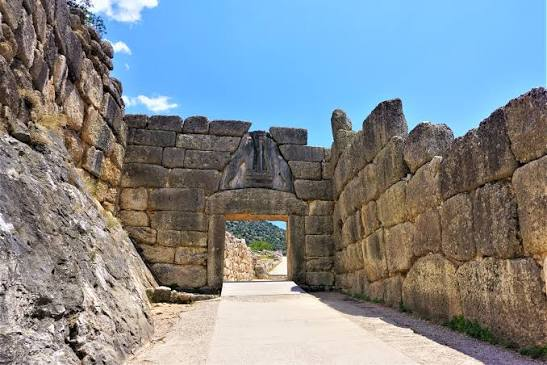
The absolute pinnacle of this defensive architecture is the Lion Gate, the monumental main entrance to the citadel of Mycenae. Constructed around 1250 BCE during a massive expansion of the city's fortification walls, the Lion Gate is not just a masterpiece of structural engineering; it is the oldest piece of monumental relief sculpture in Europe and a sophisticated monument of royal propaganda.

1. Cyclopean Masonry: The Walls of Giants

To understand the engineering of the Lion Gate, one must first look at the gargantuan fortification walls that flank it. The Mycenaeans built their citadels using a technique known as Cyclopean Masonry.

The walls were constructed using massive, naturally shaped limestone boulders, some weighing over 20 tons, stacked roughly on top of one another with smaller limestone chunks and clay mortar filling the gaps. The architecture was so impossibly vast that when classical Greeks looked at the ruins centuries later, they refused to believe human beings could have built them. They concluded that Agamemnon’s walls must have been constructed by the Cyclopes, the mythical one-eyed giants of Homeric legend.

2. The Mechanics of the Gate: The Relieving Triangle

The Lion Gate itself faced a massive structural problem. The lintel stone—the horizontal block resting on top of the two vertical doorposts—is a colossal piece of breccia limestone weighing roughly 20 tons. If the heavy Cyclopean wall blocks had been stacked directly on top of this lintel, the sheer downward force would have snapped the stone in half, collapsing the entire gateway.

To solve this weight crisis, Mycenaean engineers invented a brilliant structural device known as the Relieving Triangle.

                 /\
                /  \   ◄──── [ RELIEVING TRIANGLE ]
               /____\        Lightweight limestone relief slab
              ────────        diverts weight outward to the posts.
             │        │
             │        │ ◄──── [ MONUMENTAL LINTEL ]
             │        │        A 20-ton horizontal stone block
             │        │
      ───────┴────────┴───────
     │                        │
     │   [ VERTICAL POSTS ]   │ ◄── Transmit weight down to bedrock
     │                        │

Instead of running the heavy wall blocks straight across, the builders corbelled the stones above the lintel. Each successive layer of wall stone was nudged slightly inward, creating a hollow, inverted "V" shape directly over the gateway.

This triangular gap completely relieved the lintel of the wall's downward weight, shifting the massive structural load outward and pushing it safely down into the vertical jambs and the bedrock below.

3. Iconography: The Power of the Guardians

To fill the hollow space created by the relieving triangle, the Mycenaeans inserted a triangular slab of relatively soft, lightweight grey limestone. Carved directly into this slab is the famous Lion Relief, a powerful emblem of the Mycenaean royal house.

The relief features a highly sophisticated, heraldic composition that reflects deep artistic influences from both the Near East and Minoan Crete:

  • The Central Column: At the center of the relief stands a single Minoan-style column that flares upward, resting on two sacrificial altars. This column represents the architectural heart of the palace—the king’s megaron—and serves as a symbol of the divine protection of the state.

  • The Heraldic Lions: Flanking the column are two powerful lions (or potentially lionesses), standing in a heraldic pose with their front paws resting on the altars. Their bodies are caught in a tense, muscular profile, acting as divine guardians of the palace.

  • The Missing Heads: Visitors today will notice that the lions lack heads. The heads were originally carved separately out of a different material—potentially steatite, bronze, or a contrasting stone—and attached to the bodies using peg holes that are still visible. These heads faced forward, staring directly down at anyone approaching the gate to intimidate enemies and welcome allies.

4. Tactical Design: The Bastion Trap

The Lion Gate was not just built to look beautiful; it was a highly functional, brutal defensive weapon designed to survive a prolonged military siege.

An attacking army could not simply march up to the gate in a straight line. The Mycenaeans built a massive, projecting stone bastion on the right side of the gateway. To reach the doors, an invading army had to channel down a narrow, enclosed stone corridor.

As the attackers rushed forward, this layout forced them to expose their right sides—the side not protected by their handheld shields—to the Mycenaean defenders stationed high above on top of the bastion wall. The approach path was effectively a lethal kill-zone where attackers were bombarded with arrows, spears, and massive boulders from above before they could even touch the heavy wooden doors.

5. Summary of Mycenaean Structural Paradigms

  • Wall Construction: Utilization of massive, unworked limestone blocks stacked to form thick defensive parameters, later romanticized as "Cyclopean" architecture.

  • Structural Engineering: Invention of the corbelled Relieving Triangle to divert thousands of pounds of downward masonry weight away from the horizontal lintel stone.

  • Architectural Semiotics: Placing a lightweight, highly symbolic relief panel inside the structural triangle to visually broadcast the authority, divine protection, and martial power of the ruling dynasty.

  • Strategic Fortification: Engineering the gateway approach as a narrow flanking corridor (bastion trap) designed to systematically weaponize the vulnerability of an attacker’s shield placement.

The Lion Gate of Mycenae stands as a brilliant architectural bridge between early Bronze Age engineering and the evolution of European sculpture. By seamlessly merging the raw, defensive muscle of Cyclopean masonry with the delicate mathematical physics of the relieving triangle and the artistic sophistication of heraldic sculpture, the master builders of Mycenae created a timeless gateway. For over three thousand years, its stone guardians have stood watch over the ruins of the citadel, serving as an enduring monument to an era when architecture was forged out of an absolute obsession with strength, security, and imperial pride.

Roman Mosaics in Cyprus: The House of Dionysos in Paphos

June 16, 2026

The coastal city of Paphos, located on the southwest coast of Cyprus, was the glittering capital of the island during the Roman period. While the city was home to grand temples, theaters, and administrative palaces, its most spectacular archaeological legacy lies beneath its floors.

Discovered accidentally by a farmer plowing his field in 1962, the House of Dionysos is a sprawling, 2,000-square-meter Roman villa dating from the late 2nd century CE. The villa represents the absolute pinnacle of ancient Mediterranean floor mosaics. Through these intricate stone masterpieces, wealthy Greco-Roman aristocrats transformed their floors into a dynamic canvas of mythological storytelling, theatrical illusion, and political propaganda.

1. The Engineering of Opus Tessellatum

The breathtaking preservation of the Paphos mosaics is a triumph of ancient material engineering. The artists did not use paint or dyes; instead, they utilized a technique known as Opus Tessellatum, constructing images out of thousands of tiny, hand-cut stone cubes called tesserae.

To ensure these floors could withstand centuries of foot traffic and minor earthquakes without cracking or shifting, Roman craftsmen laid down a highly specialized, multi-tiered foundation system:

  1. The Statumen: A baseline layer of large, fist-sized rocks and stones packed tightly into the dirt to provide structural drainage and prevent shifting.

  2. The Rudus: A thick layer of rough concrete made of broken stones and lime mortar, rammed down to form a flat, solid foundation.

  3. The Nucleus: A fine, smoothed layer of mortar containing crushed brick and pottery shards, which absorbed moisture and provided a pristine, level surface.

  4. The Supranucleus (Setting Bed): A final, thin skin of wet lime and marble-dust putty. While this layer was still damp, master artists sketched out their designs (sinopia) and systematically pressed the colored tesserae directly into the cement.

To capture subtle human expressions, muscular anatomy, and the soft textures of animal fur, the Paphos workshops utilized exceptionally tiny tesserae, often measuring only a few millimeters across. They relied primarily on the natural, vibrant geology of Cyprus—using local red, yellow, and white limestone, green and brown jasper, and black manganese shale, occasionally supplementing the palette with bright blue glass paste for a luminous effect.

2. Iconography: The Power and Triumph of Dionysos

The villa is named after the god of wine, theater, and ecstasy, Dionysos, who dominates the home’s central reception rooms. To a wealthy Roman living in Cyprus, decorating a home with Dionysian imagery was an essential social statement. Dionysos was a god of luxury, civilization, and the bountiful earth—qualities the villa owner wished to project onto their guests during lavish banquets.

The Triumph of Dionysos

The artistic centerpiece of the villa is a massive, four-panel mosaic mapping the mythical life of the wine god. The most famous panel illustrates the Triumph of Dionysos, celebrating his return from a legendary conquest of India.

Dionysos sits majestically in a two-wheeled chariot drawn by two fierce panthers. He wears a crown of ivy leaves and holds the thyrsus (a pine-cone topped staff of divine power). Surrounding his chariot is a chaotic, celebratory entourage: Pan, the goat-legged god of the wild; Silenus, Dionysos’s elderly, intoxicated tutor riding a donkey; and a host of ecstatic maenads holding musical instruments. The mosaic beautifully captures a sense of joyful, spinning movement through the fluid arrangement of the colored stones.

The Myth of Icarius: The Warning of Wine

In an adjacent room used for formal dining (triclinium), a highly narrative mosaic tells a darker story regarding the power of wine: the tragedy of Icarius.

According to myth, Dionysos visited earth and taught the Athenian farmer Icarius the secret art of viticulture and winemaking. Excited by this divine gift, Icarius loaded a cart with wine skins and went out to share it with local shepherds.

The mosaic captures the exact moment of impending doom. It depicts Icarius leading his ox-cart, while next to him, two shepherds are slumped on the ground in a state of heavy intoxication. Above the shepherds, a Greek inscription reads "Oi Protoi Oinon Piontes" ("The First Wine Drinkers").

The shepherds, having never experienced alcohol before, mistakenly believed that Icarius had poisoned them or cast a demonic spell. The myth concludes with the shepherds brutally murdering Icarius—serving as a moral warning to the villa's dining guests to enjoy the host's wine with sophistication and self-control.

3. Geometric Illusions and Space Optic Manipulations

While the narrative mythological scenes captured the human imagination, the corridors and courtyards of the House of Dionysos were wrapped in brilliant geometric mosaics. These patterns demonstrate a highly sophisticated understanding of optical mathematics and visual perspective.

Using contrasting light and dark stones, the artists constructed complex patterns of interlocking swastika meanders, braided borders (guilloche), step-triangles, and multi-colored stars.

When a guest walked down the long colonnaded porticos surrounding the villa's central open-air courtyard (atrium), these geometric patterns created an advanced 3D optical illusion. The flat stone floor appeared to ripple, drop down into deep boxes, or rise up in relief carvings. This visual trickery expanded the perception of space, making the hallways feel infinitely wider and more dynamic under the shifting sunlight.

4. Summary of Mosaic Paradigms

  • Structural Integrity: Multi-layered engineering foundations using a graduated stone and mortar sequence (statumen, rudus, nucleus) capped by a setting bed of lime and marble dust to lock in the tesserae permanently.

  • Material Palette: Heavy reliance on the natural, vibrant mineral geology of Cyprus (limestone, jasper, shale) combined with manufactured glass paste to generate a highly nuanced range of colors.

  • Thematic Identity: Dominance of Dionysian narratives serving as a elite symbol of aristocratic hospitality, wealth, and moral balance during Roman banquets.

  • Visual Mechanics: Utilization of geometric 3D optical patterns along walkways to trick human depth perception and intellectually engage visitors as they moved through the architectural layout.

The mosaics of the House of Dionysos in Paphos stand as a monumental bridge connecting the artistic styles of the Hellenistic Greek East with the engineering precision of the Roman West. By transforming the utilitarian surface of a floor into a highly refined theatrical stage, the master craftsmen of Cyprus proved that stone could be manipulated to mimic the softness of flesh, the wildness of an animal, or the dizzying depth of a geometric void. More than 1,800 years later, these pristine floors continue to perform their original function, inviting modern eyes to step directly into the luxurious world of the ancient Mediterranean.

The Viking Age Settlements in the British Isles: The Kingdom of York

June 16, 2026

The Viking Age permanently reshaped the geopolitical landscape of the British Isles, transforming fragmented Anglo-Saxon kingdoms into a dynamic zone of Scandinavian colonization, trade, and cultural synthesis. While Norse raiders originally targeted isolated monasteries for quick plunder, by the late 9th century, their strategy shifted toward permanent territorial conquest.

The crown jewel of this Scandinavian expansion was the Viking Kingdom of York (known to the Norse as Jórvík). Established in 866 CE by the Great Heathen Army, this urban enclave evolved from a conquered Anglo-Saxon capital into an international mercantile powerhouse, bridging the economies of the North Sea with the deep interiors of the European continent.

1. The Fall of Eoforwic: The Dawn of Jórvík

Before the arrival of the Scandinavians, the city was known as Eoforwic, the capital of the Anglo-Saxon Kingdom of Northumbria. It was an important ecclesiastical center, home to a grand minster and a prosperous trading settlement.

In November 866 CE, the Great Heathen Army, led by the legendary Viking chieftains Ivar the Boneless and Halfdan Ragnarsson, launched a brilliant tactical assault on the city. They capitalized on a bitter civil war dividing the Northumbrian elite.

The Vikings easily breached the city's aging, neglected Roman stone walls on All Saints' Day. When the rival Northumbrian kings united the following spring to retake the city, the Vikings trapped them inside the fortifications, slaughtering both kings and decisively dismantling Anglo-Saxon rule in the north.

Rather than burning the city to the ground, Halfdan partitioned the surrounding Northumbrian lands among his veteran warriors in 876 CE. They laid down their swords, picked up plows, and established a permanent Scandinavian royal dynasty centered at York.

2. Urban Infrastructure and the Coppergate Discoveries

For over a thousand years, our understanding of Viking York was limited to hostile Anglo-Saxon monastic chronicles that painted the Norse inhabitants as dirty, illiterate raiders. This historical bias was shattered between 1976 and 1981 by the monumental excavations conducted by the York Archaeological Trust at the Coppergate site.

Because the waterlogged, oxygen-free soil along the River Foss perfectly preserved organic materials, archaeologists uncovered an intact, highly sophisticated 10th-century Viking neighborhood.

The Architecture of the Wattle and Daub

The Coppergate excavations revealed that Jórvík was a dense, bustling metropolis laid out along a highly structured grid system. The streets were lined with long, narrow plots packed with timber-framed tenement buildings:

  • The Materials: Houses were built using oak posts with walls made of interwoven hazel branches (wattle) packed with a mixture of clay, straw, and animal dung (daub). Some later structures featured sunken, semi-subterranean cellars designed to maximize storage space.

  • The Layout: Each building functioned as a combined family home, retail storefront, and industrial workshop. Fireplaces cut into the dirt floors provided heat and light, while the roofs were thatched with local reeds or straw.

3. An International Mercantile Powerhouse

The Coppergate discoveries proved that Jórvík was not a primitive fortress, but one of the premier international trade hubs of Western Europe. The city's geographic position—situated at the confluence of the rivers Ouse and Foss—allowed deep-sea Viking longships to sail directly from the North Sea into the heart of the city.

The workshops of York hummed with specialized mass production, manufacturing goods that were exported across the global Viking trade network:

  • Metalworking and Coinage: York operated its own highly active mint. Viking kings, despite being pagan, quickly adapted to the local monetary economy, striking millions of silver coins that featured a fascinating blend of Christian crosses and pagan symbols, such as the hammer of Thor.

  • Textiles and Leatherwork: Scholars discovered thousands of discarded leather shoes, sophisticated bone skates, and wooden textiles, proving the existence of highly organized cobbler and weaving guilds.

  • The Global Import Network: The soil of Coppergate yielded exotic items that traveled thousands of miles across the Viking world. Archaeologists recovered silk from the Byzantine Empire, amber from the Baltic Sea, walrus ivory from Greenland, cowrie shells from the Indian Ocean, and jet jewelry from nearby Whitby.

4. The Geopolitical Seesaw: The Dublin-York Axis

The political history of the Kingdom of York was exceptionally volatile, characterized by a constant, violent tug-of-war between Norse kings, Anglo-Saxon monarchs trying to unify England, and rival Celtic kingdoms.

The most fascinating political dynamic was the Dublin-York Axis. In the early 10th century, a powerful Viking dynasty known as the Uí Ímair (the House of Ivar) ruled simultaneously over the Viking Kingdom of Dublin in Ireland and the Kingdom of York in England.

  [ VIKING DUBLIN ] ◄─────── (The Uí Ímair Dynasty) ───────► [ VIKING YORK ]
         │                                                           │
   (Irish Sea Trade)                                          (North Sea Trade)
         └───────────────────────────┬───────────────────────────────┘
                                     ▼
                    [ Anglo-Saxon Military Resistance ]
                        (Kings Athelstan & Eadred)

Viking warlords like Ragnall ua Ímair and Sitric Cáech marched armies across the Pennine mountains, attempting to unify the Irish Sea and North Sea trade networks into a single, massive Scandinavian empire.

This Norse ambition faced fierce resistance from the expanding Anglo-Saxon Kingdom of Wessex. In 927 CE, the West Saxon King Athelstan launched a lightning invasion, captured York, and received the submission of the Northumbrians, effectively uniting England under an Anglo-Saxon crown for the very first time. However, the moment Athelstan died, the Norsemen of Dublin immediately sailed back across the sea to reclaim their York throne.

5. The End of an Era: Eric Bloodaxe

The final chapter of independent Viking York was written by one of the most infamous characters of the Viking Age: Eric Bloodaxe (Eiríkr Blóðöx), the deposed King of Norway.

Eric was invited by the fiercely independent Northumbrian nobility to rule York in 947 CE, serving as a powerful military buffer against the southern Anglo-Saxon kings. His reign was a chaotic period of shifting alliances, betrayals, and urban warfare.

In 954 CE, facing an overwhelming invasion threat from the West Saxon King Eadred, the people of York finally expelled Eric Bloodaxe to save their city from destruction. Shortly after leaving the city, Eric was ambushed and killed at the desolate mountain pass of Stainmore. With his death, the independent independent Viking Kingdom of York dissolved permanently, and the city was fully integrated into the unified Kingdom of England.

6. Summary of Settlement Dynamics

  • The Conquest (866 CE): Launched by the Great Heathen Army under Ivar the Boneless, capitalizing on Northumbrian instability to convert an Anglo-Saxon ecclesiastical center into a Scandinavian royal seat.

  • Urban Form: Densely populated, highly organized wattle-and-daub tenement neighborhoods (evidenced by the Coppergate excavations) functioning as active live-work craft spaces.

  • Economic Footprint: An international trade powerhouse operating a sovereign silver mint, importing luxury goods from Byzantium and the Baltic while exporting specialized mass-produced tools, textiles, and leatherwork.

  • The Collapse (954 CE): Decades of geopolitical swinging along the Dublin-York Axis concluded when the city expelled its final Norse king, Eric Bloodaxe, permanently consolidating York into the medieval Kingdom of England.

The legacy of Viking Jórvík is woven directly into the physical and cultural fabric of modern York. While independent Norse rule ended in 954 CE, the Scandinavians did not leave. They intermarried with the local Anglo-Saxon population, creating a unique Anglo-Scandinavian dialect and culture.

Every time a modern visitor walks down streets ending in the Norse suffix "-gate" (derived from the Old Norse gata, meaning street)—such as Coppergate, Stonegate, or Walmgate—or looks at the deeply layered archaeological horizons beneath the city's foundations, they are stepping directly into the footprint of an era when Viking longships transformed a provincial English town into a bustling center of global trade.

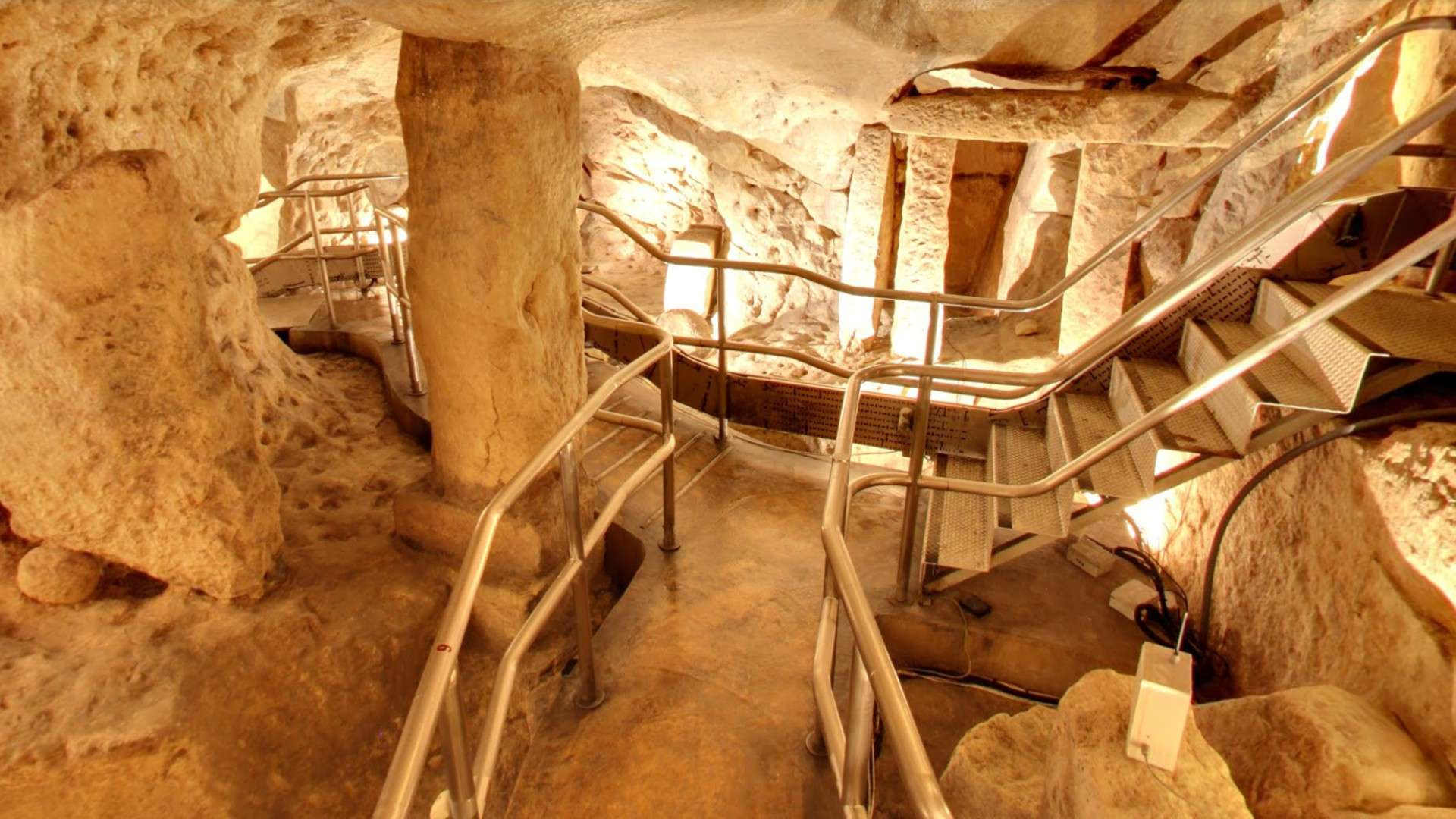
Would you like to explore the unique layout of the Anglo-Scandinavian legal system, the Danelaw, which governed this region, or look closer into the specific diets and parasites discovered by bioarchaeologists analyzing the CoppergaThe Viking Age permanently reshaped the geopolitical landscape of the British Isles, transforming fragmented Anglo-Saxon kingdoms into a dynamic zone of Scandinavian colonization, trade, and cultural synthesis. While Norse raiders originally targeted isolated monasteries for quick plunder, by the late 9th century, their strategy shifted toward permanent territorial conquest.

The crown jewel of this Scandinavian expansion was the Viking Kingdom of York (known to the Norse as Jórvík). Established in 866 CE by the Great Heathen Army, this urban enclave evolved from a conquered Anglo-Saxon capital into an international mercantile powerhouse, bridging the economies of the North Sea with the deep interiors of the European continent.

1. The Fall of Eoforwic: The Dawn of Jórvík

Before the arrival of the Scandinavians, the city was known as Eoforwic, the capital of the Anglo-Saxon Kingdom of Northumbria. It was an important ecclesiastical center, home to a grand minster and a prosperous trading settlement.

In November 866 CE, the Great Heathen Army, led by the legendary Viking chieftains Ivar the Boneless and Halfdan Ragnarsson, launched a brilliant tactical assault on the city. They capitalized on a bitter civil war dividing the Northumbrian elite.

The Vikings easily breached the city's aging, neglected Roman stone walls on All Saints' Day. When the rival Northumbrian kings united the following spring to retake the city, the Vikings trapped them inside the fortifications, slaughtering both kings and decisively dismantling Anglo-Saxon rule in the north.

Rather than burning the city to the ground, Halfdan partitioned the surrounding Northumbrian lands among his veteran warriors in 876 CE. They laid down their swords, picked up plows, and established a permanent Scandinavian royal dynasty centered at York.

2. Urban Infrastructure and the Coppergate Discoveries

For over a thousand years, our understanding of Viking York was limited to hostile Anglo-Saxon monastic chronicles that painted the Norse inhabitants as dirty, illiterate raiders. This historical bias was shattered between 1976 and 1981 by the monumental excavations conducted by the York Archaeological Trust at the Coppergate site.

Because the waterlogged, oxygen-free soil along the River Foss perfectly preserved organic materials, archaeologists uncovered an intact, highly sophisticated 10th-century Viking neighborhood.

The Architecture of the Wattle and Daub

The Coppergate excavations revealed that Jórvík was a dense, bustling metropolis laid out along a highly structured grid system. The streets were lined with long, narrow plots packed with timber-framed tenement buildings:

  • The Materials: Houses were built using oak posts with walls made of interwoven hazel branches (wattle) packed with a mixture of clay, straw, and animal dung (daub). Some later structures featured sunken, semi-subterranean cellars designed to maximize storage space.

  • The Layout: Each building functioned as a combined family home, retail storefront, and industrial workshop. Fireplaces cut into the dirt floors provided heat and light, while the roofs were thatched with local reeds or straw.

3. An International Mercantile Powerhouse

The Coppergate discoveries proved that Jórvík was not a primitive fortress, but one of the premier international trade hubs of Western Europe. The city's geographic position—situated at the confluence of the rivers Ouse and Foss—allowed deep-sea Viking longships to sail directly from the North Sea into the heart of the city.

The workshops of York hummed with specialized mass production, manufacturing goods that were exported across the global Viking trade network:

  • Metalworking and Coinage: York operated its own highly active mint. Viking kings, despite being pagan, quickly adapted to the local monetary economy, striking millions of silver coins that featured a fascinating blend of Christian crosses and pagan symbols, such as the hammer of Thor.

  • Textiles and Leatherwork: Scholars discovered thousands of discarded leather shoes, sophisticated bone skates, and wooden textiles, proving the existence of highly organized cobbler and weaving guilds.

  • The Global Import Network: The soil of Coppergate yielded exotic items that traveled thousands of miles across the Viking world. Archaeologists recovered silk from the Byzantine Empire, amber from the Baltic Sea, walrus ivory from Greenland, cowrie shells from the Indian Ocean, and jet jewelry from nearby Whitby.

4. The Geopolitical Seesaw: The Dublin-York Axis

The political history of the Kingdom of York was exceptionally volatile, characterized by a constant, violent tug-of-war between Norse kings, Anglo-Saxon monarchs trying to unify England, and rival Celtic kingdoms.

The most fascinating political dynamic was the Dublin-York Axis. In the early 10th century, a powerful Viking dynasty known as the Uí Ímair (the House of Ivar) ruled simultaneously over the Viking Kingdom of Dublin in Ireland and the Kingdom of York in England.

  [ VIKING DUBLIN ] ◄─────── (The Uí Ímair Dynasty) ───────► [ VIKING YORK ]
         │                                                           │
   (Irish Sea Trade)                                          (North Sea Trade)
         └───────────────────────────┬───────────────────────────────┘
                                     ▼
                    [ Anglo-Saxon Military Resistance ]
                        (Kings Athelstan & Eadred)

Viking warlords like Ragnall ua Ímair and Sitric Cáech marched armies across the Pennine mountains, attempting to unify the Irish Sea and North Sea trade networks into a single, massive Scandinavian empire.

This Norse ambition faced fierce resistance from the expanding Anglo-Saxon Kingdom of Wessex. In 927 CE, the West Saxon King Athelstan launched a lightning invasion, captured York, and received the submission of the Northumbrians, effectively uniting England under an Anglo-Saxon crown for the very first time. However, the moment Athelstan died, the Norsemen of Dublin immediately sailed back across the sea to reclaim their York throne.

5. The End of an Era: Eric Bloodaxe

The final chapter of independent Viking York was written by one of the most infamous characters of the Viking Age: Eric Bloodaxe (Eiríkr Blóðöx), the deposed King of Norway.

Eric was invited by the fiercely independent Northumbrian nobility to rule York in 947 CE, serving as a powerful military buffer against the southern Anglo-Saxon kings. His reign was a chaotic period of shifting alliances, betrayals, and urban warfare.

In 954 CE, facing an overwhelming invasion threat from the West Saxon King Eadred, the people of York finally expelled Eric Bloodaxe to save their city from destruction. Shortly after leaving the city, Eric was ambushed and killed at the desolate mountain pass of Stainmore. With his death, the independent independent Viking Kingdom of York dissolved permanently, and the city was fully integrated into the unified Kingdom of England.

6. Summary of Settlement Dynamics

  • The Conquest (866 CE): Launched by the Great Heathen Army under Ivar the Boneless, capitalizing on Northumbrian instability to convert an Anglo-Saxon ecclesiastical center into a Scandinavian royal seat.

  • Urban Form: Densely populated, highly organized wattle-and-daub tenement neighborhoods (evidenced by the Coppergate excavations) functioning as active live-work craft spaces.

  • Economic Footprint: An international trade powerhouse operating a sovereign silver mint, importing luxury goods from Byzantium and the Baltic while exporting specialized mass-produced tools, textiles, and leatherwork.

  • The Collapse (954 CE): Decades of geopolitical swinging along the Dublin-York Axis concluded when the city expelled its final Norse king, Eric Bloodaxe, permanently consolidating York into the medieval Kingdom of England.

The legacy of Viking Jórvík is woven directly into the physical and cultural fabric of modern York. While independent Norse rule ended in 954 CE, the Scandinavians did not leave. They intermarried with the local Anglo-Saxon population, creating a unique Anglo-Scandinavian dialect and culture.

Every time a modern visitor walks down streets ending in the Norse suffix "-gate" (derived from the Old Norse gata, meaning street)—such as Coppergate, Stonegate, or Walmgate—or looks at the deeply layered archaeological horizons beneath the city's foundations, they are stepping directly into the footprint of an era when Viking longships transformed a provincial English town into a bustling center of global trade.
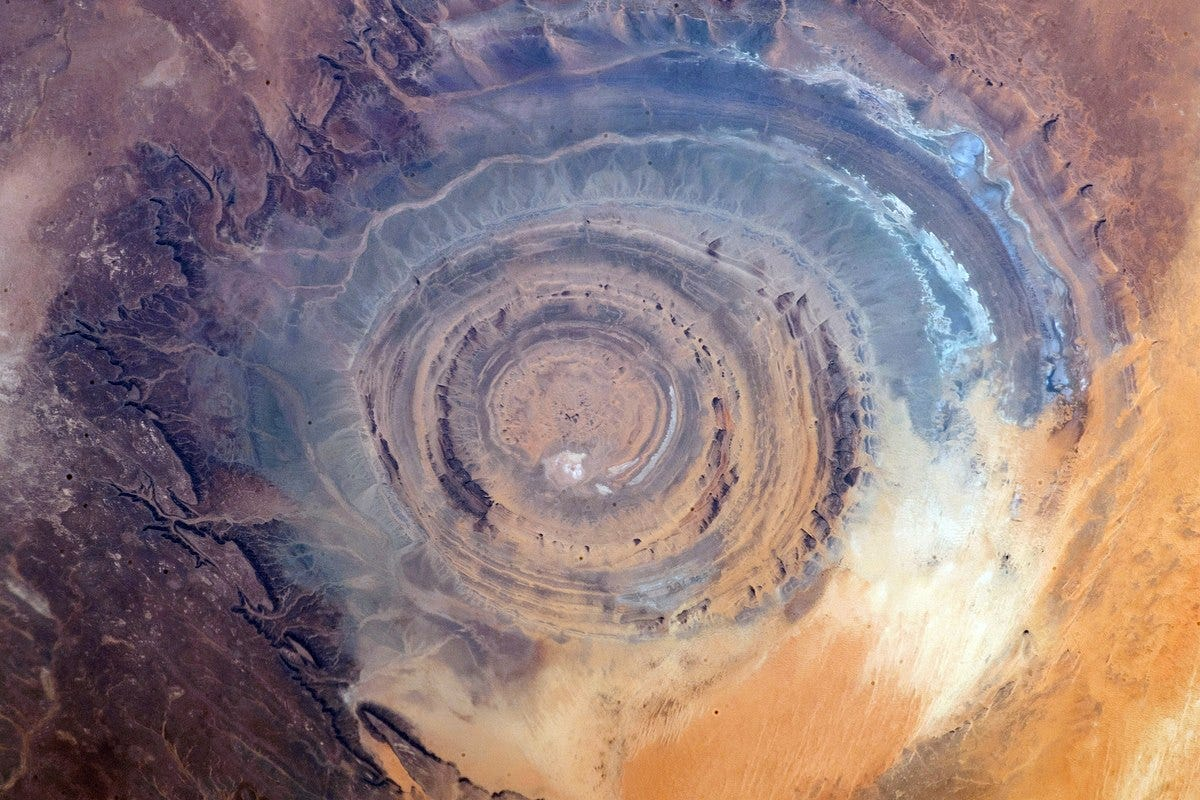
Ancient Egyptian Mythology: The Creation Myths of Heliopolis and Memphis

June 16, 2026

In the minds of the ancient Egyptians, creation was not a distant, one-time historical event. It was a continuous, fragile cosmic cycle that had to be actively maintained every single day to prevent the universe from slipping back into a state of total chaos (Isfet).

Because Egypt was composed of powerful, competing religious and political capitals, different priesthoods developed their own distinct theological models to explain how the universe came to be. The two most influential and intellectually profound models were the Heliopolitan Creation Myth, which focused on physical generation through light and blood, and the Memphite Creation Myth, which introduced a stunningly abstract philosophy of creation through pure thought and spoken word.

1. The Common Primordial Stage: The Nun

Despite their theological rivalries, nearly all Egyptian creation myths began with the exact same primordial setting: The Nun.

The Nun was an infinite, dark, silent, and chaotic cosmic ocean that existed before time, space, or life. It possessed no boundaries and no structure. Hidden inside this dark abyss was a dormant, unawakened divine potential.

Every creation myth began at the precise moment this primordial ocean receded, allowing a single, solid mound of earth—the Benben—to rise above the waters. This primeval mound represented the birth of structure, light, and fertile ground, mirroring the real-world annual receding of the Nile floods that left behind rich, black soil ready for new life.

2. The Heliopolitan Myth: The Physical Emergence of the Ennead

Centered in the ancient solar city of Heliopolis (known to the Egyptians as Iunu), this creation myth was championed by the powerful priesthood of the sun god. It is a highly physical, genealogical epic that traces the lineage of the cosmos down through nine distinct deities, a group known collectively as The Ennead.

Atum’s Self-Creation

According to the Heliopolitans, the god Atum (later merged with the sun god Ra) created himself out of pure willpower while drifting inside the Nun. Seating himself upon the primordial Benben mound, Atum looked out at the vast emptiness and realized he was completely alone.

To bring order and life into the void, Atum performed a singular, physical act of self-generation. Through the act of masturbation (or, in alternative texts, by spitting), Atum used his own bodily fluids to generate the universe's first physical pairs of opposites:

  • Shu: The god of dry air and wind.

  • Tefnut: The goddess of moisture, rain, and dew.

The Separation of Earth and Sky

Shu and Tefnut coupled and gave birth to the next layer of cosmic architecture: Geb (the physical Earth) and Nut (the canopy of the starry Sky).

Initially, Geb and Nut were locked in an eternal, passionate embrace, leaving no room between them for life to exist. To fix this, their father Shu (Air) stepped between them, lifting Nut high above his head to form the atmosphere, while holding Geb flat below. This act created the physical open space required for sunlight, vegetation, animals, and humans to thrive.

The Generation of Order and Chaos

Locked in their separate realms, Geb and Nut managed to conceive four final deities who bridged the gap between the cosmic elements and human civilization:

  • Osiris: The god of fertility, resurrection, and the prototype for divine kingship.

  • Isis: The goddess of magic, wisdom, and maternal protection.

  • Set: The god of storms, deserts, foreigners, and structural chaos.

  • Nephthys: The goddess of mourning, thresholds, and the night.

Through this physical family tree, the Heliopolitan myth successfully linked the raw, blinding power of the sun directly to the political institution of the Egyptian Pharaoh, who ruled as the earthly representative of this divine lineage.

3. The Memphite Myth: Creation Through Intellectual Logos

When the Pharaohs of the Old Kingdom established the city of Memphis as the administrative capital of unified Egypt, the local priesthood sought to elevate their patron deity, Ptah—the master craftsman and architect of the gods—above the solar theology of Heliopolis.

Recorded on the famous Shabako Stone (an 8th-century BCE black basalt monument copying a much older Old Kingdom papyrus), the Memphite Theology introduces a startlingly sophisticated, philosophical worldview that directly anticipated later Greek and Christian concepts of the Logos (creation through the word).

The Mind and the Tongue

The Memphites did not deny the Heliopolitan Ennead; instead, they boldly claimed that Ptah was the ultimate source behind Atum's creation. The text explains that Ptah created the universe not through physical masturbation or bodily fluids, but through an internal intellectual process involving two primary organs:

   [ THE HEART / SIA ] ──────► Conceives an Idea (Intellectual Thought / Intellect)
                                      │
                         (The Creative Logos Process)
                                      │
                                      ▼
   [ THE TONGUE / HU ] ──────► Speaks the Name (Spoken Word / Magical Projection)
                                      │
                                      ▼
                      [ MATERIAL REALITY MANIFESTS ]
  • The Heart (Sia): To the Egyptians, the heart was the absolute center of human thought, consciousness, and intellect (equivalent to the modern mind). Ptah first conceived the blueprint of the entire universe—its laws, its geography, and its gods—as a silent thought inside his divine heart.

  • The Tongue (Hu): To bring this internal thought into the physical world, Ptah used his tongue to speak the names of those thoughts aloud. The moment Ptah uttered the word for "tree," "mountain," or "Atum," the vibration of his voice projected that concept out of the abstract realm of thought and materialized it into physical reality.

The Craftsman of Reality

By framing creation as a cognitive and linguistic act, the Memphite myth elevated Ptah to the ultimate supreme intelligence. The Shabako Stone notes that after Ptah spoke the universe into existence, he rested, seeing that his work was good.

He then established the cities, carved the statues of the gods out of wood and stone, and provided the life-force (Ka) that allows humans, animals, and plants to move and breathe. Every time a craftsman carves a statue, an architect draws a blueprint, or a human speaks an intelligent thought, they are actively channeling the creative energy of Ptah.

4. Summary of Creation Epistemologies

  • The Primary Engine: Heliopolis relies on physical generation, using bodily fluids, lineage, and sexual duality to create elements. Memphis relies on cognitive generation, using intellectual thought and spoken language (Logos) to manifest matter.

  • The Role of Atum: Heliopolis views Atum as the self-created apex predator of the cosmos who generates all things out of his own body. Memphis subordinates Atum, framing him as a mere tool or physical executor created by the prior thoughts of Ptah.

  • Primary Deities: Heliopolis elevates Atum-Ra and the Ennead (Solar/Cosmic line). Memphis elevates Ptah (The Divine Architect/Intellect).

  • The Core Metaphor: Heliopolis mimics the biological reality of human birth and genealogical inheritance. Memphis mimics the artistic and technological reality of a master craftsman transforming an idea into a physical product.

The creation myths of Heliopolis and Memphis reveal the immense intellectual depth of ancient Egyptian theology. While Heliopolis satisfied the need for a cosmic family tree that validated the physical elements of nature and the royal lineage of the pharaoh, Memphis pushed Egyptian thought into the realm of abstract metaphysics. By demonstrating that the physical universe could be understood as the externalized speech of a single, supreme cosmic mind, the priests of Memphis proved that more than three thousand years ago, humanity was already grappling with the profound philosophical boundary where thought ends and reality begins.

The Roman Emperor Hadrian: The Pantheon and the Temple of Venus and Roma

June 16, 2026

The Roman Emperor Hadrian (who ruled from 117 to 138 CE) was one of the most enigmatic, complex, and traveled rulers in the history of the Empire. Unlike his militaristic predecessor Trajan, Hadrian focused on consolidating imperial borders and unifying Roman culture. He was a passionate philhellene (lover of Greek culture), an amateur philosopher, and, above all, a deeply hands-on architect.

Hadrian used architecture not just to project raw imperial power, but to rethink how sacred space could be experienced. His two grandest structural legacies in the city of Rome—The Pantheon and The Temple of Venus and Roma—represent a fascinating architectural duality: one looking entirely inward toward a radical new future of engineering, and the other looking outward toward the classical traditions of Greece.

1. The Pantheon: The Geometry of the Cosmos

The Pantheon stands as the absolute masterpiece of Roman concrete engineering. While a temple to "all the gods" had existed on the site since the time of Augustus, it had burned down. Hadrian completely rebuilt it between 118 and 125 CE, executing a design so radical it shattered traditional Mediterranean temple design.

The Architectural Illusion

When a Roman citizen approached the Pantheon, they were greeted by a traditional, familiar sight: a massive, rectangular Greek-style portico supported by monolithic granite columns imported from Egypt. This familiar facade was a deliberate trick of spatial compression.

Upon stepping through the massive bronze doors, the viewer was thrown into a jaw-dropping, vast, circular space wrapped under a soaring dome. The building seamlessly fused a rectangular Greek porch with a massive Roman rotunda.

The Physics of the Perfect Sphere

The interior of the Pantheon was engineered with breathtaking mathematical symmetry. The internal diameter of the rotunda ($43.3\text{ meters}$) is exactly equal to the height from the floor to the top of the dome. This means that a perfect, invisible sphere could sit perfectly inside the building, touching the floor and the roof simultaneously.

To prevent this massive $4,500\text{-ton}$ concrete dome from collapsing under its own weight, Hadrian's engineers executed a series of brilliant material innovations:

  • Graduated Concrete Aggregates: The walls and lower tiers of the dome were poured using heavy, dense basalt and brick chunks mixed into the mortar. As the concrete ascended toward the crown, the recipe shifted to lighter materials, transitioning to broken pottery shards and finally to porous, ultra-light volcanic pumice at the absolute top.

  • The Coffered Ceiling: The interior of the dome was cast with five rings of recessed square pockets called coffers. These coffers removed tons of heavy concrete from the dome's mass without sacrificing structural strength, while also creating a dramatic, geometric optical illusion that made the dome look even larger.

  • The Oculus: At the absolute apex of the dome sits a completely open, 9-meter-wide circular skylight known as the oculus. The oculus acts as a compression ring, locking the surrounding arches of the dome into place. It lets in a moving shaft of pure sunlight that tracks across the marble floor like a giant cosmic sundial, while letting rain fall directly onto a hidden drainage network built into the floor.

2. The Temple of Venus and Roma: Greek Ideals on Roman Soil

While the Pantheon used concrete to create a brand-new, inward-looking world, the Temple of Venus and Roma (begun around 121 CE) was Hadrian’s grand tribute to his deep love for classical Greek architecture. Situated on the Velian Hill overlooking the Colosseum, it was legally the largest temple in the ancient city of Rome.

The Hellenistic Footprint

Unlike traditional Roman temples, which were elevated on high stone podiums with a single frontal staircase (such as the Temple of Portunus), Hadrian designed this temple in the strict Greek Peripteral style.

The building sat on a low, multi-stepped platform (stylobate) that could be entered from any side, and it was entirely surrounded by a sweeping forest of Corinthian columns. It looked less like a traditional Roman civic building and more like an elevated Parthenon transplanted straight from Athens into the heart of the Roman Forum.

The Back-to-Back Cellae

The interior featured a highly unique, mirrored floor plan. It housed two distinct sacred chambers (cellae) placed completely back-to-back:

  • One chamber faced west toward the Forum Romanum, housing the statue of Dea Roma (the divine personification of the state).

  • The opposing chamber faced east toward the Colosseum, housing the statue of Venus Felix (the goddess of love and the ancestral matriarch of the Roman people).

Hadrian was playing a brilliant linguistic and architectural riddle with this dual layout. In Latin, the name of the goddess of love is AMOR. When spelled backward, it forms the name of the city: ROMA.

By placing the statues of Amor and Roma back-to-back in a shared temple, Hadrian visually anchored the cosmic harmony of the empire: Rome was sustained by the power of Love, and Love was protected by the power of Rome.

   [ TEMPLE ENTRANCE: FORUM ] ───► CELLA OF ROMA (The Imperial State)
                                          ▲
                                          │  (Placed Back-to-Back)
                                          ▼
   [ TEMPLE ENTRANCE: COLOSSEUM ] ──► CELLA OF AMOR (The Goddess Venus)

3. The Clash with Apollodorus: Architecture as Imperial Ego

Hadrian’s deep, hands-on obsession with architectural design eventually led to a legendary, fatal clash of egos. The premier architect of the era was Apollodorus of Damascus, the mastermind who had designed Trajan’s Forum, Trajan’s Column, and massive military bridges across the Danube.

According to the Roman historian Cassius Dio, when Hadrian proudly sent his self-designed architectural blueprints for the Temple of Venus and Roma to Apollodorus for a critique, the veteran architect was unimpressed. Apollodorus bluntly criticized the emperor's design, arguing that the statues of Venus and Roma were far too large for their low-ceilinged niches:

"They are drawn much too large for the height of the chambers. For if the goddesses should wish to stand up and leave their temple, they would be unable to do so, bumping their heads on the ceiling!"

Furthermore, Apollodorus argued that the temple should have been elevated higher on a traditional Roman podium to create a grander subterranean storage area for the stage machinery of the nearby Colosseum.

Hadrian, deeply stung by the critique and unable to tolerate insults to his artistic genius, reportedly had the legendary architect banished and eventually executed. Whether fact or historical gossip, the tale highlights just how seriously Hadrian viewed his identity as a master builder.

4. Summary of Hadrianic Architectural Strategy

  • Spatial Philosophy: * The Pantheon: Introspective and revolutionary; focuses entirely on the internal volume, using concrete to form a perfect, sky-lit sphere.

    • Temple of Venus & Roma: Extrospective and traditional; focuses on external symmetry and colonnades, bringing a Hellenistic Greek footprint to Rome.

  • Engineering Innovations:

    • The Pantheon: Graduated pumice concrete mixes, structural ceiling coffers, and a weight-locking oculus compression ring.

    • Temple of Venus & Roma: Mirrored back-to-back cellae structuring an architectural palindrome (ROMA/AMOR).

  • Political Propaganda:

    • The Pantheon: A temple to "all the gods," framing the emperor as the earthly pivot around which the entire cosmos rotates.

    • Temple of Venus & Roma: A monumental celebration of Rome’s divine ancestry and structural harmony, designed to bind Rome's elite to the artistic traditions of Greece.

Hadrian's architectural legacy demonstrates that he was a ruler who understood the profound power of stone, mortar, and space. Through the soaring, light-filled dome of the Pantheon, he proved that Roman concrete could liberate architecture from the limits of heavy interior walls, turning a temple into a microcosm of the universe. Through the sweeping, classical colonnades of the Temple of Venus and Roma, he knit the historical gravitas of Greece to the political destiny of Rome. By acting as both emperor and architect, Hadrian did not merely rule the Roman world—he permanently reshaped the physical horizon of its imagination.

Ancient Greek Sanctuaries: The Temple of Zeus at Nemea

June 16, 2026

The Sanctuary of Zeus at Nemea, nestled in a tranquil, vineyard-heavy valley of the Peloponnese, was one of the four great panhellenic athletic centers of the ancient Greek world. Alongside Olympia, Delphi, and Isthmia, Nemea hosted the prestigious Nemean Games, where athletes from across the Greek diaspora competed for glory and a crown of wild celery.

At the absolute physical and spiritual heart of this sacred precinct stood the Temple of Nemean Zeus. Constructed during the late Classical period (c. 330–300 BCE), this temple is a brilliant architectural marvel that showcases the evolution of Greek structural engineering, blending traditional design with bold spatial innovations.

1. Architectural Synthesis: The Three Orders Under One Roof

The Temple of Zeus at Nemea is celebrated by architectural historians as a masterclass in spatial economy and stylistic synthesis. Built primarily out of local limestone coated in a fine, marble-like stucco, the temple reflects a transitional era in Greek architecture where builders began moving away from the heavy, massive proportions of the High Classical era toward lighter, more dramatic interiors.

The architects achieved this by remarkably integrating all three of the classic Greek architectural orders into a single building:

  • The Exterior (Doric): The outer colonnade (peristyle) featured a $6 \times 12$ column configuration. These Doric columns are among the tallest and most slender of their style in the Greek world, possessing a height-to-base ratio ($6.34:1$) that gives the exterior a remarkably elegant, vertical grace rather than the stocky, muscular appearance of older Doric temples.

  • The Interior Lower Tier (Corinthian): Upon stepping inside the central room (cella), a visitor was met by a freestanding, U-shaped colonnade. The lower tier of these interior columns featured beautifully carved Corinthian capitals adorned with acanthus leaves, introducing a highly decorative flair to the sacred space.

  • The Interior Upper Tier (Ionic): Resting directly on top of the Corinthian columns was a second, smaller tier of Ionic columns. This double-tiered internal design allowed the architects to support a soaring wooden roof without cluttering the interior space with a massive, solid wall.

2. The Cryptic Space: The Mystery of the Adyton

The most unique and structurally fascinating feature of the Temple of Zeus at Nemea is located at the very back of the cella. Instead of a flat, solid rear wall, the floor drops down via a formal stone staircase into a sunken, semi-subterranean chamber known as an Adyton (meaning "not to be entered").

While most Greek temples featured a flat floor plan, Nemea’s sunken adyton served an intimate, highly restricted ritual function. Because Nemea was a panhellenic sanctuary heavily tied to chthonic (earth-based) mythologies and the mourning of dead heroes, archeologists hypothesize that this subterranean space was utilized for:

  • Thematic Divination: Oracular consultations or prophetic rituals linked to the subterranean world.

  • Secret Oaths: High-stakes political or athletic oaths sworn by judges and athletes in a secluded, solemn environment away from the public gaze.

  • The Myth of Opheltes: Ritual acts commemorating the infant prince Opheltes, whose tragic death by a serpent in a bed of celery supposedly sparked the founding of the Nemean Games.

3. The Athletic Infrastructure: The Stadium and the Tunnel

A panhellenic temple cannot be understood in isolation; it operated as the engine for a massive, regional athletic infrastructure. Located roughly 400 meters southeast of the temple sits the Stadium of Nemea, constructed during the exact same building boom in the late 4th century BCE.

The relationship between the temple and the stadium was cemented by a brilliant piece of civil engineering: The Vaulted Entry Tunnel.

   [ TEMPLE SANCTUARY ] ────► Athletes Process and Purify Themselves
                                        │
                             (The Vaulted Stone Tunnel)
                                        │
   [ THE STADIUM TRACK ] ◄─── Vaulted Arch Creates a Dramatic Internal Portal

Before a race, athletes would gather at the temple precinct to sacrifice to Zeus. They would then march down a sacred pathway and enter a fully enclosed, 36-meter-long stone tunnel covered by a perfect barrel vault.

This tunnel acted as an ancient locker room and a structural portal. Athletes would wait inside the dark, echo-heavy stone vault, scratching their names into the soft limestone blocks (graffiti that is still clearly visible today, including the ancient Greek word AKANTOU—"Of Acanthus"). When their names were called by the herald, they would burst out of the tunnel’s arched opening into the blinding sunlight of the stadium track, facing up to 40,000 roaring spectators.

4. Summary of Nemean Architectural and Civic Paradigms

  • Stylistic Innovation: Rejection of heavy, stocky Doric proportions; utilization of exceptionally tall, slender exterior columns combined with an internal double-tiered system of Corinthian and Ionic elements.

  • Ritual Space (Adyton): A unique, subterranean sunken chamber at the rear of the temple, creating an intimate, restricted space for oracular, political, or chthonic mourning rituals.

  • Engineering Engineering: Integration of the sanctuary through a monumental, barrel-vaulted stone tunnel that linked the spiritual heart of the temple directly to the physical competition of the stadium.

  • Panhellenic Purpose: Functioned not as a civic temple for a single city-state, but as a neutral, international athletic center where war was paused under a sacred truce (Ekecheiria) to honor Zeus through physical human excellence.

The Temple of Zeus at Nemea stands as a vital monument to the brilliance of late Classical Greek architecture. By boldly weaving together the three distinct architectural orders, carving out a subterranean sanctuary of deep religious mystery, and engineering a vaulted stone portal that physically linked the realm of the gods to the running track of the athletes, the builders of Nemea created more than a house for a deity. They engineered a dynamic, interactive space where the concepts of physical training, engineering precision, and spiritual devotion were permanently fused into the landscape of the Greek world.

The Minoan Civilization: The Use of Frescoes in Palace Decoration

June 16, 2026

During the Bronze Age, while the kingdoms of Egypt and Mesopotamia dominated the fertile river valleys of the Near East, a unique, seafaring maritime civilization flourished on the Mediterranean island of Crete: The Minoans (c. 3000–1450 BCE). Centered around sprawling, unfortified architectural complexes—most famously the Palace of Knossos—Minoan culture was characterized by its immense wealth, global trade networks, and a remarkably vibrant artistic style.

The absolute pinnacle of Minoan artistic expression was their revolutionary use of frescoes to decorate the interior plaster walls of their palaces, shrines, and elite villas. Unlike the rigid, monumental, and war-centric art of contemporary Near Eastern empires, Minoan frescoes celebrate the natural world, fluid human movement, and deep religious devotion, offering an invaluable visual window into a sophisticated society that left behind no readable historical texts.

1. The Chemistry of Preservation: The Buon Fresco Technique

The word fresco derives from the Italian word for "fresh," and the Minoans were among the very first civilizations to master the highly demanding technique of Buon Fresco (true fresco). This chemical process required immense speed and precision from the palace artists.

Instead of simply painting on a dry, finished wall, Minoan craftsmen applied their pigments directly to a freshly laid layer of wet lime plaster (intonaco).

  • The Chemical Bond: As the wet plaster dried, it underwent a chemical reaction with the air, carbonating and trapping the mineral paint pigments directly inside the crystalline structure of the wall itself. The paint did not sit on top of the wall; it became a permanent, structural part of the plaster.

  • The Pigment Palette: Because the highly alkaline wet lime would destroy organic dyes, Minoan artists relied exclusively on natural, earth-derived mineral pigments:

    • Red and Yellow: Sourced from iron ochres mined from volcanic soils.

    • Blue: Made from costly imported lapis lazuli or an artificial copper-silicate compound known as Egyptian Blue.

    • White: Created using pure, unpainted lime plaster.

    • Black: Derived from ground charcoal or shale.

When artists needed to add fine details after the plaster had dried, they utilized the Fresco Secco (dry fresco) technique, using an organic binder like egg white or animal glue. However, it is the true buon fresco sections that survived over 3,500 years of earthquakes, fires, and volcanic ash.

2. Iconography and Themes: A World of Movement and Grace

While Egyptian art utilized a strict, mathematical grid system to depict human figures in rigid, unchanging poses, Minoan artists favored curved lines, organic asymmetry, and a sense of dynamic, looping movement. Their thematic focus was radically distinct from their neighbors.

The Marine Style: A Thalassocracy Celebrated

As an island nation whose survival depended entirely on naval dominance and maritime trade, the Minoans possessed a deep obsession with the ocean. Palace walls were transformed into vibrant, indoor aquariums.

The famous Dolphin Fresco from the Queen’s Megaron at Knossos depicts playfully curving dolphins swimming alongside schools of small fish. Other frescoes showcase highly stylized octopuses wrapping their tentacles around rocks, sea urchins, and floating nautiluses. These paintings were not mere decorations; they were a visual celebration of the thalassocracy—the Minoan empire of the sea.

Courtly Life and the Sacred Bull-Leaping

Minoan frescoes provide our best look at Bronze Age clothing, hairstyles, and social hierarchies. Elite Minoan women are consistently depicted occupying high-status positions as priestesses or courtly ladies, dressed in elaborate, tiered skirts and open-front bodices, their hair styled in complex, beaded tresses.

The most famous narrative painting is the Bull-Leaping Fresco (Taureador Fresco). Set against a vivid blue background, it depicts a massive, charging structural bull caught in mid-gallop. Three young acrobats—two women (painted with traditional white skin) and one man (painted with dark reddish-brown skin)—perform a high-stakes religious ritual. One figure holds the bull's horns, another flips directly over the beast's back, and a third prepares to land, demonstrating a culture that valued acrobatic agility, athletic courage, and a deep, ritualistic relationship with nature.

3. Spatial Illusions: Integrating Architecture and Nature

Minoan architects did not design rooms with heavy, oppressive stone walls. Instead, they built palaces featuring open-air lightwells, polythyron pier-and-door partitions, and grand colonnades designed to let light and wind circulate freely.

The frescoes were engineered to work in perfect harmony with this open architecture. Rather than trapping the viewer inside a room, the wall paintings acted as optical illusions designed to blur the boundary between the interior palace and the exterior natural landscape.

   [ Open-Air Lightwells ] ───► Cast Shifting Sunlight onto Polished Plaster
                                          │
                              (The Spatial Illusion)
                                          │
   [ Naturalistic Frescoes ] ─► Blurs Room Boundaries / Brings the Aegean Landscape Indoors

In the Spring Fresco discovered at Akrotiri (a Minoan-influenced settlement on Santorini), an entire room is wrapped in a continuous painting of undulating red and yellow volcanic hills covered in blooming red lilies, while swallows swoop and dive through the air. When sunlight cast through an open lightwell hit these walls, the room felt completely open to the Aegean landscape, transforming the masonry of the palace into a living, breathing ecosystem.

4. Summary of Minoan Artistic Paradigms

  • Technique (Buon Fresco): Applying natural mineral pigments directly to wet, fresh lime plaster, creating a permanent chemical bond that preserved the artwork across millennia.

  • Thematic Style: Rejection of warfare, military triumphs, and static royal monuments; heavy focus on natural fluidity, marine life, and athletic religious rituals.

  • Color and Gender Conventions: Utilization of specific color profiles, notably using dark red-brown skin tones for men and fair white skin tones for women in communal depictions.

  • Architectural Harmony: Continuous, wrap-around wall designs combined with natural light sources to eliminate visual boundaries and bring the natural environment inside the living space.

The legacy of Minoan frescoes marks a monumental shift in the history of Western art. By replacing the stiff, linear militarism of Bronze Age empires with an artistic language rooted in spontaneity, curves, and a passionate love for life, the painters of Crete established a tradition of naturalism that would deeply influence Mycenaean Greece, classical antiquity, and eventually the wall-painting traditions of the Roman world. Through the vibrant red of their ochres and the deep blue of their lapis lazuli, the Minoans successfully captured the fleeting movement of a swallow, the leap of an acrobat, and the pulse of the sea, holding them perfectly still for eternity.

Roman Urban Water Management: The Aqueducts and Fountains of Rome

June 16, 2026

The expansion of the city of Rome from a modest volcanic hilltop settlement into a sprawling metropolis of over one million inhabitants was not merely a triumph of military conquest; it was an unparalleled feat of hydraulic engineering. At the absolute core of Roman urban survival was its sophisticated infrastructure for water management.

By constructing a vast, gravity-powered network of aqueducts and public fountains, Roman engineers transformed water from a scarce natural commodity into a highly regulated, publicly accessible civic utility. This infrastructure powered the city's famous public baths, flushed its subterranean sewer networks, and served as the ultimate visual propaganda for imperial wealth and engineering dominance.

1. The Engineering of Gravity: How Aqueducts Worked

Between 312 BCE and 226 CE, the city of Rome constructed eleven major aqueduct lines, spanning a combined length of over 500 kilometers. Remarkably, this entire network operated without mechanical pumps. It relied entirely on a single physical principle: constant, gravity-powered downhill flow.

To harvest water from pristine mountain springs located up to 90 kilometers away in the Apennine Mountains, Roman hydraulic engineers (aquarii) executed precise surveying calculations using specialized tools:

  • The Groma: A cross-shaped sighting instrument used to align straight lines across long distances.

  • The Chorobates: A massive 20-foot wooden leveling device utilizing water-filled grooves and plumb bobs to calculate exceptionally shallow slopes.

To maintain a steady, uniform incline—frequently dropping as little as 30 centimeters per kilometer ($1:3000$)—the aqueducts had to adapt to changing terrain:

  • Underground Conduits: Roughly 80% to 90% of Rome’s aqueduct network was actually hidden underground. Channels (specus) were tunneled directly through solid rock or dug into trenches, lined with waterproof concrete (opus signinum), and fitted with vertical inspection shafts to protect the water from evaporation, thermal fluctuations, animal contamination, and enemy sabotage.

  • Arched Bridges: When an aqueduct encountered a deep valley or a low-lying plain approaching Rome, engineers elevated the channel atop monumental stone or brick arched arcades. The arch design provided immense structural strength while minimizing wind resistance and saving precious building materials.

  • The Inverted Siphon: If a valley was too deep to bridge with arches, engineers utilized fluid dynamics to construct an inverted siphon. Water was collected in a header tank on one side of the valley, funneled down through pressurized lead or clay pipes, rushed across the valley floor under intense kinetic pressure, and naturally ascended into a receiving tank on the opposite side, matching its original height.

2. Urban Distribution: The Castellum Aquae

When an aqueduct line finally reached the city walls of Rome, it emptied its cargo into a massive, centralized distribution fortress called a Castellum Aquae (water castle). This chamber acted as a sediment settling tank and a pressure regulator.

Inside the Castellum Aquae, the incoming water was divided into three distinct pipe networks to ensure a strict, legally mandated triage of water priority during shortages or droughts:

  • The Public Fountains: The lowest, baseline chamber supplied the city’s hundreds of public street fountains. This water was free and open to all citizens, ensuring a baseline of survival for the poorest inhabitants.

  • The Public Baths and Theaters: The secondary chamber supplied the grand imperial bath complexes (thermae), public latrines, and water features in theaters. This network was vital for public hygiene and state-sponsored entertainment.

  • Private Luxury Homes: The highest chamber supplied private villas and wealthy apartments (insulae). Wealthy patricians paid a specialized water tax (calix) for the privilege of tapping into the public lines, drawing water through calibrated lead pipes directly into their private fountains, gardens, and private baths.

3. The Public Fountains: Civic Lifelines and Propaganda

For the average Roman citizen living in cramped, wooden apartment blocks without indoor plumbing, the local street fountain (lacus) was an absolute daily lifeline. Rome was home to over 1,300 public basins and fountains, meaning no citizen was ever more than a few minutes' walk from fresh, running water.

   [ CONSTANT AQUEDUCT INFLOW ] ───► Public Street Basins (Lacus) ───► Excess Overflow
                                                                               │
                                                                   (Gravity Flushing System)
                                                                               │
   [ SUBTERRANEAN SEWERS ] ◄─────── Flushes Public Latrines ◄──────────────────┘

These fountains were engineered with a brilliant, continuous-flow design. Unlike modern fountains that recirculate water using electric pumps, Roman fountains ran 24/7, constantly spilling fresh water over the edges of their monolithic stone basins.

This constant overflow was not wasted; it ran directly down the stone streets, scrubbing the roadways clean of horse manure and garbage, before emptying into the public latrines and flushing the city's massive subterranean sewer main, the Cloaca Maxima.

Beyond utility, public fountains functioned as grand monuments of political propaganda. Major intersections featured nymphaea—elaborate, theatrical fountains adorned with marble statues of water nymphs, gods, and emperors, complete with cascading waterfalls designed to showcase the generosity and technological mastery of the ruling imperial dynasty.

4. Regulation, Theft, and the Water Curator

Managing this monumental infrastructure required a massive, dedicated bureaucratic task force. At the apex of this hierarchy stood the Curator Aquarum (Water Curator), a high-ranking Roman official responsible for the maintenance, security, and legal regulation of the entire city's water supply.

The most famous Curator, Sextus Julius Frontinus (who took office in 97 CE), left behind a definitive text, De Aquaeductu, which meticulously detailed the administrative challenges of running Rome’s water network.

Frontinus dedicated much of his career to combating water theft (fraus). Wealthy landowners and corrupt industrial operators frequently hired rogue plumbers to illegally pierce underground aqueduct conduits or install oversized lead pipes (fistulae) to steal water without paying the imperial tax. Frontinus instituted a rigorous system of stamping every authorized lead pipe with an official imperial seal, tracking the exact volumetric delivery (quinaria) of each line to protect the integrity of the public fountains.

5. Summary of Urban Water Architecture

  • Source Gathering: Gravity-powered channels (specus) running primarily underground, transitioning to monumental arched bridges over low valleys to maintain a minimal, steady downward slope from mountain springs.

  • Centralized Regulation: Central distribution hubs (castella aquae) that segregated water into three distinct chambers, prioritizing public basins over recreational baths and private luxury villas.

  • Civic Application: Continuous-flow street basins (lacus) acting as primary drinking water sources, while the constant overflow naturally cleansed public streets and flushed the subterranean sewer network.

  • Administrative Control: Regulated by a dedicated imperial agency led by the Curator Aquarum, using stamped lead pipes and standard volumetric measurements to combat widespread illegal water tapping.

The water management system of ancient Rome remains one of the most striking achievements of the classical world. By viewing water as an essential public right and a primary pillar of urban sanitation rather than a commercial luxury, Roman engineers successfully sustained a megacity under conditions that would not be replicated until the industrial era. The aqueducts and fountains did not merely keep Rome hydrated; they created a highly advanced civic ecosystem where engineering, law, and architecture merged to elevate the quality of human life.

The Viking Age Weaponry: The Development of the Dane Axe

June 16, 2026

While popular culture often associates the Viking Age with an array of flashy swords, the weapon that struck the absolute greatest terror into the hearts of medieval European armies was the axe. In the early Germanic world, the axe was an affordable, everyday tool adapted for the battlefield. However, as warfare evolved, this simple woodcutting implement was re-engineered into a highly specialized weapon of shock cavalry destruction: the Dane Axe (also known as the English longaxe or hafted axe).

Emerging in the late 10th century, the Dane Axe was the premier weapon of elite Viking warrior cliques—such as the Danish King's Hird and the Anglo-Saxon Housecarls—and it permanently altered the tactical landscape of medieval infantry combat.

1. The Anatomy of an Engineering Masterpiece

The Dane Axe was not a clumsy, oversized block of iron. It was a masterpiece of precise metallurgy and weight distribution, balanced perfectly to deliver maximum kinetic force without sacrificing the wielder's agility.

  • The Thin, Light Blade: Unlike thick woodcutting axes designed to wedge open logs, the Dane Axe blade was forged remarkably thin—often only a few millimeters thick just behind the cutting edge. This made the head surprisingly light, usually weighing between 1 and 2 pounds.

  • The Steeled Edge: To save precious carbon steel, blacksmiths used a two-part forging technique. They constructed the main body and eye of the axe out of flexible, shock-absorbing wrought iron, and then forge-welded a high-carbon, razor-sharp steel bit onto the cutting edge.

  • The Swept Profile: The blade featured pronounced, exaggerated upper and lower "horns" (a broad-axe silhouette). This crescent-shaped, sweeping edge maximized the cutting area, meaning that upon impact, the blade sliced through flesh and mail armor rather than just crushing it.

  • The Massive Haft: The head was mounted on a thick ash or oak pole ranging from 4 to 6 feet in length. This long haft granted the wielder immense leverage, turning the weapon into a two-handed kinetic engine.

2. Tactical Execution on the Battlefield

The Dane Axe was a dedicated shock weapon. Because it required two hands to swing, the warrior had to slink his shield onto his back or rely on comrades to protect him while he operated the weapon.

   [ Overhead Kinetic Cleave ] ───► Crushes Helmets / Shears Mail Armor
                                               │
                                   (Dynamic Versatility)
                                               │
   [ The Extended Horns ] ────────► Hooks Shield Rims / Trips Ankles / Pulls Cavalry

When deployed within a dense infantry formation like the Shield Wall, Dane axe-wielders were typically stationed just behind the front line of shield-bearing spearmen. At the critical moment of collision, they would step forward through gaps in the wall to unleash devastating overhead or diagonal cleaves.

The weapon operated on pure physics: the immense leverage of the 5-foot haft combined with the thin, heavy-striking steel edge concentrated all of the swing's kinetic energy into a tiny point of impact. Contemporary accounts note that a single, well-placed blow from a Dane Axe could cleanly decapitate a warhorse, shatter a heavy iron helmet, or shear straight through a warrior's chainmail sleeve and arm.

3. Beyond Bludgeoning: Hooking and Controlling

The Dane Axe was also a highly sophisticated tool for tactical manipulation. Elite housecarls used the unique geometry of the swept blade to control their opponents' gear:

  • Shield Hooking: If an enemy was locked tightly behind a shield wall, the axe-wielder could catch the top or side rim of the enemy's shield with the lower horn of the axe blade. With a violent, twisting pull, they could yank the shield away, exposing the enemy's neck and torso to a spear thrust from an ally.

  • Cavalry Defense: The upper horn could be used like a hook or short pike to pull horsemen out of their saddles, catch the ankles of fleeing infantry, or parry incoming sword strikes by trapping the enemy's blade against the wooden haft.

4. The Apex of the Axe: Hastings and the Varangian Guard

The historical climax of the Dane Axe occurred during the monumental battles of 1066. At the Battle of Hastings, King Harold Godwinson's elite Anglo-Saxon Housecarls formed a legendary shield wall at the top of Senlac Hill, defending it primarily with Dane Axes.

The anonymous author of the Carmen de Hastingae Proelio recorded that the blows of these axes sliced easily through the shields and chainmail of William the Conqueror's Norman cavalry, blunting multiple cavalry charges.

Following the Norman conquest of England, many displaced Anglo-Saxon axe-wielders fled south to Constantinople, where they were eagerly recruited into the Byzantine Empire's elite imperial bodyguard: The Varangian Guard.

The Byzantines specifically referred to these Norse mercenaries as the Pelekyphoroi—the "Axe-Bearing Barbarians." For centuries, these northern guardsmen stood directly behind the Byzantine Emperor in the Hagia Sophia, carrying their gold-inlaid Dane Axes as both an ultimate symbol of imperial authority and a terrifying final line of battlefield defense.

5. Summary of Weapon Evolution

  • Early Viking Age Axe (8th–9th Century): Hand-axes and bearded axes; dual-purpose (woodcutting and fighting), shorter hafts, heavier heads, used in one hand alongside a round shield.

  • Late Viking Age Dane Axe (10th–11th Century): Specialized military broad-axe; two-handed execution, 5-to-6 foot hafts, ultra-thin steeled blades with sweeping horns maximized for military cutting and leverage.

  • Tactical Application: Shock infantry deployment; utilized behind shield walls to break stalemates, hook enemy shields, shatter mail armor, and neutralize incoming cavalry.

The development of the Dane Axe demonstrates that Viking military technology was highly adaptive and sophisticated. It took the basic tool of the northern farmer and optimized it into an elite weapon system that dominated the shield-wall warfare of Northern Europe. Though eventually eclipsed by the rise of fully armored plate knights and longer polearms like the halberd, the Dane Axe remains an enduring testament to an era when Norse metallurgy and battlefield tactics struck fear into the heart of an entire continent.

The Mycenaean Civilization: The Influence of the Minoan Culture

June 14, 2026

When the Greek-speaking Mycenaeans descended into the Aegean basin around 1600 BCE, they encountered the Minoans—a highly sophisticated, literate, and artistically advanced civilization centered on the island of Crete. At the time, the Mycenaeans were primarily a tribal, warrior-dominated society. Recognizing the immense cultural power of the Minoans, the Mycenaean elite did not simply conquer; they engaged in a massive, centuries-long process of cultural appropriation and adaptation.

This profound Minoan influence transformed the Mycenaeans from isolated regional chieftains into the rulers of Greece's first great literate, palatial civilization.

1. Linear A to Linear B: The Adaptation of Literacy

The most profound intellectual leap the Mycenaeans made under Minoan influence was the acquisition of writing. The Minoans had long utilized a unique, logo-syllabic script known today as Linear A to manage their complex palace bureaucracies. Because the Mycenaeans spoke an entirely different language (an early form of Greek), they could not use Linear A directly.

Instead, Mycenaean scribes systematically overhauled the Minoan writing system:

  • The Structural Borrowing: They kept the underlying phonetic mechanics, formatting styles, and numeric systems of Linear A.

  • The Linguistic Shift: They adapted the individual signs to represent the sounds of the Mycenaean Greek language, creating Linear B.

The physical medium remained identical: both cultures recorded their accounts by scratching the symbols into unbaked clay tablets using bone or bronze styluses. However, while Linear A remains untranslated to this day because the Minoan language is unknown, Linear B was famously deciphered in 1952, revealing the oldest written records of the Greek language.

2. Re-Engineering the Palace Economy

Before interacting with Crete, Mycenaean rulers lived in modest, stone-and-timber defensive longhouses called megarons. As they absorbed Minoan culture, they adopted the entire concept of the Palace Economy.

The Mycenaeans looked to the sprawling complexes of Knossos and Phaistos as architectural blueprints, borrowing advanced Minoan engineering techniques to build their own palatial administration hubs at Mycenae, Tiryns, and Pylos.

   [ Minoan Open Palaces ] ──────► Focus: Trade, Rituals, Lightwells, No Walls
                                           │
                                (Mycenaean Selective Adaptation)
                                           │
   [ Mycenaean Citadels ] ───────► Focus: Fortification, Cyclopean Walls, Central Megaron

However, the Mycenaeans adapted this architecture to fit their warrior psychology. While Minoan palaces were open-air, sprawling, and completely unfortified, Mycenaean palaces were tightly condensed, defensive fortresses enclosed by massive, multi-ton Cyclopean stone walls. At the center of the Mycenaean palace, instead of an open Minoan courtyard, sat a grand, enclosed throne room built around a massive hearth—the ancestral Greek megaron.

3. Artistic Plagiarism: Weapons and Frescoes

The early Mycenaean elite possessed a voracious appetite for Minoan luxury goods, which they used as status symbols to legitimize their royal authority. They imported Minoan artisans directly to the Greek mainland to decorate their palaces and forge their weapons, resulting in a fascinating hybridization of styles.

The Shaft Graves of Mycenae

Excavations of the royal Shaft Graves at Mycenae yielded spectacular treasures crafted almost entirely by Minoan hands or by Mycenaeans trained in Minoan workshops. The most famous examples are the Niello Daggers—bronze ceremonial blades inlaid with gold, silver, and dark copper alloys.

While the physical technique and fluid artistic style of these daggers are completely Minoan, the subject matter is purely Mycenaean: instead of peaceful marine life or religious processions, the blades depict violent lion hunts and soldiers marching with heavy shields, reflecting the militaristic values of the mainlanders.

The Frescoes

Mycenaean palace walls were covered in brilliant, wet-plaster frescoes that utilized the exact chemical formulas and color palettes pioneered on Crete. Mycenaean artists copied the Minoan conventions for depicting the human form—rendering figures with pinched waists, stylized long hair, and profile views.

However, the thematic focus shifted dramatically. Where Minoan walls featured playful dolphins, lilies, and peaceful bull-leaping rituals, Mycenaean walls were covered in lines of heavy chariots, soldiers clad in boar's-tusk helmets, and bloody battle scenes.

4. Religious Syncretism: Goddesses and Gods

The Mycenaeans did not just adopt Minoan art; they absorbed parts of the Minoan spiritual world. Minoan religion was heavily centered around a dominant, earth-centric matriarchal pantheon, featuring a supreme Mother Goddess associated with snakes, birds, and double-headed axes (labrys).

Linear B tablets reveal that the Mycenaeans adopted many of these Minoan nature deities into their religious practices. They worshiped a prominent female divinity known as Potnia ("The Mistress" or "Lady"), who held immense economic and spiritual power over palace lands.

Over time, the Mycenaeans fused these indigenous Minoan earth goddesses with their own Indo-European, male-dominated sky gods. This complex religious synthesis laid the direct foundations for the classical Greek pantheon, combining Minoan concepts of sanctuary worship with the early iterations of familiar Olympian gods like Zeus, Poseidon, Hera, and Athena.

5. Summary of Cultural Exchange

  • Minoan Original (Crete): Linear A script, open-air labyrinthine palaces, marine/nature artwork, matriarchal earth-deity worship, peaceful trade focus.

  • Mycenaean Adaptation (Mainland): Linear B script, heavily fortified citadels with a central megaron, war and hunting motifs, syncretic warrior-god pantheon, militaristic focus.

The relationship between the Minoans and Mycenaeans serves as an enduring template for how civilizations evolve through cultural contact. The Mycenaeans did not merely mimic Crete; they weaponized Minoan literacy, administrative strategy, and artistic technology to fit their own geopolitical ambitions. By pouring their fierce warrior energy into the structural molds forged by Minoan genius, the Mycenaeans created a powerful cultural synthesis that defined the Greek Bronze Age and echoed through the legends of Homer centuries later.

← Newer Posts Older Posts →
Featured
image_2026-06-18_213122751.png
June 18, 2026
Lake Titicaca: Tiwanaku's Sunken Reed Islands and Sacred Offerings
June 18, 2026
Read more →
June 18, 2026
image_2026-06-18_213043467.png
June 18, 2026
Bimini Road: Bahamas' Atlantis-Linked Underwater Stones
June 18, 2026
Read more →
June 18, 2026
image_2026-06-18_212908711.png
June 18, 2026
Doggerland: Europe's Drowned Mesolithic Paradise
June 18, 2026
Read more →
June 18, 2026
image_2026-06-18_212832104.png
June 18, 2026
Kumari Kandam: Lemuria's Lost Tamil Continent Evidence
June 18, 2026
Read more →
June 18, 2026
image_2026-06-18_212753804.png
June 18, 2026
Dwarka: India's Submerged Kingdom of Krishna
June 18, 2026
Read more →
June 18, 2026
image_2026-06-18_212718035.png
June 18, 2026
Port Royal: Jamaica's 1692 Earthquake-Swallowed Pirate City
June 18, 2026
Read more →
June 18, 2026
read more

Powered by The archaeologist