Introduction
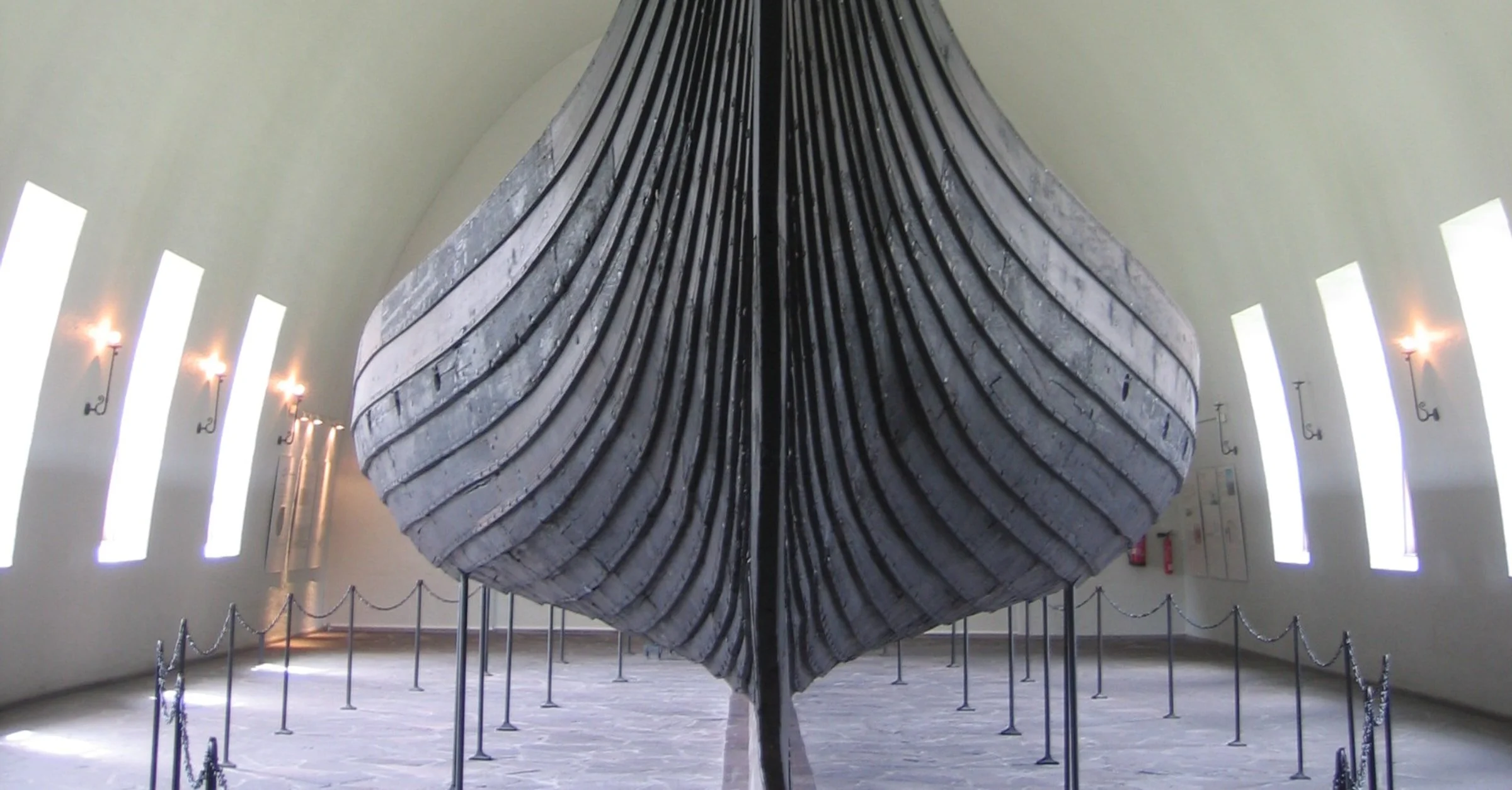
The Gokstad Ship is one of the most famous archaeological discoveries from the Viking Age. Excavated from a burial mound at Gokstad near Sandefjord in southeastern Norway, the ship provides extraordinary evidence for Viking shipbuilding, seafaring, burial practices, social hierarchy, and political culture.
Dating to the 9th century, the vessel demonstrates the sophistication of Scandinavian maritime technology at a time when Viking ships were carrying people across enormous distances.
The burial itself is equally important. The ship was not simply abandoned or buried as an object. It formed the central component of an elaborate funerary monument associated with a high-status individual.
The Discovery
The Gokstad mound attracted attention during the nineteenth century.
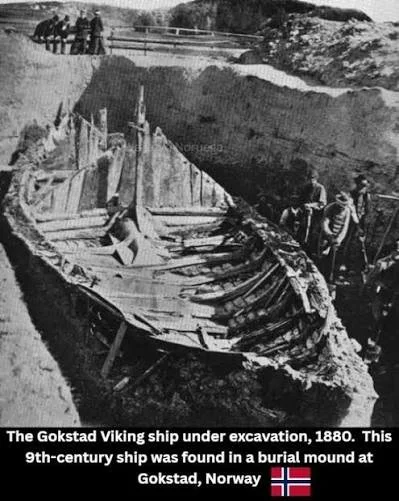
Archaeological excavation revealed the remains of a large clinker-built ship beneath the burial mound.
Although the burial had been disturbed and robbed in antiquity, enough survived to reconstruct the vessel and identify important aspects of the burial.
The discovery dramatically expanded scholarly understanding of Viking ships.
Construction of the Gokstad Ship
The Gokstad vessel demonstrates the classic Scandinavian clinker-building tradition.
Its hull consisted of overlapping wooden planks attached to a structural framework.
The design created a relatively light and flexible vessel.
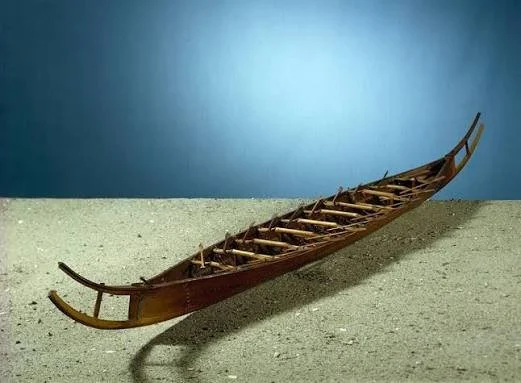
The ship could be propelled using both oars and sail.
Its dimensions indicate that it was capable of carrying a substantial crew while maintaining considerable speed and maneuverability.
The Ship's Design
The hull was carefully shaped to balance several competing requirements.
A vessel needed to be stable enough to carry people but light enough to move efficiently.
It needed sufficient freeboard for open water while maintaining a relatively shallow draft for coastal and riverine environments.
The ship's design reflects generations of accumulated maritime knowledge.
There was no modern naval architecture software.
Instead, shipwrights relied on proportional systems, templates, experience, and knowledge passed between generations.
The Burial
The ship was placed within a burial mound.
The deceased was positioned inside the ship, accompanied by grave goods.
Although many objects were removed by grave robbers, archaeologists recovered enough evidence to demonstrate that this was an elite burial.
The ship itself was an extraordinary offering.
Constructing such a vessel required enormous resources.
Who Was Buried at Gokstad?
The identity of the individual has been debated.
Scientific examination of the skeletal remains indicates that the person was a mature adult male who had suffered serious injuries during his lifetime.
These injuries have contributed to interpretations concerning his status and possible military activity.
However, archaeology cannot establish every aspect of his identity with certainty.
The burial demonstrates high status, but the precise political position of the individual remains a subject of scholarly discussion.
Ship Burials and Status
Ship burials were powerful statements.
A ship could symbolize travel, power, wealth, and social identity.
In a funerary context, it may also have represented transportation into another realm, although interpretations of Viking afterlife beliefs must be treated cautiously.
Not every ship burial necessarily carried exactly the same symbolic meaning.
Nevertheless, the enormous investment involved indicates that the deceased belonged to an elite social group.
The Gokstad Ship and Viking Warfare
The Gokstad ship has often been described as a warship.
Its design would certainly have made it suitable for military activity.
The vessel was fast, maneuverable, and capable of carrying a considerable number of people.
However, Viking ships were multifunctional.
The same vessel could potentially support warfare, transportation, trade, political travel, or exploration.
It is therefore better understood as a highly adaptable maritime platform.
Oars and Sailing
The ship possessed numerous rowing positions.
This provided propulsion when wind conditions were unfavorable.
The large sail, meanwhile, could dramatically increase speed under suitable conditions.
The combination of both systems was one of the major strengths of Viking vessels.
Crews could switch between rowing and sailing depending on conditions.
The Broader Viking World
The Gokstad Ship emerged during a period of increasing Scandinavian mobility.
Viking Age Scandinavians established connections throughout northern Europe and the North Atlantic.
They traded with communities across enormous distances, raided coastal settlements, established colonies, and founded political centers.
The ship was the technological foundation of this mobility.
Archaeological Reconstruction
Modern scholars have learned enormous amounts from the Gokstad vessel.
The surviving timbers reveal how planks were shaped and joined.
The dimensions of the ship provide information about hull design.
Experimental archaeology has gone further by constructing replicas based on Viking ship discoveries.
Such replicas have demonstrated that reconstructed Viking ships can achieve impressive speeds and seaworthiness.
Legacy
The Gokstad Ship became one of the defining symbols of Viking archaeology.
Its survival transformed modern understanding of medieval Scandinavian technology.
It also challenged older stereotypes of Vikings as technologically primitive warriors.
The ship demonstrates a sophisticated engineering tradition based on careful observation of materials and water behavior.
Conclusion
The Gokstad Ship is one of the most important surviving monuments of the Viking Age.
Its construction reveals extraordinary expertise in timber engineering and maritime design, while its burial context provides evidence for social hierarchy and elite funerary practices.
The vessel also represents something larger: the technological foundation of Viking mobility.
Without ships capable of crossing open water, navigating fjords, reaching shallow coastal areas, and transporting people and goods efficiently, the extraordinary geographical expansion of Viking Age Scandinavia would have been impossible.
The Gokstad Ship therefore stands as both a funerary monument and a technological masterpiece—a wooden vessel that preserves the story of one of medieval Europe's most remarkable maritime cultures.