• MAIN PAGE
  • LATEST NEWS
    • Lost Cities
    • Archaeology's Greatest Finds
    • Underwater Discoveries
    • Greatest Inventions
    • Studies
    • Blog
  • PHILOSOPHY
  • HISTORY
  • RELIGIONS
    • Africa
    • Anatolia
    • Arabian Peninsula
    • Balkan Region
    • China - East Asia
    • Europe
    • Eurasian Steppe
    • Levant
    • Mesopotamia
    • Oceania - SE Asia
    • Pre-Columbian Civilizations of America
    • Iranian Plateau - Central Asia
    • Indus Valley - South Asia
    • Japan
    • The Archaeologist Editor Group
    • Scientific Studies
    • Aegean Prehistory
    • Historical Period
    • Byzantine Middle Ages
    • Predynastic Period
    • Dynastic Period
    • Greco-Roman Egypt
  • Rome
  • PALEONTOLOGY
  • About us
Menu

The Archaeologist

  • MAIN PAGE
  • LATEST NEWS
  • DISCOVERIES
    • Lost Cities
    • Archaeology's Greatest Finds
    • Underwater Discoveries
    • Greatest Inventions
    • Studies
    • Blog
  • PHILOSOPHY
  • HISTORY
  • RELIGIONS
  • World Civilizations
    • Africa
    • Anatolia
    • Arabian Peninsula
    • Balkan Region
    • China - East Asia
    • Europe
    • Eurasian Steppe
    • Levant
    • Mesopotamia
    • Oceania - SE Asia
    • Pre-Columbian Civilizations of America
    • Iranian Plateau - Central Asia
    • Indus Valley - South Asia
    • Japan
    • The Archaeologist Editor Group
    • Scientific Studies
  • GREECE
    • Aegean Prehistory
    • Historical Period
    • Byzantine Middle Ages
  • Egypt
    • Predynastic Period
    • Dynastic Period
    • Greco-Roman Egypt
  • Rome
  • PALEONTOLOGY
  • About us
No results found

Abó Ruins: New Mexico's Salinas Pueblo

September 18, 2026

Introduction

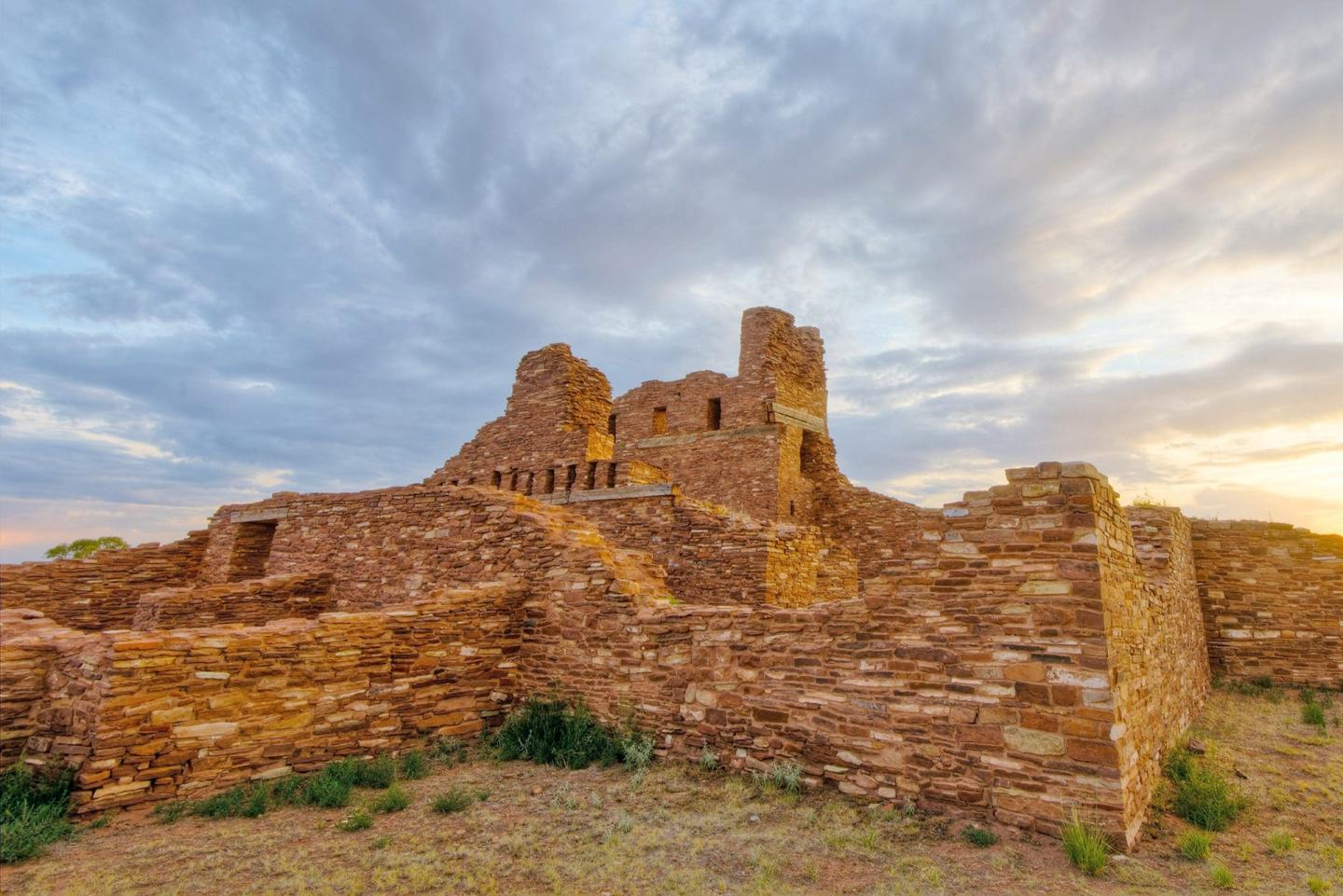
Abó is one of the three major sites preserved within Salinas Pueblo Missions National Monument in central New Mexico.

The site is particularly significant because it preserves both a large Pueblo settlement and the remains of a Spanish Franciscan mission.

The National Park Service identifies Pueblo occupation at Abó dating to approximately the thirteenth century, with evidence of interaction between Mogollon and Ancestral Pueblo traditions that contributed to the development of Tompiro culture.

The Pueblo

Abó was once a large and prosperous community.

Its inhabitants constructed substantial masonry buildings.

Agriculture, hunting, gathering, craft production, and trade supported the settlement.

Trade

The Salinas region occupied an important position between the Rio Grande and the Great Plains.

Trade routes brought communities into contact with peoples from different ecological and cultural zones.

Salt was particularly important.

The nearby saline environments provided a valuable resource that could be exchanged with neighboring communities.

Tompiro Culture

The people associated with Abó spoke a language identified by archaeologists as Tompiro.

Their culture reflected interaction between different Southwestern traditions.

This illustrates that cultural identity in the ancient Southwest could be complex and dynamic.

Spanish Arrival

Spanish colonization transformed the region.

Franciscan missionaries established a mission at Abó.

The mission church was constructed using local stone and Indigenous labor.

Its massive walls remain among the most impressive Spanish colonial ruins in New Mexico.

Cultural Interaction

The mission was not simply a European structure placed into an empty landscape.

It was built within an existing Pueblo community.

Indigenous people participated in construction and lived within a society increasingly shaped by Spanish colonial institutions.

This created both cultural exchange and profound conflict.

Abandonment

The Salinas communities experienced severe pressures during the seventeenth century.

Drought, famine, disease, Apache raids, and colonial pressures contributed to the eventual abandonment of the settlements.

The National Park Service notes that only a portion of the original Pueblo buildings at Abó remain visible today, while many remain unexcavated.

Archaeological Importance

Abó preserves multiple historical layers.

The Pueblo represents Indigenous history.

The mission represents Spanish colonial history.

The landscape preserves evidence of agricultural, economic, religious, and political change.

Conclusion

Abó is important precisely because it cannot be understood from a single perspective.

It is simultaneously a Pueblo archaeological site, a colonial mission landscape, and a record of Indigenous resilience.

Its ruins demonstrate how dramatically life changed in New Mexico after Spanish colonization.

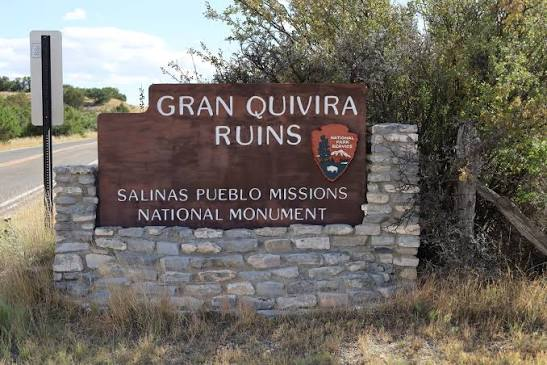
Gran Quivira: New Mexico's Largest Salinas Site

September 17, 2026

Introduction

Gran Quivira is one of the most spectacular archaeological sites in central New Mexico.

Today part of Salinas Pueblo Missions National Monument, the site preserves the remains of a large Pueblo settlement and two Spanish mission complexes.

Before European colonization, Gran Quivira was a major regional center inhabited by Tompiro-speaking Pueblo people.

At its height, estimates place the population between approximately 1,500 and 3,000 people.

A Major Pueblo Center

Gran Quivira was not a small village.

It contained multiple pueblos, kivas, plazas, and associated structures.

Mound 7 alone contained 226 rooms and represents the largest fully excavated Pueblo structure at the site.

Regional Trade

Gran Quivira occupied a strategic location.

The settlement stood near the transition between the Pueblo world and the Great Plains.

Trade connected residents with communities from distant regions.

Goods could include food, stone, pottery, pigments, and other materials.

The site therefore functioned as a crossroads.

Salt

The Salinas Basin was economically important because of its salt resources.

Salt could be used for food preservation and dietary needs and could also function as an exchange commodity.

The relationship between settlement and salt resources contributed to the area's prosperity.

Spanish Colonization

Spanish colonization began to transform Gran Quivira during the late sixteenth and seventeenth centuries.

Franciscan missionaries established churches and convent structures.

The remains of these buildings stand alongside the Pueblo ruins.

Two Historical Landscapes

Gran Quivira therefore contains two architectural traditions.

The first is Indigenous Pueblo architecture.

The second is Spanish colonial mission architecture.

Their physical proximity provides a powerful record of cultural encounter.

Abandonment

By the late seventeenth century, Gran Quivira had been abandoned.

The National Park Service identifies a combination of disease, drought, famine, and Apache raiding among the factors involved.

This reminds us that historical events rarely have a single cause.

Environmental stress could intensify political conflict.

Disease could reduce populations.

Economic disruption could make settlements increasingly difficult to maintain.

Archaeological Preservation

Gran Quivira was designated a national monument in 1909 and later became part of Salinas Pueblo Missions National Monument.

Archaeological excavation and stabilization have revealed portions of the Pueblo and mission complexes.

Conclusion

Gran Quivira was one of the great Pueblo centers of the Salinas Basin.

Its size, architecture, trade networks, salt resources, and colonial history make it one of the most important archaeological landscapes in New Mexico.

The ruins preserve not only architecture but also the history of cultural interaction, conflict, resilience, and transformation.

Kuaua Pueblo: New Mexico's Kiva Murals

September 17, 2026

Introduction

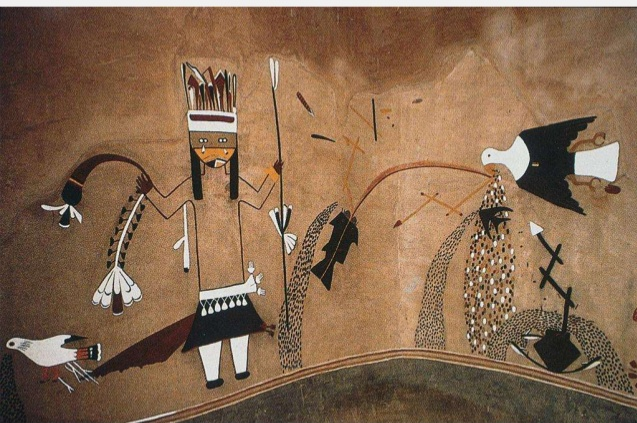
Kuaua Pueblo, located near the Rio Grande north of Albuquerque, is particularly famous for its remarkable kiva murals.

The site provides evidence for Pueblo architecture, ceremonial life, artistic traditions, agriculture, and the cultural transformations that occurred during the period of Spanish colonization.

The Pueblo

Kuaua was a substantial Pueblo settlement.

Its architecture included residential rooms, communal spaces, plazas, and kivas.

The community depended heavily on agriculture.

Corn, beans, squash, and other crops formed the foundation of subsistence.

Kivas

Kivas were important ceremonial structures within Pueblo communities.

They could be partly underground and often contained specialized architectural features.

Their location within settlements indicates that ritual activity was integrated into community life.

The Murals

Kuaua's murals are among its most important archaeological discoveries.

Painted designs covered interior walls of kivas.

The images provide rare evidence for Pueblo visual culture.

Because pigments can survive in protected underground structures, kiva murals can preserve artistic information that would otherwise disappear.

What Did the Murals Mean?

Interpretation requires caution.

Some imagery appears to involve supernatural beings, ceremonial figures, masks, animals, and geometric patterns.

However, researchers cannot assume that every image has one fixed meaning.

Pueblo religious traditions are complex, and many ceremonial practices were not recorded by early European observers.

Art as Historical Evidence

The murals are valuable because they demonstrate that Pueblo societies had sophisticated artistic traditions.

Painting was not merely decorative.

Images could participate in ceremonial and social systems.

The creation of murals required pigments, tools, artistic skill, and coordinated labor.

Spanish Contact

Kuaua also preserves evidence of the transition brought by Spanish colonization.

The arrival of Spanish settlers and missionaries introduced new political, religious, and economic systems.

Pueblo communities responded in different ways.

Some incorporated new materials and practices.

Others resisted colonial authority.

The result was a complicated process of cultural interaction.

Preservation

Murals are exceptionally fragile.

Light, humidity, temperature changes, physical contact, and exposure can damage pigments.

Archaeological conservation therefore requires carefully controlled environments.

Why Kuaua Matters

Kuaua's murals provide a rare visual window into Pueblo ceremonial life.

They allow researchers to study imagery that complements archaeological evidence from architecture and artifacts.

Together, these sources provide a more complete picture of prehistoric and early historic Pueblo society.

Conclusion

Kuaua Pueblo is one of the most valuable archaeological sites in New Mexico for understanding Pueblo art and ceremonial traditions.

Its kiva murals demonstrate the sophistication of Indigenous artistic expression and provide evidence of a rich symbolic world that existed long before and during the earliest period of European colonization.

The site reminds us that archaeological ruins are not simply remnants of buildings.

They preserve ideas, beliefs, artistic traditions, and memories embedded within physical landscapes.

Birka: Sweden's Viking Trading Island

September 14, 2026

Introduction

Birka was one of the most important trading centers in Viking Age Scandinavia.

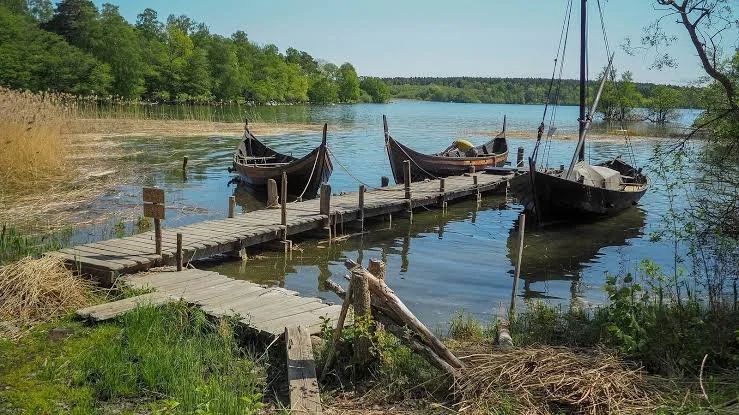
Located on the island of Björkö in Lake Mälaren, Sweden, Birka connected the Scandinavian world with extensive commercial networks extending across the Baltic, eastern Europe, the Islamic world, and western Europe.

The settlement became a major center of commerce, craftsmanship, cultural exchange, and political activity.

Its archaeological remains provide some of the richest evidence for Viking Age urban life.

The Island Location

Birka's position on an island within Lake Mälaren offered both advantages and challenges.

Waterways provided efficient transportation.

The surrounding islands created a protected maritime environment.

At the same time, controlling access to the settlement required ships and knowledge of local waterways.

International Trade

Birka's greatest importance came from trade.

Archaeologists have recovered objects originating from distant parts of the world.

These include:

  • Islamic silver coins;

  • beads;

  • textiles;

  • glass;

  • jewelry;

  • weapons;

  • ceramics;

  • exotic materials.

Such discoveries demonstrate that Viking Age Scandinavia was connected to enormous trade networks.

Islamic Silver

One of Birka's most famous archaeological characteristics is the large number of Islamic silver coins.

Many came from the Islamic world through eastern European trade routes.

Their presence demonstrates that Scandinavian merchants participated in long-distance exchange extending deep into Eurasia.

Craft Production

Birka was also a major manufacturing center.

Craftspeople produced jewelry, weapons, textiles, beads, and other objects.

The settlement therefore did not simply redistribute imported goods.

It transformed raw materials into new products.

The Harbor

Ships were essential to Birka.

The harbor allowed merchants to unload cargo and transport goods throughout the Baltic region.

Maritime technology was therefore central to the settlement's economic success.

Defensive Structures

Birka was protected by defensive works.

Fortifications helped safeguard the settlement and its wealth.

They also demonstrate that trade centers required security.

A marketplace containing valuable goods would naturally become an important strategic target.

Burials

Birka is famous for its extensive cemeteries.

Thousands of graves provide evidence about the population.

Burials contain weapons, jewelry, tools, clothing accessories, and other objects.

These materials allow archaeologists to investigate social identity, gender roles, wealth, trade, and religious beliefs.

The Famous Warrior Burial

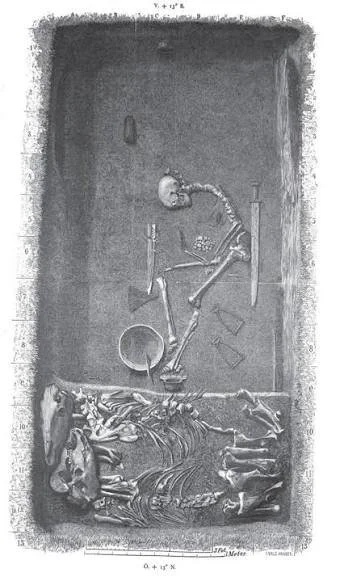
One burial at Birka became especially famous because it was originally interpreted as belonging to a male warrior.

Later osteological and DNA research demonstrated that the individual was biologically female.

This discovery stimulated major discussions about gender, identity, and warfare in Viking Age society.

It also demonstrates why archaeological interpretations must remain open to revision as scientific methods improve.

Christianity

Christian influence reached Birka relatively early.

Missionaries visited the settlement, including Ansgar in the ninth century.

Christianity initially existed alongside traditional Norse religious beliefs.

This makes Birka valuable for studying religious transition.

Social Diversity

Birka's international trade likely brought people from different regions.

Merchants, artisans, farmers, warriors, slaves, travelers, and political representatives could all participate in the settlement's economy.

This made Birka one of the most cosmopolitan environments in Viking Age Scandinavia.

Decline

Birka eventually lost its importance.

Changes in waterways, political organization, trade routes, and economic geography contributed to its decline.

Nearby Sigtuna later became a more important Scandinavian center.

Archaeological Importance

Birka is indispensable for understanding Viking Age commerce.

Its artifacts demonstrate connections between Scandinavia and regions separated by thousands of kilometers.

The settlement also provides evidence for urban life, craftsmanship, religion, burial practices, social organization, and political power.

Conclusion

Birka was one of the great commercial centers of the Viking Age.

Its island location, harbor, workshops, cemeteries, imported goods, and enormous collection of silver coins reveal a society deeply connected to the wider medieval world.

The settlement challenges the image of Viking Scandinavia as isolated and rural.

Birka was cosmopolitan, commercially sophisticated, technologically capable, and culturally diverse.

Its archaeological remains demonstrate that the Viking Age was fundamentally an age of movement—of ships, merchants, metals, technologies, beliefs, and people crossing the waterways of northern Europe and connecting Scandinavia to distant civilizations.

Uppåkra: Sweden's Iron Age Power Center

September 14, 2026

Introduction

Uppåkra was one of the most important settlements in Iron Age Scandinavia.

Located in southern Sweden near modern Lund, the site was occupied for many centuries and developed into a major political, economic, religious, and cultural center.

Its enormous archaeological record contains hundreds of thousands of artifacts.

This makes Uppåkra one of the richest archaeological sites for understanding the transformation of southern Scandinavia from the Iron Age into the Viking Age.

Long Occupation

Uppåkra was occupied for approximately a millennium.

This long sequence allows archaeologists to study social change over generations.

Rather than providing a snapshot of one moment, the site records continuous transformation.

Political Power

The settlement appears to have been an important elite center.

Large halls and high-status objects demonstrate concentrated wealth.

Political leaders could use the site to control surrounding communities and economic resources.

The Cult House

One of Uppåkra's most famous discoveries is a small but highly significant ritual building.

The structure is generally interpreted as a cult house.

Its architectural form and associated artifacts indicate that religious ceremonies took place there.

Religious Artifacts

Archaeologists have discovered numerous objects with religious significance.

These include figurines, decorated objects, and ritual deposits.

They provide evidence for pre-Christian Scandinavian beliefs.

Craft Production

Uppåkra was also a major manufacturing center.

Metalworking, jewelry production, and other specialized crafts occurred there.

Craftspeople required access to raw materials and elite patrons.

International Connections

Imported objects demonstrate that Uppåkra participated in long-distance trade.

Connections extended across Scandinavia and continental Europe.

Luxury objects provided elites with ways to demonstrate wealth and status.

The Gold Foils

Small decorative gold objects known as gold foils are among the site's most remarkable finds.

They often depict human figures.

Their exact meanings remain debated, but they are widely associated with elite or religious contexts.

Warfare

Weapons found at Uppåkra demonstrate that military power was part of elite society.

Weapons could function both practically and symbolically.

A warrior's equipment communicated social status as well as battlefield capability.

The Move to Lund

Around the end of the Viking Age, the center of settlement shifted toward Lund.

This transformation probably reflected changes in political organization and Christian urban development.

The transition demonstrates the emergence of medieval towns and new forms of royal administration.

Conclusion

Uppåkra was a major Iron Age center of power whose importance extended across centuries.

Its halls, ritual structures, gold objects, workshops, weapons, and imported goods reveal a society characterized by wealth, craftsmanship, political authority, and religious complexity.

The site's long history makes it particularly valuable because it demonstrates how Viking Age and medieval Scandinavian society emerged from earlier Iron Age traditions.

Uppåkra was not simply an ancient settlement.

It was a political and cultural heartland that helped shape the development of southern Scandinavia.

Tissø: Denmark's Viking Age Lake Village

September 14, 2026

Introduction

Tissø was an important Viking Age settlement and elite center located near a lake on the Danish island of Zealand.

The site is particularly valuable because it combines evidence for aristocratic residence, craft production, religious activity, agriculture, and long-distance trade.

Tissø demonstrates that Viking Age power was not concentrated exclusively in fortified towns.

Elite centers could also develop within rural landscapes.

The Lake Setting

The settlement was situated beside Lake Tissø.

Water provided transportation, food resources, and symbolic significance.

The lake could also serve as a natural boundary around which settlement and ritual activities developed.

The Elite Residence

Archaeological discoveries indicate the presence of a large elite hall.

The building was probably associated with a powerful local ruler or aristocratic family.

Such halls were centers of political and social life.

Craft Production

Tissø was an important manufacturing center.

Archaeologists have discovered evidence of:

  • metalworking;

  • jewelry production;

  • weapon manufacture;

  • textile production;

  • bone and antler working.

Craft specialization indicates that elite households could support skilled workers.

International Trade

Imported artifacts demonstrate contact with distant regions.

Luxury objects from continental Europe and other Scandinavian areas reached Tissø.

The site therefore participated in broader commercial networks.

Religion

Tissø is particularly important for understanding Viking religious practices.

Deposits of valuable objects in and around the lake have been interpreted in connection with ritual activity.

Water played a major role in many ancient religious traditions.

Objects deposited in lakes may have been offerings to supernatural powers.

Elite Power

The combination of a large hall, workshops, wealth, and ritual evidence suggests that Tissø was a major center of authority.

The ruler associated with the site could command labor and access to trade networks.

Rural Kingship

Tissø demonstrates that Viking Age political power did not require urban living.

An elite center could control surrounding agricultural communities while maintaining international connections.

The hall was the political heart of a wider landscape.

Archaeological Importance

Tissø helps archaeologists reconstruct the relationship between:

  • agriculture;

  • craft production;

  • trade;

  • religion;

  • political authority.

These systems were interconnected.

Conclusion

Tissø was an important Viking Age elite settlement where political authority, craftsmanship, commerce, and religion converged.

Its lakeside location and ritual deposits make it especially valuable for studying Viking belief systems, while its workshops and imported objects reveal extensive economic connections.

Tissø demonstrates that Viking Age Denmark consisted of a network of elite centers, farms, trading towns, religious sites, and military installations.

Its archaeological remains provide a detailed picture of how power operated within the Scandinavian countryside.

Lejre: Denmark's Royal Iron Age Hal

September 14, 2026

Introduction

Lejre is one of Denmark's most important archaeological sites associated with early royal power.

Located on Zealand, the site contains evidence of elite halls, ritual activity, settlement, and monumental architecture extending across several centuries.

Lejre has also been connected with medieval legends concerning Danish kings.

Although archaeology cannot simply confirm every legendary story, the extraordinary remains demonstrate that the region genuinely was an important center of power.

The Royal Hall

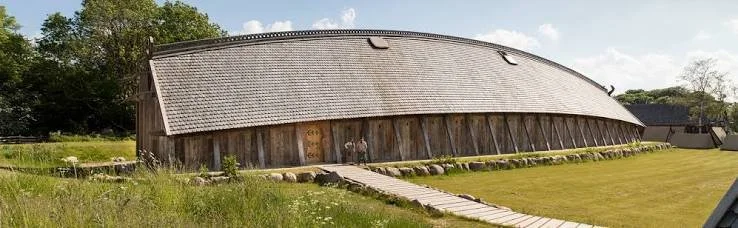
The most famous archaeological feature at Lejre is the sequence of large halls.

These structures were constructed from timber and required substantial resources.

Their size indicates that they were not ordinary houses.

They were probably used for elite gatherings, feasting, political meetings, and ceremonies.

Feasting and Kingship

Feasting was an essential component of early medieval political culture.

A powerful leader demonstrated generosity by distributing food and drink.

Guests developed relationships with the ruler.

Warriors could receive gifts.

Alliances could be strengthened.

The hall therefore functioned as a political institution.

Archaeological Finds

Lejre has produced numerous artifacts, including:

  • jewelry;

  • weapons;

  • glass vessels;

  • imported objects;

  • animal remains;

  • tools;

  • craft materials.

These discoveries indicate substantial wealth and international connections.

Myth and Archaeology

Lejre became associated with legendary Danish rulers, particularly figures preserved in medieval literature.

However, archaeological evidence must be interpreted independently from later stories.

The legends may preserve memories of powerful dynasties, but they were written centuries after the periods they describe.

Ritual Activity

Evidence suggests that religious activity occurred at Lejre.

Animal remains and unusual deposits may represent ritual practices.

The connection between political halls and religious ceremonies illustrates the close relationship between authority and belief.

Landscape

Lejre's significance extends beyond individual buildings.

The surrounding landscape contains archaeological features demonstrating long-term occupation and monument building.

The placement of elite structures within the landscape communicated status.

Political Center

Lejre may have functioned as a regional or dynastic center.

Its wealth and monumental architecture demonstrate the concentration of resources.

The ability to construct repeated large halls indicates that political authority persisted across generations.

Conclusion

Lejre offers a rare archaeological glimpse into the world of early Scandinavian kingship.

Its enormous halls, wealth, ritual evidence, and long occupation demonstrate that elite political centers existed before the fully developed Viking Age.

The site's association with Danish legend adds cultural significance, but its archaeological evidence is important in its own right.

Lejre stands as a powerful reminder that medieval kingship grew from centuries of Scandinavian traditions involving feasting, warfare, religion, wealth, and control of people and resources.

Gudme: Denmark's Iron Age Gold Hoard Site

September 14, 2026

Introduction

Gudme, located on the Danish island of Funen, was one of the most important centers of power in Iron Age Scandinavia.

Its archaeological remains reveal a wealthy and influential community involved in craft production, long-distance trade, elite culture, and religious activity.

The enormous quantities of precious metal discovered in the region have made Gudme especially famous.

A Wealthy Power Center

Gudme flourished particularly during the late Iron Age.

Archaeologists have uncovered evidence suggesting that the settlement was more than an ordinary farming community.

Large halls, workshops, imported objects, and precious metals indicate the presence of an elite political center.

Gold and Silver

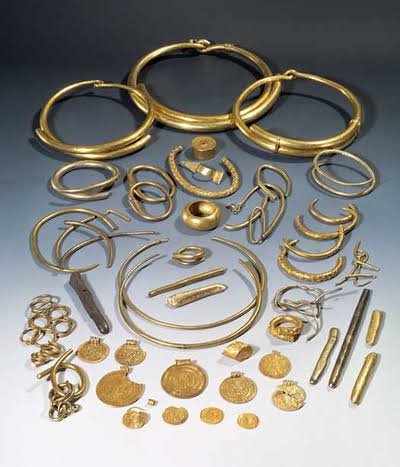
The discovery of gold objects is one of Gudme's defining features.

Gold was an elite material.

It required access to wealth and extensive exchange networks.

Gold jewelry, ornaments, and other objects demonstrate the concentration of resources at the site.

Trade Networks

Gudme was connected to wider European networks.

Imported objects demonstrate interaction with continental Europe and other parts of Scandinavia.

Trade may have brought luxury goods, raw materials, technologies, and cultural influences to the settlement.

Craft Production

Gudme was also a major center of craftsmanship.

Metalworking required specialist knowledge.

The presence of workshops indicates that elite communities could support highly skilled artisans.

Craft production reinforced the status of political leaders by allowing them to acquire and display exceptional objects.

The Great Halls

Large halls were central to elite life.

They could serve as residences, meeting places, ceremonial spaces, and locations for feasting.

Feasting was politically important because leaders strengthened alliances by providing food and hospitality.

The hall therefore represented both architecture and social power.

Religion

Gudme appears to have possessed significant religious importance.

The association between elite halls and ritual activity suggests that political and religious authority could overlap.

Religious ceremonies may have reinforced the legitimacy of local leaders.

Archaeological Significance

Gudme challenges simplistic ideas about Iron Age Scandinavia.

The region possessed sophisticated political economies before the Viking Age.

Long-distance trade, elite culture, craft specialization, and religious institutions were already well developed.

Transition to the Viking Age

The importance of Gudme declined as other centers rose.

Nearby Lundeborg became an important trading site.

This transition demonstrates how economic centers could shift as political and commercial networks changed.

Conclusion

Gudme represents one of the most important Iron Age power centers in Denmark.

Its gold, workshops, halls, imported objects, and religious evidence demonstrate the wealth and complexity of Scandinavian society before the Viking Age.

Rather than appearing suddenly in the eighth century, Viking Age culture emerged from earlier traditions of trade, craftsmanship, elite power, and international exchange.

Gudme provides an essential archaeological foundation for understanding that development.

Nonnebakken: Odense's Viking Fort Remains

September 14, 2026

Introduction

Nonnebakken was one of the Viking Age ring fortresses associated with Denmark's late tenth-century royal building program.

Located in modern Odense on the island of Funen, the fortress represents an important stage in the development of Danish royal authority.

Although much of the original structure has disappeared beneath later urban development, archaeological investigations have revealed evidence of its enormous circular design.

Location

Nonnebakken occupied an important position near Odense.

Its location gave it access to regional transportation routes and surrounding agricultural resources.

The fortress could therefore serve as a strategic center for controlling movement through Funen.

Architectural Design

Like other Danish ring fortresses, Nonnebakken was characterized by a circular defensive enclosure.

Its layout appears to have followed a carefully planned geometric design.

The similarities with other fortresses suggest that they were constructed as part of a coordinated royal program.

Harald Bluetooth

The fortress is generally associated with the reign of Harald Bluetooth.

During this period Denmark experienced increasing political centralization.

The king needed mechanisms for controlling territory and mobilizing military forces.

Nonnebakken was likely part of that system.

Military Function

A fortress could accommodate warriors and protect supplies.

It could also serve as a staging point for military operations.

Its location on Funen made it strategically valuable because the island occupied a central position between parts of Denmark.

Archaeological Evidence

Excavations and geophysical investigations have helped reconstruct the fortress despite later development.

Evidence of ramparts, ditches, and internal organization demonstrates the site's scale.

Archaeological methods are especially important at Nonnebakken because much of the monument is no longer visible above ground.

Urban Transformation

Modern Odense developed around and over parts of the ancient site.

This illustrates an important challenge in archaeology.

Historic settlements often remain beneath modern cities.

Archaeologists must therefore combine excavation with:

  • aerial photography;

  • geophysical surveys;

  • historical maps;

  • soil analysis;

  • digital reconstruction.

Political Significance

Nonnebakken demonstrates that royal power extended beyond Jutland.

The construction of major fortifications on Funen indicates that political integration involved strategic infrastructure across the Danish kingdom.

Conclusion

Nonnebakken is a reminder that Viking Age monuments do not always survive as spectacular ruins.

Much of the fortress is now hidden beneath later development, yet archaeological investigation continues to reveal its original form.

As one of the Danish ring fortresses, Nonnebakken provides evidence for Harald Bluetooth's efforts to organize territory, strengthen military authority, and consolidate the Danish kingdom.

Its buried remains represent an important chapter in the emergence of a more centralized Scandinavian state.

Aggersborg: Denmark's Largest Viking Fort

September 14, 2026

Introduction

Aggersborg is the largest and most spectacular of Denmark's Viking Age ring fortresses.

Located near the Limfjord in northern Jutland, Aggersborg occupied a strategically important position controlling one of Denmark's most significant waterways.

Its enormous circular enclosure and highly standardized internal layout demonstrate a level of military and architectural planning rarely associated with early medieval Scandinavia.

Scale

Aggersborg was substantially larger than the other known Danish ring fortresses.

Its enormous dimensions allowed it to accommodate large numbers of people.

The scale of the structure demonstrates that its construction required extraordinary resources.

Circular Design

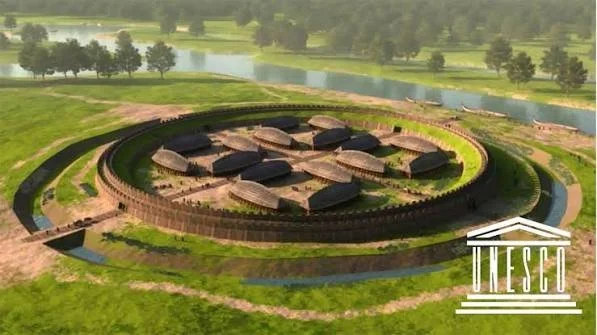
The fortress consisted of a massive circular rampart divided by major roads.

Four principal entrances were positioned according to a carefully planned geometric scheme.

Inside were groups of standardized longhouses.

The symmetry is one of Aggersborg's most remarkable characteristics.

Engineering

Building Aggersborg required:

  • surveying;

  • earthmoving;

  • timber construction;

  • road construction;

  • drainage;

  • logistical planning.

Workers needed food and equipment throughout the construction process.

The fortress therefore represents not only military technology but administrative capacity.

Strategic Geography

The Limfjord was a major transportation corridor.

Ships could use the waterway to move across northern Jutland.

Controlling this region allowed rulers to influence both commercial and military movement.

Aggersborg's position was therefore strategically valuable.

Royal Authority

Aggersborg is closely associated with the political ambitions of Harald Bluetooth.

The fortress formed part of a broader network of royal installations.

These sites likely helped the monarchy coordinate military forces and reinforce control over strategically important areas.

International Context

The construction of Aggersborg occurred during a period when Scandinavian kingdoms increasingly interacted with continental European powers.

Military organization was changing.

Kings were building stronger political institutions.

Christianity was expanding.

Trade networks were becoming increasingly integrated.

Aggersborg belongs to this broader transformation.

Daily Life

Despite its military appearance, people lived within the fortress.

Food preparation, craft production, animal keeping, and domestic activities all occurred.

Archaeological remains provide evidence of what inhabitants ate and how they worked.

The Meaning of the Fortresses

Scholars debate whether the ring fortresses were purely military.

Possible functions include:

  • royal residences;

  • military camps;

  • administrative centers;

  • training facilities;

  • logistical depots;

  • political symbols.

It is possible that they served several functions simultaneously.

Short Occupation

One striking feature of Aggersborg is that it appears to have been used for a relatively short period.

This raises important questions.

Why would a king invest enormous resources in a fortress that was not occupied continuously for centuries?

One possibility is that the fortress was designed for a particular political or military campaign.

Conclusion

Aggersborg represents the extraordinary organizational capacity of late Viking Age Denmark.

Its massive size, geometric design, strategic location, and standardized architecture reveal a centralized state capable of mobilizing enormous resources.

The fortress stands as a monument to a period when Scandinavian kingship was becoming more powerful and structured.

Aggersborg was therefore not merely a defensive wall.

It was an expression of royal strategy, military organization, engineering, and political ambition.

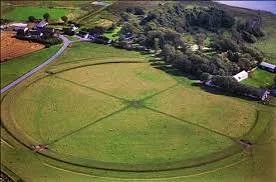
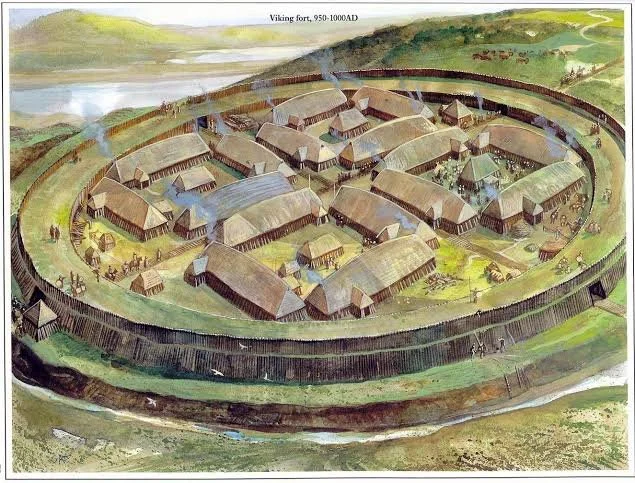
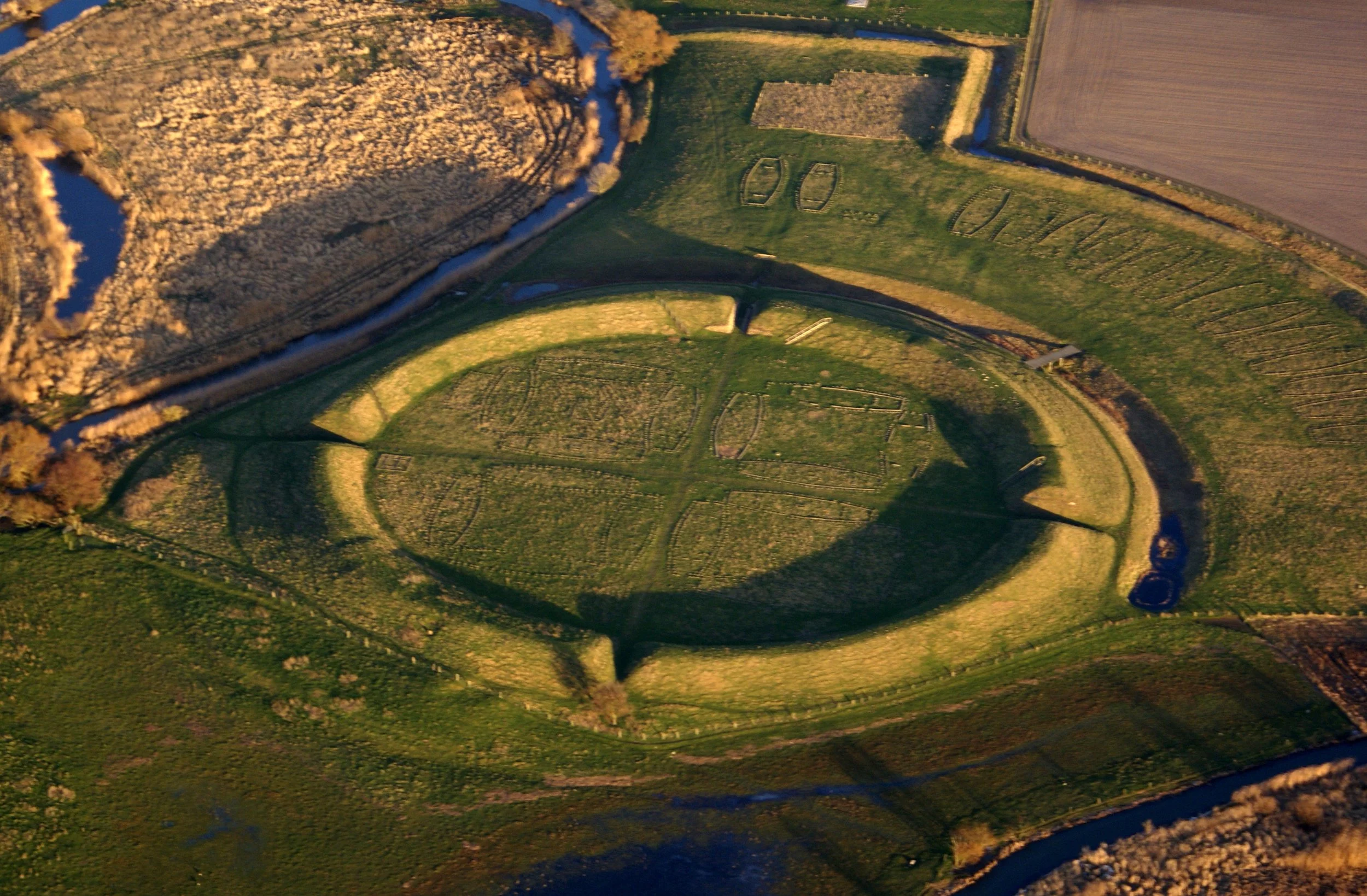
Trelleborg: Denmark's Massive Viking Fort

September 14, 2026

Introduction

Trelleborg is one of Denmark's most famous Viking Age fortresses and an important example of the highly organized military architecture associated with the reign of Harald Bluetooth.

The fortress was constructed according to a precise geometric plan.

Its circular enclosure, monumental ramparts, standardized houses, and strategic location demonstrate that Viking Age Denmark possessed sophisticated military and administrative capabilities.

Construction

Trelleborg required enormous quantities of labor.

Earth had to be excavated and moved to create defensive banks and ditches.

Timber was needed for buildings and fortifications.

The standardized design indicates that construction was planned before work began.

The Fortress Layout

The main fortress was circular.

Inside were longhouses arranged in a carefully organized pattern.

Roads and entrances were systematically positioned.

This symmetry suggests the involvement of skilled planners and surveyors.

Military Organization

Trelleborg could accommodate substantial numbers of people.

Its military purpose probably included training, mobilization, storage, and strategic defense.

The fortress may have served as a temporary base for royal forces rather than simply a permanent city.

The Viking Army

The fortress provides evidence for a more organized form of warfare than the stereotype of independent raiders might suggest.

A centralized king needed warriors who could assemble rapidly.

They required food, weapons, horses, ships, and logistical support.

Fortresses such as Trelleborg could facilitate this organization.

The River and Strategic Position

Trelleborg was positioned near important waterways.

This allowed movement of troops and supplies.

Water transportation was essential to Scandinavian warfare.

A fortress controlling river and land routes could have significant strategic importance.

Archaeological Evidence

Artifacts discovered at the site include:

  • weapons;

  • tools;

  • jewelry;

  • agricultural equipment;

  • household objects;

  • craft materials.

These finds demonstrate that the fortress was a functioning settlement rather than a purely symbolic monument.

Burials

Nearby graves provide evidence for individuals associated with the community.

Human remains can help archaeologists investigate age, sex, health, diet, and injuries.

Such evidence can reveal the physical realities of Viking life.

Royal Power

Trelleborg is best understood within the political transformation of tenth-century Denmark.

Harald Bluetooth was attempting to strengthen royal control over a more unified kingdom.

Fortresses could serve as instruments of that process.

They provided military infrastructure while simultaneously demonstrating royal authority.

Christianization

Harald's reign also witnessed the growing influence of Christianity.

The construction of military fortresses and the promotion of Christianity occurred within the same period of political consolidation.

Both processes strengthened connections between Denmark and continental Europe.

Conclusion

Trelleborg demonstrates the sophisticated organizational capabilities of Viking Age Denmark.

Its geometry, standardized architecture, military function, and archaeological remains reveal a society capable of large-scale planning.

Rather than depicting Vikings simply as independent warriors, Trelleborg reveals the administrative machinery behind royal armies and territorial control.

It was a fortress, military base, logistical center, and powerful symbol of centralized kingship.

Fyrkat: Denmark's Viking Ring Fortress

September 14, 2026

Introduction

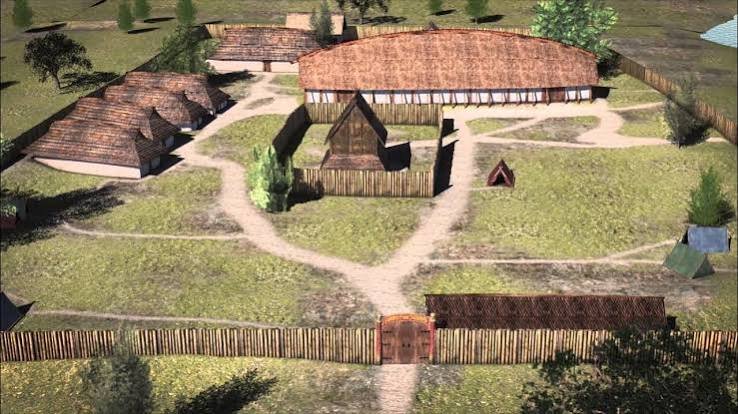
Fyrkat is one of the remarkable circular fortresses constructed in Denmark during the reign of King Harald Bluetooth in the late tenth century.

Its highly organized geometry distinguishes it from ordinary fortified settlements.

The fortress consisted of a circular defensive enclosure divided into carefully planned sections, with houses arranged according to a remarkably regular design.

Fyrkat provides important evidence for the organizational capabilities of Viking Age royal power.

The Ring Fortress Design

Fyrkat's most distinctive feature is its circular plan.

The fortress was surrounded by an earthwork rampart and defensive ditch.

Inside, buildings were organized according to a symmetrical layout.

This level of planning required surveying, engineering, labor coordination, and centralized authority.

Royal Construction

The construction of Fyrkat was probably beyond the capacity of a small local community acting independently.

Large quantities of earth and timber had to be moved.

Workers needed food, tools, supervision, and logistical support.

The fortress therefore represents the ability of the Danish monarchy to mobilize substantial resources.

The Longhouses

Inside Fyrkat stood large timber longhouses.

Their standardized form suggests that the buildings were constructed according to a planned architectural design.

Such standardization is important evidence for centralized planning.

The fortress was not a randomly developed village.

Military Function

Fyrkat's defensive character suggests a military purpose.

The fort could accommodate warriors and provide a strategic position from which the surrounding region could be controlled.

However, historians continue to debate exactly how these fortresses functioned.

They may have served military, administrative, political, and logistical purposes simultaneously.

Harald Bluetooth

Fyrkat belongs to a group of circular fortresses associated with Harald Bluetooth.

These include Aggersborg, Trelleborg, and other fortifications.

Their construction occurred during a period when Denmark was becoming more politically centralized.

The fortresses therefore form part of a broader transformation in royal authority.

Archaeological Finds

Excavations at Fyrkat have produced weapons, tools, jewelry, household objects, and other artifacts.

These finds provide evidence about the people who occupied the fortress.

Burials near the site also contribute information about the community.

The Fyrkat Woman

One particularly interesting burial is associated with a richly equipped woman.

Her grave contained objects that have sometimes been interpreted in connection with magic or ritual practices.

Such finds demonstrate the complexity of Viking Age belief and identity.

Fortification Technology

The fortress demonstrates sophisticated defensive engineering.

Earth ramparts provided elevated defensive positions.

Timber structures could reinforce entrances and walls.

Ditches made direct assault more difficult.

The circular layout allowed defenders to monitor the surrounding area.

Political Symbolism

Fyrkat was not only a military structure.

Its geometric precision would itself have communicated royal authority.

The ability to impose such a design upon the landscape demonstrated power.

The fortress essentially announced that the king possessed the organizational capacity to control people, resources, and territory.

Conclusion

Fyrkat represents one of the clearest archaeological expressions of centralized Viking Age kingship.

Its circular architecture, standardized longhouses, defensive earthworks, and archaeological remains reveal an unusually organized settlement.

The fortress illustrates the growing ability of Danish rulers to mobilize large populations and construct monumental infrastructure.

Fyrkat therefore stands as both a military installation and a symbol of political transformation during the late Viking Age.

Jelling Stones: Denmark's 10th-Century Runestones

September 14, 2026

Introduction

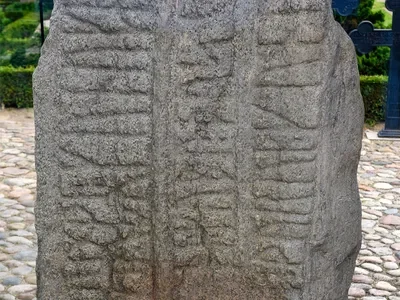
The Jelling Stones are among the most important monuments in Danish history.

Standing at Jelling in central Jutland, the two famous runestones are closely associated with King Gorm and King Harald Bluetooth.

The larger stone erected by Harald is particularly significant because its inscription refers to Harald's rule over Denmark and Norway and his conversion of the Danes to Christianity.

The monument therefore combines political authority, dynastic memory, religion, writing, and monumental art.

King Gorm's Stone

The older stone is associated with King Gorm.

Its inscription commemorates his wife, Thyra.

This demonstrates that runestones served as monuments to individuals and families.

They could preserve memory in a public and highly visible form.

Harald Bluetooth's Stone

The larger Jelling Stone was erected by Harald Bluetooth.

Its inscription presents Harald as a powerful ruler and emphasizes his achievements.

Among these was his claim to have unified Denmark and made the Danes Christian.

This is one of the clearest statements of royal ideology from Viking Age Scandinavia.

Christianity and Political Power

Harald's Christian conversion was not simply a religious event.

Christianity offered rulers new political and ideological tools.

Kings could present themselves as divinely sanctioned authorities.

Church institutions could strengthen royal administration.

Christianity also connected Denmark more closely to the wider European Christian world.

The Images

The larger Jelling Stone contains both runic writing and elaborate imagery.

One famous figure is interpreted as Christ.

The monument therefore represents the merging of Scandinavian artistic traditions with Christian symbolism.

Runic Writing

Runes were more than decorative symbols.

They were a practical writing system used for names, memorial inscriptions, ownership statements, magical formulas, and other purposes.

At Jelling, writing became a tool of royal propaganda.

The king's achievements were publicly displayed in durable stone.

The Jelling Monument Complex

The stones were part of a much larger monumental landscape.

The site included burial mounds, a church, and other structures.

Together they formed a carefully organized royal complex.

The arrangement demonstrates that architecture and landscape were used to communicate political authority.

Dynastic Memory

The Jelling monuments linked Harald to his parents and royal ancestors.

This strengthened dynastic legitimacy.

A ruler did not simply govern because he possessed military power.

He also needed to establish a convincing historical connection with earlier rulers.

Historical Significance

The Jelling Stones are frequently described as a kind of national monument because of their connection with the formation of Denmark.

However, historians must be careful not to project modern nationalism backward.

The tenth-century political world was structured around kingship, dynasties, alliances, territories, and personal loyalties rather than modern nation-states.

Conclusion

The Jelling Stones represent one of the most important surviving expressions of Viking Age royal ideology.

Through their inscriptions, imagery, and monumental setting, they communicate ideas about family, kingship, conquest, Christianity, and political legitimacy.

They demonstrate how Viking rulers used both traditional Scandinavian forms and new Christian symbolism to construct powerful statements about their authority.

Jelling is therefore not simply a collection of ancient stones.

It is a carefully constructed political landscape that captures Denmark during one of the most transformative periods in its history.

Ribe: Denmark's 8th-Century Trading Post

September 14, 2026

Introduction

Ribe is one of the earliest and most significant urban settlements in Scandinavia.

Founded during the early eighth century in southwestern Denmark, Ribe developed into a major center of commerce, craftsmanship, and cultural exchange.

Its importance is particularly significant because it emerged before the conventional beginning of the Viking Age in 793.

Ribe therefore demonstrates that the commercial and technological foundations of the Viking world existed before the famous raids associated with Viking history.

The Birth of a Trading Center

Ribe was established near the River Ribe and close to the North Sea.

The location provided access to maritime transportation while also connecting the settlement to inland communities.

Its position made it suitable for trade between Scandinavia and western Europe.

Merchants could bring goods to Ribe, exchange them, and continue onward through regional networks.

Early Urban Development

Ribe was not initially a large city.

It began as a specialized marketplace.

Temporary market stalls and workshops gradually developed into a more permanent settlement.

This process represents one of the earliest examples of Scandinavian urbanization.

Archaeological Discoveries

Ribe has produced an extraordinary archaeological record.

Excavations have uncovered:

  • coins;

  • beads;

  • imported ceramics;

  • glass;

  • bronze objects;

  • iron tools;

  • animal bones;

  • textile equipment;

  • craft debris;

  • building remains.

Because some occupation layers preserved organic materials unusually well, archaeologists have been able to reconstruct many aspects of daily life.

International Trade

Ribe was connected to a broad trading network.

Merchants interacted with communities from the North Sea and continental Europe.

Objects from distant regions demonstrate that Ribe's inhabitants were not economically isolated.

The exchange of goods also meant the exchange of ideas, technologies, artistic traditions, and religious practices.

Beadmaking

One of Ribe's most famous archaeological signatures is evidence for bead production.

Glass was melted and shaped into colorful beads.

The presence of manufacturing debris demonstrates that beads were not simply imported finished products.

Specialized craftspeople produced them locally.

Metalworking

Metalworkers also operated at Ribe.

Iron and non-ferrous metals could be transformed into tools, ornaments, fittings, and other objects.

Metalworking required specialized knowledge and access to fuel and raw materials.

Its presence indicates a sophisticated craft economy.

Coins and Commerce

Coins provide another important source of information.

Early Scandinavian trade did not depend entirely on coins.

Silver could be weighed and exchanged.

Nevertheless, coins from different regions demonstrate contact with foreign economic systems.

Weights and scales allowed merchants to conduct transactions efficiently.

Daily Life

Ribe was populated by people from many social backgrounds.

Merchants and craftspeople interacted with farmers, sailors, laborers, and political authorities.

The archaeological record reveals household activities, food consumption, manufacturing, clothing, and personal adornment.

This makes Ribe one of the best places to study ordinary life in early medieval Scandinavia.

Ribe and the Viking Age

Ribe's early foundation changes how the Viking Age should be understood.

The Viking Age did not suddenly begin when Scandinavian warriors attacked monasteries.

Long-distance trade, shipbuilding, specialized craftsmanship, and political organization were already developing.

Ribe represents part of this earlier transformation.

Christianity

Christianity eventually became increasingly important in Ribe.

The establishment of ecclesiastical institutions reflected the broader Christianization of Denmark.

Religious transformation affected burial practices, architecture, artistic styles, and political organization.

Urban Continuity

Unlike many Viking Age settlements that disappeared, Ribe continued developing through the medieval period.

This continuity makes it especially valuable.

Archaeologists can compare earlier Viking-period activity with later medieval urban development.

Conclusion

Ribe was one of Scandinavia's earliest trading towns and an important precursor to the mature Viking Age commercial world.

Its archaeological evidence reveals long-distance trade, specialized crafts, monetary exchange, international contacts, and emerging urban life.

Ribe reminds us that the Viking Age was not simply an age of raiding.

It was also an age of commerce and innovation.

The marketplace established at Ribe helped create the economic environment in which later Viking expansion became possible.

Hedeby: Denmark-Germany's Viking Empor

September 14, 2026

Introduction

Hedeby was one of the most important trading centers of the Viking Age and one of the greatest archaeological sites associated with early medieval northern Europe.

Located near the southern edge of the Jutland Peninsula, close to the modern German-Danish border, Hedeby occupied an exceptionally strategic position.

Its location connected the North Sea with the Baltic Sea through the narrow land and water corridors of Schleswig.

This geography transformed Hedeby into a commercial gateway between Scandinavia, continental Europe, the North Atlantic, and the eastern Baltic.

A Strategic Location

Hedeby's success was fundamentally geographical.

The settlement stood near the Schlei inlet, which provided access to the Baltic.

At the same time, travelers could cross relatively short distances overland to reach waterways leading toward the North Sea.

This meant merchants could avoid dangerous open-sea voyages around Jutland.

The settlement consequently became a natural transfer point between different maritime systems.

Foundation and Growth

Hedeby emerged during the eighth century and expanded significantly during the following centuries.

Its development corresponded with the growing importance of long-distance trade.

The settlement eventually contained houses, workshops, streets, landing facilities, and defensive structures.

Thousands of people may have participated in its economic life over the course of its occupation.

International Commerce

Hedeby's archaeological record demonstrates an enormous geographic range of connections.

Goods came from:

  • Scandinavia;

  • the Frankish world;

  • the British Isles;

  • the Baltic;

  • eastern Europe;

  • the North Atlantic;

  • regions farther south.

Merchants could exchange furs, amber, textiles, metals, weapons, food products, ceramics, glass, and luxury goods.

The settlement functioned as an international marketplace.

The Port

Water transportation was central to Hedeby.

Ships could bring cargo directly to the settlement.

Archaeological evidence indicates extensive maritime activity.

The harbor would have been filled with vessels during periods of commercial activity, bringing merchants and sailors from different regions.

The port was therefore not merely an economic facility but a point of cultural contact.

Craftspeople

Hedeby supported many specialized crafts.

Archaeologists have discovered evidence of:

  • metalworking;

  • bone carving;

  • antler working;

  • glass production;

  • beadmaking;

  • textile production;

  • leatherworking;

  • woodworking.

Craft specialization demonstrates that the settlement possessed a complex economy.

Houses and Urban Structure

Hedeby's houses were typically constructed from timber and other organic materials.

Because wood, leather, textiles, and food waste were preserved in certain archaeological layers, excavations provide remarkable information about everyday life.

The settlement included organized streets and densely occupied areas.

This degree of spatial organization demonstrates that Hedeby was substantially more urban than ordinary Viking Age rural settlements.

Defensive Earthworks

Hedeby was protected by substantial defensive structures.

The settlement became connected with the Danevirke defensive system, which controlled movement across southern Jutland.

These fortifications demonstrate the political significance of the region.

Trade and defense were closely connected.

A ruler who controlled Hedeby could potentially influence the movement of wealth across northern Europe.

Religious Change

Hedeby existed during the transition from traditional Norse religion to Christianity.

Pagan beliefs remained important for much of its history.

Later, Christianity became increasingly prominent.

The archaeological record reflects this transformation through burial practices, religious objects, and the eventual establishment of Christian institutions.

Hedeby therefore provides an unusually valuable setting for studying religious change.

Coinage

Coins were essential to Hedeby's commercial system.

Both local and foreign coins have been discovered.

Arabic dirhams and coins from western Europe demonstrate the enormous geographic range of trade networks.

Silver could also circulate as bullion.

Weights and scales allowed merchants to conduct transactions based on precious-metal weight.

Everyday Life

Despite its international significance, Hedeby was also a place where ordinary people lived.

Archaeologists can study diet, housing, clothing, tools, household activities, and crafts.

Animal bones reveal aspects of food consumption.

Objects such as combs, needles, knives, beads, and household implements provide insight into personal and domestic life.

Political Importance

Control of Hedeby meant control over a major economic resource.

Danish rulers and regional political powers therefore had strong incentives to protect and influence the settlement.

Hedeby's importance illustrates a central principle of Viking Age politics: economic power and political power were closely connected.

Decline

Hedeby eventually declined during the eleventh century.

Changes in political geography, commercial routes, and competing settlements contributed to its loss of importance.

Nearby Schleswig eventually developed as a successor urban center.

The abandonment of Hedeby, however, preserved archaeological layers that later became extraordinarily valuable to researchers.

Archaeological Significance

Hedeby is important because it captures a critical period in European history.

It demonstrates how Scandinavian societies became integrated into international trade networks.

It also reveals the diversity of Viking Age communities.

The archaeological record contains evidence for people, objects, technologies, and ideas moving across enormous distances.

Conclusion

Hedeby was much more than a Viking marketplace.

It was an international port, craft center, political asset, cultural meeting point, and gateway between northern and continental Europe.

Its strategic geography allowed merchants to connect the Baltic and North Sea worlds, while its defensive structures demonstrate the political importance of controlling commerce.

Today, Hedeby remains one of the most important archaeological windows into Viking Age urban life.

Its remains reveal a world that was remarkably mobile, commercially sophisticated, culturally diverse, and deeply connected to the wider medieval world.

Kaupang: Norway's Early Viking Trading Town

September 14, 2026

Introduction

Kaupang occupies a special place in the archaeology of the Viking Age because it represents one of Scandinavia's earliest urban trading settlements. Located in present-day Vestfold in southeastern Norway, the site developed during the late eighth century and became an important center for commerce, craft production, maritime activity, and cultural exchange.

The name Kaupang is itself revealing. It is related to Old Norse terms associated with buying, selling, and marketplaces, reflecting the settlement's commercial character. Rather than being simply a farming village, Kaupang was part of a wider network connecting Scandinavia with the North Sea, the Baltic, and regions farther east.

Its importance becomes particularly clear when Kaupang is compared with other Viking Age commercial centers such as Ribe, Hedeby, Birka, and later trading towns. Archaeological excavations have uncovered evidence of imported objects, manufacturing, coinage, weights, metalworking, glassworking, textiles, and maritime commerce.

Kaupang therefore provides an extraordinary opportunity to study how Scandinavian society began developing more complex economic centers during the transition into the Viking Age.

Geographic Setting

Kaupang was situated near the western side of the Oslo Fjord system.

Its location was strategically valuable because waterways were the principal transportation routes of Viking Age Scandinavia. Ships could move people and goods considerably more efficiently than overland transportation.

The surrounding landscape also provided agricultural resources, timber, pasture, and access to maritime resources.

Most importantly, Kaupang's position allowed it to participate in regional and international maritime networks.

The Founding of Kaupang

Archaeological evidence indicates that Kaupang was established around the late eighth century, approximately contemporary with the beginning of the Viking Age.

Its emergence was not an isolated event.

Across Scandinavia and the wider North Sea world, new commercial settlements were developing. These locations brought together merchants, craftspeople, sailors, farmers, political authorities, and travelers.

Kaupang appears to have been established as part of this broader transformation.

The settlement did not necessarily resemble a modern city. Instead, it consisted of workshops, houses, activity areas, storage spaces, paths, landing places, and commercial zones.

Archaeological Excavation

Modern archaeological investigation at Kaupang has revealed an exceptionally rich collection of evidence.

Excavators have recovered:

  • glass beads;

  • imported ceramics;

  • coins;

  • weights;

  • iron objects;

  • bronze ornaments;

  • textile equipment;

  • animal bones;

  • metalworking debris;

  • evidence of craft production;

  • fragments of imported materials.

The distribution of these discoveries allows archaeologists to reconstruct different activities within the settlement.

Some areas appear to have been associated with craft production, while others were residential or commercial.

Craft Production

Kaupang was not merely a place where imported goods were exchanged.

Craftsmanship was one of its defining characteristics.

Evidence indicates production of objects including jewelry, tools, textiles, and other manufactured goods.

Metalworkers transformed raw materials into finished objects, while beadmakers and other craftspeople produced decorative items.

Textile production was also important.

Spinning and weaving were essential Scandinavian industries, and archaeological discoveries of spindle whorls and other textile equipment demonstrate that domestic and specialized production occurred within the settlement.

International Trade

Perhaps the most significant aspect of Kaupang is the evidence for international commerce.

Objects originating from distant regions demonstrate that people living or trading at Kaupang were connected to networks extending far beyond Norway.

The Viking Age was characterized by extensive movement of goods through maritime routes.

Products could travel from the British Isles and continental Europe into Scandinavia and onward toward the Baltic and eastern European river systems.

Luxury goods, raw materials, ornaments, coins, and everyday commodities all participated in these networks.

Kaupang therefore functioned as a meeting point between different economic and cultural systems.

Coinage and Weights

Trade required mechanisms for measuring value.

Archaeological discoveries of weights and scales demonstrate that merchants at Kaupang engaged in transactions involving measured quantities of precious metals and commodities.

Unlike modern economies, Viking Age commerce did not rely exclusively on standardized coinage.

Silver could be weighed and exchanged according to its mass.

Coins could be used as bullion rather than simply as currency.

This system required specialized weights and careful measurement.

The presence of such equipment provides evidence of sophisticated commercial practices.

Ships and Maritime Activity

Kaupang's economic success depended heavily on ships.

Viking Age vessels served simultaneously as transportation systems, trading platforms, military machines, and symbols of political power.

Merchants could transport cargoes across enormous distances.

The settlement's location near navigable waterways made maritime access fundamental to its existence.

Ships also brought people.

Foreign merchants, travelers, craftspeople, and settlers contributed to the cultural diversity of Viking Age commercial centers.

Cultural Diversity

The archaeological evidence from Kaupang suggests that the settlement was more cosmopolitan than a typical rural Scandinavian community.

Imported objects reveal contact with different cultural regions.

Such contact could involve trade, migration, marriage, political alliances, warfare, or religious exchange.

The Viking world was therefore not culturally isolated.

Kaupang demonstrates that Scandinavian communities were integrated into international networks centuries before the development of modern nation-states.

Religion and Belief

Although Kaupang was fundamentally commercial, religion remained embedded in Viking society.

Merchants and craftspeople operated within a world shaped by Norse religious beliefs.

Amulets, symbolic objects, burial practices, and artistic motifs can provide evidence for religious traditions.

At the same time, contact with Christian Europe meant that Christian objects could also reach Scandinavian trading centers.

Kaupang thus existed during a period when Scandinavian religious culture was beginning to encounter increasingly strong Christian influence.

Social Organization

A trading settlement required cooperation between people with different occupations.

Farmers provided food.

Craftspeople manufactured objects.

Merchants organized trade.

Sailors transported goods.

Political authorities provided protection and controlled access to resources.

This created a complex social environment.

Kaupang demonstrates that Viking Age society cannot be understood solely through rural farms or warrior elites. Commercial communities were becoming increasingly important.

Kaupang and Urbanization

Kaupang is sometimes described as an early town, but Viking Age urbanization was different from modern urban development.

The settlement was relatively small by modern standards.

Its importance came from the concentration of people, economic activity, craft production, and long-distance trade.

This represented a major transformation in Scandinavian economic organization.

Instead of every community producing nearly everything it needed, specialized centers could facilitate exchange.

Decline

Kaupang did not remain permanently dominant.

By the tenth century, its importance had declined.

The reasons were probably complex.

Changes in trade routes, political organization, economic centers, and regional power structures could all influence the fortunes of a settlement.

The rise of other Scandinavian centers eventually reduced Kaupang's commercial importance.

Yet its decline does not diminish its historical significance.

Archaeological Importance

Kaupang provides direct evidence for the emergence of early Scandinavian commercial society.

It demonstrates:

  • long-distance trade;

  • specialized craftsmanship;

  • maritime transportation;

  • monetized exchange;

  • cultural interaction;

  • social specialization;

  • early urban development.

The site is particularly valuable because archaeological evidence preserves aspects of Viking life that written sources rarely describe.

Conclusion

Kaupang was one of the earliest major trading settlements in Norway and an important participant in the international networks of the Viking Age.

Its workshops, imported objects, weights, coins, and maritime connections reveal a society undergoing profound economic transformation.

The settlement shows that Viking Age Scandinavia was not merely a world of isolated farms and raiding warriors.

It was also a world of merchants, artisans, sailors, marketplaces, international exchange, and increasingly complex communities.

Kaupang therefore represents an essential stage in the development of Scandinavian urbanism and commerce—a place where the emerging Viking economy connected Norway to the wider medieval world.

Skeie: Norway's Viking Smithy

September 14, 2026

Introduction

Skeie provides an important window into one of the least glamorous but most essential aspects of Viking society: craft production.

The popular image of the Viking Age often focuses on ships, warriors, kings, and dramatic raids. Yet none of these activities could have existed without skilled craftspeople.

Blacksmiths produced weapons, tools, fittings, agricultural equipment, nails, rivets, and countless other objects essential to everyday life.

A Viking smithy therefore represents much more than a workshop. It was a technological center where raw materials were transformed into objects that supported warfare, agriculture, transportation, construction, and trade.

The Importance of Iron

Iron was one of the most important materials in Viking Age Scandinavia.

Unlike stone or wood, iron could be reshaped repeatedly through heating and hammering.

This made it ideal for producing durable tools and weapons.

However, iron production was labor-intensive.

Ore had to be extracted, processed, smelted, and refined before a blacksmith could turn it into usable metal.

The Viking Blacksmith

A skilled smith possessed specialized knowledge.

The craftsman needed to understand:

  • furnace temperatures;

  • iron behavior;

  • carbon content;

  • hammering techniques;

  • welding;

  • quenching;

  • sharpening;

  • tool maintenance.

These skills could not simply be learned from written instructions.

Much of the knowledge was practical and transmitted through apprenticeship.

The Smithy Environment

A smithy required controlled heat.

The furnace or forge had to reach temperatures high enough to make metal workable.

Bellows increased airflow and allowed the smith to regulate the fire.

Anvil surfaces provided the hard platform needed for hammering.

The workshop would also require hammers, tongs, chisels, files, and other tools.

Weapons Production

Blacksmiths produced essential military equipment.

Spearheads were relatively common.

Axes could serve both agricultural and military functions.

Knives were universal tools.

Swords were more complicated and expensive.

A high-quality sword required advanced metallurgy and considerable labor.

Shipbuilding

The smithy was also essential to maritime technology.

Ships required numerous iron components.

Rivets held planks together.

Nails and fasteners were required for structural elements.

Other fittings supported rigging and equipment.

Without blacksmiths, Scandinavian shipbuilding could not have reached the scale represented by Viking Age archaeological discoveries.

Agriculture

Iron technology was equally important to farming.

Agricultural communities needed durable tools.

Iron sickles, knives, axes, and other implements increased productivity and reduced the limitations imposed by wooden or stone tools.

This means that the smith indirectly supported food production.

The Economics of Craftsmanship

A skilled smith represented valuable human capital.

Smithing required training, tools, fuel, and access to raw materials.

Elite communities may have supported specialist craftsmen directly.

In other cases, smiths could have operated independently or moved between settlements.

The presence of a smithy therefore provides evidence for economic specialization.

Trade and Exchange

Metalworking also connected communities.

Iron ore was not equally accessible everywhere.

Finished metal objects could therefore circulate through trade and exchange.

Smiths might obtain raw materials through local production or imported supplies.

The movement of metal provides archaeologists with clues about regional economic networks.

Archaeological Evidence

Smithies often leave distinctive traces.

These can include:

  • slag;

  • charcoal;

  • furnace remains;

  • hammer scale;

  • metal fragments;

  • damaged tools;

  • hearth structures.

Even when the wooden building itself disappears, these industrial residues can reveal that metalworking occurred at a site.

The Social Status of Smiths

The status of smiths in Viking society is difficult to determine.

Some literary sources portray smiths as highly skilled and sometimes mysterious figures.

Archaeological evidence demonstrates their importance, but not every smith necessarily possessed the same social position.

Some may have been elite specialists.

Others may have served local communities.

Technology and Power

Metalworking was closely connected with political authority.

A leader capable of equipping warriors required access to weapons.

A community capable of producing tools had greater economic resilience.

A society capable of constructing ships depended on both woodworking and metalworking specialists.

Craft production was therefore one of the foundations of Viking power.

Conclusion

Skeie and other Viking Age smithing sites remind us that history was built by more than kings and warriors.

The blacksmith stood behind the technological systems that made Viking society possible.

From sword blades and spearheads to ship rivets and farming tools, forged iron connected warfare, agriculture, transportation, and everyday life.

The remains of a smithy may appear modest compared with a monumental ship burial, but its historical significance is enormous.

Without the controlled fire of the forge, the hammer of the smith, and generations of accumulated metallurgical knowledge, the Viking Age would have looked very different.

Skeie therefore represents the technological workshop behind the Viking world—a place where raw metal became the tools, weapons, and structures upon which medieval Scandinavian society depended.

Myklebostad: Norway's Warrior Boat Grave

September 14, 2026

Introduction

Myklebostad represents another important chapter in the archaeological history of Viking Age Norway, particularly in the study of boat burials and warrior identity.

Boat graves provide a unique combination of evidence. They reveal the importance of maritime technology while simultaneously demonstrating how ships could become symbols of social status, military identity, and funerary power.

The archaeological evidence from such burials contributes to our understanding of a society in which warfare and seafaring were deeply interconnected.

The Norwegian Maritime Environment

Norway's geography made boats essential.

Long coastlines, fjords, islands, and mountain barriers encouraged communities to rely on maritime transportation.

Boats allowed people to move between settlements more efficiently than many overland routes.

This geographic reality helps explain why ships became such powerful symbols.

The Boat Grave Tradition

A boat grave differs from an ordinary burial because the vessel itself becomes part of the funerary monument.

The boat might be placed in a pit, surrounded by grave goods, and covered by a mound.

The scale of the vessel could communicate the wealth of the deceased.

Such a burial required resources that ordinary families might not possess.

Warrior Identity

The association of boat graves with weapons has contributed to interpretations of warrior status.

Weapons were important markers of elite identity in Viking Age Scandinavia.

However, as with other graves, archaeological interpretation must consider the symbolic function of objects.

A weapon in a grave demonstrates that the object was considered appropriate or meaningful for the deceased. It does not necessarily provide a complete biography.

Shipbuilding and Warfare

The connection between ships and warfare was practical.

A ship allowed warriors to travel quickly.

Viking vessels could approach shorelines with little warning and could operate in shallow water.

This made them particularly effective for coastal warfare and raiding.

The same technology also supported trade and peaceful transportation.

Social Investment

A large boat required enormous investment.

Timber had to be harvested.

Iron fasteners had to be produced.

Specialists had to shape the hull.

The construction process required coordination among many workers.

The presence of a substantial vessel in a burial therefore indicates significant social resources.

Burial Monuments and Memory

A boat grave could remain visible for generations.

The mound became a physical marker of ancestry.

Communities could use such monuments to remember important individuals and families.

In a society where oral traditions were important, physical monuments provided a durable anchor for collective memory.

Archaeological Interpretation

Modern archaeology attempts to reconstruct these sites using multiple lines of evidence.

Researchers examine:

  • surviving timber;

  • iron fasteners;

  • weapon fragments;

  • animal remains;

  • soil chemistry;

  • mound construction;

  • artifact distribution.

Each category contributes different information.

The Importance of Experimental Archaeology

Replicas of Viking ships have demonstrated the practical capabilities of Scandinavian vessels.

Modern reconstructions can be tested in real water.

Researchers can measure speed, maneuverability, stability, and sailing performance.

These experiments help transform archaeological remains into functional technological knowledge.

Conclusion

Myklebostad belongs to the rich tradition of Viking Age boat burials that demonstrate the extraordinary importance of ships in Scandinavian society.

The boat represented more than transportation.

It embodied technological expertise, economic resources, maritime identity, and potentially military power.

When placed within a grave, the vessel became a monument to the deceased and the community capable of constructing it.

The site therefore contributes to a broader understanding of Viking society—one in which the sea was not a barrier but a central environment for travel, trade, warfare, and cultural connection.

Flagghaugen: Norway's Shield Maiden Grave

September 14, 2026

Introduction

Flagghaugen is associated with the rich archaeological tradition of Viking Age burial monuments in Norway. Its popular interpretation as the grave of a "shield maiden" reflects the enduring fascination with female warriors in Scandinavian history and legend.

However, archaeological interpretation requires care. Terms such as "shield maiden" are modern descriptions influenced by literary traditions and popular culture. The presence of weapons or military equipment in a woman's grave does not automatically prove that she fought as a professional warrior.

Nevertheless, elite female burials containing weapons and other high-status objects provide important evidence that women could possess military symbolism, authority, wealth, or roles that extended beyond conventional domestic activities.

Women in Viking Age Society

Viking Age society was strongly hierarchical and gendered.

Men frequently occupied roles associated with warfare, political leadership, and long-distance raiding.

Women were commonly associated with household management, textile production, family organization, and agricultural responsibilities.

Yet archaeological evidence demonstrates that these categories were not absolute.

Women could own property, inherit wealth, manage estates, and occupy positions of considerable social influence.

Burial as Social Evidence

A grave is not necessarily a simple record of the person's occupation.

Burial rituals are constructed by the living.

Objects placed in a grave may represent the identity of the deceased, their family, their social position, or ideals that the community wished to associate with them.

A weapon might therefore indicate actual military participation, elite status, symbolic authority, or some combination.

The "Shield Maiden" Debate

The term shield maiden comes largely from medieval literary traditions.

Sagas and heroic narratives contain women portrayed as warriors.

However, many of these texts were written down centuries after the Viking Age.

Their descriptions cannot automatically be treated as direct historical records.

Archaeology provides a different kind of evidence.

When weapons appear in women's graves, they establish that weapons could be part of female funerary symbolism.

They do not, by themselves, settle questions about battlefield participation.

Weapons and Identity

Weapons were powerful status symbols.

Swords, shields, spears, axes, and other military equipment represented considerable value.

A grave containing such objects therefore indicates access to wealth.

The symbolic importance of weapons could also extend beyond actual combat.

They could communicate authority, ancestry, social position, or membership in an elite group.

The Broader Viking Burial Tradition

Viking burials varied enormously.

Some individuals received elaborate ship burials.

Others were buried with minimal grave goods.

The differences likely reflect variations in wealth, social status, regional custom, and personal identity.

Flagghaugen belongs to this broader funerary landscape.

Women and Political Authority

Elite women could play important roles in political networks.

Marriage connected families.

Women could manage estates while men were absent.

They could oversee household resources and maintain relationships with neighboring communities.

A high-status burial may therefore reflect social power that cannot be reduced to a single occupational label.

Archaeological Caution

One of the most important lessons from sites such as Flagghaugen is the importance of evidence-based interpretation.

Archaeologists must distinguish:

  1. what the excavation directly demonstrates;

  2. what can reasonably be inferred;

  3. what remains uncertain.

This distinction is especially important when interpreting gender and warfare.

Viking Age Gender Complexity

The Viking Age was not a society in which every individual fit neatly into modern categories.

Identity could involve ancestry, wealth, household position, religious role, political relationships, age, and personal reputation.

Burial objects formed part of the way these identities were communicated.

Conclusion

Flagghaugen's significance extends beyond the popular image of a female Viking warrior.

The site contributes to a much larger discussion about gender, identity, wealth, and power in Viking Age Scandinavia.

Whether the individual associated with the grave actually fought in battle may remain uncertain. What is clearer is that weapons and elite symbols could be incorporated into female funerary contexts, challenging simplistic assumptions about women's roles.

The archaeological record therefore presents a more complicated Viking world—one in which women could possess wealth, authority, and powerful symbols of status, while the precise meaning of those symbols must be interpreted carefully.

Flagghaugen reminds us that the Viking past is most fascinating when archaeological evidence is allowed to reveal complexity rather than being forced into simple heroic categories.

Storhaug: Norway's Double Ship Burial

September 14, 2026

Introduction

Storhaug is one of the remarkable Viking Age burial monuments of Norway, particularly important because archaeological investigation has revealed evidence connected with a ship burial and elite society.

The site belongs to a wider Scandinavian tradition in which ships, burial monuments, and high-status individuals were closely associated.

Ship burials are among the most visually dramatic expressions of Viking Age funerary culture. They required enormous resources and transformed an ordinary means of transportation into a monument to the dead.

The Meaning of a Ship Burial

A ship burial involved placing a vessel within a grave or burial monument.

The practice was not simply a practical method of disposing of a body.

A ship was an expensive technological object.

Constructing one required large quantities of timber, iron, skilled labor, and specialized knowledge.

Consequently, burying a ship demonstrated the resources available to the deceased or their community.

Storhaug in Context

Storhaug should be understood within the broader landscape of Viking Age elite culture in southwestern Norway.

The region contained wealthy farms, maritime routes, burial monuments, and communities involved in regional political networks.

The placement of monumental graves in prominent landscapes could help establish social authority.

The Idea of "Double" Burial

The site's association with multiple vessels or burial episodes has contributed to its distinctive archaeological interpretation.

However, terminology surrounding Viking burials can sometimes oversimplify complex archaeological evidence.

Researchers distinguish between primary burials, later interventions, boat components, and reused monuments.

Such distinctions are important because burial landscapes could remain meaningful for generations.

Ships as Symbols of Authority

Why were ships so powerful as symbols?

Part of the answer lies in their practical importance.

A large ship demonstrated access to resources.

It could transport warriors, merchants, diplomats, or settlers.

It connected communities across the sea.

A ship therefore represented mobility and power.

Placing one in a burial monument transformed that practical power into a permanent memorial.

Viking Maritime Technology

The ships associated with elite burials demonstrate sophisticated construction.

Scandinavian shipwrights used clinker techniques in which overlapping planks created flexible hulls.

The vessels could use both sails and oars.

Their shallow drafts allowed them to approach beaches and navigate coastal waterways.

These characteristics made Viking ships exceptionally versatile.

Burial Goods

Ship burials could include numerous objects.

Weapons might symbolize martial identity.

Tools could represent everyday activities.

Textiles and jewelry could communicate wealth.

Animals might have practical or ritual significance.

Transportation equipment could reinforce elite status.

The combination of objects provides archaeologists with clues about the social identity of the deceased.

Political Landscapes

Burial monuments were often positioned strategically.

A prominent mound could be seen from surrounding settlements or routes.

This visibility allowed the dead to remain part of the social landscape.

Ancestors could become symbols of continuity.

In societies where political legitimacy depended on lineage, monumental burial sites could therefore reinforce claims to authority.

Archaeological Methods

Modern investigation of Viking burial sites increasingly combines excavation with non-invasive methods.

Geophysical survey can detect buried structures.

Soil analysis can identify changes caused by ancient activity.

Scientific dating can establish chronological sequences.

Artifact analysis can reconstruct trade and craft networks.

Together, these methods provide a more complete picture than excavation alone.

Conclusion

Storhaug contributes to our understanding of the relationship between ships, burial, and political power in Viking Age Norway.

Its importance lies not simply in the physical remains but in what they reveal about the society capable of creating such monuments.

A ship required skilled craftsmen, forests, ironworkers, organized labor, and substantial resources. Turning that ship into a burial monument therefore represented a dramatic display of wealth and authority.

Storhaug demonstrates that Viking Age maritime technology was also a language of status. The ship could carry the living across the sea, but in death it could become a monument preserving the memory and power of an elite individual or family.

← Newer Posts Older Posts →
Featured
images (88).jpeg
September 20, 2026
Vendel Cemetery: Sweden's Pre-Viking Elite Graves
September 20, 2026
Read more →
September 20, 2026
images (89).jpeg
September 20, 2026
Valsgärde: Sweden's Ship Burials
September 20, 2026
Read more →
September 20, 2026
images (90).jpeg
September 20, 2026
Boat Graves of Salme: Estonia's 8th-Century Warriors
September 20, 2026
Read more →
September 20, 2026
images (92).jpeg
September 20, 2026
Rõuge: Estonia's Bronze Age Hillfort
September 20, 2026
Read more →
September 20, 2026
images (93).jpeg
September 20, 2026
Asva: Saaremaa's Iron Age Fort
September 20, 2026
Read more →
September 20, 2026
images (94).jpeg
September 20, 2026
Ridala: Estonia's Stone Cist Graves
September 20, 2026
Read more →
September 20, 2026
read more

Powered by The archaeologist